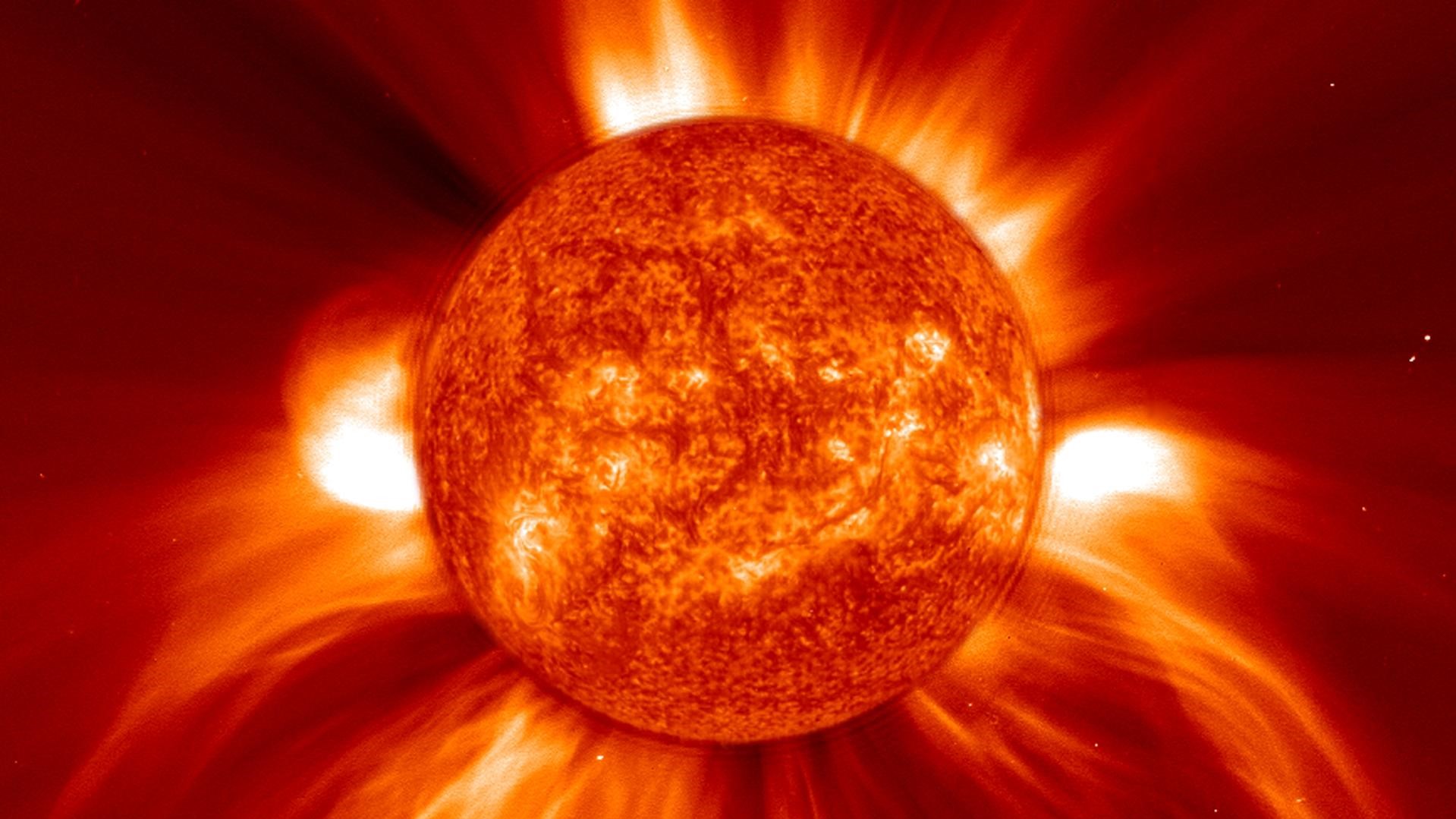
The Sun appears calm when viewed from Earth. It rises every morning, shines steadily throughout the day, and sets in the evening, giving the impression of an unchanging celestial object. But this peaceful appearance hides an incredibly dynamic and sometimes violent star. Deep within and above its glowing surface, powerful magnetic forces twist, stretch, and suddenly snap, unleashing enormous eruptions into space.
Among the most dramatic of these eruptions is a phenomenon known as a Coronal Mass Ejection, or CME. During a CME, the Sun hurls billions of tons of electrically charged gas into space at astonishing speeds. These immense clouds can travel across the Solar System, and if one happens to be directed toward Earth, it can trigger dazzling auroras, disrupt satellite operations, interfere with radio communications, and even affect electrical power grids.
Coronal Mass Ejections are among the most important subjects in space weather research because they demonstrate that our planet is not isolated from the activity of the Sun. Instead, Earth exists within the Sun’s vast sphere of influence, where powerful solar events can have real effects on modern technology and human society.
Understanding the Sun’s Outer Atmosphere
To understand a Coronal Mass Ejection, it helps to first understand the part of the Sun from which it originates.
The Sun is made up of several layers. The bright visible surface is called the photosphere, which is the layer we normally see from Earth. Above it lies the chromosphere, and beyond that is the corona, the Sun’s outer atmosphere.
The corona is one of the most fascinating regions of the Sun. Although it is much less dense than the Sun’s surface, it reaches temperatures of more than one million degrees Celsius. Scientists are still investigating why the corona is so much hotter than the layers below it, making this one of solar physics’ enduring mysteries.
The corona extends millions of kilometers into space and is shaped by the Sun’s powerful magnetic field. It is within this vast, superheated atmosphere that Coronal Mass Ejections are born.
What Exactly Is a Coronal Mass Ejection?
A Coronal Mass Ejection is a massive eruption of plasma and magnetic field from the Sun’s corona into space.
Plasma is often called the fourth state of matter. It consists of atoms that have been stripped of some or all of their electrons, creating a mixture of positively charged ions and free electrons. Because plasma is electrically charged, it responds strongly to magnetic fields.
During a CME, the Sun ejects an enormous cloud of this hot plasma along with embedded magnetic field lines. The amount of material expelled is staggering. A single Coronal Mass Ejection can carry billions of tons of plasma into interplanetary space.
These enormous clouds can travel at speeds ranging from a few hundred kilometers per second to well over 2,000 kilometers per second. At the highest speeds, a CME can reach Earth in as little as about 15 to 18 hours, although many take two to three days to arrive.
How Does a Coronal Mass Ejection Form?
The Sun is constantly generating powerful magnetic fields through the movement of hot plasma inside its interior.
Unlike Earth, which rotates almost like a solid body, the Sun rotates at different speeds depending on latitude. The equatorial regions rotate faster than the polar regions. This differential rotation gradually twists and tangles magnetic field lines over time.
As these magnetic fields become increasingly stressed, enormous amounts of magnetic energy are stored in the corona.
Eventually, the magnetic field can become unstable.
When this happens, a process called magnetic reconnection rapidly rearranges the magnetic field. During magnetic reconnection, magnetic energy is converted into heat, light, and the kinetic energy of moving plasma.
The result can be a spectacular Coronal Mass Ejection that blasts material far into space.
The Relationship Between Solar Flares and Coronal Mass Ejections
Solar flares and Coronal Mass Ejections are closely related, but they are not the same phenomenon.
A solar flare is an intense burst of electromagnetic radiation that includes X-rays, ultraviolet light, and other forms of high-energy radiation. Because light travels at the speed of light, the radiation from a solar flare reaches Earth in just over eight minutes.
A Coronal Mass Ejection, on the other hand, involves the actual ejection of billions of tons of solar plasma. Since this material moves much more slowly than light, it usually takes one to several days to reach Earth.
Many powerful solar flares occur together with CMEs because both are often produced by the same magnetic instability. However, not every flare produces a CME, and not every CME is accompanied by a major flare.
Although they are distinct events, they often occur together during periods of intense solar activity.
How Big Is a Coronal Mass Ejection?
The scale of a Coronal Mass Ejection is almost impossible to imagine.
A CME can expand until it becomes much larger than the Sun itself. As it moves outward through the Solar System, the cloud continues to grow, eventually spanning millions of kilometers across.
Despite carrying billions of tons of plasma, the material within the expanding cloud becomes increasingly spread out as it travels through space.
By the time it reaches Earth’s orbit, the CME is an immense but relatively diffuse cloud of charged particles and magnetic fields.
How Scientists Observe Coronal Mass Ejections
Because the corona is much dimmer than the Sun’s bright surface, observing CMEs requires specialized instruments.
One important tool is the coronagraph, which blocks the brilliant light from the Sun’s disk, allowing scientists to see the faint outer corona where CMEs develop.
Spacecraft have revolutionized our understanding of these eruptions.
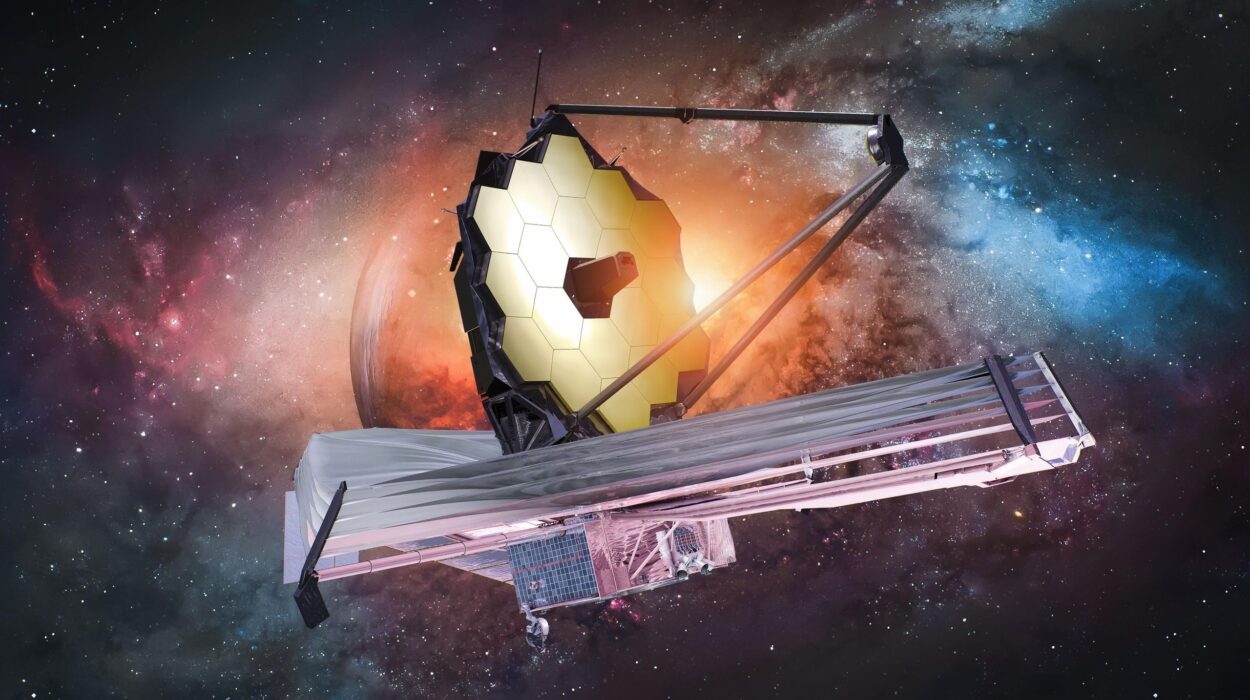
Observatories such as the Solar and Heliospheric Observatory (SOHO), NASA’s Solar Dynamics Observatory (SDO), the STEREO spacecraft, and the Parker Solar Probe continuously monitor the Sun from different perspectives.
These missions allow scientists to watch CMEs form, measure their speed, estimate their direction, and predict whether they might affect Earth.
What Happens When a CME Travels Through Space?
After leaving the Sun, a Coronal Mass Ejection moves through the solar wind, the continuous stream of charged particles flowing outward from the Sun.
As the CME travels, it can interact with the surrounding solar wind, accelerate slower particles, or slow down if it encounters denser regions.
Fast CMEs often generate powerful shock waves ahead of them, similar to the bow wave created by a fast-moving ship or the shock wave produced by a supersonic aircraft.
These shock waves can accelerate charged particles to extremely high energies, creating additional hazards for spacecraft and astronauts.
What Happens When a CME Reaches Earth?
Earth is protected by its magnetic field, known as the magnetosphere.
When a Coronal Mass Ejection reaches our planet, its magnetic field interacts with Earth’s own magnetic field.
If the CME’s magnetic field is oriented in a direction opposite to Earth’s magnetic field, the interaction becomes especially effective. Magnetic reconnection can then occur near Earth, allowing energy from the CME to enter the magnetosphere.
This process can trigger a geomagnetic storm, a temporary disturbance of Earth’s magnetic environment.
The strength of the storm depends on several factors, including the speed of the CME, its magnetic field orientation, and the amount of energy it carries.
The Beautiful Side of Coronal Mass Ejections
Although CMEs can pose technological challenges, they also produce one of nature’s most breathtaking spectacles.
During geomagnetic storms, charged particles travel along Earth’s magnetic field lines toward the polar regions.
As these particles collide with oxygen and nitrogen atoms high in the atmosphere, they excite the atoms to higher energy states.
When the atoms return to lower energy states, they emit light.
This process creates the shimmering curtains of green, red, purple, and blue known as the aurora borealis in the Northern Hemisphere and the aurora australis in the Southern Hemisphere.
During particularly strong geomagnetic storms, auroras can sometimes be seen much farther from the poles than usual.
Can Coronal Mass Ejections Be Dangerous?
Coronal Mass Ejections are generally not dangerous to people standing on Earth’s surface because our atmosphere and magnetic field provide excellent protection.
However, modern technology can be vulnerable.
Strong geomagnetic storms can interfere with satellite electronics, disrupt GPS navigation, affect high-frequency radio communications, and increase atmospheric drag on satellites in low Earth orbit.
Large geomagnetic disturbances can also induce electrical currents in long power transmission lines, potentially damaging transformers and causing widespread power outages.
Astronauts beyond Earth’s protective magnetic field face greater risks because they are more exposed to energetic particles associated with solar eruptions.
For this reason, monitoring solar activity is an essential part of planning human space missions.
The Most Powerful Solar Storm in History
One of the most famous solar storms occurred in September 1859.
Known as the Carrington Event, it remains the most powerful geomagnetic storm ever reliably recorded.
British astronomer Richard Carrington observed an exceptionally bright solar flare shortly before Earth experienced an intense geomagnetic storm.
Auroras became visible near the equator, where they are almost never seen.
Telegraph systems—the world’s most advanced communication technology at the time—experienced widespread disruptions. Some operators received electric shocks, while others found their equipment continued operating even after power supplies were disconnected due to geomagnetically induced currents.
If a storm of similar intensity occurred today, experts expect it could significantly affect satellites, navigation systems, communications, and parts of the electrical infrastructure, making space weather forecasting increasingly important.
The Solar Cycle and CMEs
The Sun does not produce Coronal Mass Ejections at a constant rate.
Instead, solar activity follows an approximately 11-year cycle known as the solar cycle.
During solar minimum, the Sun is relatively quiet, producing fewer sunspots, solar flares, and CMEs.
As activity increases toward solar maximum, sunspots become more numerous, magnetic fields grow more complex, and Coronal Mass Ejections occur much more frequently.
This cycle helps scientists estimate periods when space weather is likely to become more active.
Predicting Coronal Mass Ejections
Scientists cannot yet predict exactly when a Coronal Mass Ejection will occur.
However, continuous monitoring of the Sun has greatly improved forecasting.
By observing active regions, measuring magnetic fields, and tracking newly erupted CMEs, researchers can estimate whether an eruption is likely to reach Earth and approximately when it might arrive.
Computer models simulate the CME’s journey through interplanetary space, helping forecast its speed, arrival time, and potential impact.
Although forecasting continues to improve, predicting the exact strength of a geomagnetic storm remains challenging because the internal magnetic structure of a CME is difficult to determine before it reaches Earth.
Coronal Mass Ejections Beyond Earth
Earth is not the only planet affected by CMEs.
Mars, with its thin atmosphere and lack of a global magnetic field, is particularly vulnerable to solar eruptions.
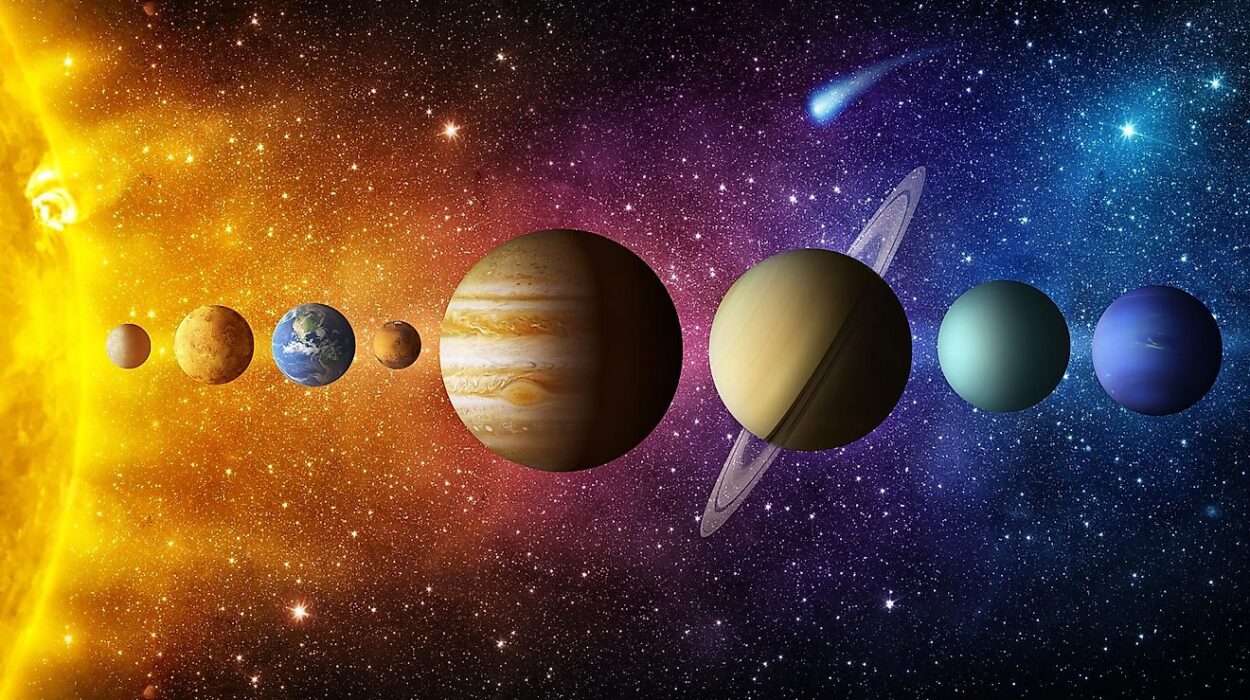
Jupiter, Saturn, Mercury, and the other planets also experience interactions between solar activity and their magnetic environments or atmospheres.
Even spacecraft exploring the outer Solar System can encounter the effects of Coronal Mass Ejections as these immense clouds travel outward from the Sun.
Studying these interactions helps scientists better understand both our own Solar System and the environments around other stars.
Why Coronal Mass Ejections Matter
Coronal Mass Ejections remind us that space is far from empty or quiet.
The Sun is an active, evolving star whose behavior influences every planet orbiting it. As human civilization becomes increasingly dependent on satellites, global communications, navigation systems, and space exploration, understanding solar activity becomes more important than ever.
Research into CMEs is not only about protecting technology. It also helps scientists better understand magnetic fields, plasma physics, stellar activity, and the behavior of stars throughout the universe.
Every new observation brings us closer to predicting solar storms more accurately and preparing for their effects.
Conclusion
A Coronal Mass Ejection is one of the most powerful natural events in our Solar System. It begins with the sudden release of magnetic energy in the Sun’s corona, launching billions of tons of hot plasma and magnetic fields into space. These immense clouds can race across millions of kilometers, sometimes colliding with Earth and producing both spectacular auroras and powerful geomagnetic storms.
Although CMEs can temporarily disrupt modern technology, they also offer scientists a remarkable opportunity to study the dynamic relationship between the Sun and the planets. They serve as a vivid reminder that Earth is part of a much larger cosmic system, constantly connected to the activity of the star that makes life on our planet possible.