Space has fascinated humanity since the first people looked up at the night sky. Long before telescopes, satellites, or spacecraft existed, ancient civilizations watched the stars to navigate oceans, predict seasons, and understand the passage of time. Every clear night reminded them that Earth was part of something far larger than themselves.
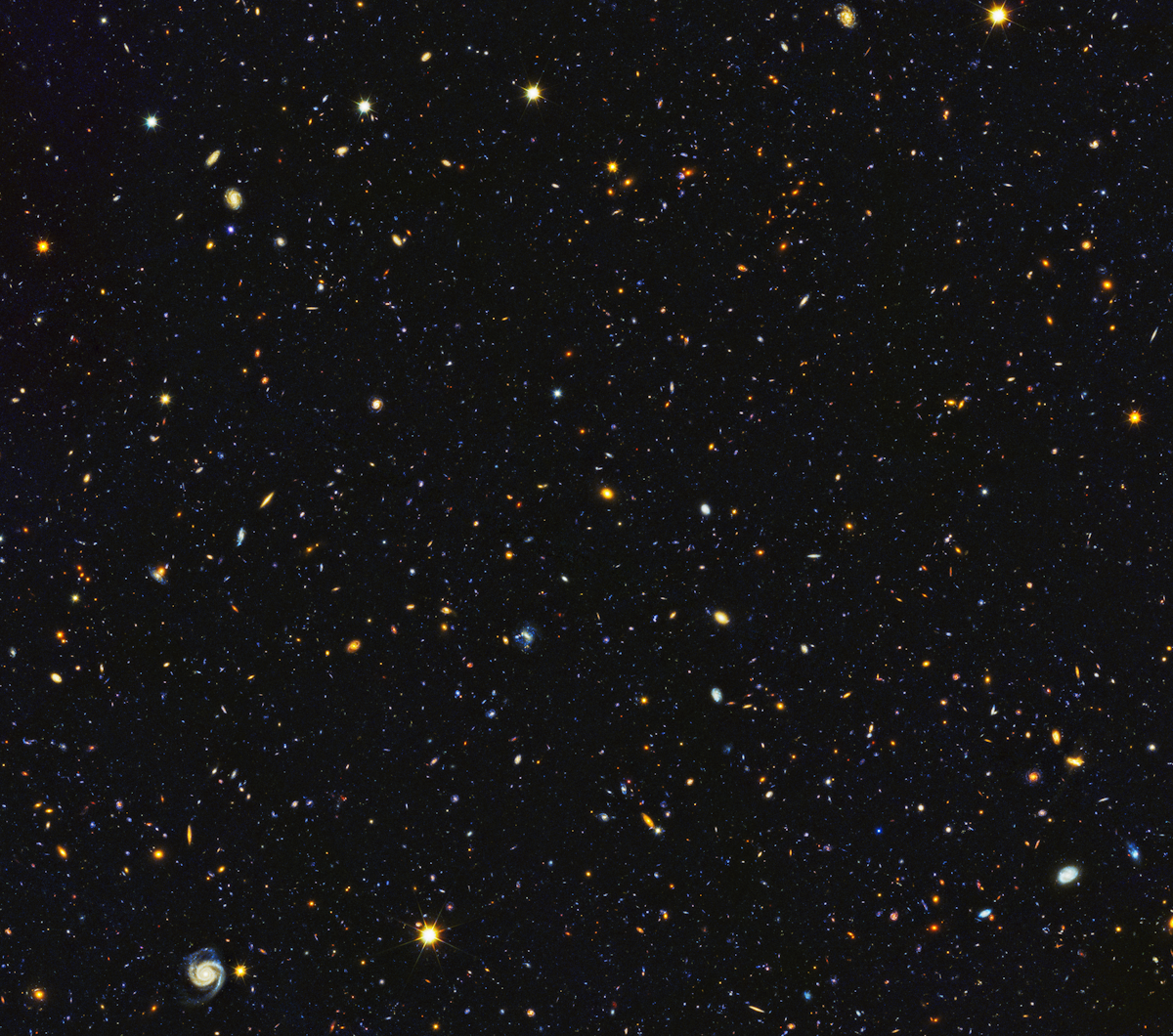
Today, modern astronomy has answered many of the questions that puzzled our ancestors. We know that Earth orbits the Sun, that our galaxy contains hundreds of billions of stars, and that the observable universe is home to hundreds of billions of galaxies. Powerful space telescopes have revealed worlds around distant stars, captured images of black holes, and observed galaxies whose light began its journey billions of years ago.
Yet every answer leads to new mysteries. Scientists still seek to understand dark matter, dark energy, the nature of black holes, and whether life exists elsewhere in the universe.
If you’ve ever gazed at the stars and wondered how the cosmos works, these twenty fascinating astronomy questions and answers will take you on a journey from our own planet to the edge of the observable universe.
1. What Is Astronomy?
Astronomy is the scientific study of everything beyond Earth’s atmosphere. It investigates stars, planets, moons, comets, asteroids, galaxies, black holes, nebulae, and the universe itself.
Unlike astrology, which is a belief system and is not supported by scientific evidence, astronomy relies on observation, mathematics, physics, chemistry, and advanced technology to understand the cosmos.
Modern astronomers use ground-based observatories, radio telescopes, satellites, and space telescopes to study objects located billions of light-years away. Every observation helps scientists piece together the story of how the universe formed and evolved.
Astronomy is one of humanity’s oldest sciences, yet it remains one of its fastest-growing fields of discovery.
2. How Big Is the Universe?
The universe is so vast that ordinary distances become almost meaningless.
The observable universe—the portion whose light has had enough time to reach Earth since the Big Bang—is estimated to be about 93 billion light-years in diameter.
A light-year is the distance light travels in one year, approximately 9.46 trillion kilometers (5.88 trillion miles).
Importantly, the observable universe is not necessarily the entire universe. Because space itself is expanding, regions beyond our observable limit may exist that we can never see.
Scientists do not yet know whether the entire universe is finite or infinite.
3. What Is a Galaxy?
A galaxy is a massive collection of stars, gas, dust, dark matter, and planets held together by gravity.
Galaxies come in many shapes, including spiral, elliptical, and irregular forms.
Our home galaxy, the Milky Way, is a barred spiral galaxy containing an estimated 100 to 400 billion stars.
At its center lies a supermassive black hole known as Sagittarius A*.
The Milky Way itself is only one galaxy among hundreds of billions within the observable universe.
4. Why Does Earth Orbit the Sun?
Earth remains in orbit because of gravity.
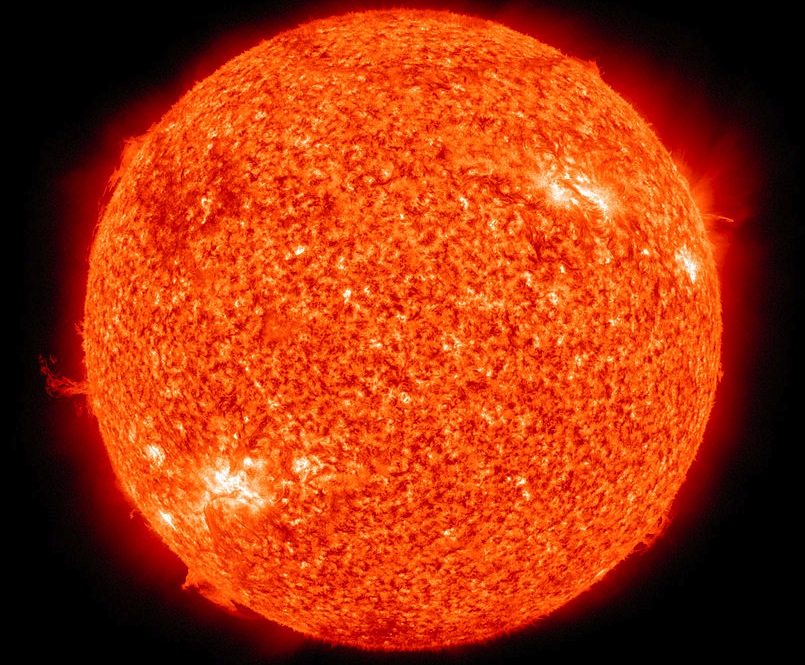
The Sun contains about 99.8% of the mass in our Solar System, producing an enormous gravitational pull.
At the same time, Earth moves sideways at approximately 29.8 kilometers per second (18.5 miles per second).
Gravity continuously pulls Earth toward the Sun, while Earth’s forward motion keeps it from falling directly inward. Instead, our planet follows a stable elliptical orbit.
This delicate balance has continued for about 4.5 billion years.
5. Why Is Pluto No Longer Considered a Planet?
For many decades, Pluto was recognized as the ninth planet in our Solar System.
In 2006, however, the International Astronomical Union established a formal definition of a planet.
To qualify, an object must orbit the Sun, be nearly spherical because of its own gravity, and have cleared most other objects from its orbital neighborhood.
Pluto satisfies the first two conditions but not the third. It shares its orbital region with many icy objects in the Kuiper Belt.
As a result, Pluto is now classified as a dwarf planet rather than a major planet.
Its scientific importance has not diminished. Pluto remains one of the Solar System’s most fascinating worlds.
6. What Is a Black Hole?
A black hole is a region of space where gravity becomes so strong that nothing—not even light—can escape once it crosses a boundary called the event horizon.
Black holes form in different ways.
Stellar black holes are created when massive stars collapse after exhausting their nuclear fuel.
Supermassive black holes, containing millions or billions of times the Sun’s mass, occupy the centers of most galaxies.
Although black holes themselves cannot be seen directly, astronomers detect them by observing their effects on nearby stars, gas, and light.
In 2019, scientists released the first-ever image of a black hole’s shadow.
7. What Is a Light-Year?
Despite its name, a light-year measures distance, not time.
It represents the distance light travels in one year while moving through a vacuum at approximately 299,792 kilometers per second (186,282 miles per second).
One light-year equals roughly 9.46 trillion kilometers.
Astronomers use light-years because distances between stars and galaxies are far too large for ordinary units like kilometers.
When observing distant galaxies, astronomers are literally looking back in time because their light has taken millions or billions of years to reach Earth.
8. Why Do Stars Twinkle?
Stars appear to twinkle because Earth’s atmosphere is constantly moving.
As starlight passes through layers of air with different temperatures and densities, it bends slightly in changing directions.
These tiny variations cause stars to appear brighter, dimmer, or shifted in position.
Planets usually twinkle much less because they appear as tiny disks rather than point-like sources of light.
Space telescopes avoid this atmospheric distortion entirely, producing much sharper images.
9. What Happens When a Star Dies?
The fate of a star depends largely on its mass.
Stars similar to the Sun eventually expand into red giants before shedding their outer layers and leaving behind dense white dwarfs.
More massive stars experience spectacular supernova explosions.
These explosions create many of the heavy elements found throughout the universe, including the calcium in human bones and the iron in our blood.
Depending on their remaining mass, these stars become either neutron stars or black holes.
In this way, the death of one generation of stars provides the raw materials for future stars, planets, and potentially life itself.
10. What Is a Nebula?
A nebula is a vast cloud of gas and dust floating through space.
Some nebulae are regions where new stars are actively forming.
Others are the expanding remains of exploded stars.
The famous Orion Nebula, visible with binoculars under dark skies, is one of the nearest stellar nurseries to Earth.
Nebulae are among the most colorful objects in astronomy because different gases emit different wavelengths of light when energized.
11. How Many Planets Are in the Solar System?
Our Solar System contains eight recognized planets.
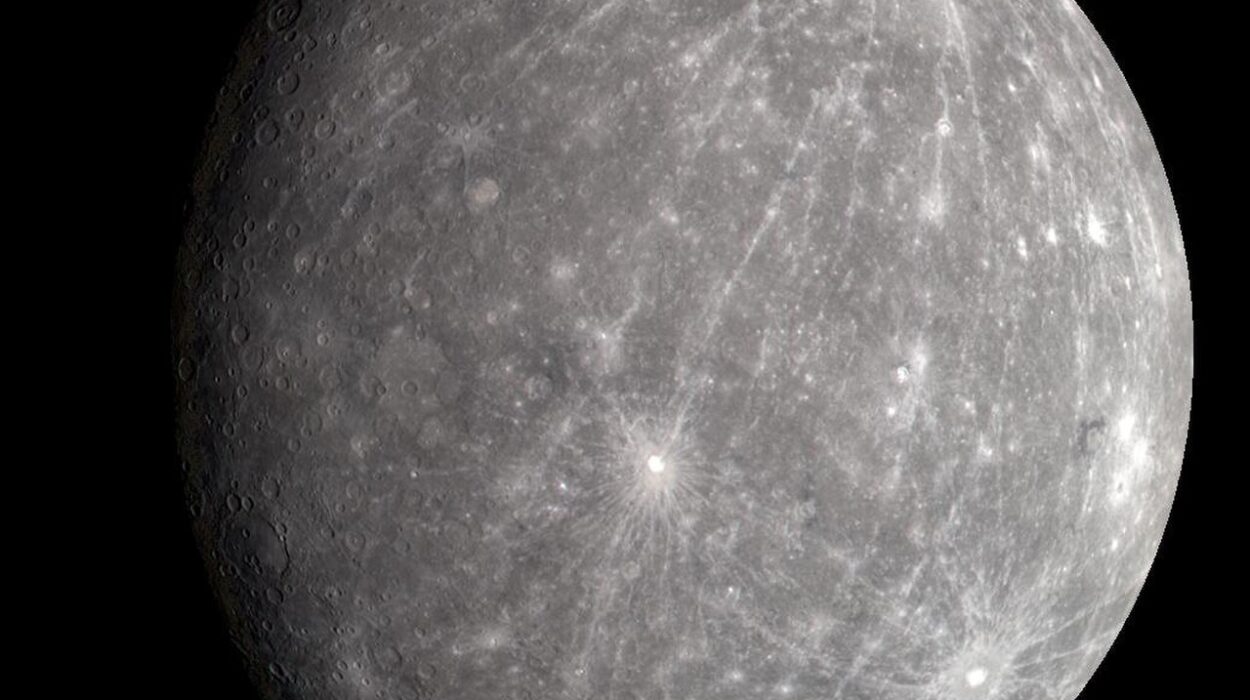
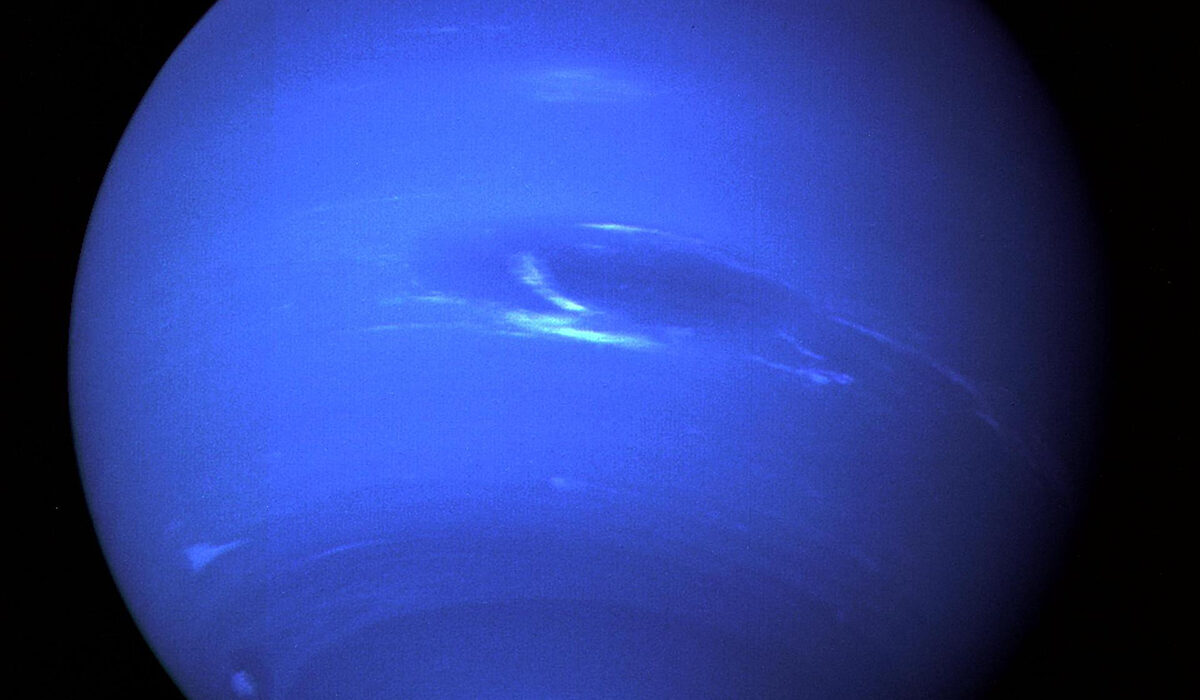
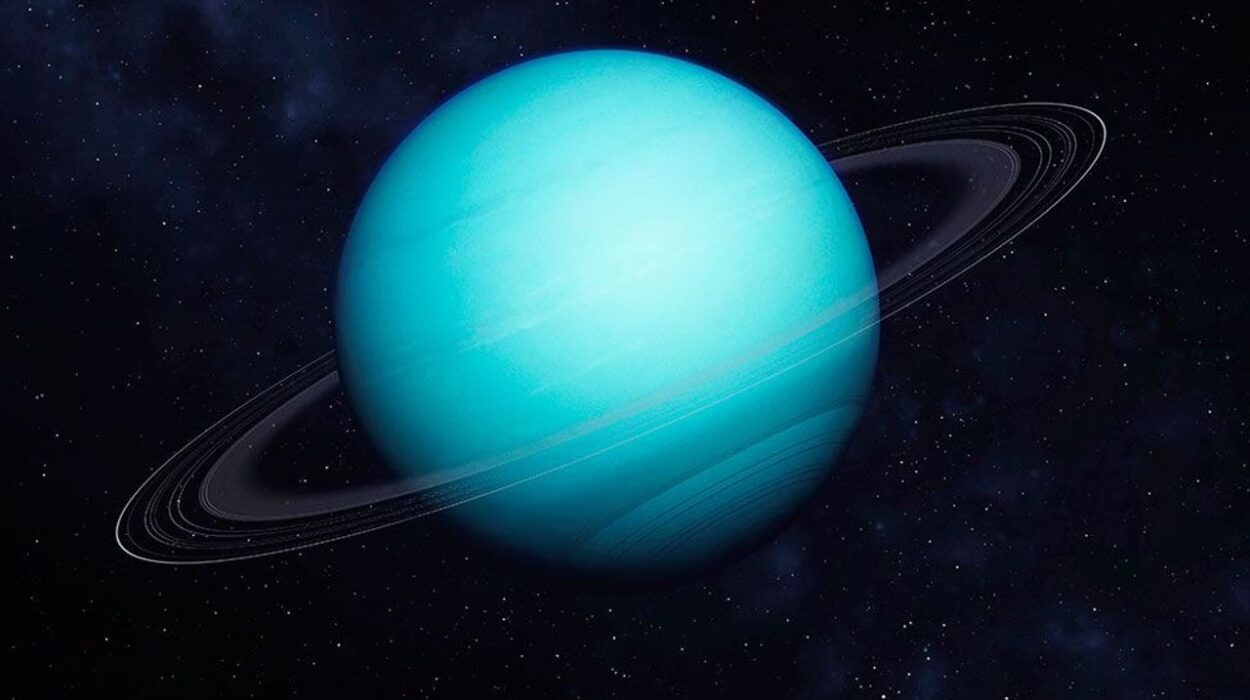
In order from the Sun, they are Mercury, Venus, Earth, Mars, Jupiter, Saturn, Uranus, and Neptune.
Beyond Neptune lies the Kuiper Belt, home to Pluto and many other icy dwarf planets.
The Solar System also contains hundreds of moons, millions of asteroids, countless comets, and vast numbers of smaller objects.
Together, these bodies orbit the Sun, forming our cosmic neighborhood.
12. What Is an Exoplanet?
An exoplanet is any planet that orbits a star other than the Sun.
The first confirmed exoplanets were discovered in the early 1990s.
Since then, astronomers have identified thousands of them using methods such as the transit technique, in which a planet briefly blocks a small amount of its star’s light.
Some exoplanets are larger than Jupiter.
Others are rocky worlds similar in size to Earth.
Scientists are especially interested in planets located within the habitable zone, where temperatures might allow liquid water to exist.
Although no confirmed evidence of extraterrestrial life has been found, exoplanets have dramatically expanded our understanding of planetary diversity.
13. Why Is the Sky Dark at Night?
This question, known as Olbers’ Paradox, puzzled astronomers for centuries.
If the universe were infinite, static, and filled uniformly with stars, every direction should eventually end at a star, making the night sky brilliantly bright.
Instead, the sky is mostly dark.
The solution lies in modern cosmology.
The universe has a finite age, meaning light from many distant stars has not yet reached Earth.
In addition, the expansion of space stretches light toward longer wavelengths, making much of it invisible.
The dark night sky is therefore evidence of the universe’s history and expansion.
14. What Is Dark Matter?
Dark matter is an invisible form of matter that does not emit, absorb, or reflect light.
Scientists infer its existence through its gravitational effects.
Galaxies rotate too quickly to be held together by visible matter alone.
Galaxy clusters also exhibit gravitational behavior requiring far more mass than can be observed directly.
Current evidence suggests that dark matter makes up roughly 27% of the universe’s total mass-energy content.
Despite decades of research, its true nature remains unknown.
15. What Is Dark Energy?
Dark energy is an even greater mystery than dark matter.
In the late 1990s, astronomers discovered that the universe’s expansion is accelerating rather than slowing down.
Some unknown phenomenon appears to be driving this acceleration.
Scientists call it dark energy.
Current cosmological models estimate that dark energy accounts for approximately 68% of the universe’s total mass-energy content.
Although it dominates the cosmos, its physical nature remains one of astronomy’s greatest unanswered questions.
16. Can Humans Live on Mars?
Mars is the most promising planet for future human exploration, but living there would be extremely challenging.
The Martian atmosphere is very thin and consists mostly of carbon dioxide.
Surface temperatures are generally far below freezing.
Liquid water is unstable on the surface under present conditions.
Cosmic radiation presents additional health risks.
Future human settlements would require protective habitats, reliable life-support systems, food production, water extraction, and advanced engineering solutions.
Space agencies and private companies continue studying technologies that could eventually make long-term missions possible.
17. What Causes Solar and Lunar Eclipses?
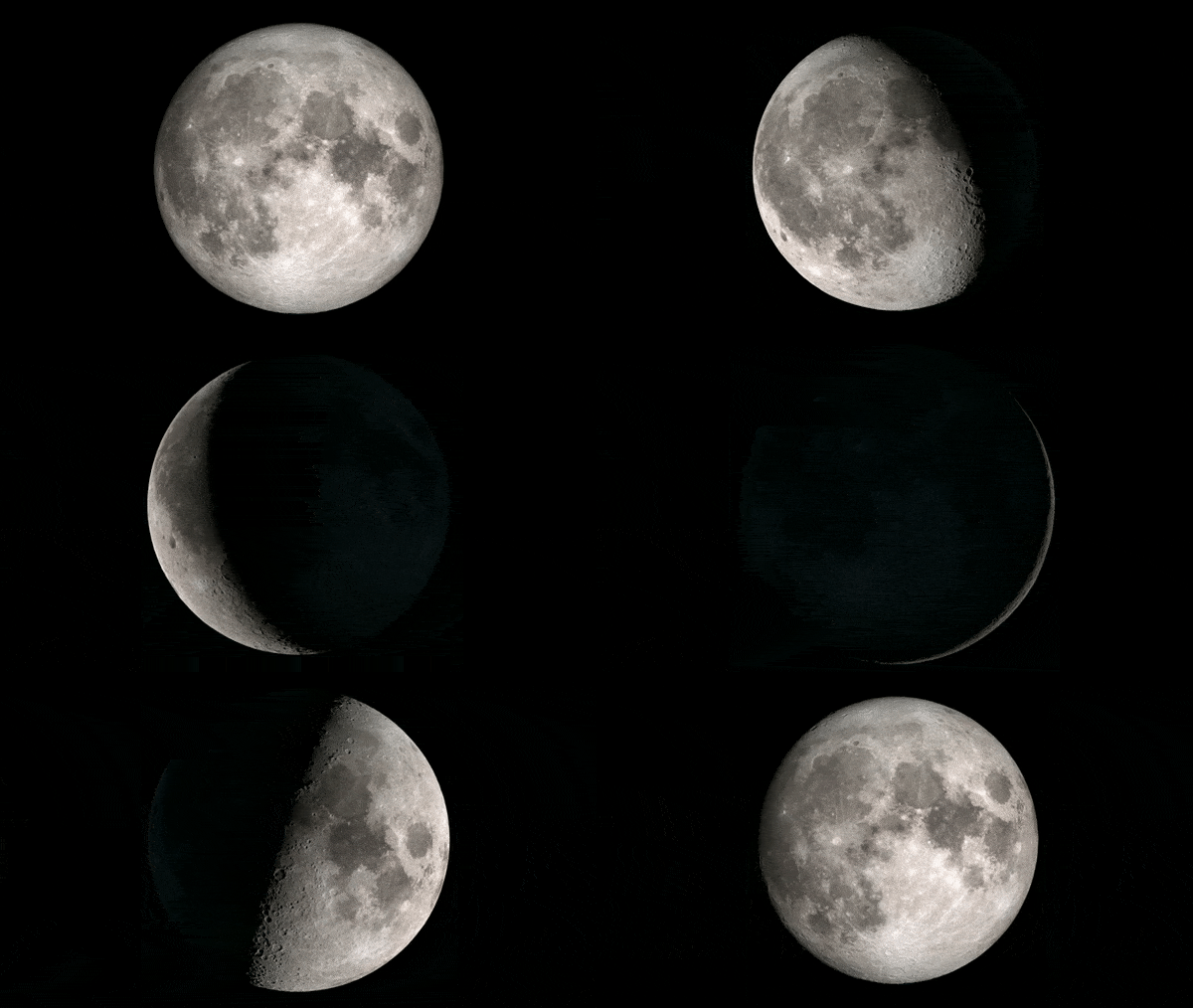
A solar eclipse occurs when the Moon passes between Earth and the Sun, temporarily blocking sunlight.
A lunar eclipse occurs when Earth passes between the Sun and the Moon, causing Earth’s shadow to fall across the lunar surface.
These events occur because the Sun, Earth, and Moon occasionally align very precisely.
Although eclipses appear dramatic, they are entirely predictable using the laws of celestial mechanics.
18. Are We Alone in the Universe?
This is perhaps humanity’s greatest unanswered question.
Scientists have found no confirmed evidence that life exists beyond Earth.
However, the discovery of thousands of exoplanets has shown that planets are extremely common throughout the galaxy.
Many stars possess planetary systems.
Some planets orbit within regions where liquid water may exist.
Researchers continue searching for biosignatures in planetary atmospheres, microbial life within our own Solar System, and intelligent signals from distant civilizations.
At present, the scientific answer remains simple: we do not yet know.
19. How Do Astronomers Know the Age of the Universe?
The current best estimate places the age of the universe at approximately 13.8 billion years.
This estimate comes from multiple independent lines of evidence.
Astronomers study the expansion of galaxies, the cosmic microwave background radiation, the evolution of stars, and the abundance of light elements produced shortly after the Big Bang.
Remarkably, these different methods produce highly consistent results.
The age of the universe is therefore one of the best-established measurements in modern cosmology.
20. Why Should We Study Astronomy?
Astronomy does far more than satisfy curiosity.
It helps us understand Earth’s place in the cosmos and reveals the physical laws governing the universe.
Many technologies developed for astronomy have found practical applications on Earth, including advances in digital imaging, data processing, satellite communications, medical imaging, and precision engineering.
Astronomy also inspires international collaboration. Observatories, space telescopes, and planetary missions often involve scientists from many countries working together toward shared scientific goals.
Perhaps most importantly, astronomy reminds us of perspective.
From the viewpoint of space, national borders disappear. Earth becomes a small, fragile world orbiting an ordinary star within an immense galaxy. This perspective encourages appreciation for our planet and the shared responsibility of protecting it.
The Universe Is Still Full of Questions
The more astronomers discover, the more they realize remains unknown. Every powerful new telescope reveals galaxies never seen before. Every spacecraft uncovers surprising features on familiar worlds. Every exoplanet discovery challenges assumptions about how planetary systems form.
Black holes continue to test the limits of physics. Dark matter and dark energy dominate the universe yet remain mysterious. The search for life beyond Earth has only just begun. Even our own Solar System still holds secrets waiting to be uncovered beneath the icy crusts of distant moons and within the atmospheres of giant planets.
Astronomy is unique among the sciences because it constantly expands the boundaries of human imagination. It reminds us that the universe is far older, larger, and more complex than our everyday experience suggests.
Every question answered opens the door to another. Every discovery reveals a deeper mystery. And every time we look up at the night sky, we are seeing not only distant stars but also the history of the universe written in light that has traveled across space for millions or even billions of years.
Our journey to understand the cosmos is far from over. In many ways, it has only just begun.