The universe has always inspired wonder. On a clear night, the stars scattered across the sky remind us that countless mysteries exist beyond our world. For centuries, people looked up and wondered how the first galaxies formed, what distant planets are like, and whether we could ever see the earliest chapters of cosmic history. Today, one extraordinary observatory is helping answer those questions: the James Webb Space Telescope.
Often called the most powerful space telescope ever built, the James Webb Space Telescope, or JWST, is transforming our understanding of the universe. Unlike any telescope before it, Webb can observe some of the faintest and most distant objects ever detected, allowing scientists to study galaxies that formed only a few hundred million years after the Big Bang. It also peers into stellar nurseries where new stars are born, examines the atmospheres of planets orbiting distant stars, and reveals breathtaking details hidden within cosmic clouds of dust.
More than just a telescope, James Webb represents decades of scientific innovation, engineering excellence, and international collaboration. It is one of humanity’s greatest scientific achievements and a remarkable window into the distant past.
What Is the James Webb Space Telescope?
The James Webb Space Telescope is a large infrared space observatory designed to study the universe in unprecedented detail. It was built to answer some of astronomy’s biggest questions, including how the first stars and galaxies formed, how planetary systems develop, and whether planets beyond our Solar System could support life.
Unlike telescopes on Earth, Webb operates in space, far above our atmosphere. Earth’s atmosphere absorbs much of the infrared light coming from the universe, making it difficult for ground-based telescopes to detect faint infrared signals. By placing Webb in space, astronomers can observe the cosmos with extraordinary clarity.
The telescope is named after James E. Webb, who served as the administrator of NASA from 1961 to 1968 during the Apollo era. Under his leadership, NASA expanded many of its scientific programs alongside the Moon missions.
Why Was the James Webb Space Telescope Built?
Astronomers have long wanted to look farther into the universe than ever before. Because light takes time to travel across space, observing distant galaxies is like looking back in time.
For example, sunlight reaches Earth in about eight minutes. Light from the nearest star beyond the Sun takes more than four years to arrive. Light from the most distant galaxies observed by Webb has traveled for over 13 billion years.
This means Webb is not simply observing distant objects—it is observing the ancient universe.
Scientists built the telescope to investigate some of the most important mysteries in astronomy.
They wanted to understand how the first galaxies formed after the Big Bang.
They wanted to study how stars are born inside enormous clouds of gas and dust.
They hoped to observe planets around other stars and analyze their atmospheres.
They also wanted to explore how galaxies have changed throughout cosmic history.
These ambitious goals required a telescope much larger and more sensitive than any previous space observatory.
The Successor to the Hubble Space Telescope
Many people compare James Webb with the famous Hubble Space Telescope. Although both are remarkable observatories, they were designed for different purposes.
Hubble primarily observes visible light along with some ultraviolet and infrared wavelengths. Its stunning images have revolutionized astronomy since its launch in 1990.
James Webb, however, is optimized for infrared astronomy.
Infrared light has longer wavelengths than visible light and can pass through clouds of cosmic dust that block ordinary light. This allows Webb to observe regions of space that were previously hidden.
Infrared observations also enable astronomers to detect extremely distant galaxies because the expansion of the universe stretches visible light into infrared wavelengths through a process known as cosmological redshift.
Rather than replacing Hubble, Webb complements it. Together, the two telescopes provide a much more complete picture of the universe.
Launching One of the Most Complex Spacecraft Ever Built
After decades of planning, engineering, and testing, the James Webb Space Telescope launched on December 25, 2021, aboard an Ariane 5 rocket from Europe’s Spaceport in French Guiana.
The launch marked the beginning of an extraordinary journey.
Unlike many spacecraft that begin operating soon after launch, Webb had to perform one of the most complicated deployments ever attempted in space.
Its mirrors unfolded.
Its enormous sunshield opened.
Its scientific instruments cooled to extremely low temperatures.
Hundreds of moving parts operated flawlessly.
The deployment sequence took nearly a month and was considered one of the riskiest phases of the mission.
Fortunately, everything worked remarkably well.
Where Is the James Webb Space Telescope?
The James Webb Space Telescope does not orbit Earth like Hubble.
Instead, it operates near the second Sun-Earth Lagrange point, commonly called L2.
This location lies approximately 1.5 million kilometers (about 930,000 miles) from Earth.
At L2, the gravitational pull of the Earth and the Sun allows Webb to orbit the Sun while remaining in nearly the same position relative to Earth.
This location offers several important advantages.
The Sun, Earth, and Moon remain on the same side of the spacecraft, making it easier for Webb’s giant sunshield to block their heat and light.
The stable thermal environment helps keep the telescope extremely cold, which is essential for infrared observations.
It also provides an unobstructed view of deep space.
The Giant Golden Mirror
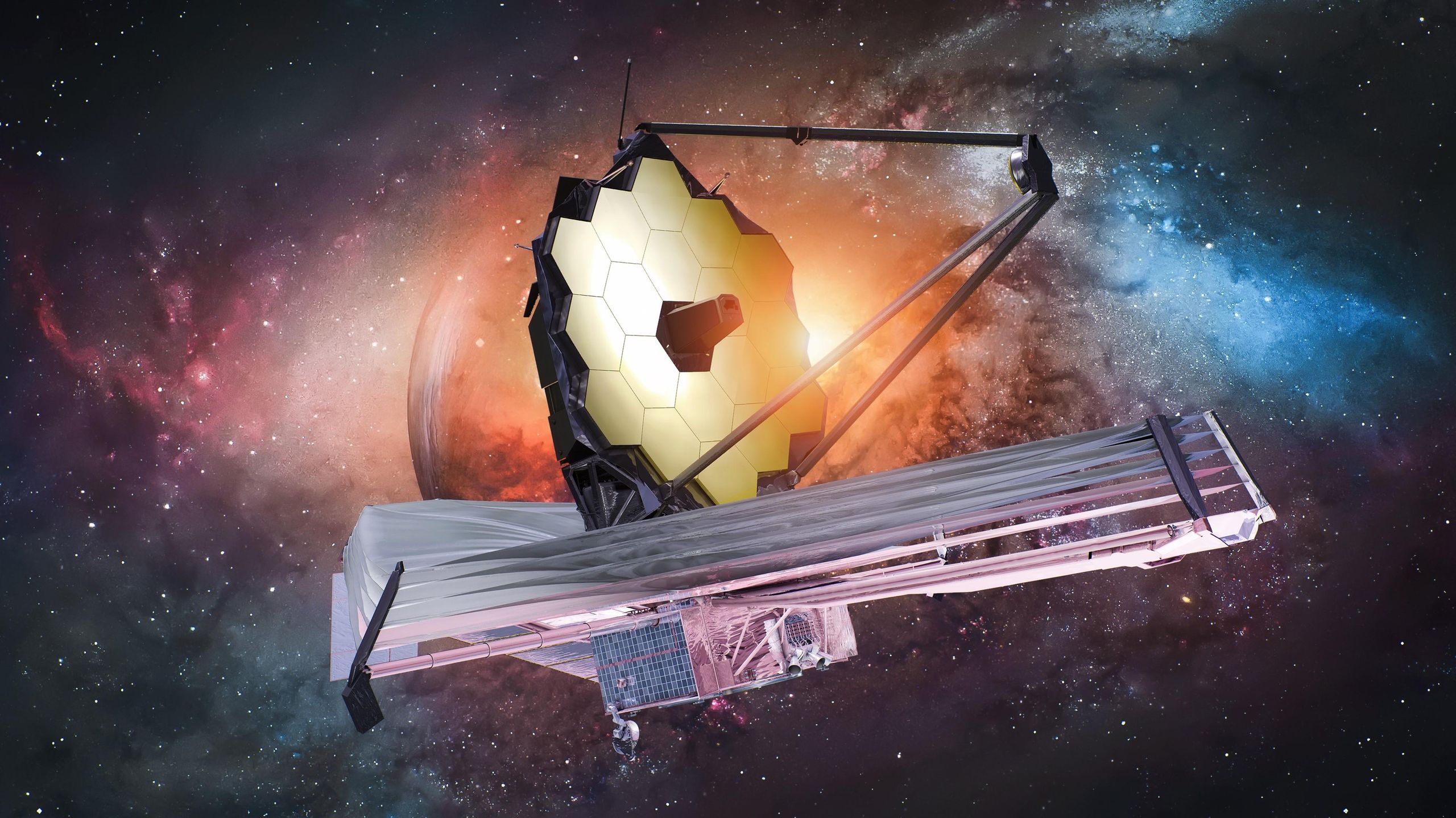
One of Webb’s most recognizable features is its enormous golden primary mirror.
The mirror measures 6.5 meters (21.3 feet) across, making it much larger than Hubble’s 2.4-meter mirror.
Instead of being made from a single piece, Webb’s mirror consists of 18 hexagonal segments.
Each segment is constructed from lightweight beryllium and coated with a very thin layer of gold.
Gold is an excellent reflector of infrared light, making it ideal for Webb’s mission.
The segmented design allowed the mirror to fold during launch and then unfold once in space.
After deployment, the mirror segments were aligned with incredible precision until they functioned as one giant mirror.
This enormous collecting area enables Webb to detect extremely faint light from distant galaxies and exoplanets.
The Remarkable Sunshield
Webb’s massive sunshield is almost as impressive as its mirror.
About the size of a tennis court, it consists of five ultra-thin layers made from a durable material called Kapton.
The sunshield protects the telescope from heat emitted by the Sun, Earth, and Moon.
Without it, the telescope would become too warm to detect faint infrared radiation.
The sun-facing side of the shield can become hot enough to boil water, while the telescope itself remains colder than about 50 kelvins (approximately –223°C or –370°F), depending on the instrument and location.
This dramatic temperature difference allows Webb’s sensitive instruments to operate effectively.
Why Infrared Light Matters
Human eyes detect only a small portion of the electromagnetic spectrum.
Much of the universe shines most brightly in infrared wavelengths.
Young stars often form inside thick clouds of dust that block visible light.
Infrared light passes through much of this dust, allowing Webb to reveal stellar nurseries hidden from ordinary telescopes.
Extremely distant galaxies also become easier to observe in infrared because the expansion of the universe stretches their light into longer wavelengths before it reaches Earth.
Infrared observations therefore allow astronomers to study both the birth of stars and the earliest galaxies in cosmic history.
Webb’s Scientific Instruments
The James Webb Space Telescope carries four primary scientific instruments, each designed for specialized observations.
The Near Infrared Camera captures detailed images of galaxies, nebulae, stars, and planets.
The Near Infrared Spectrograph analyzes light to determine the chemical composition, temperature, motion, and other physical properties of distant objects.
The Mid-Infrared Instrument observes longer infrared wavelengths, allowing scientists to investigate cooler cosmic structures such as dust clouds, forming stars, and certain exoplanets.
The Fine Guidance Sensor and Near Infrared Imager and Slitless Spectrograph help maintain extremely accurate pointing while also supporting specialized observations, including studies of exoplanet atmospheres.
Together, these instruments make Webb one of the most capable scientific observatories ever built.
Looking Back to the Dawn of the Universe
One of Webb’s greatest achievements is its ability to observe the early universe.
After the Big Bang, the universe gradually cooled, allowing the first stars and galaxies to form.
These ancient objects are incredibly distant, and their light has traveled for more than 13 billion years before reaching us.
Webb has detected galaxies that existed surprisingly early in cosmic history.
These observations are helping astronomers test and refine theories about galaxy formation, star formation, and the evolution of the universe.
Every deep-field image captured by Webb reveals thousands of galaxies, many never seen before.
Each tiny point of light represents an enormous collection of stars separated by unimaginable distances.
Revealing Stellar Nurseries
Stars are born inside vast clouds of gas and dust called molecular clouds.
Visible-light telescopes often cannot see through these dusty regions.
Webb’s infrared vision changes that.
Its observations have revealed intricate structures inside stellar nurseries where gravity causes dense clouds to collapse into newborn stars.
Scientists can now study how stars grow, how planets begin forming around them, and how stellar winds shape surrounding gas.
These observations provide valuable insight into how our own Sun and Solar System likely formed billions of years ago.
Studying Exoplanets
One of Webb’s most exciting missions involves exoplanets—planets orbiting stars beyond our Solar System.
Rather than simply detecting these worlds, Webb can examine the composition of some of their atmospheres.
When an exoplanet passes in front of its star, a small amount of starlight filters through the planet’s atmosphere.
By analyzing this light, scientists can identify gases such as water vapor, carbon dioxide, methane, and other molecules.
These observations improve our understanding of planetary climates, atmospheric chemistry, and the diversity of planetary systems throughout the galaxy.
Although Webb was not specifically designed to search for life, its measurements help scientists investigate environments where life might be possible.
Exploring Our Own Solar System
Webb is not limited to distant galaxies.
It also studies planets, moons, asteroids, and comets within our own Solar System.
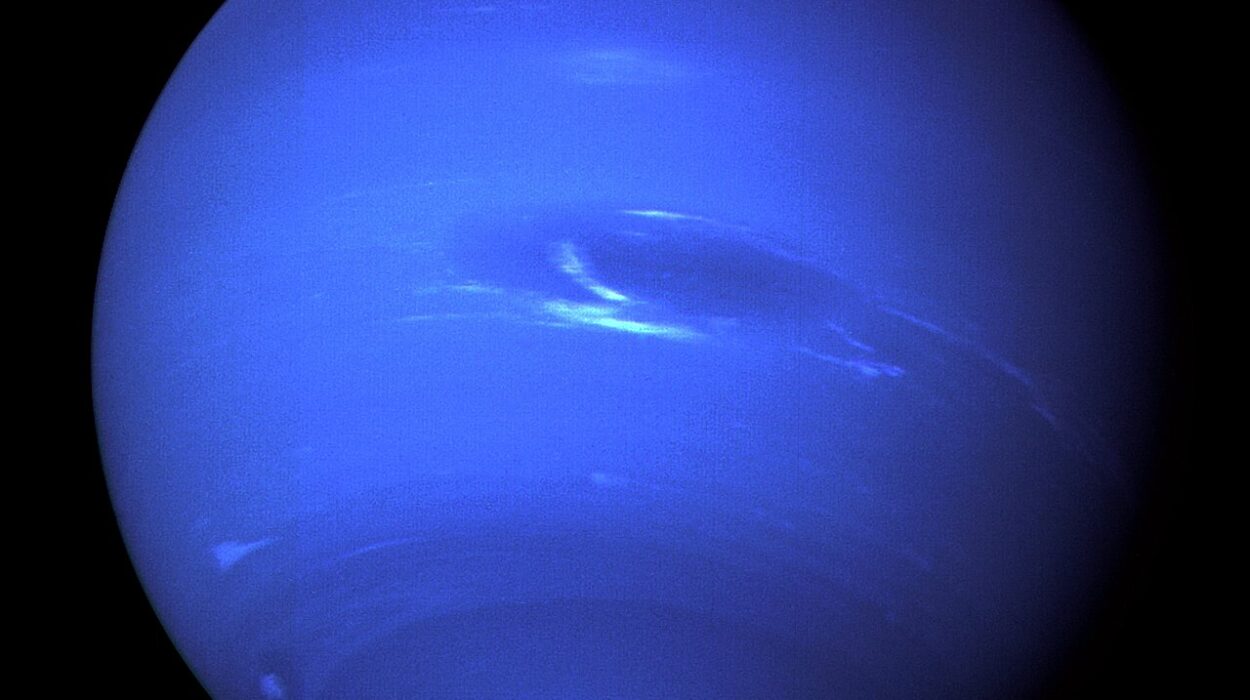
Its observations have revealed new details about Jupiter’s storms and auroras, Saturn’s atmosphere, Neptune’s rings, and distant icy bodies in the outer Solar System.
Because Webb observes infrared light, it can measure temperatures, detect chemical compounds, and study atmospheric processes with exceptional precision.
These observations complement data collected by planetary spacecraft, providing broader views of our cosmic neighborhood.
Beautiful Images With Scientific Value
The first images released by the James Webb Space Telescope amazed people around the world.
They displayed colorful nebulae, sparkling star clusters, interacting galaxies, and incredibly deep views of the universe.
Although the published images are processed into visible colors for public presentation, every image is based on real scientific data.
Different infrared wavelengths are assigned different colors to highlight physical structures and chemical compositions.
These breathtaking images are not merely artistic—they help scientists understand how stars form, how galaxies evolve, and how cosmic dust interacts with light.
International Cooperation
The James Webb Space Telescope is the result of a remarkable international partnership.
NASA led the mission in collaboration with the European Space Agency (ESA) and the Canadian Space Agency (CSA).
Scientists, engineers, technicians, and institutions from many countries contributed to its design, construction, testing, launch, and operation.
This global cooperation demonstrates how scientific exploration can unite nations in pursuit of knowledge.
Challenges During Development
Building Webb was one of the most difficult engineering projects ever undertaken.
Its mirror had to fold for launch and unfold perfectly in space.
Its sunshield required hundreds of precision release mechanisms.
Its instruments needed to operate at extremely low temperatures.
The telescope also had to survive the intense vibrations of launch before performing flawlessly millions of kilometers from Earth, where astronauts cannot easily repair it.
Development took decades and involved countless tests to ensure reliability.
The successful deployment remains one of the greatest engineering accomplishments in space exploration.
How the James Webb Space Telescope Is Changing Astronomy
Every observation made by Webb expands our understanding of the universe.
Its discoveries are refining theories about galaxy evolution, star formation, planetary systems, black holes, and cosmic chemistry.
Scientists are finding galaxies that appear more developed than expected in the early universe, prompting new questions about how quickly galaxies formed after the Big Bang.
Webb is also revealing complex molecules in space, providing clues about the ingredients available during the formation of stars and planets.
Many of its discoveries are unexpected, reminding scientists that nature often surprises us.
The Future of Webb’s Mission
The James Webb Space Telescope was designed with a primary mission lasting several years, but careful launch performance and efficient fuel use have increased expectations that it could continue operating much longer, potentially for well over a decade if its systems remain healthy.
During this time, Webb will continue observing thousands of galaxies, stars, planets, and other cosmic objects.
Its data will inspire new research, answer longstanding questions, and undoubtedly raise many new ones.
Future astronomers may spend decades studying the enormous archive of observations collected by Webb, just as scientists continue to analyze data from Hubble today.
Why the James Webb Space Telescope Matters
The James Webb Space Telescope is far more than a powerful scientific instrument. It represents humanity’s enduring desire to understand the universe and our place within it. By observing light that has traveled across billions of years, Webb allows us to witness chapters of cosmic history that were previously beyond our reach.
Its discoveries are deepening our knowledge of how galaxies evolve, how stars and planets form, and how the universe has changed over time. At the same time, its stunning images remind us that science is not only about solving mysteries—it is also about experiencing the beauty and wonder of the cosmos. As Webb continues its mission, it will almost certainly reshape astronomy for generations, opening new windows onto a universe that is richer, more complex, and more extraordinary than we ever imagined.