When you look up at the night sky, countless tiny points of light sparkle above you. Most of them are distant stars, but a few are something different. These wandering worlds are planets—fascinating celestial bodies that travel around stars and come in an incredible variety of sizes, colors, and environments. Some are scorching hot, others are frozen wastelands. Some are made mostly of rock, while others are giant balls of gas with storms larger than Earth itself.
For thousands of years, people have watched planets move across the sky and wondered what they are. Today, thanks to centuries of scientific discovery and powerful space telescopes, we know that planets are among the most important building blocks of planetary systems. Our own Solar System contains eight planets, but astronomers have now discovered thousands of planets orbiting stars beyond the Sun, revealing that planets are common throughout the universe.
Understanding what a planet is opens a window into astronomy, space exploration, and the story of how worlds—including our own Earth—came to exist.
Understanding the Meaning of a Planet
A planet is a large natural object in space that orbits a star. Unlike stars, planets do not produce their own light through nuclear fusion. Instead, they shine because they reflect the light of their parent star.
Planets come in many forms. Some have solid rocky surfaces, while others are composed mainly of gas or ice. They may have mountains, volcanoes, oceans, rings, moons, thick atmospheres, or almost no atmosphere at all. Despite these differences, all planets share certain fundamental characteristics that distinguish them from other objects in space.
The word “planet” comes from the ancient Greek word planetes, meaning “wanderer.” Ancient skywatchers noticed that a handful of bright objects slowly moved across the sky relative to the background stars. These wandering lights were later recognized as planets.
The Scientific Definition of a Planet
In modern astronomy, scientists use a precise definition to classify planets.
According to the International Astronomical Union (IAU), a planet in our Solar System must meet three requirements.
First, it must orbit the Sun.
Second, it must have enough mass for its own gravity to pull it into a nearly spherical shape. This condition is known as hydrostatic equilibrium. Small objects often have irregular shapes because their gravity is too weak to overcome the strength of their materials, but planets are massive enough to become almost round.
Third, it must have cleared the neighborhood around its orbit. This means the planet has become gravitationally dominant, either collecting, ejecting, or controlling most smaller objects near its path around the Sun.
These criteria separate planets from dwarf planets and smaller bodies such as asteroids and comets.
For planets orbiting stars other than the Sun, astronomers generally apply similar physical principles, even though the formal IAU definition specifically refers to our Solar System.
Why Earth Is a Planet
Earth perfectly satisfies every requirement of the scientific definition.
It orbits the Sun once every 365.25 days.
Its gravity pulls it into an almost spherical shape.
Over billions of years, Earth became the dominant object in its orbital region, clearing away or controlling nearby debris through gravitational interactions.
Earth is also unique among known planets because it is the only world confirmed to support life. Its moderate temperature, abundant liquid water, protective atmosphere, and stable climate make it an extraordinary place in the universe.
The Eight Planets of Our Solar System
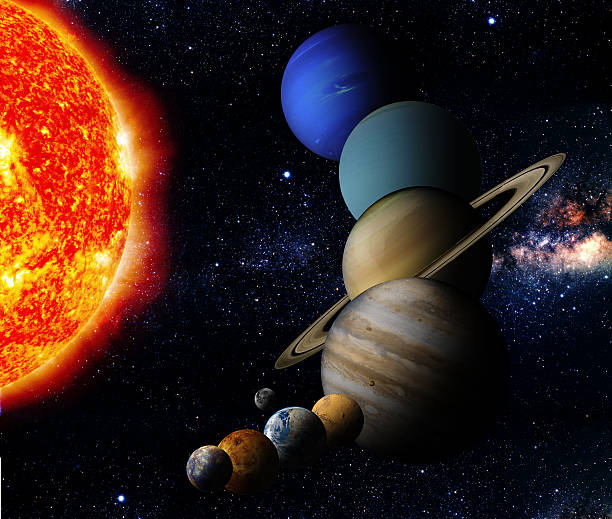
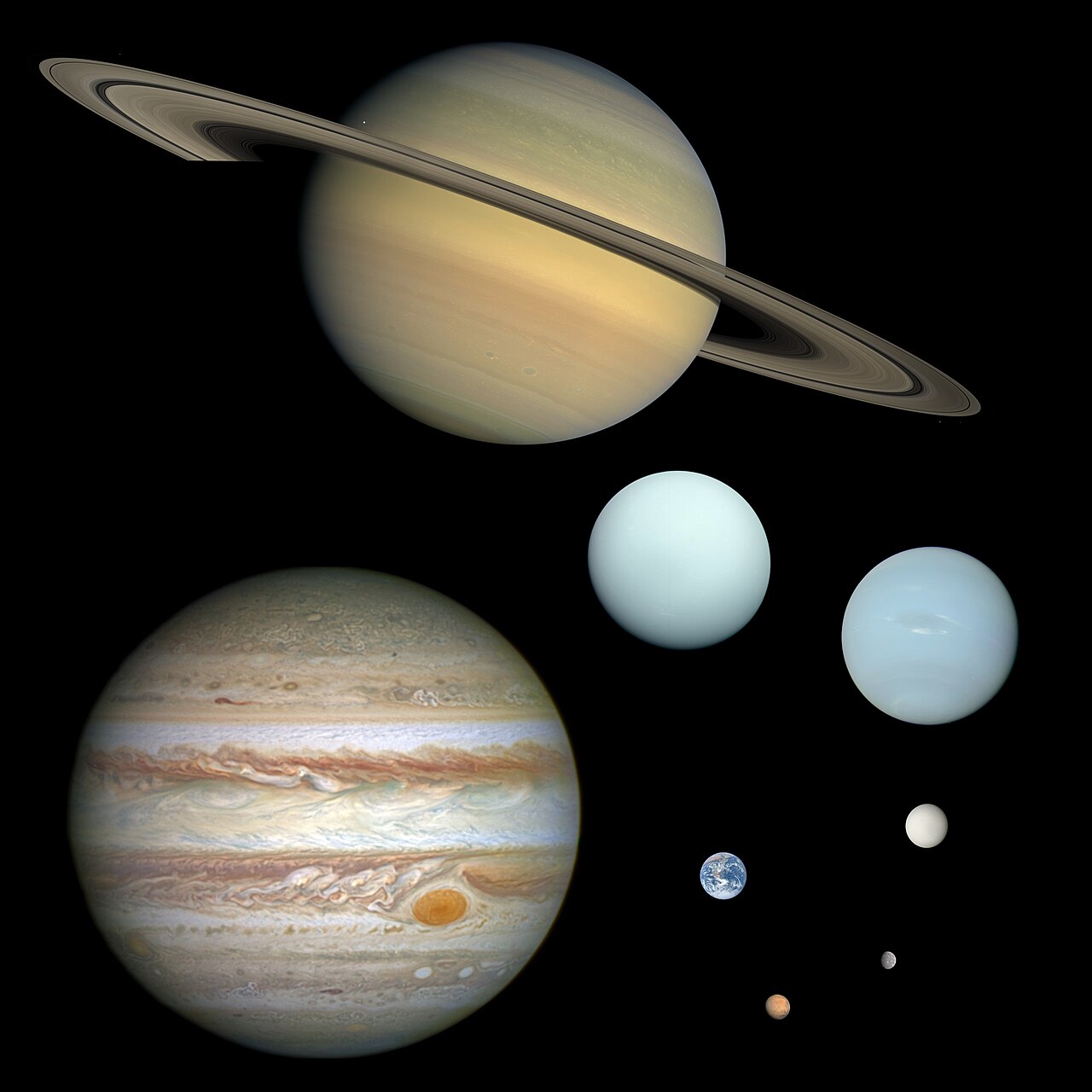
Our Solar System contains eight recognized planets.
Mercury is the smallest and closest planet to the Sun. It has almost no atmosphere and experiences dramatic temperature changes between day and night.
Venus is nearly the same size as Earth but has a thick atmosphere rich in carbon dioxide. A powerful greenhouse effect makes Venus the hottest planet in the Solar System.
Earth is the third planet from the Sun and the only known world where life exists.
Mars, often called the Red Planet, is famous for its dusty landscapes, giant volcanoes, polar ice caps, and evidence that liquid water once flowed across its surface.
Beyond Mars lies Jupiter, the largest planet in the Solar System. It is a gas giant with dozens of moons and the enormous Great Red Spot, a storm that has raged for centuries.
Saturn is best known for its spectacular ring system, made mostly of countless particles of ice and rock.
Uranus is an ice giant that rotates on its side, giving it one of the most unusual orientations among the planets.
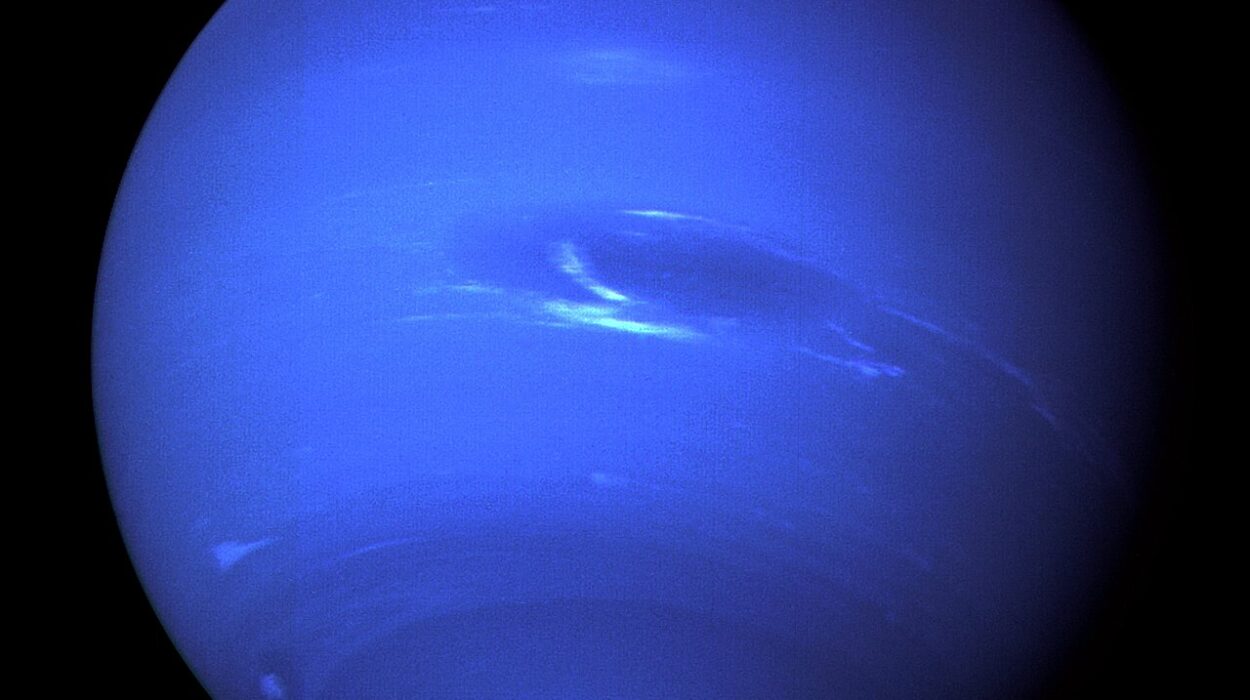
Neptune, the farthest known planet from the Sun, is another ice giant famous for its extremely powerful winds and deep blue appearance.
Together, these eight planets demonstrate the remarkable diversity of worlds that can exist around a single star.
Rocky Planets and Giant Planets
Planets are often divided into two broad categories based on their composition.
The inner planets—Mercury, Venus, Earth, and Mars—are known as terrestrial planets. They have solid rocky surfaces composed primarily of silicate rocks and metals. These planets are relatively small but have high densities.
The outer planets are much larger.
Jupiter and Saturn are gas giants. They consist mainly of hydrogen and helium, the same elements that make up most of the Sun. Although they may contain rocky cores, they have no solid surface like Earth.
Uranus and Neptune are called ice giants because they contain larger amounts of substances such as water, ammonia, and methane deep inside their interiors. These materials exist under extreme pressure and temperature, creating environments unlike anything found on Earth.
How Planets Form
Planets begin their lives inside enormous clouds of gas and dust called molecular clouds.
When part of such a cloud collapses under gravity, it forms a young star surrounded by a rotating disk of gas and dust known as a protoplanetary disk.
Tiny dust grains within the disk gradually collide and stick together. Over millions of years, they grow into larger rocks, then into kilometer-sized bodies called planetesimals.
Gravity causes these planetesimals to merge into even larger objects called protoplanets. As collisions continue, the largest bodies accumulate more material and eventually become full-sized planets.
Near the young star, high temperatures allow only rock and metal to remain solid, leading to the formation of rocky planets.
Farther away, colder temperatures allow water, methane, ammonia, and other substances to freeze into ice, helping giant planets grow rapidly by attracting large amounts of hydrogen and helium gas.
This process explains why many planetary systems contain different kinds of planets at different distances from their stars.
Why Planets Are Round
Many small asteroids have irregular, potato-like shapes.
Planets, however, are much more massive.
As a growing planet accumulates material, its gravity pulls equally toward its center from every direction. Over time, this force smooths out mountains, valleys, and other large irregularities until the object becomes nearly spherical.
No planet is a perfect sphere because rotation causes a slight bulge around the equator. Earth, for example, is slightly wider at the equator than from pole to pole.
Do Planets Produce Their Own Light?
Unlike stars, planets do not generate visible light through nuclear fusion.
Instead, they reflect sunlight or the light of their parent star.
This is why planets can often be seen shining in the night sky.
Some planets also emit small amounts of infrared radiation because they retain heat from their formation or generate internal heat through gravitational contraction or radioactive decay. However, this is very different from the energy produced by stars.
The Difference Between a Planet and a Star
Although both planets and stars are celestial objects, they are fundamentally different.
Stars are enormous balls of hot plasma where hydrogen atoms fuse into helium, releasing tremendous amounts of energy. This nuclear fusion causes stars to shine.
Planets are much smaller and lack enough mass to initiate sustained nuclear fusion in their cores.
Stars create light.
Planets reflect light.
Stars can exist independently.
Planets usually form around stars.
These differences make stars the engines of planetary systems and planets the worlds that orbit them.
The Difference Between a Planet and a Moon
A moon, also called a natural satellite, is an object that orbits a planet rather than a star.
Earth has one natural moon.
Mars has two small moons.
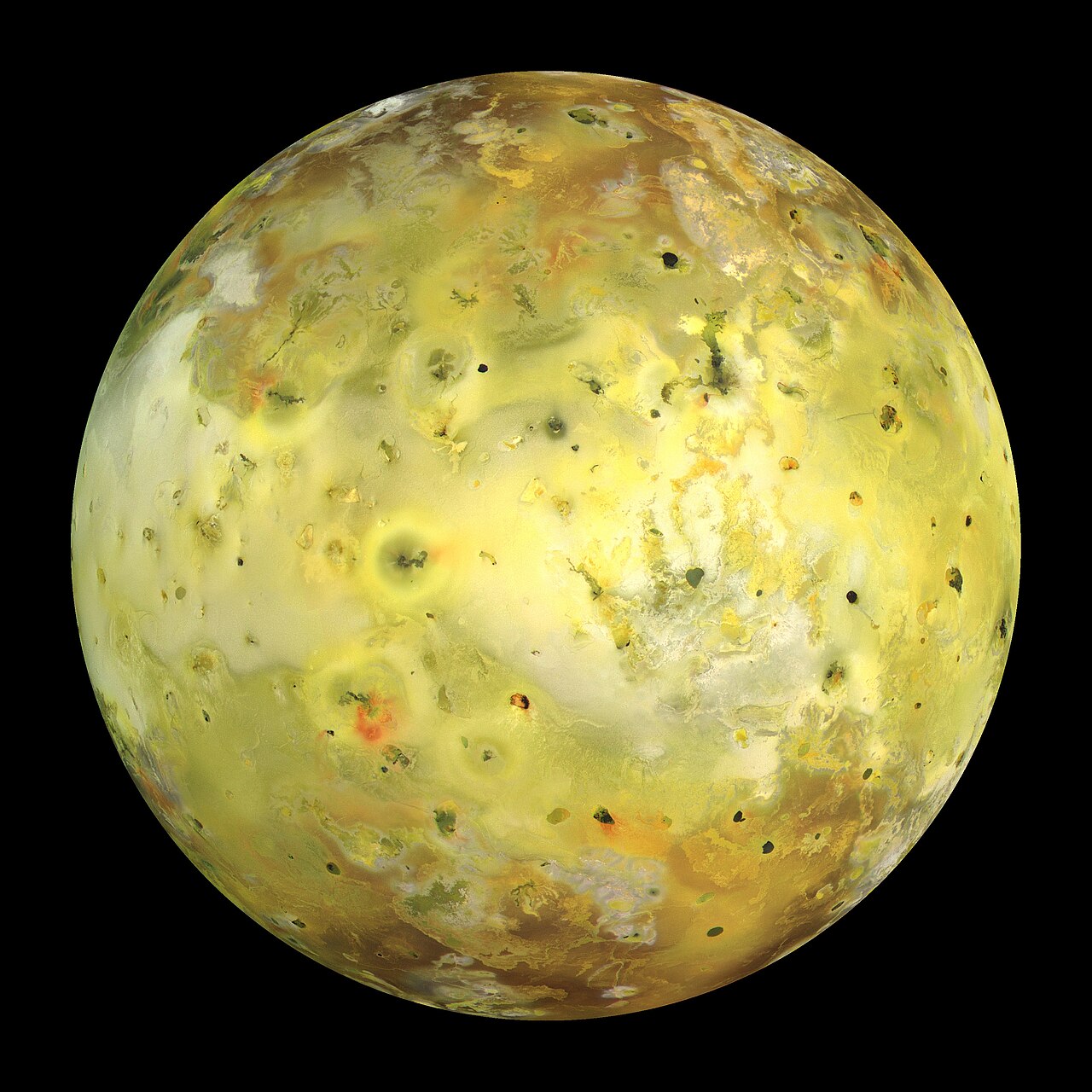
Jupiter and Saturn each have dozens of known moons, many of which are fascinating worlds in their own right.
Some moons are even larger than the planet Mercury, but because they orbit planets instead of the Sun directly, they are classified as moons rather than planets.
The Difference Between a Planet and a Dwarf Planet
The distinction between planets and dwarf planets became widely known after Pluto’s reclassification in 2006.
Like planets, dwarf planets orbit the Sun and are nearly spherical.
However, they have not cleared the neighborhoods around their orbits.
Pluto shares its orbital region with many icy objects in the Kuiper Belt beyond Neptune.
Because it does not gravitationally dominate its surroundings, Pluto is classified as a dwarf planet rather than a full planet.
Other well-known dwarf planets include Eris, Haumea, Makemake, and Ceres.
This classification reflects our growing understanding of the Solar System rather than diminishing the scientific importance of these fascinating worlds.
Atmospheres of Planets
Many planets are surrounded by atmospheres, although their compositions vary greatly.
Earth’s atmosphere contains mostly nitrogen and oxygen, creating conditions suitable for life.
Venus has a dense atmosphere dominated by carbon dioxide, producing an extreme greenhouse effect.
Mars has a very thin carbon dioxide atmosphere that offers little protection from radiation or cold temperatures.
The giant planets possess enormously deep atmospheres composed mainly of hydrogen and helium, with clouds of ammonia, methane, and water at different depths.
A planet’s atmosphere plays a major role in determining its weather, climate, surface conditions, and ability to retain heat.
Weather on Other Planets
Weather is not unique to Earth.
Mars experiences dust storms that can spread across the entire planet.
Jupiter has giant storms, including the famous Great Red Spot, which has persisted for centuries.
Saturn produces massive thunderstorms and powerful jet streams.
Neptune experiences some of the fastest winds ever measured in the Solar System, reaching speeds of more than 2,000 kilometers per hour.
Studying planetary weather helps scientists understand atmospheric physics under conditions very different from those on Earth.
Can Planets Have Rings?
Although Saturn’s rings are the most famous, it is not the only ringed planet.
Jupiter, Uranus, and Neptune also possess ring systems.
Planetary rings consist of enormous numbers of tiny particles, ranging from microscopic dust grains to chunks of ice and rock several meters across.
These particles orbit the planet under the influence of gravity, creating beautiful structures that can stretch for hundreds of thousands of kilometers.
Can Planets Support Life?
One of astronomy’s greatest questions is whether life exists elsewhere in the universe.
At present, Earth remains the only planet known to host life.
Scientists believe that several factors are important for habitability, including stable temperatures, liquid water, an energy source, and suitable chemical ingredients.
Mars may once have supported conditions favorable for microbial life billions of years ago.
Some moons, such as Europa and Enceladus, contain subsurface oceans that may also offer environments where simple life could potentially exist, although no evidence of extraterrestrial life has yet been found.
The search continues through robotic missions, powerful telescopes, and future space exploration.
Planets Beyond Our Solar System
For centuries, people wondered whether planets existed around other stars.
Today, the answer is a resounding yes.
Astronomers have confirmed thousands of exoplanets—planets orbiting stars beyond the Sun.
These discoveries have revealed astonishing diversity.
Some exoplanets are larger than Jupiter.
Others are rocky worlds similar in size to Earth.
Some orbit two stars instead of one.
Others travel around tiny red dwarf stars.
There are planets so close to their stars that a year lasts only a few hours, while others take decades or centuries to complete one orbit.
Many planetary systems look very different from our own, showing that nature can build worlds in countless ways.
How Scientists Discover Planets
Because planets are much dimmer than stars, they are often difficult to observe directly.
Astronomers therefore use several clever techniques.
One common method measures tiny decreases in a star’s brightness when a planet passes in front of it. This is called the transit method.
Another detects the slight wobble of a star caused by the gravitational pull of an orbiting planet.
In some cases, advanced telescopes can directly image large planets located far from their stars.
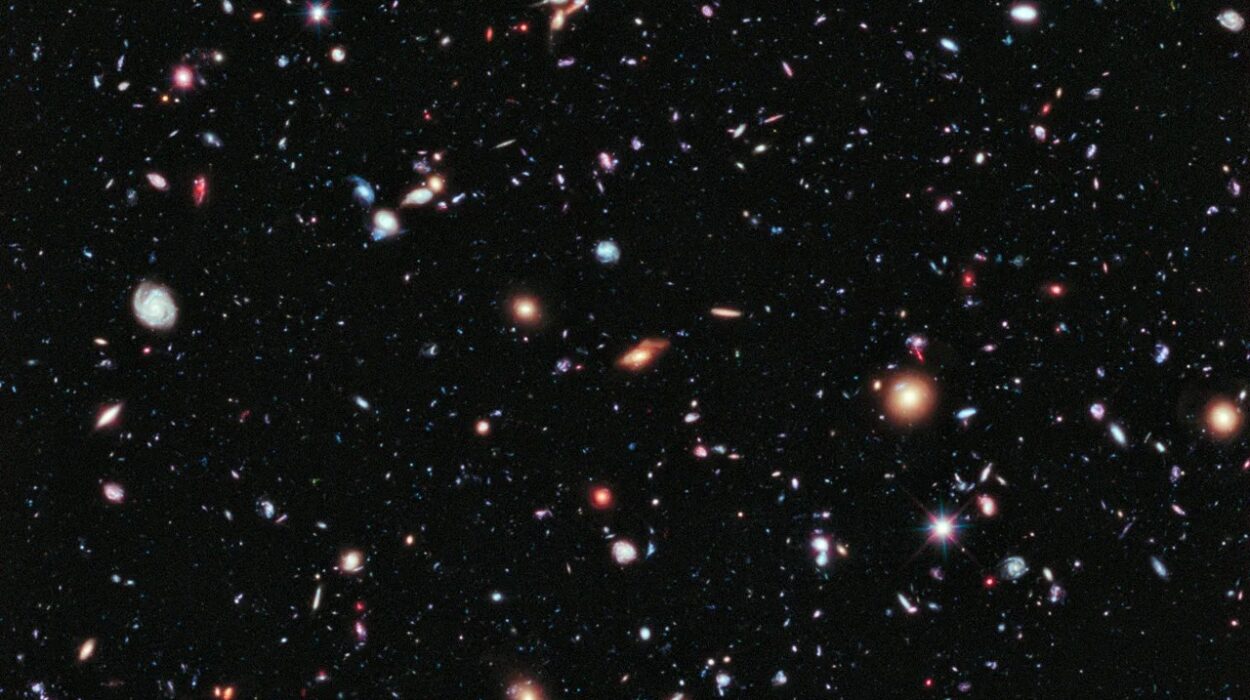
These methods have transformed our understanding of the universe by revealing that planets are widespread throughout the Milky Way Galaxy.
Why Studying Planets Is Important
Planets preserve the history of how planetary systems form and evolve.
By comparing different worlds, scientists learn why Earth became habitable while other planets followed very different paths.
Planetary research also improves our understanding of climate, geology, atmospheric science, chemistry, and the origins of life.
Space missions to planets provide valuable knowledge that benefits future exploration and inspires new generations of scientists and engineers.
The study of planets reminds us that Earth is one world among countless others in a vast universe.
The Future of Planetary Exploration
The exploration of planets is entering an exciting new era.
Robotic spacecraft continue to investigate Mars, Jupiter, Saturn, and other worlds in extraordinary detail.
New space telescopes are examining the atmospheres of distant exoplanets, searching for chemical signatures that could indicate habitable conditions.
Future missions may return samples from Mars, explore the icy oceans beneath distant moons, and perhaps one day send humans to other planets.
Each mission brings us closer to answering some of humanity’s oldest questions: How do planets form? How common are Earth-like worlds? Are we alone in the universe?
Conclusion
A planet is far more than a large object orbiting a star. It is a unique world shaped by gravity, time, chemistry, and the dynamic processes of the universe. Some planets are rocky landscapes with mountains and valleys. Others are immense spheres of gas wrapped in colorful clouds and powerful storms. Together, they reveal the incredible diversity of nature beyond Earth.
From the eight planets of our Solar System to the thousands of exoplanets discovered around distant stars, planets remind us that the universe is filled with extraordinary worlds waiting to be explored. Every new discovery expands our understanding of how planetary systems form, how environments evolve, and where life might exist beyond our home. As science and technology continue to advance, the study of planets will remain one of humanity’s greatest adventures, inspiring curiosity about the countless worlds that share our universe.