When we look up at the night sky, space appears calm and silent. The Moon hangs above Earth, planets slowly drift across the heavens, and countless stars sparkle in the darkness. It is easy to imagine that space is empty and that objects simply float wherever they please. But beneath this peaceful appearance lies one of the most powerful forces in the universe: gravity.
Many people believe there is “no gravity” in space because astronauts seem to float inside spacecraft. In reality, gravity is everywhere. It reaches across vast distances, holding galaxies together, keeping planets in orbit, shaping stars, and guiding the motion of everything from tiny asteroids to massive black holes.
Understanding how gravity works in space reveals a fascinating truth: the universe is not held together by solid structures or invisible strings. Instead, it is connected by the gentle but relentless pull of gravity.
What Is Gravity?
Gravity is a fundamental force of nature that attracts objects with mass toward one another. Every object in the universe has gravity, from a tiny grain of sand to the largest galaxy.
The more massive an object is, the stronger its gravitational pull. Earth’s gravity keeps us standing on the ground, the Moon’s gravity creates ocean tides, and the Sun’s gravity holds the entire solar system together.
Gravity acts over incredibly long distances. Unlike many other forces that weaken quickly, gravity extends across the universe, influencing objects millions or even billions of light-years apart.
Without gravity, planets would drift away from their stars, stars would never form, galaxies would fall apart, and life as we know it would not exist.
Is There Gravity in Space?
One of the biggest misconceptions about space is that it has no gravity.
The truth is exactly the opposite.
Gravity exists almost everywhere in space. In fact, Earth’s gravity extends far beyond the Moon and continues for enormous distances.
Even astronauts aboard the International Space Station are still under the influence of Earth’s gravity. At the station’s altitude of about 400 kilometers (250 miles) above Earth, gravity is still around 90 percent as strong as it is on Earth’s surface.
So why do astronauts float?
The answer has nothing to do with the absence of gravity.
Why Do Astronauts Float?
Astronauts appear weightless because they are constantly falling around Earth.
This may sound strange at first, but it is the key to understanding motion in space.
Imagine throwing a ball. It travels forward while gravity pulls it downward until it lands.
Now imagine throwing the ball much faster. It travels farther before falling.
If you could throw it fast enough—about 7.8 kilometers (4.8 miles) every second—it would keep falling toward Earth but never hit the ground because Earth’s surface curves away beneath it.
This continuous falling motion is called an orbit.
The International Space Station and its astronauts are always falling toward Earth, but they are also moving sideways so quickly that they keep missing the planet.
Because everything inside the spacecraft is falling together at the same rate, astronauts experience what scientists call microgravity, which creates the feeling of weightlessness.
How Gravity Keeps Planets in Orbit
Gravity is the invisible force that keeps planets moving around the Sun.
Without gravity, Earth would travel in a straight line through space.
Instead, the Sun’s enormous gravity constantly pulls Earth inward while Earth continues moving forward. The result is a stable orbit.
This balance between forward motion and gravitational attraction keeps Earth circling the Sun year after year.
The same process keeps the Moon orbiting Earth and keeps thousands of satellites orbiting our planet.
Every orbit in the solar system is a delicate balance between motion and gravity.
How the Sun Controls the Solar System
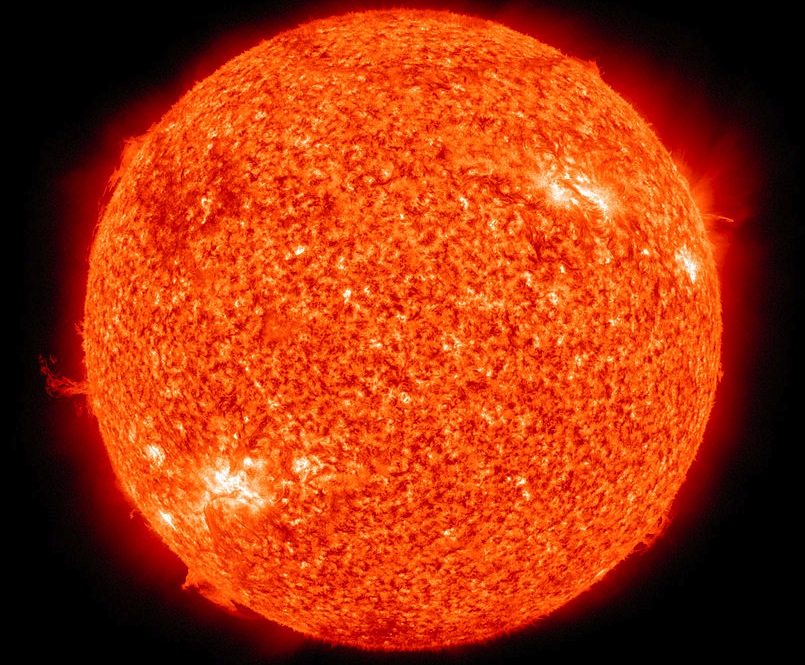
The Sun contains about 99.8 percent of all the mass in the solar system.
Because gravity depends on mass, the Sun has by far the strongest gravitational pull in our planetary neighborhood.
Its gravity holds together:
Mercury
Venus
Earth
Mars
Jupiter
Saturn
Uranus
Neptune
Dwarf planets
Asteroids
Comets
Even objects billions of kilometers away remain under the Sun’s gravitational influence.
Without the Sun’s gravity, the solar system would quickly scatter into deep space.
Does Gravity Become Weaker in Space?
Yes, gravity becomes weaker as distance increases.
The farther you move from an object, the weaker its gravitational pull becomes.
This is why Earth’s gravity is much stronger near its surface than it is thousands of kilometers away.
However, gravity never completely disappears.
Even in the vast emptiness between galaxies, every object still feels tiny gravitational pulls from countless stars and galaxies.
Although these forces may be incredibly weak, they are never exactly zero.
Gravity has an infinite range.
Why Larger Objects Have Stronger Gravity
Gravity depends mainly on two things: mass and distance.
A larger mass produces a stronger gravitational field.
This is why:
A mountain has more gravity than a pebble.
Earth has much stronger gravity than the Moon.
The Sun’s gravity is stronger than Earth’s.
A black hole has one of the strongest gravitational fields in the universe.
The amount of gravity you experience also depends on how close you are to the object.
Even a massive star far away may exert less gravitational pull on you than Earth because of the enormous distance between you.
Newton’s Explanation of Gravity
In the seventeenth century, Sir Isaac Newton developed the first successful mathematical description of gravity.
According to Newton, every object attracts every other object with a force proportional to their masses and inversely proportional to the square of the distance between them.
This idea explained many natural phenomena, including:
Why apples fall from trees.
Why the Moon orbits Earth.
Why planets move around the Sun.
Why tides occur.
Newton’s law of gravity became one of the greatest scientific achievements in history and accurately predicts the motion of many objects in everyday life and throughout the solar system.
Einstein Changed Our Understanding of Gravity
Although Newton’s theory works extremely well in most situations, scientists eventually discovered that it could not explain everything.
In 1915, Albert Einstein introduced the theory of general relativity.
Instead of describing gravity as a force pulling objects together, Einstein proposed something even more remarkable.
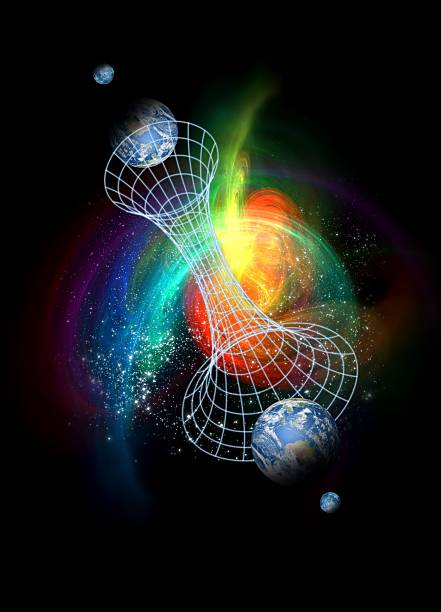
Mass and energy bend the fabric of space and time, often called spacetime.
Objects move along the curves created by this bending.
A common way to imagine this is to picture a heavy bowling ball placed on a stretched rubber sheet. The ball creates a dip in the sheet. Smaller balls rolling nearby naturally move toward it because the surface is curved.
Although spacetime is not literally a rubber sheet, this analogy helps illustrate Einstein’s idea.
According to general relativity, Earth orbits the Sun because it follows the curved geometry of spacetime created by the Sun’s immense mass.
This theory has been confirmed repeatedly through observations and experiments.
What Is a Gravitational Field?
Every object with mass creates a gravitational field around it.
A gravitational field is the region where gravity can influence other objects.
Earth’s gravitational field extends far into space.
The Moon has its own gravitational field.
The Sun has an enormous gravitational field that dominates the solar system.
Galaxies also possess vast gravitational fields that affect millions or even trillions of stars.
Whenever two objects enter each other’s gravitational fields, they begin interacting through gravity.
Gravity Shapes Stars
Gravity is responsible for the birth, life, and death of stars.
Stars begin inside giant clouds of gas and dust.
Gravity slowly pulls this material together.
As more gas gathers, pressure and temperature increase.
Eventually, the center becomes so hot that hydrogen atoms begin fusing into helium.
This process, called nuclear fusion, releases enormous amounts of energy and causes a new star to shine.
Without gravity, stars would never form.
Gravity also determines how stars evolve and eventually die.
Gravity Creates Planets
Billions of years ago, our solar system formed from a rotating cloud of gas and dust.
Tiny particles collided and stuck together.
Gravity gradually pulled these growing clumps into larger bodies.
Over millions of years, these objects became planets, moons, asteroids, and comets.
Earth itself exists because gravity slowly gathered enormous amounts of matter into a single world.
The same process continues today in young planetary systems throughout the universe.
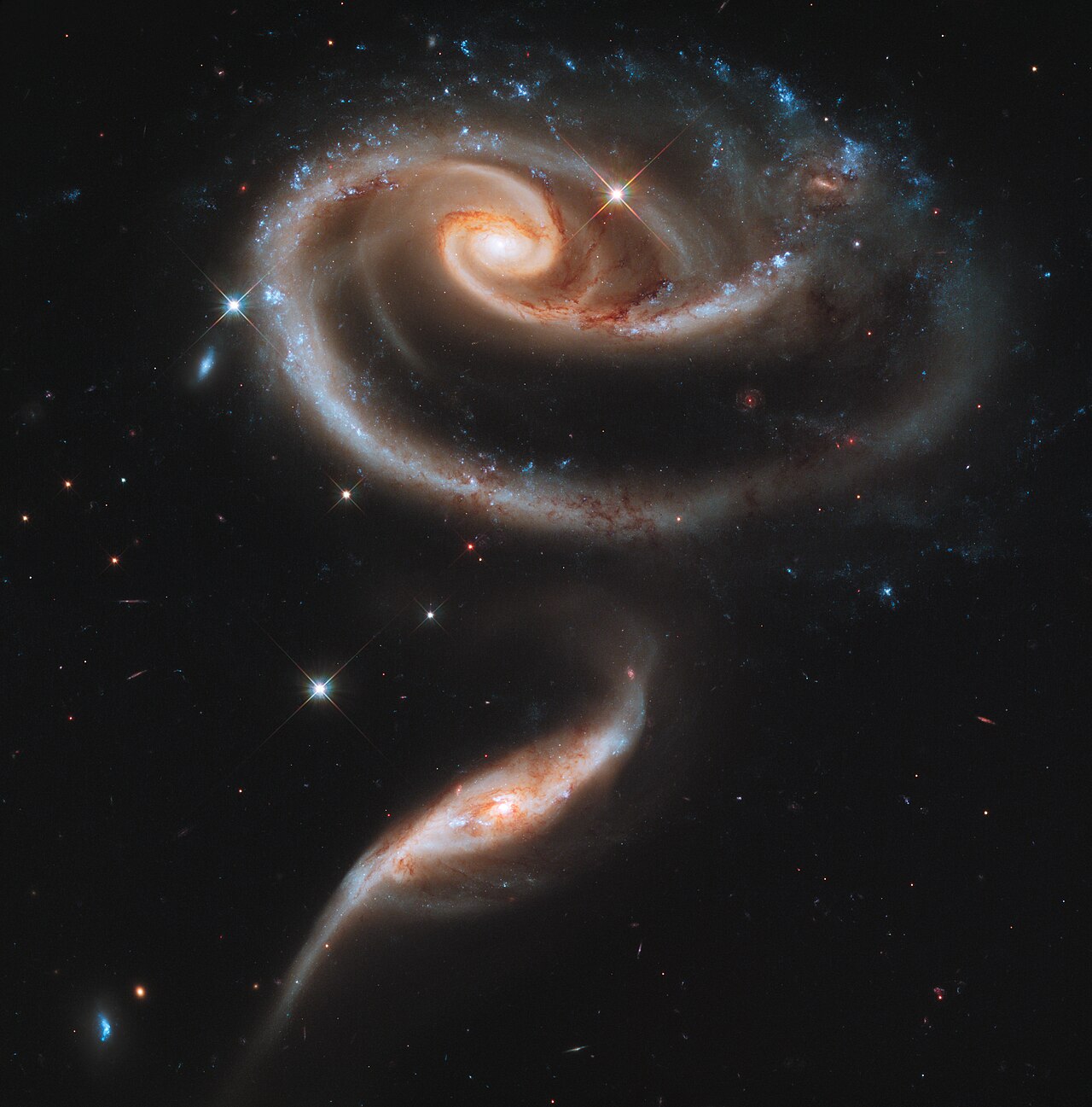
Gravity Holds Galaxies Together
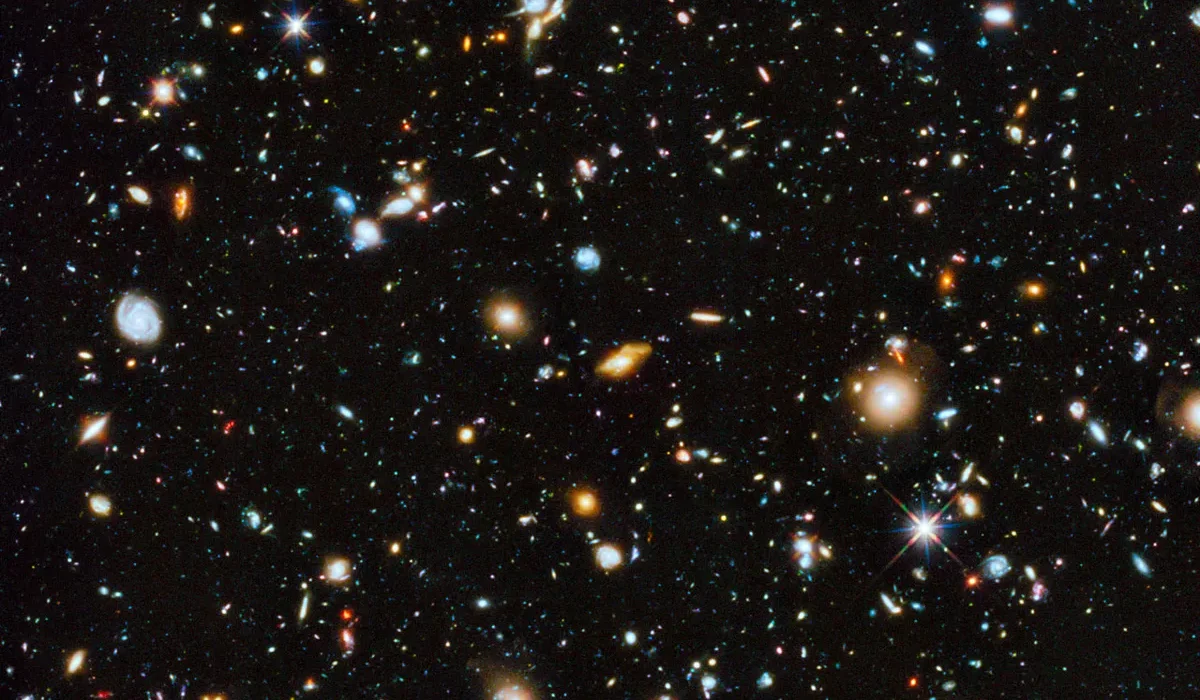
Galaxies contain enormous numbers of stars.
The Milky Way alone contains hundreds of billions of stars.
Gravity keeps all these stars orbiting the galaxy’s center.
Without gravity, galaxies would quickly disperse into space.
Astronomers have also discovered that galaxies rotate faster than expected.
This surprising observation suggests that invisible matter, known as dark matter, provides additional gravity that helps hold galaxies together.
Although scientists cannot directly observe dark matter, its gravitational effects are clearly visible.
Black Holes and Extreme Gravity
Black holes are among the most fascinating objects in the universe.
They form when extremely massive stars collapse under their own gravity.
The resulting gravitational field becomes so strong that nothing—not even light—can escape once it crosses a boundary called the event horizon.
Despite their mysterious nature, black holes obey the same fundamental laws of gravity as everything else.
Their enormous gravity affects nearby stars, bends light from distant galaxies, and can even merge with other black holes.
Scientists have detected ripples in spacetime called gravitational waves from these dramatic cosmic collisions.
What Are Gravitational Waves?
Einstein predicted that accelerating massive objects should create waves in spacetime.
These are called gravitational waves.
They spread through the universe at the speed of light.
Gravitational waves are incredibly tiny disturbances, making them extremely difficult to detect.
In 2015, scientists directly observed gravitational waves for the first time when two black holes collided more than a billion light-years away.
This historic discovery confirmed another major prediction of general relativity and opened a completely new way of studying the universe.
Does Gravity Affect Time?
One of the most surprising discoveries of modern physics is that gravity influences time itself.
According to general relativity, clocks run slightly slower in stronger gravitational fields.
Near Earth’s surface, time passes just a tiny bit more slowly than it does farther away in space.
Although the difference is extremely small, it is real and measurable.
This effect is so important that Global Positioning System (GPS) satellites must correct for it. Without accounting for gravity’s influence on time, GPS navigation would quickly become inaccurate.
Can Gravity Travel Through Empty Space?
Yes.
Gravity does not require air, water, or any material medium.
It acts across the vacuum of space.
The Sun’s gravity reaches Earth across about 150 million kilometers (93 million miles) of nearly empty space.
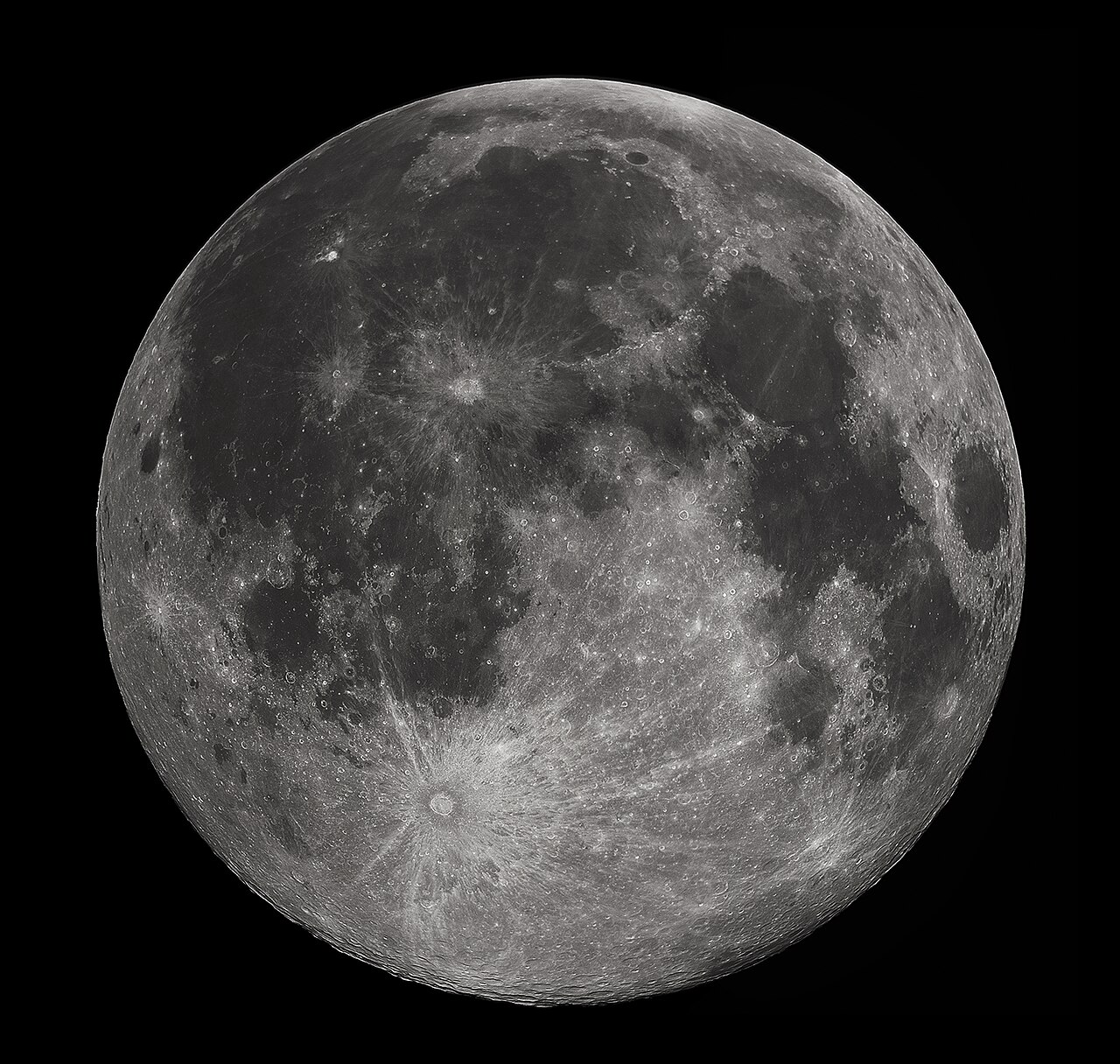
Similarly, Earth’s gravity reaches the Moon across an average distance of about 384,400 kilometers (239,000 miles).
Gravity connects objects even when nothing visible lies between them.
Can We Escape Gravity?
People often say that rockets “escape Earth’s gravity.”
In reality, rockets never completely escape gravity.
Instead, they travel fast enough to overcome Earth’s gravitational pull without falling back.
Even spacecraft traveling to other planets remain influenced by Earth’s gravity, the Sun’s gravity, and the gravity of other planets.
The famous Voyager spacecraft, launched in 1977, has traveled billions of kilometers into space, yet gravity from the Sun continues to affect its motion.
There is no place in the known universe where gravity disappears completely.
Why Gravity Is Essential for Life
Life on Earth depends on gravity in countless ways.
Gravity holds our atmosphere close to the planet, allowing us to breathe.
It keeps oceans from floating away into space.
It drives rainfall by pulling water back to Earth’s surface.
It shapes rivers, mountains, and weather systems.
Plants grow differently because they sense gravity.
Animals, including humans, evolved under Earth’s gravitational conditions.
Even our bones and muscles depend on gravity to remain strong.
Long periods in microgravity cause astronauts to lose bone density and muscle mass, showing just how important gravity is for the human body.
The Ongoing Mystery of Gravity
Although gravity is one of the most familiar forces in everyday life, it remains one of the greatest mysteries in science.
Physicists still do not fully understand how gravity fits with quantum mechanics, the theory that describes the behavior of the smallest particles.
Scientists are searching for a theory of quantum gravity that would unite these two pillars of modern physics.
Researchers also continue investigating dark matter, dark energy, black holes, and the earliest moments of the universe, all of which involve gravity in profound ways.
Every new discovery brings us closer to understanding this remarkable force.
Conclusion
Gravity is far more than the force that keeps our feet on the ground. It is the invisible architect of the universe, shaping planets, guiding moons, forming stars, holding galaxies together, and influencing the flow of time itself. Even in the vast emptiness of space, gravity is always present, quietly directing the motion of everything from tiny satellites to colossal black holes.
The next time you look at the Moon, watch a rocket launch, or admire the stars on a clear night, remember that an invisible force is constantly at work. Across unimaginable distances, gravity connects every object in the cosmos, weaving the universe into a magnificent and ever-changing masterpiece. It is one of nature’s most extraordinary forces—and one that scientists are still striving to fully understand.