On a clear night, when the lights of cities fade and the sky reveals thousands of stars, it is almost impossible not to feel a sense of wonder. For thousands of years, people have looked upward and asked the same timeless questions. What are the stars? How far away are they? Are we alone in the universe? How did everything begin?
These simple questions gave birth to one of humanity’s oldest sciences: astronomy.
Astronomy is much more than the study of stars and planets. It is the science of the entire universe. It explores everything from our own Moon to galaxies billions of light-years away, from tiny rocky asteroids to enormous black holes, and from the birth of the universe to its possible future. Every discovery made by astronomers helps us better understand not only the cosmos but also our own place within it.
Although astronomy may seem distant from everyday life, it has shaped civilization in countless ways. It has inspired technological innovations, improved our understanding of Earth, helped us navigate oceans, advanced modern medicine, and even changed the way humanity thinks about itself.
What Is Astronomy?
Astronomy is the scientific study of celestial objects and the universe beyond Earth’s atmosphere. It investigates the Sun, the Moon, planets, stars, galaxies, nebulae, black holes, comets, asteroids, and the large-scale structure of the cosmos.
Unlike astrology, which is not supported by scientific evidence, astronomy relies on careful observations, mathematical analysis, physical laws, and repeated testing. Astronomers use telescopes on Earth and in space to collect light and other forms of electromagnetic radiation from distant objects. By analyzing this information, they can determine an object’s distance, temperature, composition, motion, age, and many other properties.
Astronomy combines knowledge from physics, chemistry, mathematics, geology, computer science, and engineering, making it one of the most interdisciplinary sciences.
Astronomy Helps Us Understand Our Place in the Universe
One of astronomy’s greatest contributions is helping humanity understand where we fit in the vast universe.
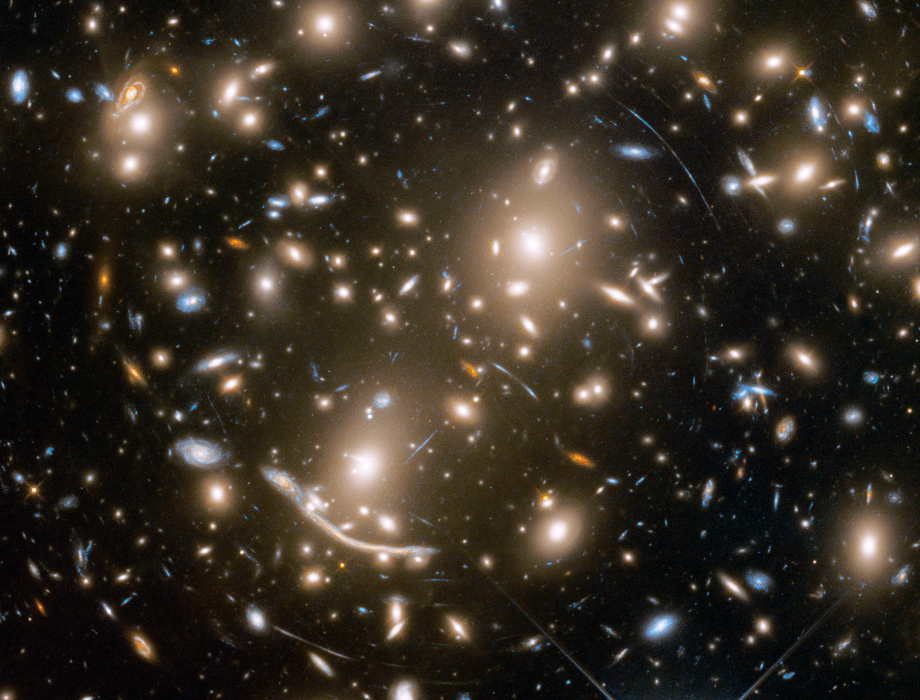
For much of human history, many civilizations believed Earth was the center of everything. Scientific discoveries gradually transformed this view. We learned that Earth is one of eight major planets orbiting the Sun. Our Sun is just one ordinary star among hundreds of billions in the Milky Way galaxy. The Milky Way itself is only one galaxy among hundreds of billions of galaxies in the observable universe.
This realization profoundly changed humanity’s perspective. It showed that we are part of something unimaginably vast and interconnected.
Rather than making humanity less important, this understanding highlights how extraordinary our planet truly is. So far, Earth remains the only known place where life has been confirmed to exist.
Astronomy Reveals the History of the Universe
Astronomy allows scientists to look back in time.
Because light travels at a finite speed—about 299,792 kilometers (186,282 miles) per second in a vacuum—it takes time to travel across space. When astronomers observe the Sun, they see it as it was about eight minutes ago because sunlight takes roughly eight minutes to reach Earth.
Looking farther into space means looking farther into the past. The light from nearby stars may have traveled for years or decades before reaching us. The light from distant galaxies may have been traveling for billions of years.
Modern telescopes therefore act like time machines. They allow scientists to study galaxies as they existed shortly after the universe formed.
By observing ancient light, astronomers have reconstructed much of cosmic history, from the formation of the first stars to the growth of galaxies over billions of years.
Astronomy Explains How Earth Formed
Our planet did not appear suddenly.
Astronomy has shown that Earth formed approximately 4.54 billion years ago from a rotating cloud of gas and dust surrounding the young Sun. Over millions of years, tiny particles collided and gradually built larger objects, eventually forming planets.
Studying young planetary systems around other stars helps astronomers understand how our own Solar System developed.
By comparing Earth with neighboring planets such as Mars, Venus, Jupiter, and Saturn, scientists learn why planets evolve differently and what conditions allow life to flourish.
This knowledge provides valuable insight into Earth’s own history and future.
Astronomy Helps Protect Earth
Astronomy plays a vital role in planetary defense.
Millions of asteroids and comets travel through the Solar System. Most never come close to Earth, but some follow orbits that could eventually pose a collision risk.
Astronomers continuously monitor the skies to identify near-Earth objects and calculate their future paths.
Early detection is essential. If scientists discover a potentially hazardous asteroid decades before impact, humanity may have enough time to alter its trajectory using spacecraft or other carefully planned methods.
The successful demonstration of NASA’s Double Asteroid Redirection Test (DART) mission in 2022 showed that changing an asteroid’s orbit is possible under the right circumstances, representing an important milestone in planetary defense.
Without astronomy, such threats would remain largely invisible until it was too late.
Astronomy Helps Us Understand Climate and Earth
Looking outward also helps us understand our own planet.
Earth is only one example of a planet. By studying the atmospheres, temperatures, weather patterns, and geological histories of other worlds, scientists gain valuable insights into Earth’s climate system.
For example, Venus experiences an extreme greenhouse effect, making its surface hot enough to melt lead. Mars, by contrast, has a thin atmosphere and a cold, dry climate.
Comparing these planets helps scientists better understand atmospheric processes, climate change, and planetary evolution.
Space-based observatories also monitor Earth’s weather, oceans, forests, glaciers, and atmosphere, providing critical information for forecasting storms, studying environmental changes, and responding to natural disasters.
Astronomy Drives Technological Innovation
Many technologies developed for astronomy eventually benefit everyday life.
Building powerful telescopes requires advances in optics, electronics, sensors, computing, artificial intelligence, robotics, and precision engineering.
These innovations often find applications far beyond astronomy.
Digital image sensors originally developed for scientific imaging contributed to the cameras used in smartphones.
Techniques designed to sharpen astronomical images have improved medical imaging.
Advanced detectors developed for telescopes have influenced security systems and environmental monitoring.
The need to process enormous amounts of astronomical data has also accelerated developments in supercomputing, cloud computing, and machine learning.
In many cases, technologies created to explore distant galaxies end up improving daily life on Earth.
Astronomy Inspires Scientific Curiosity
Astronomy has a unique ability to inspire people of all ages.
A child looking through a telescope for the first time often experiences a sense of amazement that few other sciences can provide. Seeing Saturn’s rings, Jupiter’s moons, or the craters of Earth’s Moon transforms abstract textbook knowledge into something real.
This excitement encourages curiosity, creativity, and critical thinking.
Many scientists, engineers, astronauts, mathematicians, and inventors have said their interest in science began with astronomy.
By inspiring future generations, astronomy helps build the scientific workforce needed to solve tomorrow’s challenges.
Astronomy Helps Answer Fundamental Questions
Some of humanity’s deepest questions belong to astronomy.
How did the universe begin?
How do stars form?
What happens inside black holes?
What is dark matter?
What is dark energy?
How common are planets like Earth?
Is there life elsewhere in the universe?
These questions extend beyond scientific curiosity. They touch philosophy, history, and humanity’s understanding of existence.
Each new discovery brings us closer to answering questions that people have wondered about for thousands of years.
Astronomy Reveals the Life Cycle of Stars
Stars are the factories of the universe.
They produce nearly all the chemical elements heavier than hydrogen and helium through nuclear fusion. Elements such as carbon, oxygen, silicon, calcium, and iron were forged inside stars over billions of years.
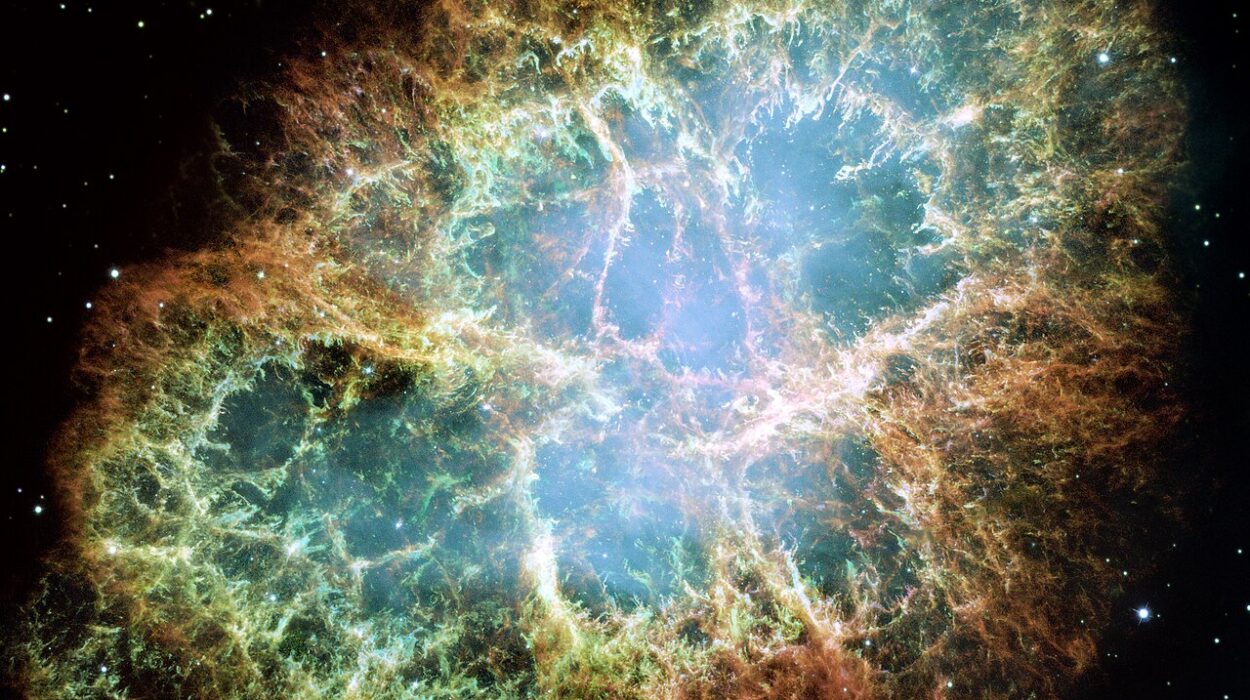
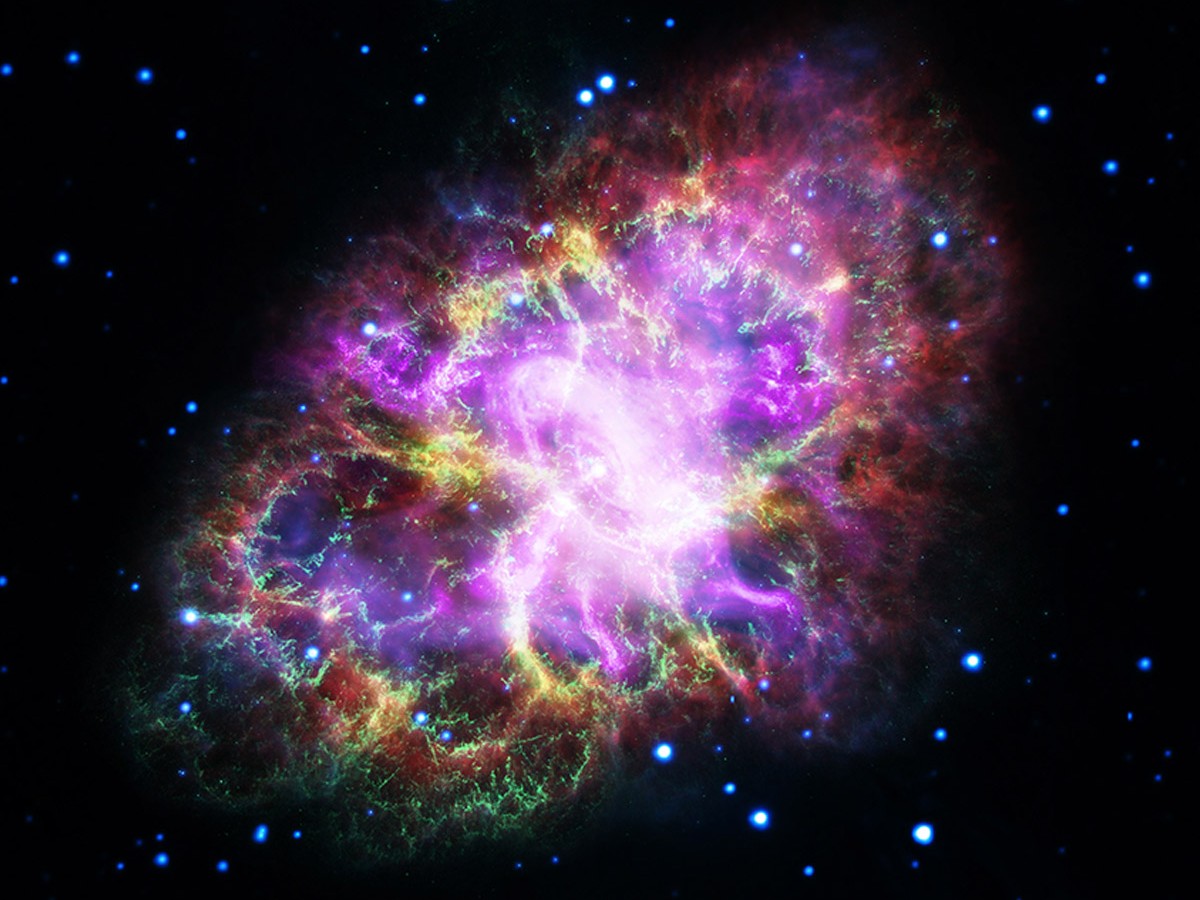
When massive stars explode as supernovae, they scatter these elements across space. Later generations of stars and planets form from this enriched material.
The atoms in your body—including the calcium in your bones and the iron in your blood—were created inside ancient stars that lived and died long before our Solar System formed.
This remarkable fact connects every living thing on Earth to the broader universe.
In a very real scientific sense, we are made of stardust.
Astronomy Expands Our Search for Life
One of the most exciting goals of modern astronomy is the search for life beyond Earth.
Since the 1990s, astronomers have discovered thousands of planets orbiting other stars. These worlds, called exoplanets, come in an astonishing variety of sizes and environments.
Some orbit close to their stars, while others lie within regions where temperatures may allow liquid water to exist on their surfaces under the right conditions.
Powerful telescopes are beginning to analyze the atmospheres of some exoplanets, searching for gases that could indicate biological activity.
Although no confirmed evidence of extraterrestrial life has yet been found, astronomy has greatly expanded our understanding of where life might exist.
Astronomy Connects Many Scientific Fields
Astronomy is not isolated from other sciences.
It depends heavily on physics to understand gravity, light, and energy.
Chemistry explains the composition of stars, planets, and interstellar clouds.
Geology helps scientists study the surfaces and interiors of planets and moons.
Biology contributes to astrobiology, the study of life’s potential elsewhere in the universe.
Computer science plays an increasingly important role in analyzing enormous datasets collected by modern telescopes.
Because astronomy combines so many disciplines, it encourages collaboration across scientific fields.
Astronomy Improves Navigation and Timekeeping
For thousands of years, people relied on the stars to navigate oceans and deserts.
Ancient civilizations used the movements of the Sun, Moon, and stars to develop calendars and measure the passage of time.
Even today, astronomy continues to influence precise timekeeping.
Modern atomic clocks, satellite navigation systems, and global positioning technologies depend on accurate astronomical observations and an understanding of Earth’s rotation and orbital motion.
Without this knowledge, many modern communication and navigation systems would become far less accurate.
Astronomy Encourages International Cooperation
Large astronomical projects often require cooperation between many countries.
Space telescopes, giant ground-based observatories, planetary missions, and radio telescope networks are typically built through international partnerships.
Scientists from different cultures and nations work together to share data, develop new technologies, and answer common scientific questions.
This global collaboration demonstrates how scientific discovery can unite people across political and cultural boundaries.
The universe belongs to everyone, and astronomy reflects that shared human curiosity.
Astronomy Teaches Humility
Perhaps one of astronomy’s most important lessons is humility.
When we learn that Earth is a small planet orbiting an ordinary star in one galaxy among hundreds of billions, everyday conflicts often seem less significant.
Astronomy reminds us that our planet is both tiny and precious.
The famous “Pale Blue Dot” photograph taken by the Voyager 1 spacecraft captured Earth as a tiny point of light suspended in the darkness of space. That image became a powerful symbol of humanity’s shared home.
Every person who has ever lived, every civilization, every culture, every scientific discovery, and every moment of history has taken place on this single world.
This perspective encourages cooperation, environmental responsibility, and appreciation for our unique planet.
Astronomy Continues to Shape the Future
Astronomy is advancing faster than ever before.
Powerful new observatories are revealing galaxies from the early universe, studying the atmospheres of distant exoplanets, mapping dark matter, and observing black holes with unprecedented detail.
Future missions may discover signs of life beyond Earth, uncover the true nature of dark matter, or reveal entirely new laws of physics.
Each generation builds upon the discoveries of those before it, expanding humanity’s understanding of the cosmos.
The questions we answer today often lead to even more fascinating questions tomorrow.
Conclusion
Astronomy is important because it helps us understand the universe, our planet, and ourselves. It reveals how stars, planets, and galaxies form, explains the origins of the elements that make up our world, and provides insight into Earth’s past, present, and future. Its discoveries drive technological innovation, strengthen planetary defense, improve climate research, inspire education, and encourage international collaboration.
More than anything else, astronomy satisfies one of humanity’s deepest instincts—the desire to explore and understand the unknown. Every time we look toward the night sky, we are continuing a journey that began thousands of years ago and remains one of the greatest adventures in the history of science. As our telescopes become more powerful and our knowledge continues to grow, astronomy will keep expanding the boundaries of human understanding, reminding us that the universe is far larger, richer, and more remarkable than we have ever imagined.