From the moment early humans looked up at the night sky, the universe has inspired wonder. Long before telescopes existed, people watched the stars to mark the seasons, navigate across oceans, and tell stories about the heavens. Even today, standing beneath a clear, star-filled sky can make us feel both incredibly small and deeply connected to something far greater than ourselves.
Astronomy is the science that helps us understand this vast cosmic landscape. It seeks to answer some of humanity’s oldest and most profound questions. What are stars? How did the planets form? What happens inside a black hole? Is there life beyond Earth? How did the universe begin?
Over thousands of years, astronomy has transformed from careful observations of the night sky into one of the most advanced scientific disciplines. Using powerful telescopes, spacecraft, satellites, and sophisticated computer models, astronomers can now study objects billions of light-years away and investigate events that occurred shortly after the birth of the universe.
Understanding the Meaning of Astronomy
Astronomy is the scientific study of celestial objects, space, and the universe as a whole. It examines everything beyond Earth’s atmosphere, including the Sun, Moon, planets, stars, galaxies, nebulae, comets, asteroids, black holes, and the large-scale structure of the cosmos.
The word astronomy comes from the ancient Greek words astron, meaning “star,” and nomos, meaning “law” or “arrangement.” Together, the term reflects the study of the laws that govern the heavens.
Unlike astrology, which is a belief system claiming that celestial bodies influence human personalities or future events, astronomy is a science based on observation, experimentation, mathematics, and evidence. Astronomers test ideas using data collected from telescopes, satellites, and space missions, continually refining their understanding as new evidence becomes available.
Why Astronomy Matters
At first glance, studying distant stars and galaxies may seem disconnected from everyday life. Yet astronomy has profoundly influenced human civilization and continues to shape our understanding of the universe and our place within it.
Astronomy has revealed that Earth is not the center of the universe but one planet orbiting an ordinary star in a galaxy containing hundreds of billions of stars. It has shown that our galaxy is just one among hundreds of billions of galaxies spread across an immense universe.
Beyond expanding human knowledge, astronomy has also driven technological innovation. Advances developed for astronomical research have contributed to improvements in digital imaging, communication technologies, computer processing, satellite systems, and medical imaging.
Perhaps most importantly, astronomy reminds us that we share a small planet within an enormous cosmos, encouraging curiosity, humility, and scientific exploration.
The Universe: Astronomy’s Greatest Laboratory
The universe is everything that exists—space, time, matter, energy, galaxies, stars, planets, radiation, and the physical laws that govern them.
Current scientific evidence indicates that the universe began approximately 13.8 billion years ago in an event known as the Big Bang. Contrary to a common misconception, the Big Bang was not an explosion in empty space. Instead, it marked the rapid expansion of space itself from an extremely hot and dense early state.
Since then, the universe has continued expanding and evolving. Tiny fluctuations in matter gradually formed galaxies, stars, and planetary systems, eventually leading to the conditions that made life on Earth possible.
Astronomy seeks to understand every stage of this remarkable cosmic history.
The Solar System: Our Cosmic Neighborhood
Earth belongs to the Solar System, a planetary system centered on the Sun.
The Sun contains more than 99 percent of the Solar System’s mass and provides the light and energy that sustain life on Earth. Eight planets orbit the Sun, along with dwarf planets, moons, asteroids, comets, and countless smaller objects.
Mercury races closest to the Sun.
Venus possesses an extremely dense atmosphere and surface temperatures hot enough to melt lead.
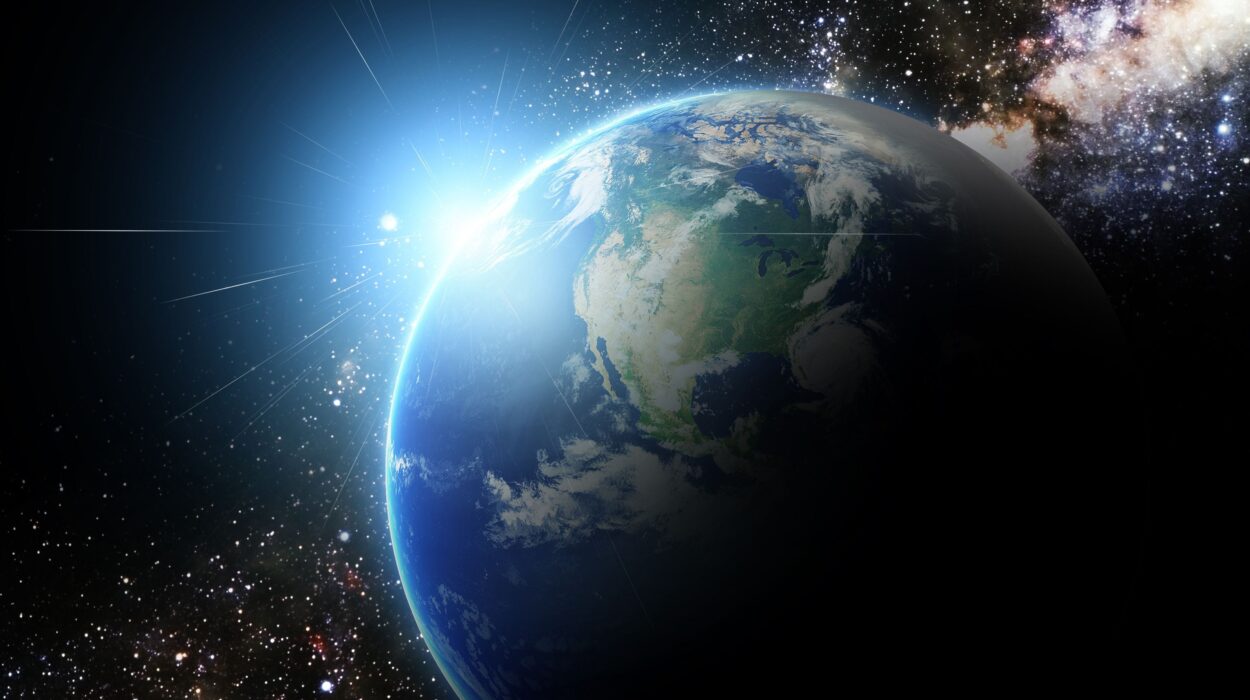
Earth is currently the only known planet to support life.
Mars preserves evidence of ancient rivers and lakes, making it one of the most intriguing places in the search for past microbial life.
Beyond the rocky planets lie the giant worlds Jupiter and Saturn, followed by the ice giants Uranus and Neptune.
Astronomy allows scientists to compare these diverse worlds and better understand how planetary systems form and evolve.
What Are Stars?
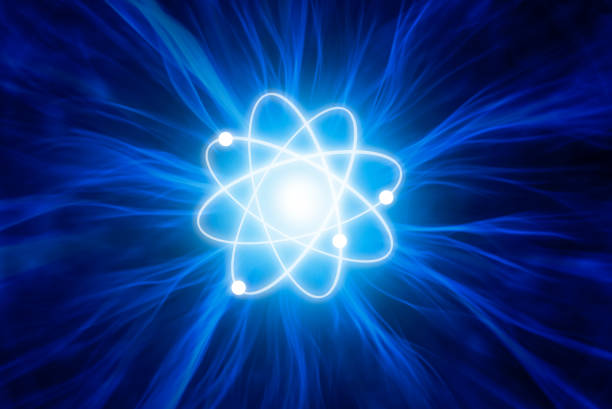
Stars are enormous spheres of hot gas, primarily hydrogen and helium, held together by gravity.
At their cores, hydrogen atoms fuse into helium through nuclear fusion, releasing tremendous amounts of energy. This energy travels outward as light and heat.
The Sun is a star—one among hundreds of billions in the Milky Way Galaxy.
Stars vary greatly in size, temperature, brightness, and lifespan. Some are much smaller than the Sun, while others are hundreds of times larger. Massive stars burn their fuel rapidly and live relatively short lives, whereas smaller stars can shine steadily for trillions of years.
The life cycle of stars is one of astronomy’s most fascinating subjects because stars create many of the chemical elements that later become part of planets, oceans, and even living organisms.
Galaxies: Islands of Stars
A galaxy is a vast collection of stars, gas, dust, planets, and dark matter held together by gravity.
Our home galaxy, the Milky Way, contains hundreds of billions of stars spread across a disk approximately 100,000 light-years wide.
The Solar System lies within one of the Milky Way’s spiral arms, about 26,000 light-years from the galaxy’s center.
Galaxies come in many shapes. Some are elegant spirals with graceful arms. Others are smooth elliptical systems or irregular collections without a distinct structure.
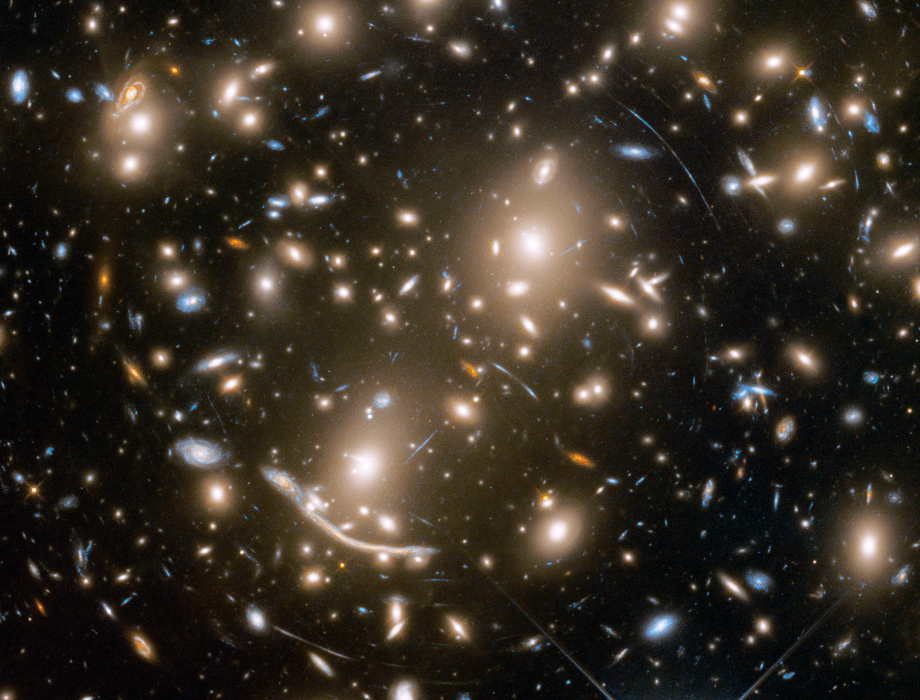
Astronomers estimate that the observable universe contains hundreds of billions of galaxies, each potentially hosting billions of planets.
Understanding Light: Astronomy’s Most Important Tool
Unlike many other sciences, astronomers cannot usually touch or collect the objects they study. Instead, nearly everything they learn comes from analyzing light and other forms of electromagnetic radiation.
Visible light is only one small part of the electromagnetic spectrum. Celestial objects also emit radio waves, infrared radiation, ultraviolet light, X-rays, and gamma rays.
Different wavelengths reveal different information.
Radio waves can trace cold clouds of gas where new stars form.
Infrared light penetrates dust clouds that block visible light.
Ultraviolet observations reveal extremely hot stars.
X-rays expose energetic phenomena such as black holes and neutron stars.
By combining observations across the electromagnetic spectrum, astronomers build a more complete picture of the universe.
The Speed of Light and Looking Back in Time
One of astronomy’s most remarkable ideas is that looking farther into space means looking farther back in time.
Light travels at approximately 299,792 kilometers per second (186,282 miles per second). Although incredibly fast, it still requires time to cross vast cosmic distances.
Sunlight takes about eight minutes to reach Earth.
The light from the nearest star beyond the Sun takes more than four years to arrive.
Some galaxies observed by modern telescopes are so distant that their light began traveling toward us billions of years ago.
This means astronomers can directly observe earlier stages of cosmic history simply by studying increasingly distant objects.
The Birth and Death of Stars
Stars are born inside enormous clouds of gas and dust called molecular clouds.
Gravity gradually pulls material together until pressure and temperature become high enough for nuclear fusion to begin. At that moment, a new star is born.
Throughout their lives, stars convert hydrogen into helium, producing the energy that makes them shine.
Eventually, stars exhaust their nuclear fuel.
Smaller stars, including the Sun, eventually expand into red giants before shedding their outer layers and leaving behind dense remnants called white dwarfs.
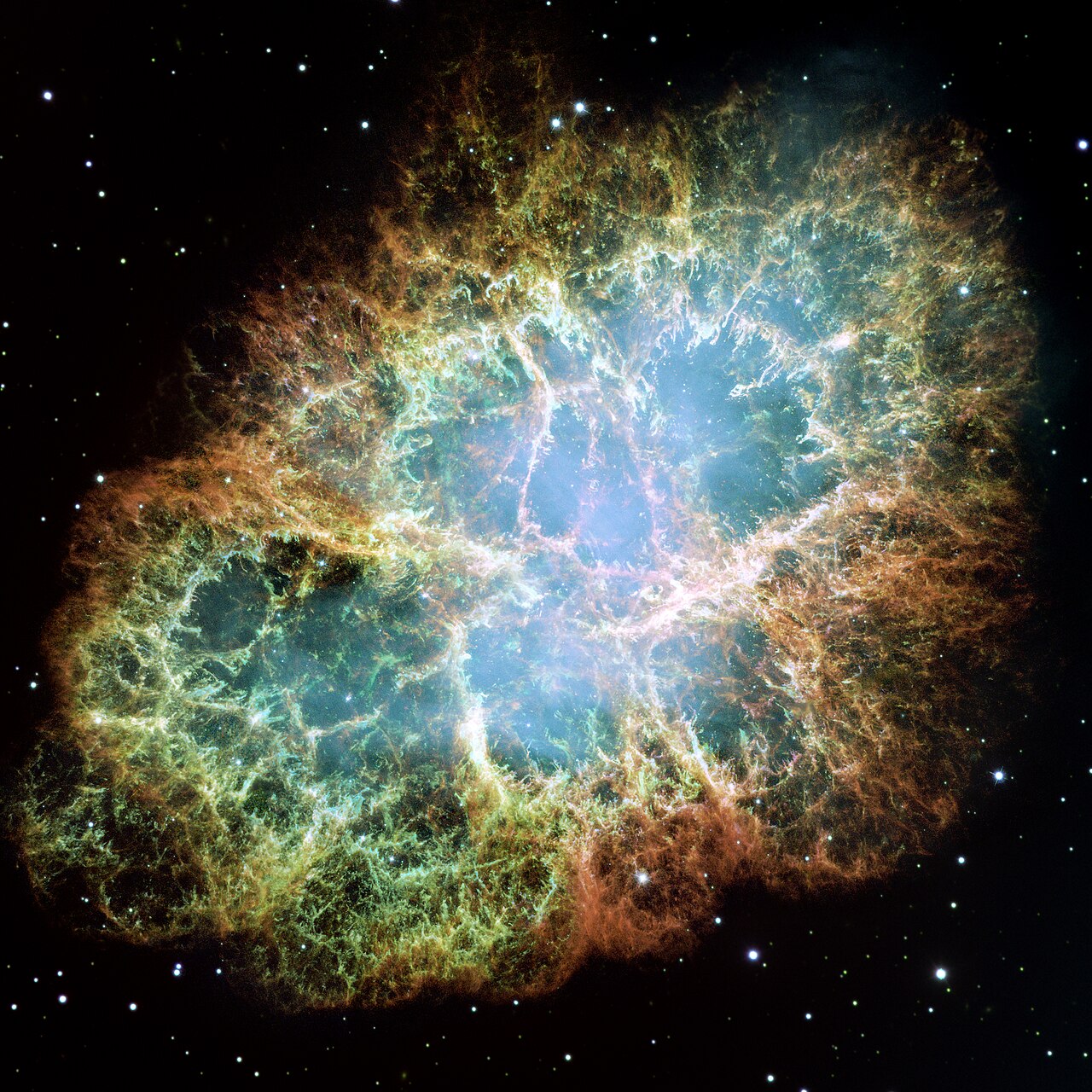
Massive stars experience spectacular explosions known as supernovae. These explosions scatter heavy elements throughout space, enriching future generations of stars and planets.
The remnants of the most massive stars may become neutron stars or black holes.
Black Holes: Gravity at Its Extreme
Black holes are among the universe’s most extraordinary objects.
They form when extremely massive stars collapse under their own gravity after exhausting their nuclear fuel.
The gravitational pull near a black hole becomes so strong that nothing—not even light—can escape once it crosses a boundary known as the event horizon.
Although black holes themselves emit no light, astronomers detect them by observing their effects on nearby matter, stars, and radiation.
In recent years, scientists have even captured images of the glowing material surrounding supermassive black holes, providing striking confirmation of theoretical predictions.
The Moon and Other Natural Satellites
Earth’s Moon is our nearest celestial neighbor and has profoundly influenced life on our planet.
Its gravity produces ocean tides, helps stabilize Earth’s rotational axis, and has played an important role in Earth’s long-term climate stability.
Other planets possess fascinating moons as well.
Jupiter’s moon Europa likely hides a vast ocean beneath its icy surface.
Saturn’s moon Titan has rivers and lakes—not of water, but of liquid methane and ethane.
These worlds are among the most promising places in the search for extraterrestrial life within our Solar System.
Comets, Asteroids, and Meteoroids
Not every object in the Solar System is a planet or moon.
Asteroids are rocky bodies that mostly orbit the Sun between Mars and Jupiter.
Comets consist largely of ice mixed with dust and rock. As they approach the Sun, heat causes their ice to vaporize, producing spectacular glowing tails that can stretch millions of kilometers.
Meteoroids are smaller rocky fragments traveling through space.
When one enters Earth’s atmosphere, it creates a bright streak of light called a meteor.
If part of it survives the journey and reaches the ground, it becomes a meteorite.
Studying these objects provides valuable clues about the early Solar System.
How Astronomers Study the Universe
Astronomy depends on careful observation supported by advanced technology.
Ground-based observatories use enormous telescopes equipped with sensitive cameras and spectrographs.
Space telescopes avoid Earth’s atmosphere, allowing clearer observations across many wavelengths.
Radio telescopes detect signals invisible to human eyes.
Space probes visit planets, moons, asteroids, and comets, collecting measurements directly.
Powerful computers process enormous amounts of data and simulate cosmic events that unfold over millions or billions of years.
Together, these tools allow astronomers to investigate the universe with remarkable precision.
Space Telescopes Have Revolutionized Astronomy
Space telescopes have transformed our understanding of the cosmos.
Operating above Earth’s atmosphere, they avoid atmospheric turbulence that blurs images and blocks many wavelengths.
The Hubble Space Telescope revealed breathtaking views of distant galaxies, nebulae, and star-forming regions while helping refine measurements of the universe’s expansion.
The James Webb Space Telescope has extended humanity’s vision even farther, observing some of the earliest galaxies formed after the Big Bang and analyzing the atmospheres of distant exoplanets.
These observatories continue to provide discoveries that reshape modern astronomy.
Searching for Planets Beyond Our Solar System
One of astronomy’s fastest-growing fields is the study of exoplanets—planets orbiting stars beyond the Sun.
Since the first confirmed discovery in the 1990s, astronomers have identified thousands of exoplanets with remarkable diversity.
Some are giant gas planets larger than Jupiter.
Others are rocky worlds similar in size to Earth.
Some orbit two stars.
Others circle red dwarf stars much cooler than the Sun.
Scientists carefully study certain exoplanets located within their stars’ habitable zones, where temperatures might allow liquid water to exist under suitable conditions.
Although no confirmed evidence of extraterrestrial life has yet been found, the search continues with increasing sophistication.
Cosmology: Studying the Universe Itself
Cosmology is the branch of astronomy that investigates the origin, evolution, structure, and ultimate fate of the universe.
By studying the distribution of galaxies, the cosmic microwave background radiation, and the expansion of space, cosmologists seek to answer profound questions about the cosmos.
Current evidence indicates that ordinary matter—the atoms making up stars, planets, and people—accounts for only a small fraction of the universe.
Most of the universe appears to consist of dark matter, an invisible form of matter detected through its gravitational effects, and dark energy, a mysterious phenomenon associated with the accelerating expansion of the universe.
Understanding these components remains one of modern astronomy’s greatest challenges.
Astronomy and Space Exploration
Astronomy and space exploration work hand in hand.
Robotic spacecraft have visited every major planet in the Solar System, landed on Mars, explored distant asteroids, flown past Pluto, and sampled comets.
Astronauts have walked on the Moon, conducted experiments aboard space stations, and helped construct observatories in orbit.
Future missions aim to return humans to the Moon, explore Mars, investigate icy moons with subsurface oceans, and search for signs of life beyond Earth.
Each mission expands humanity’s understanding of the universe.
Astronomy in Everyday Life
Although astronomy studies distant objects, it has practical importance here on Earth.
Satellite technology supports communication, navigation, weather forecasting, disaster monitoring, agriculture, and environmental research.
Astronomical research has driven advances in optics, digital sensors, image processing, artificial intelligence, and high-performance computing.
Even the calendar, timekeeping, and seasonal cycles that organize daily life have their origins in astronomical observations made by ancient civilizations.
Astronomy continues to inspire innovation while deepening our understanding of the natural world.
The Human Connection to the Cosmos
Perhaps the greatest gift of astronomy is perspective.
Every atom of carbon in our bodies, every oxygen atom we breathe, and much of the iron in our blood were forged inside stars that lived and died billions of years before the Solar System formed.
In a very real scientific sense, humans are made of stardust.
This remarkable fact connects our lives to the evolution of the universe itself. The same physical laws governing distant galaxies also govern the atoms inside every living cell.
Astronomy reminds us that we are not separate from the universe—we are one of its many extraordinary expressions.
Why Astronomy Continues to Fascinate Humanity
Despite centuries of discovery, astronomy remains filled with unanswered questions.
Scientists continue searching for the nature of dark matter and dark energy.
They seek to understand how the first stars formed, what happens inside black holes, and whether life exists elsewhere in the universe.
New telescopes, improved spacecraft, and increasingly powerful computers promise discoveries that previous generations could scarcely imagine.
Every observation has the potential to rewrite our understanding of the cosmos.
Conclusion
Astronomy is the scientific study of the universe beyond Earth. It explores planets, stars, galaxies, black holes, nebulae, comets, and the immense cosmic structures that fill space. Through observation, mathematics, and technology, astronomy reveals how celestial objects form, evolve, and interact over billions of years.
More than any other science, astronomy invites us to look beyond the horizon of our everyday lives. It shows us that our planet is part of a vast and evolving universe filled with extraordinary beauty, complexity, and mystery. As humanity continues to explore the cosmos, astronomy will remain one of our greatest tools for understanding not only the universe around us but also our own place within it.