Artificial intelligence often feels like magic. You ask your smartphone a question, unlock it with your face, translate a foreign language instantly, or watch your security camera recognize a person at your front door. Behind these seemingly effortless experiences is an invisible network of powerful computing systems working together. But increasingly, the intelligence behind these features is no longer happening in distant data centers. Instead, it is happening right inside the devices you use every day.
This shift is being driven by a new generation of specialized processors known as Edge AI chips. These chips are transforming how artificial intelligence works by allowing devices to analyze data, make decisions, and respond almost instantly without constantly relying on the internet or cloud servers.
Edge AI chips are becoming one of the most important technologies of the modern digital era. They are making smartphones smarter, cars safer, factories more efficient, and healthcare devices more responsive. As artificial intelligence continues to expand into nearly every aspect of life, understanding Edge AI chips provides a glimpse into the future of computing itself.
What Are Edge AI Chips?
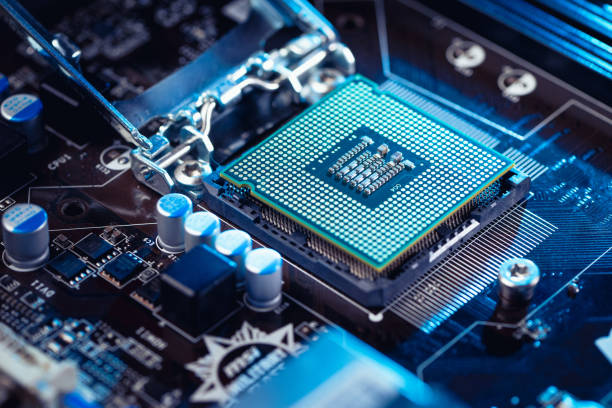
Edge AI chips are specialized computer processors designed to perform artificial intelligence tasks directly on a device rather than sending data to remote cloud servers.
The word “edge” refers to the edge of a network—the place where data is created. This could be a smartphone, smartwatch, security camera, drone, robot, smart speaker, industrial sensor, or autonomous vehicle.
Instead of transmitting every piece of information across the internet for analysis, an Edge AI chip processes the data locally. This allows the device to make intelligent decisions almost immediately.
Unlike traditional processors that are designed to handle many different types of computing tasks, Edge AI chips are optimized for the mathematical operations used in machine learning and deep learning models. They can recognize images, understand speech, detect objects, predict outcomes, and perform many other AI tasks with remarkable speed and efficiency.
Understanding Edge Computing
To appreciate Edge AI chips, it helps to understand edge computing.
For many years, most artificial intelligence applications depended heavily on cloud computing. Devices collected information and sent it over the internet to massive data centers. These servers processed the information using powerful AI models before returning the results.
Although this approach remains useful, it has several limitations.
Sending data to distant servers introduces delays known as latency. Internet connections can become slow or unavailable. Constant communication also increases energy consumption and raises privacy concerns because personal information must leave the device.
Edge computing changes this model by moving computation closer to where the data is generated.
Instead of relying entirely on the cloud, the device itself becomes intelligent.
Edge AI chips are the hardware that makes this possible.
Why Traditional CPUs Are Not Enough
A central processing unit, or CPU, is designed to perform many different tasks efficiently. It manages operating systems, runs applications, and handles general computing operations.
Artificial intelligence, however, requires enormous numbers of mathematical calculations performed simultaneously.
Deep learning models often involve billions of mathematical operations involving matrices and vectors. These calculations are very different from the everyday tasks CPUs were originally designed to handle.
Although a CPU can run AI software, it usually consumes more power and takes longer to complete these specialized workloads.
Edge AI chips include dedicated hardware that accelerates AI computations while using far less electricity.
This specialization allows even small battery-powered devices to perform sophisticated artificial intelligence tasks.
How Edge AI Chips Work
An Edge AI chip receives data directly from sensors such as cameras, microphones, temperature sensors, radar systems, or touchscreens.
The chip runs a trained machine learning model stored in its memory.
Instead of learning from scratch, the model has already been trained using enormous datasets, often on powerful cloud-based computers.
Once deployed to the device, the Edge AI chip performs what is known as AI inference.
Inference means applying the trained model to new incoming data.
For example, a smartphone camera captures an image.
The Edge AI chip analyzes millions of pixels.
It compares visual patterns against its trained neural network.
Within fractions of a second, it recognizes a person’s face, identifies objects, adjusts exposure, removes image noise, and enhances colors before the user even notices.
All of this happens locally inside the device.
The Difference Between AI Training and AI Inference
Artificial intelligence involves two major stages.
The first is training.
During training, computers learn patterns from enormous collections of data. This process requires vast computing resources and often uses clusters of high-performance GPUs inside data centers.
Training can take days, weeks, or even months depending on the complexity of the model.
The second stage is inference.
Inference uses the completed model to make predictions on new information.
Edge AI chips are primarily designed for inference.
Because inference is much less computationally demanding than training, it can be performed efficiently on specialized hardware inside smartphones, cameras, vehicles, and wearable devices.
Neural Networks Inside Edge AI Chips
Modern Edge AI chips are optimized for artificial neural networks.
Neural networks are computer models inspired by the structure of the human brain.
They consist of layers of interconnected mathematical nodes that process information step by step.
When data enters the network, each layer extracts increasingly complex features.
An image recognition model might first detect edges.
The next layer recognizes shapes.
Later layers identify eyes, noses, ears, and facial structures.
Eventually, the model determines that the image contains a specific person or object.
Edge AI chips include hardware specifically engineered to perform these neural network calculations rapidly.
Specialized Hardware Inside Edge AI Chips
Modern Edge AI processors often contain multiple computing components working together.
A CPU manages general computing tasks and coordinates the overall system.
A graphics processing unit, or GPU, accelerates parallel mathematical operations that benefit graphics and some AI workloads.
Many chips also include a dedicated Neural Processing Unit (NPU), AI accelerator, or Tensor Processing Unit (TPU), depending on the manufacturer.
These specialized engines are optimized specifically for neural network operations.
Some Edge AI chips also include image signal processors that improve camera performance and digital signal processors that enhance audio processing.
Working together, these components deliver intelligent features while minimizing power consumption.
Why Speed Matters
One of the greatest advantages of Edge AI chips is speed.
Because information never needs to travel across the internet, responses occur almost instantly.
This low latency is essential for many real-world applications.
An autonomous vehicle cannot wait several seconds for a cloud server to decide whether an obstacle is in the road.
A surgical robot cannot tolerate network delays during a medical procedure.
A drone navigating through a forest must react immediately to avoid trees.
Even smartphones benefit from immediate responses when recognizing faces or processing voice commands.
Local AI processing dramatically reduces response times.
Power Efficiency Is Essential
Many Edge AI devices operate using batteries.
Smartphones, wireless earbuds, smartwatches, fitness trackers, drones, and wearable medical devices all have limited energy supplies.
Edge AI chips are carefully designed to maximize performance while minimizing electricity consumption.
Engineers use several techniques to achieve this.
Dedicated AI hardware performs calculations more efficiently than general-purpose processors.
Many chips use lower numerical precision for AI operations, reducing both memory requirements and energy usage without significantly affecting accuracy.
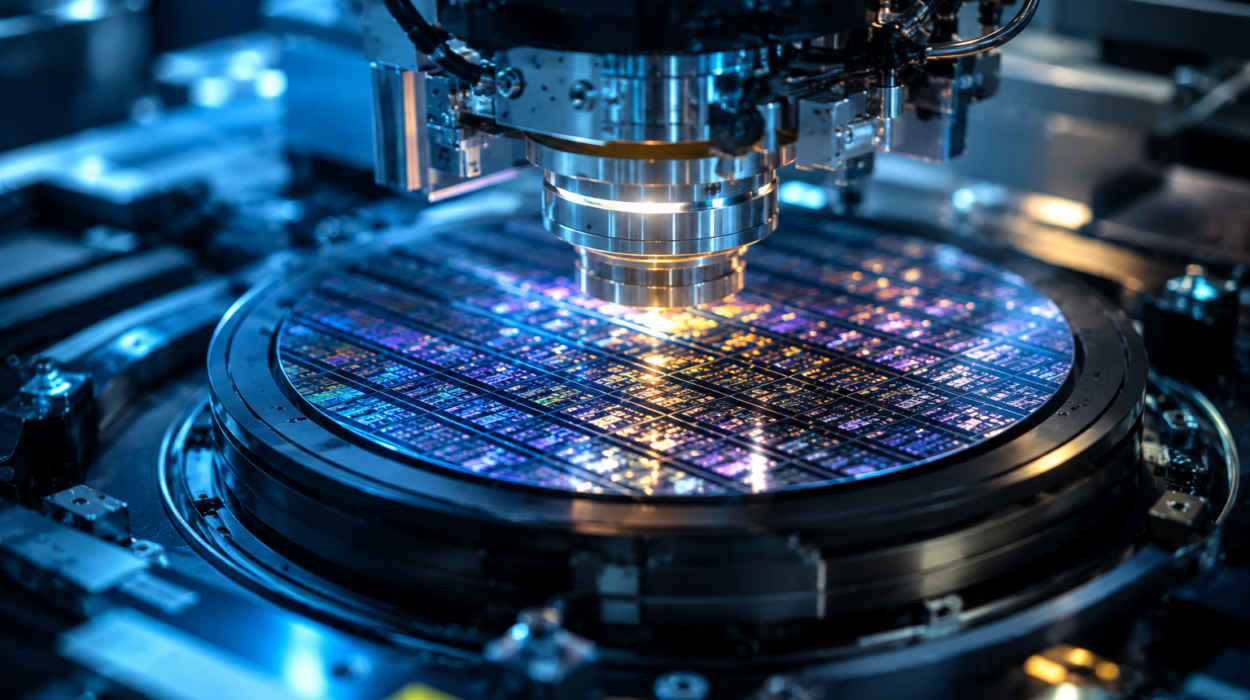
Advanced semiconductor manufacturing technologies also reduce power consumption while increasing transistor density.
These improvements allow devices to run sophisticated AI continuously throughout the day.
Privacy Benefits of Edge AI
Privacy has become one of the strongest arguments for Edge AI.
When processing occurs locally, personal information often never leaves the device.
A smartphone can recognize your face without uploading your image to remote servers.
A smart speaker can wake upon hearing its activation phrase without constantly transmitting every conversation across the internet.
A medical wearable can monitor heart rhythms while keeping sensitive health information on the device itself.
Although some applications still communicate with cloud services, local processing reduces the amount of personal data transmitted over networks.
This approach helps improve privacy while reducing cybersecurity risks.
Edge AI in Smartphones
Modern smartphones are among the most advanced examples of Edge AI technology.
Every time you unlock your phone using facial recognition, AI models analyze your facial features in real time.
Camera systems use AI to recognize scenes, improve portraits, reduce image noise, sharpen details, and enhance low-light photography.
Voice assistants understand spoken commands locally before accessing online services when necessary.
Predictive typing, language translation, live captions, spam detection, and battery optimization increasingly rely on Edge AI chips.
Many premium smartphones now include dedicated NPUs capable of performing trillions of AI operations every second.
Smarter Cameras Through Edge AI
Digital cameras have evolved far beyond simply capturing light.
Today’s AI-powered cameras recognize smiles, detect animals, identify vehicles, separate subjects from backgrounds, and automatically adjust camera settings.
Security cameras equipped with Edge AI chips can distinguish between people, pets, bicycles, and cars.
Instead of recording every movement, they intelligently identify meaningful events.
This reduces unnecessary recordings while improving security monitoring.
Because processing occurs inside the camera, alerts arrive more quickly and bandwidth requirements decrease.
Edge AI in Self-Driving Vehicles
Modern vehicles contain hundreds of sensors continuously generating enormous amounts of information.
Cameras monitor traffic.
Radar detects nearby objects.
LiDAR measures distances.
Ultrasonic sensors assist with parking.
Edge AI chips combine these sensor inputs to understand the vehicle’s surroundings.
They recognize pedestrians, traffic signs, lane markings, cyclists, and other vehicles.
These decisions must happen within milliseconds.
Cloud computing alone cannot provide sufficiently fast responses for safe autonomous driving.
Local AI processing is therefore essential for advanced driver-assistance systems and future self-driving cars.
Healthcare at the Edge
Medical technology increasingly relies on Edge AI.
Wearable devices monitor heart rate, oxygen levels, sleep quality, and physical activity.
Some devices can detect irregular heart rhythms or identify potential health problems before symptoms become noticeable.
Portable ultrasound machines use Edge AI to improve image quality instantly.
Medical imaging systems assist physicians by identifying abnormalities in X-rays, CT scans, and MRI images.
Because much of this analysis occurs locally, healthcare professionals receive immediate insights while protecting sensitive patient information.
Smart Homes Become More Intelligent
Smart homes are filled with Edge AI devices.
Smart thermostats learn household routines and adjust temperatures automatically.
Smart speakers recognize voices and understand spoken commands.
Robot vacuum cleaners map rooms while avoiding furniture.
Doorbells identify visitors.
Home security systems distinguish family members from strangers.
Each device becomes increasingly intelligent because of specialized AI processors operating locally.
Industrial Edge AI
Factories generate enormous quantities of sensor data.
Edge AI chips help monitor machinery, inspect products, predict equipment failures, and optimize manufacturing processes.
Instead of sending every measurement to distant servers, industrial systems analyze data immediately.
This allows engineers to detect problems before equipment breaks down.
Predictive maintenance reduces downtime, lowers repair costs, and improves production efficiency.
Industrial Edge AI is becoming a major component of modern smart factories.
Agriculture Powered by Edge AI
Farms are also benefiting from Edge AI.
Autonomous tractors navigate fields using onboard AI processors.
Drones inspect crops and identify disease or water stress.
Smart irrigation systems analyze soil conditions locally before deciding when watering is necessary.
Livestock monitoring devices track animal health continuously.
By making decisions directly in the field, Edge AI helps improve agricultural productivity while conserving resources.
Edge AI and the Internet of Things
The Internet of Things, or IoT, connects billions of devices worldwide.
Many IoT devices have limited computing power and operate in locations with unreliable internet connections.
Edge AI allows these devices to become far more intelligent.
Instead of acting merely as data collectors, they can analyze information, recognize patterns, and make autonomous decisions.
This greatly reduces network traffic while improving responsiveness.
As IoT continues expanding, Edge AI chips will become increasingly important.
The Challenge of Small Devices
Designing Edge AI chips is not easy.
Unlike data centers, small devices have limited space, limited battery capacity, and restricted cooling systems.
Engineers must balance several competing goals.
The chip must deliver high AI performance.
It must consume very little power.
It must generate minimal heat.
It must fit inside compact devices.
Achieving all these objectives simultaneously requires sophisticated semiconductor engineering and advanced manufacturing technologies.
How Edge AI Chips Are Improving
Every new generation of Edge AI processors becomes faster and more energy efficient.
Manufacturers continue shrinking transistor sizes using advanced semiconductor fabrication techniques.
Memory systems become faster.
AI accelerators become more specialized.
Software frameworks improve model optimization.
Researchers also develop smaller neural networks that require fewer computations while maintaining high accuracy.
These advances allow increasingly powerful AI capabilities to operate on everyday devices.
Edge AI and Cloud AI Work Together
Edge AI does not replace cloud computing.
Instead, the two approaches complement one another.
Large cloud data centers remain essential for training enormous AI models, storing vast amounts of information, and performing highly complex computations.
Edge AI handles immediate, real-time decisions close to where data is generated.
Many modern applications combine both methods.
A smartphone may recognize your voice locally while accessing cloud services for more advanced language understanding.
A vehicle may avoid obstacles using onboard AI while receiving updated traffic information from cloud servers.
Together, Edge AI and cloud AI create faster, more efficient intelligent systems.
Challenges Facing Edge AI
Although Edge AI offers many advantages, several challenges remain.
Running sophisticated AI models on small devices requires careful optimization.
Limited memory can restrict model size.
Battery life remains an important concern.
Keeping AI models updated across millions of devices requires efficient software management.
Security is also critical because intelligent devices may become targets for cyberattacks.
Engineers continue developing better encryption, secure hardware, and trusted execution environments to protect AI systems.
The Future of Edge AI Chips
The future of Edge AI looks remarkably promising.
As semiconductor technology continues advancing, Edge AI chips will become smaller, faster, and more capable.
Future devices may understand natural conversations almost instantly, recognize complex environments with greater accuracy, and adapt continuously to user preferences.
Robots will become more autonomous.
Medical devices will provide increasingly personalized healthcare.
Autonomous vehicles will process more sensor data than ever before.
Factories, farms, cities, and homes will all become more intelligent through local AI processing.
Emerging technologies such as tiny machine learning, sometimes called TinyML, are already bringing artificial intelligence to extremely small microcontrollers that consume only tiny amounts of energy. This opens the possibility of AI-powered sensors operating for years on a single battery.
Why Edge AI Chips Matter
Edge AI chips represent one of the most significant advances in modern computing because they bring intelligence directly to the devices we interact with every day. By processing data locally, they deliver faster responses, lower power consumption, improved privacy, and greater reliability than cloud-only solutions.
As artificial intelligence becomes increasingly woven into daily life, these specialized processors will quietly power everything from smartphones and smart homes to autonomous vehicles, medical devices, industrial robots, and wearable technology. Most people may never see an Edge AI chip, yet they will experience its benefits every time a device responds instantly, understands its surroundings, or makes an intelligent decision without needing to ask a distant server for help.
In many ways, Edge AI chips are changing the very nature of computing. Instead of intelligence living only in massive data centers, it is moving closer to people—into pockets, homes, workplaces, vehicles, and cities. This shift is making technology faster, more personal, and more capable, bringing artificial intelligence to the edge of the world where it can have the greatest impact.