For most of human history, the only way to communicate with the outside world has been through our bodies. We speak with our voices, write with our hands, and interact with technology by pressing buttons, tapping screens, or moving a mouse. But what if thoughts alone could control a computer? What if a person who could no longer move or speak could send a message simply by imagining the words? What if the human brain could communicate directly with machines?
These remarkable possibilities are becoming increasingly real through a technology known as the Brain-Computer Interface (BCI).
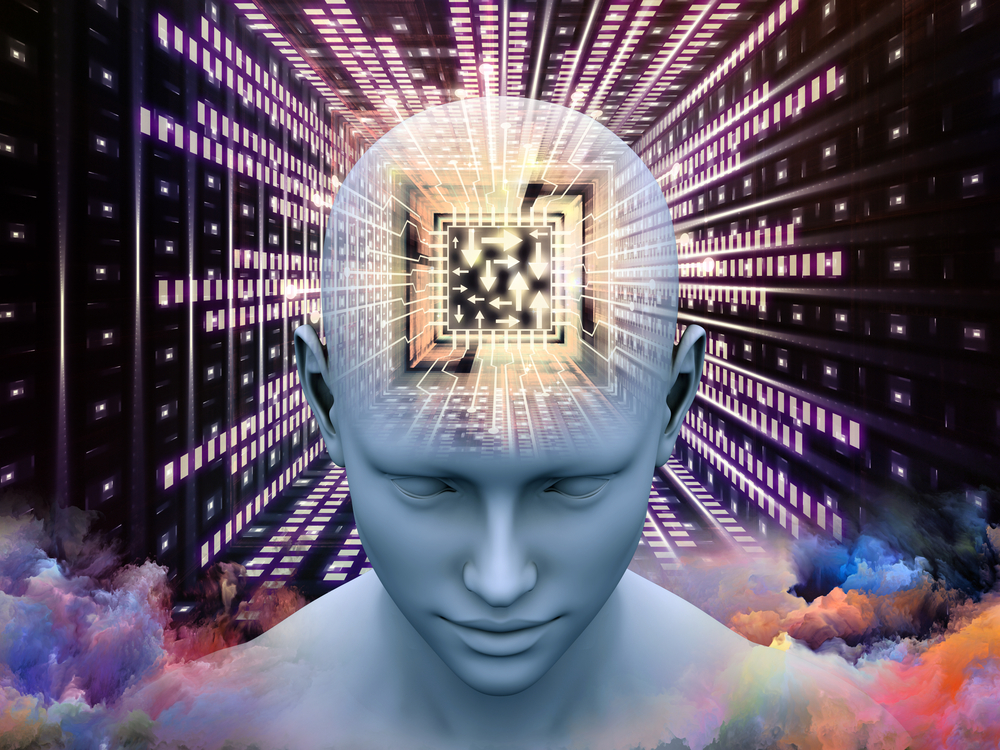
A Brain-Computer Interface creates a direct communication pathway between the brain and an external device, such as a computer, robotic arm, wheelchair, or other electronic system. Instead of relying on muscles or speech, a BCI interprets signals produced by the brain and translates them into commands that a machine can understand.
Although the concept once belonged almost entirely to science fiction, Brain-Computer Interfaces are now an active field of scientific research and medical innovation. Scientists, engineers, neuroscientists, and physicians around the world are working together to develop systems that can restore communication, improve mobility, and deepen our understanding of the human brain.
What Is a Brain-Computer Interface?
A Brain-Computer Interface, often abbreviated as BCI, is a technology that allows information to flow directly between the brain and an external device without requiring the body’s normal pathways, such as muscles or nerves.
Normally, when a person wants to move their hand, the brain sends electrical signals through the spinal cord and nerves to the muscles. The muscles then contract, producing movement.
A Brain-Computer Interface works differently.
Instead of waiting for the muscles to move, it detects the brain’s electrical activity as the person thinks about performing an action. Computer algorithms analyze these brain signals and convert them into digital commands.
For example, simply imagining moving a cursor to the right may generate a recognizable pattern of brain activity. A BCI can detect that pattern and move the cursor on a computer screen accordingly.
In this way, thoughts become actions without requiring physical movement.
How the Brain Produces Signals
To understand Brain-Computer Interfaces, it helps to understand how the brain works.
The human brain contains approximately 86 billion neurons. These specialized nerve cells constantly communicate by sending tiny electrical and chemical signals to one another.
Every thought, memory, emotion, movement, sensation, and decision depends on this enormous network of communicating neurons.
Whenever groups of neurons become active, they produce tiny electrical signals.
Although each individual signal is extremely small, millions of neurons working together generate patterns that can be detected using specialized equipment.
Brain-Computer Interfaces measure these patterns and use advanced computer systems to interpret what they may represent.
How a Brain-Computer Interface Works
A Brain-Computer Interface follows several important steps.
First, sensors detect electrical activity produced by the brain.
Next, the recorded signals are amplified and filtered to remove unwanted noise.
Computer software then analyzes the signals using mathematical models and machine learning algorithms to identify meaningful patterns.
Finally, those patterns are translated into commands that control an external device.
This entire process can occur very quickly, allowing users to interact with computers in near real time.
Although the underlying technology is highly sophisticated, the overall goal is simple: convert brain activity into useful actions.
Different Types of Brain-Computer Interfaces
Not all Brain-Computer Interfaces work in the same way.
Some systems record brain activity from outside the head, while others place sensors inside the brain itself.
These different approaches offer unique advantages and challenges.
Non-Invasive Brain-Computer Interfaces
Non-invasive BCIs do not require surgery.
Instead, sensors are placed on the scalp to detect electrical activity from the brain.
The most common method uses electroencephalography (EEG).
EEG records tiny voltage changes produced by large groups of neurons.
Because the electrodes remain outside the skull, this approach is relatively safe and painless.
However, the skull and surrounding tissues weaken and blur the electrical signals before they reach the sensors.
As a result, non-invasive BCIs generally provide lower signal quality than implanted systems.
Despite this limitation, EEG-based BCIs are widely used in research, medical studies, and experimental communication systems.
Invasive Brain-Computer Interfaces
Invasive BCIs involve surgically placing tiny electrodes directly into the brain.
Because the sensors sit close to individual neurons, they can record much more detailed signals.
This higher resolution allows for more precise control of computers, robotic limbs, and other devices.
However, invasive systems also involve greater medical risks, including surgery, infection, and long-term maintenance of implanted devices.
Researchers continue developing safer implants that remain stable for many years while minimizing complications.
Partially Invasive Interfaces
Some Brain-Computer Interfaces fall between these two approaches.
Instead of placing electrodes deep within brain tissue, they position sensors on the brain’s surface beneath the skull.
This method often provides stronger signals than scalp recordings while avoiding some of the challenges associated with fully implanted electrodes.
Reading Brain Signals
Brain signals are incredibly complex.
The electrical activity recorded by a Brain-Computer Interface does not directly reveal complete thoughts or memories.
Instead, the system searches for patterns associated with specific mental activities.
For example, researchers may train a computer to recognize the brain activity that occurs when a person imagines moving their left hand or right hand.
After repeated training, the computer learns to distinguish between these patterns.
When the user thinks about moving the left hand, the computer interprets that signal as a command.
This process depends heavily on machine learning and artificial intelligence.
Modern algorithms improve their accuracy by learning from repeated examples of each user’s unique brain activity.
Can a BCI Read Thoughts?
One of the biggest misconceptions about Brain-Computer Interfaces is that they can read minds.
Current BCIs cannot simply access someone’s private thoughts, memories, or emotions like science fiction often portrays.
Instead, Brain-Computer Interfaces recognize specific patterns that users intentionally generate or that have been carefully trained beforehand.
The technology cannot freely interpret everything happening inside the brain.
Human thought is extraordinarily complex, and scientists are still far from fully understanding how thoughts are represented by neural activity.
While research continues to advance rapidly, today’s BCIs remain specialized tools rather than universal mind-reading machines.
Helping People With Paralysis
One of the most important goals of Brain-Computer Interface research is restoring independence to people who have lost movement due to disease or injury.
Conditions such as spinal cord injury, stroke, amyotrophic lateral sclerosis (ALS), or severe neurological disorders can interrupt communication between the brain and the muscles.
In many cases, the brain still generates movement commands, but those signals can no longer reach the body.
A Brain-Computer Interface bypasses the damaged pathways.
Instead of sending commands to muscles, it sends them directly to a computer or assistive device.
This approach has allowed some individuals with paralysis to move computer cursors, type messages, operate robotic arms, and interact with digital devices using only their brain activity.
These achievements represent major milestones in neuroscience and rehabilitation.
Restoring Communication
For individuals who cannot speak because of neurological conditions, communication can become extraordinarily difficult.
Brain-Computer Interfaces offer new possibilities.
Some experimental systems analyze brain activity related to speech or imagined speech.
Advanced artificial intelligence then predicts the intended words or sentences.
Although these technologies remain under development, they have demonstrated the potential to restore communication for people with severe speech impairments.
As accuracy improves, future systems may enable faster and more natural conversations.
Controlling Robotic Limbs
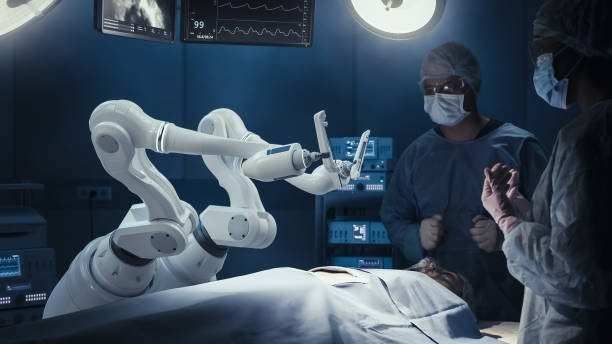
Researchers have developed robotic arms that respond directly to brain signals.
After training, users can sometimes reach for objects, grasp cups, or perform simple tasks simply by thinking about moving their own arms.
In some experimental systems, users receive sensory feedback that helps them judge grip strength or object position.
Although these technologies are still evolving, they illustrate how neuroscience, robotics, and artificial intelligence can work together to restore lost abilities.
Brain-Computer Interfaces in Medicine
Beyond paralysis, Brain-Computer Interfaces have many potential medical applications.
Researchers are investigating their use in stroke rehabilitation, where BCIs may encourage recovery by strengthening connections between the brain and affected muscles.
Scientists are also studying their potential in treating certain neurological disorders, improving prosthetic limb control, and assisting patients recovering from traumatic brain injuries.
In some cases, BCIs are combined with electrical stimulation techniques that help damaged neural pathways regain function.
While many of these approaches remain experimental, early results are promising.
Brain-Computer Interfaces and Artificial Intelligence
Artificial intelligence plays an increasingly important role in Brain-Computer Interfaces.
Brain signals vary from person to person and often contain significant background noise.
AI algorithms help identify meaningful patterns within these complex signals.
Machine learning systems improve over time by analyzing large amounts of training data.
As these algorithms become more sophisticated, Brain-Computer Interfaces may become faster, more accurate, and easier to use.
Rather than replacing neuroscience, artificial intelligence serves as a powerful tool for interpreting the brain’s remarkably intricate electrical activity.
Can BCIs Improve Healthy Brains?
Much public attention focuses on whether Brain-Computer Interfaces might someday enhance memory, learning, attention, or intelligence in healthy individuals.
At present, these possibilities remain largely speculative.
Most current research concentrates on medical applications that restore lost function rather than enhancing normal abilities.
Scientists continue exploring future possibilities, but significant technical, ethical, and medical challenges remain.
Any claims about dramatically increasing intelligence or instantly downloading knowledge are not supported by current scientific evidence.
Ethical Questions
Brain-Computer Interfaces raise important ethical questions alongside their scientific promise.
Because BCIs interact directly with brain activity, protecting user privacy becomes especially important.
Researchers must ensure that neural data are securely stored and used responsibly.
Questions also arise regarding informed consent, long-term safety, accessibility, fairness, and potential misuse.
As Brain-Computer Interfaces become more capable, governments, scientists, healthcare professionals, ethicists, and society will need to develop policies that balance innovation with individual rights.
Ethics will remain as important as engineering in shaping the future of this technology.
The Challenges Facing Brain-Computer Interfaces
Although remarkable progress has been made, Brain-Computer Interfaces still face significant obstacles.
Brain signals are incredibly complex and often difficult to interpret accurately.
Every person’s brain is unique, meaning systems frequently require individualized training.
Non-invasive BCIs sometimes produce weak signals that limit performance.
Implanted devices must remain safe and functional for many years without causing tissue damage or infection.
Researchers also seek faster communication speeds, greater reliability, lower costs, and more comfortable designs.
Overcoming these challenges will require continued advances in neuroscience, materials science, computing, and artificial intelligence.
Brain-Computer Interfaces Beyond Medicine
Although healthcare remains the primary focus, Brain-Computer Interfaces may eventually find applications in many other fields.
Scientists are exploring their use in education, virtual reality, gaming, robotics, industrial control, and scientific research.
For example, BCIs could one day make interactions with digital environments more intuitive by reducing the need for keyboards, controllers, or touchscreens.
However, many of these ideas remain experimental, and widespread adoption will depend on future technological progress and careful evaluation of benefits and risks.
Recent Advances
During the past decade, Brain-Computer Interface research has advanced rapidly.
Improved electrode designs, faster computer processors, more powerful artificial intelligence, and better understanding of the brain have all contributed to significant progress.
Several research groups have demonstrated increasingly accurate decoding of intended movements and speech.
Experimental participants have used BCIs to type messages, operate computers, play simple games, and control robotic devices with impressive precision.
Although many systems remain confined to research laboratories or clinical trials, each advancement brings the technology closer to broader practical use.
The Future of Brain-Computer Interfaces
The future of Brain-Computer Interfaces is both exciting and uncertain.
Scientists hope to develop systems that are smaller, safer, more accurate, and easier to use.
Future BCIs may help restore speech to individuals who cannot communicate, allow people with paralysis to regain greater independence, and improve rehabilitation after neurological injuries.
Researchers are also working toward wireless implants, more natural control of prosthetic limbs, and better integration with artificial intelligence.
At the same time, responsible development will require careful attention to ethics, privacy, cybersecurity, and equitable access.
As the technology evolves, these considerations will become increasingly important.
Why Brain-Computer Interfaces Matter
Brain-Computer Interfaces represent one of the most remarkable intersections of neuroscience, engineering, medicine, and computer science. They demonstrate that the electrical signals generated by the human brain can be transformed into meaningful actions, opening new possibilities for people who have lost the ability to move or communicate.
Although much remains to be discovered, the progress achieved so far has already changed lives. Individuals once unable to interact with the world have gained new ways to communicate, control assistive devices, and express themselves through technology.
Rather than replacing the human brain, Brain-Computer Interfaces are designed to work alongside it, extending its ability to connect with the outside world. They remind us that understanding the brain is not only one of science’s greatest challenges but also one of its greatest opportunities to improve human health and quality of life.
As research continues, Brain-Computer Interfaces may become an increasingly important part of medicine and technology. While many challenges remain, the journey has only begun. Each new discovery brings us closer to a future where the connection between the human mind and machines is guided not by science fiction, but by rigorous science, careful engineering, and a commitment to improving lives.