For more than a century, helicopters have been the symbol of personal flight. They rescue people from disasters, transport patients to hospitals, carry supplies to remote regions, and allow pilots to land almost anywhere. But in recent years, a new idea has captured the world’s imagination—the flying car.
Once considered science fiction, flying cars are now being developed by companies around the world. Engineers are testing aircraft that can take off vertically, fly over traffic, and, in some cases, even drive on roads. Videos of futuristic vehicles lifting into the sky have sparked excitement and raised an important question: if flying cars become common, what makes them different from helicopters?
Although both vehicles can fly and may even look similar at first glance, they are built for different purposes. Their designs, technologies, safety systems, operating costs, and intended users vary significantly. Understanding these differences helps explain why flying cars are not simply smaller helicopters with wheels.
What Is a Helicopter?
A helicopter is a type of aircraft that generates lift using one or more large rotating blades called rotors. Unlike airplanes, helicopters do not need long runways. They can take off vertically, hover in one place, move sideways, fly backward, and land in confined spaces.
The first practical helicopters appeared during the first half of the twentieth century, and since then they have become essential in many industries. Emergency medical services rely on helicopters to transport critically ill patients. Military forces use them for transport and rescue missions. News organizations use them for aerial reporting, while construction companies employ helicopters to lift heavy equipment to places that cranes cannot reach.
The helicopter remains one of the most versatile flying machines ever invented.
What Is a Flying Car?
A flying car is a vehicle designed to provide personal air transportation while offering greater convenience than traditional aircraft. The term “flying car” actually describes several different types of vehicles.
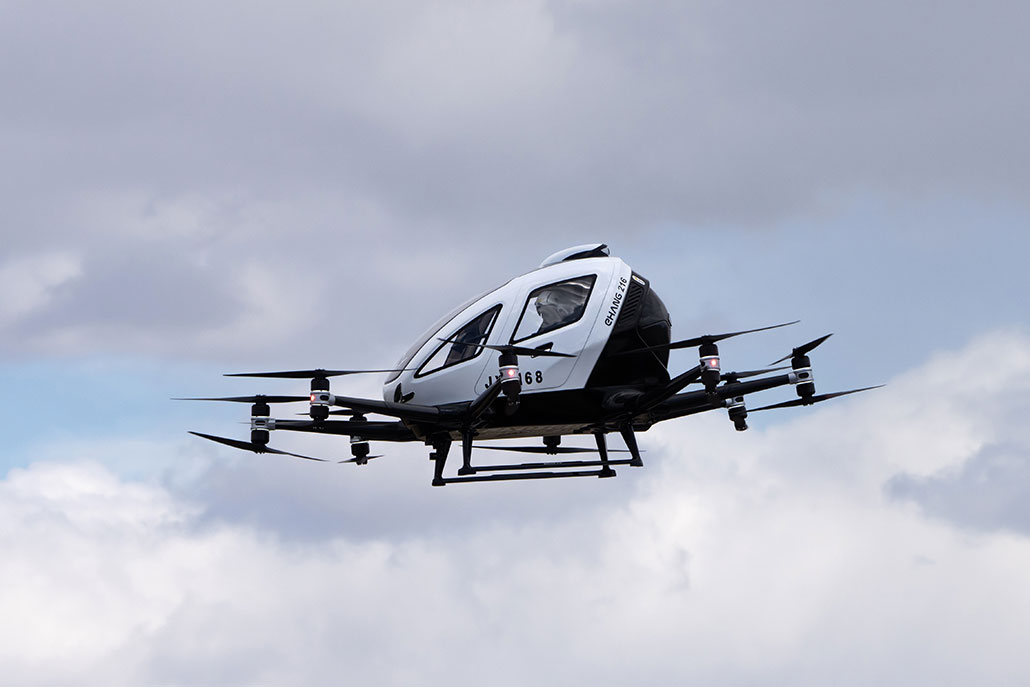
Some flying cars are road vehicles that can transform into small airplanes by unfolding wings. Others cannot drive on roads at all but are designed to carry passengers through the air using multiple electric propellers. These aircraft are often called electric Vertical Take-Off and Landing aircraft, or eVTOLs.
Many companies developing flying cars focus on short-distance urban transportation. Their goal is to reduce travel time in crowded cities by allowing passengers to fly above traffic instead of sitting in it.
Although the phrase “flying car” suggests a car that simply lifts into the air, today’s prototypes are much closer to highly automated aircraft than conventional automobiles.
Different Design Philosophies
Perhaps the biggest difference between helicopters and flying cars lies in their design goals.
Helicopters were created to perform demanding aviation tasks. Their priority is versatility, endurance, and the ability to operate in difficult conditions. A helicopter is expected to fly for long periods, carry heavy loads, and function in challenging environments.
Flying cars, on the other hand, are generally designed for everyday transportation. Engineers aim to make them quieter, easier to operate, and more accessible to people without years of pilot training.
Instead of focusing on military operations or heavy cargo, most flying car developers imagine commuters traveling between cities, airports, and business districts.
How They Generate Lift
Both helicopters and flying cars produce lift by pushing air downward, following Newton’s Third Law of Motion. As air is forced downward, an equal and opposite reaction pushes the aircraft upward.
However, the way they accomplish this is quite different.
A helicopter usually relies on one large main rotor that spins above the aircraft. This rotor generates nearly all of the lift required for flight. Because the spinning rotor also causes the helicopter’s body to rotate in the opposite direction, helicopters use a tail rotor—or in some designs, alternative systems—to counteract this rotational force.
Most modern flying cars, especially eVTOL aircraft, replace one large rotor with many smaller electric propellers. Instead of depending on a single rotor system, these aircraft distribute lift across multiple independently controlled propellers.
This design changes how the aircraft flies and improves certain aspects of safety and control.
Vertical Takeoff and Landing
One reason helicopters remain so valuable is their ability to take off and land vertically.
Many flying cars are designed with the same capability.
Vertical takeoff eliminates the need for long airport runways, making urban air transportation much more practical.
However, not every flying car can do this. Some roadable aircraft require a runway because they operate like small airplanes once airborne.
Therefore, while helicopters always perform vertical takeoffs, flying cars vary depending on their design.
Hovering Ability
Hovering is one of the helicopter’s greatest strengths.
A helicopter can remain almost motionless in the air for extended periods. This ability allows rescue teams to lower ropes, firefighters to drop water accurately, and television crews to film live events from above.
Not all flying cars are equally capable of hovering.
Many eVTOL designs can hover briefly during takeoff and landing, but they are generally optimized for forward flight rather than remaining stationary for long periods.
Hovering continuously consumes large amounts of energy, especially for battery-powered aircraft.
As a result, helicopters still outperform most flying cars in missions requiring extended hovering.
Power Sources
Traditional helicopters usually use powerful turbine engines that burn aviation fuel.
These engines provide high energy output and allow helicopters to fly for several hours depending on fuel capacity.
Flying cars are taking a different approach.
Many are powered entirely by electricity using rechargeable lithium-ion batteries or future battery technologies.
Electric motors offer several advantages.
They contain fewer moving parts.
They require less maintenance.
They produce lower direct emissions during operation.
They also respond instantly to control inputs.
However, batteries currently store much less energy per kilogram than aviation fuel. This limits the flight range and endurance of today’s electric flying cars.
Future improvements in battery technology could significantly expand these capabilities.
Noise Levels
Anyone who has heard a helicopter nearby knows how loud it can be.
The large spinning rotor blades generate significant noise, especially during takeoff and landing.
Reducing this noise has become one of the biggest engineering challenges in helicopter design.
Flying cars aim to be much quieter.
Their multiple smaller electric propellers rotate differently than large helicopter rotors, and electric motors themselves produce less mechanical noise than combustion engines.
Although flying cars are not silent, many prototypes generate noticeably lower noise levels than conventional helicopters.
Lower noise is especially important if these vehicles are to operate regularly above residential neighborhoods.
Safety Systems
Safety is one of the most important considerations for any aircraft.
Helicopters have benefited from decades of operational experience. Engineers understand their strengths and weaknesses, and modern helicopters include numerous safety features.
Flying cars attempt to improve safety through new technologies.
Many eVTOL aircraft use multiple electric motors instead of a single engine.
If one motor fails, the remaining motors may continue operating, depending on the aircraft’s design and certification requirements.
Advanced computers constantly monitor flight conditions, adjusting power to individual propellers many times each second.
Some manufacturers also plan to include emergency parachute systems capable of slowing the aircraft during certain emergencies.
While these technologies show promise, flying cars must undergo extensive testing and certification before they can achieve safety standards comparable to established aircraft.
Flight Controls
Flying a helicopter requires extensive training.
Pilots must coordinate several controls simultaneously while constantly adjusting for changing aerodynamic conditions.
Hovering alone demands continuous small corrections.
Learning to fly a helicopter safely typically requires many hours of instruction.
Flying cars aim to simplify this process.
Many developers envision highly automated flight systems capable of handling navigation, stability, obstacle avoidance, and even portions of takeoff and landing.
Some future vehicles may require only selecting a destination while onboard computers perform most flight operations.
Even so, regulatory authorities will determine the level of human involvement required before these aircraft enter widespread service.
Speed and Range
Helicopters are capable of impressive performance.
Many modern civilian helicopters cruise between approximately 200 and 300 kilometers per hour, while some military helicopters fly considerably faster.
Their range often exceeds several hundred kilometers before refueling.
Today’s electric flying cars generally target similar or somewhat lower cruising speeds, depending on their mission.
Because batteries have limited energy density, many current designs focus on relatively short urban trips ranging from a few tens to a few hundred kilometers.
As battery technology improves, these distances are expected to increase.
Passenger Capacity
Helicopters come in many sizes.
Small models may carry only two or three people.
Large transport helicopters can accommodate dozens of passengers or heavy cargo.
Most current flying car designs focus on personal transportation.
Many carry two to six passengers.
Their primary goal is moving individuals or small groups efficiently through urban environments rather than transporting large amounts of cargo.
Operating Costs
Helicopters are expensive to purchase, maintain, and operate.
Their engines, transmissions, rotor systems, and mechanical components require regular inspection and maintenance.
Fuel costs also contribute significantly to operating expenses.
Flying cars hope to reduce these costs through electric propulsion.
Electric motors have fewer mechanical parts than turbine engines, potentially lowering maintenance requirements.
Electricity may also cost less than aviation fuel under many circumstances.
However, batteries eventually require replacement, and building safe charging infrastructure introduces additional expenses.
The long-term economics of flying cars will become clearer as commercial operations expand.
Environmental Impact
Environmental considerations are driving much of the interest in electric flying cars.
Traditional helicopters burn fossil fuels and release carbon dioxide along with other emissions.
Electric flying cars produce no direct exhaust emissions during flight.
However, their overall environmental impact depends on how the electricity used to charge their batteries is generated.
If electricity comes primarily from renewable sources such as solar, wind, or hydroelectric power, overall emissions can be significantly reduced.
Manufacturing batteries also has environmental impacts that scientists and engineers continue working to minimize through improved recycling and cleaner production methods.
Infrastructure Requirements
Helicopters operate from airports, helipads, hospitals, offshore platforms, and military bases.
These facilities already exist in many parts of the world.
Flying cars may require new infrastructure.
Future cities could include rooftop landing platforms, charging stations, maintenance centers, and dedicated air traffic management systems for low-altitude urban flight.
Engineers and city planners are studying how these systems could integrate safely into existing transportation networks.
Air Traffic Management
Managing thousands of flying vehicles over cities presents major challenges.
Today’s air traffic control system was designed primarily for conventional aircraft operating at higher altitudes.
Large numbers of flying cars would require advanced digital traffic management capable of coordinating many aircraft simultaneously.
Researchers are developing automated systems that could communicate continuously with aircraft, monitor weather, prevent collisions, and optimize flight routes.
Artificial intelligence may play an important role in managing future urban air mobility.
Real-World Uses
Helicopters already perform a wide variety of essential missions.
They rescue stranded hikers.
They transport injured patients.
They support firefighters battling wildfires.
They deliver supplies after natural disasters.
They inspect power lines and pipelines.
They assist scientific research in remote regions.
Flying cars are expected to serve different needs.
Their primary role is likely to be urban transportation, airport transfers, regional commuting, tourism, and rapid travel between nearby cities.
Rather than replacing helicopters, flying cars may complement them by serving entirely different markets.
Can Flying Cars Replace Helicopters?
Many people wonder whether helicopters will eventually disappear as flying cars become more common.
Current evidence suggests this is unlikely.
Helicopters remain exceptionally capable in situations requiring heavy lifting, extended hovering, long endurance, difficult weather operations, and specialized rescue missions.
Flying cars are generally optimized for shorter passenger trips, quieter operation, and greater automation.
Each technology has strengths that suit different purposes.
In much the same way that airplanes did not eliminate helicopters, flying cars are unlikely to replace them completely.
Instead, both may coexist, each serving the tasks it performs best.
Challenges Facing Flying Cars
Despite rapid progress, several important challenges remain before flying cars become part of everyday life.
Battery technology must continue improving to increase flight range and reduce charging time.
Governments must establish comprehensive regulations covering certification, pilot requirements, maintenance, cybersecurity, and air traffic management.
Public acceptance also matters. People will need confidence that these aircraft are safe, reliable, and affordable.
Noise reduction, infrastructure development, and emergency response planning all remain active areas of research.
These challenges are significant, but many experts believe they can be addressed through continued technological innovation and careful regulation.
The Future of Personal Flight
The dream of personal flight has inspired inventors for generations. Today, advances in electric propulsion, lightweight materials, autonomous systems, and battery technology are bringing that dream closer to reality. Flying cars represent one possible future in which short-distance air travel becomes more accessible, especially in crowded urban areas.
Helicopters, meanwhile, continue to evolve with improved engines, quieter rotor designs, advanced avionics, and enhanced safety systems. They remain indispensable for emergency response, military operations, scientific missions, and heavy transport.
Rather than competing directly, flying cars and helicopters are likely to occupy different roles within the broader aviation landscape.
Conclusion
Although both flying cars and helicopters allow people to travel through the air, they are fundamentally different machines designed for different purposes. Helicopters are powerful, versatile aircraft capable of carrying heavy loads, hovering for extended periods, and performing demanding missions in challenging environments. Their long history has made them one of the most reliable tools in modern aviation.
Flying cars, by contrast, represent a new generation of personal air transportation. Most rely on electric propulsion, multiple small propellers, advanced computer systems, and increasing levels of automation. They are designed to make short-distance air travel quieter, simpler, and potentially more accessible than traditional aircraft.
As technology advances, flying cars may become a familiar part of city transportation, while helicopters continue performing the specialized tasks they have mastered for decades. Together, they illustrate how aviation continues to evolve, combining proven engineering with innovative ideas that could reshape the way people move through the world.