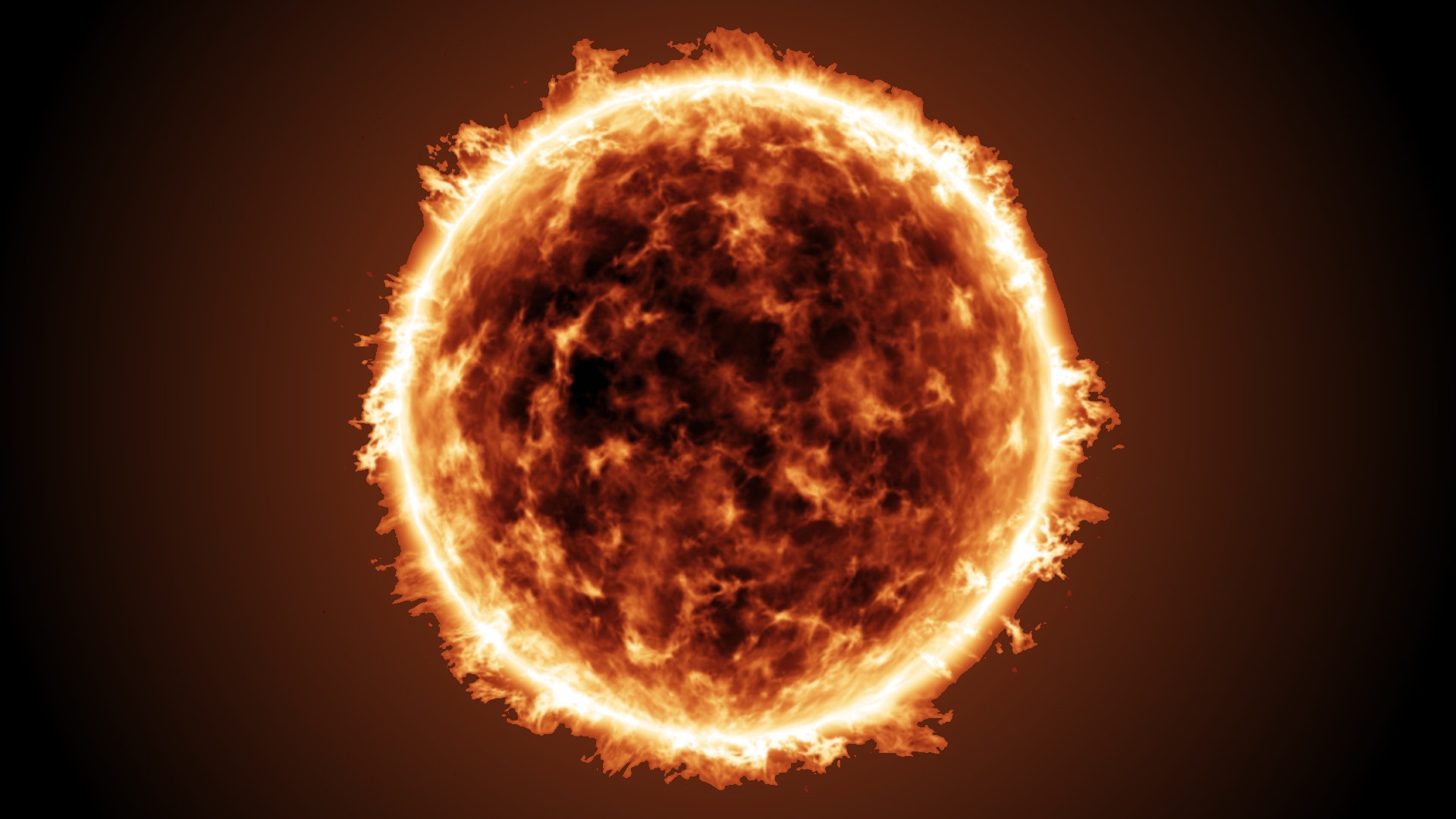
Every morning, the Sun rises and fills the Earth with warmth and light. Plants begin photosynthesis, weather systems come to life, and nearly every form of life on our planet depends on the Sun’s energy. Yet few people stop to wonder where all of that enormous energy comes from. The answer lies in one of the most extraordinary processes in nature: nuclear fusion.
Nuclear fusion is the process that powers the Sun and every other star in the universe. It is one of the most powerful energy-producing reactions known to science. Unlike burning coal, oil, or natural gas, fusion does not rely on chemical reactions. Instead, it releases energy by combining the nuclei of light atoms into heavier ones. This process produces tremendous amounts of energy while generating no carbon dioxide during operation and far less long-lived radioactive waste than conventional nuclear fission.
Scientists have spent decades trying to recreate nuclear fusion on Earth because it holds the promise of providing abundant, low-carbon energy for future generations. Although achieving practical fusion power remains one of humanity’s greatest scientific and engineering challenges, remarkable progress has been made, bringing us closer than ever before to turning the energy of the stars into a source of electricity.
Understanding Nuclear Fusion
At its simplest, nuclear fusion is a reaction in which two light atomic nuclei combine to form a heavier nucleus. During this process, a small amount of mass is converted directly into energy.
This conversion follows one of the most famous equations in science:
E = mc²
Developed by Albert Einstein, the equation shows that even a tiny amount of mass can be transformed into an enormous amount of energy because it is multiplied by the square of the speed of light, an incredibly large number.
Fusion demonstrates this principle perfectly. When light nuclei merge, the mass of the resulting nucleus is slightly less than the combined mass of the original nuclei. The missing mass becomes energy.
This released energy is what makes stars shine for billions of years.
The Structure of an Atom
To understand fusion, it helps to understand the structure of atoms.
Everything around us is made of atoms. Each atom consists of a dense central nucleus surrounded by electrons.
Inside the nucleus are particles called protons and neutrons.
Protons carry a positive electric charge, while neutrons have no electric charge.
Normally, positively charged protons repel one another because like charges push apart. This electrical repulsion creates one of the biggest challenges for nuclear fusion.
For fusion to occur, two atomic nuclei must come close enough for another force, known as the strong nuclear force, to overcome this electrical repulsion.
The strong nuclear force acts only over extremely short distances, but when nuclei get close enough, it becomes far stronger than the electric repulsion and binds them together.
Creating conditions where this can happen requires extraordinary temperatures and pressures.
Why Fusion Needs Extreme Heat
Hydrogen nuclei naturally repel one another.
To force them close enough to fuse, they must move at incredibly high speeds.
Temperature is a measure of the average kinetic energy of particles. The hotter a substance becomes, the faster its particles move.
Inside stars, temperatures reach millions of degrees Celsius.
At such enormous temperatures, atoms lose their electrons, forming an electrically charged state of matter known as plasma.
Plasma behaves differently from solids, liquids, and gases. It responds strongly to magnetic fields and consists of freely moving ions and electrons.
Fusion reactions occur within this hot plasma.
On Earth, scientists typically need temperatures exceeding 100 million degrees Celsius to achieve conditions suitable for fusion—hotter than the center of the Sun. Although the Sun’s core is around 15 million degrees Celsius, its immense gravity creates pressures far greater than anything currently possible in terrestrial fusion reactors.
How the Sun Produces Energy
The Sun is essentially an enormous natural fusion reactor.
Its immense gravity squeezes hydrogen nuclei together under extreme pressure and temperature.
Deep within the Sun’s core, hydrogen nuclei gradually combine through a series of fusion reactions that ultimately produce helium.
During this process, energy is released as gamma rays and the kinetic energy of particles. Over thousands to millions of years, this energy slowly moves outward through the Sun before finally escaping as visible sunlight, infrared radiation, ultraviolet light, and other forms of electromagnetic radiation.
Every second, the Sun converts hundreds of millions of tonnes of hydrogen into helium.
Although an enormous amount of mass is transformed into energy every second, the Sun contains so much hydrogen that it is expected to continue shining for roughly another five billion years.
Hydrogen: The Ideal Fusion Fuel
Hydrogen is the simplest and most abundant element in the universe.
Its nucleus usually contains a single proton.
Scientists often focus on special forms of hydrogen known as isotopes.
An isotope has the same number of protons but a different number of neutrons.
The two hydrogen isotopes most commonly used in fusion research are deuterium and tritium.
Deuterium contains one proton and one neutron.
Tritium contains one proton and two neutrons.
When deuterium and tritium fuse, they produce helium, a high-energy neutron, and a large amount of energy.
This reaction is currently considered the most practical approach for achieving controlled fusion because it occurs more readily than many other possible fusion reactions.
Plasma: The Fourth State of Matter
Most people learn about solids, liquids, and gases.
Fusion introduces a fourth state of matter: plasma.
Plasma forms when gases become so hot that electrons separate from atomic nuclei.
The result is a mixture of charged particles.
More than 99 percent of the visible universe exists in the plasma state.
Stars are giant spheres of plasma.
Lightning creates plasma.
The colorful auroras near Earth’s poles are produced by plasma interactions in the upper atmosphere.
Fusion reactors must carefully confine this extremely hot plasma without allowing it to touch the reactor walls.
Magnetic Confinement Fusion
One of the leading methods for producing controlled fusion uses powerful magnetic fields.
Because plasma contains charged particles, magnetic fields can guide and confine it.
A device called a tokamak traps plasma inside a doughnut-shaped chamber using extremely strong magnetic fields.
The goal is to keep the plasma hot, dense, and stable long enough for fusion reactions to produce more energy.
Another design, known as a stellarator, also uses magnetic confinement but employs a more complex arrangement of twisted magnetic fields to improve plasma stability.
Both approaches represent decades of scientific innovation and continue to be actively developed around the world.
Inertial Confinement Fusion
Another major approach to fusion is called inertial confinement fusion.
Instead of magnetic fields, this method uses extremely powerful lasers or particle beams.
Tiny fuel pellets containing deuterium and tritium are rapidly compressed and heated.
The intense pressure causes fusion reactions before the fuel has time to expand.
This process lasts only tiny fractions of a second but can produce enormous temperatures and pressures.
Advances in high-powered laser technology have enabled significant breakthroughs in this area, demonstrating that controlled fusion reactions are possible under laboratory conditions.
Nuclear Fusion Versus Nuclear Fission
People sometimes confuse fusion with nuclear fission because both release nuclear energy.
However, they are fundamentally different processes.
Nuclear fission splits large atomic nuclei, such as uranium or plutonium, into smaller nuclei.
This splitting releases energy and forms the basis of today’s nuclear power plants.
Fusion does the opposite.
Instead of splitting heavy atoms, it joins light atoms together.
Fusion offers several important advantages over fission.
Fusion reactions cannot sustain themselves in the same way as a fission chain reaction. If the necessary conditions are interrupted, the reaction naturally stops.
Fusion also produces far less long-lived radioactive waste than conventional fission reactors.
Furthermore, fusion does not emit carbon dioxide during electricity generation.
These characteristics make fusion an attractive candidate for future low-carbon energy systems.
Why Fusion Produces So Much Energy
Fusion releases enormous amounts of energy because of differences in nuclear binding energy.
Atomic nuclei have varying levels of stability.
Light nuclei become more stable when they fuse into somewhat heavier nuclei.
The increase in stability releases energy.
This process continues efficiently up to elements around iron.
Stars create many of the chemical elements in the universe through successive stages of nuclear fusion.
Without fusion inside stars, the elements needed for planets, oceans, and life—including carbon, oxygen, and many others—would never have formed.
In this sense, every person is made from atoms that were forged in ancient stars through nuclear fusion.
Fusion and the Origin of the Elements
Shortly after the Big Bang, the universe consisted mainly of hydrogen and helium.
Heavier elements did not yet exist.
Over billions of years, stars acted as cosmic furnaces.
Fusion gradually built heavier elements from lighter ones.
Massive stars eventually produced elements up to iron.
Even heavier elements formed during some of the universe’s most energetic events, such as certain stellar explosions and neutron star mergers.
The calcium in our bones, the oxygen we breathe, the carbon in our cells, and the iron in our blood all originated through processes connected to stellar nuclear reactions.
Fusion has therefore shaped not only the stars but also the chemical foundation of life itself.
Why Controlled Fusion Is So Difficult
If fusion powers every star, why has it proven so difficult to reproduce on Earth?
The answer lies in the extraordinary conditions required.
Temperatures must reach well over 100 million degrees Celsius.
The plasma must remain stable despite intense turbulence.
The fuel must be confined without touching reactor walls.
Powerful magnetic fields or precisely controlled laser systems are required.
The reactor materials must withstand intense neutron bombardment and extreme heat.
Scientists must also ensure that the fusion reactions produce more usable energy than the energy required to start and maintain them.
Meeting all these conditions simultaneously represents one of the greatest engineering challenges ever attempted.
Fusion Energy and Electricity
Fusion reactions themselves do not directly power homes.
Instead, the energy released from fusion heats materials surrounding the plasma.
This heat can produce steam, much like in many existing power plants.
The steam drives turbines connected to electrical generators.
The generators convert mechanical energy into electricity that can be supplied to homes, industries, hospitals, and businesses.
Although the source of heat differs from coal, natural gas, or nuclear fission plants, the final electricity-generation process is similar.
The Fuel Supply for Fusion
One reason fusion attracts so much attention is the availability of its fuel.
Deuterium occurs naturally in seawater.
Although only a small fraction of hydrogen atoms are deuterium, Earth’s oceans contain an enormous total amount.
Tritium is much rarer in nature, but future fusion reactors are expected to produce much of the tritium they need by using neutrons from the fusion reaction to interact with lithium-containing materials inside the reactor.
If practical fusion becomes commercially successful, its fuel resources could potentially support energy production for a very long time.
Is Fusion Safe?
No energy technology is completely without risk, but fusion has several inherent safety characteristics.
Fusion does not rely on a self-sustaining chain reaction.
If reactor conditions change unexpectedly, the plasma cools rapidly and the fusion reactions stop.
Because the amount of fuel inside the reactor at any moment is relatively small, the energy available for an uncontrolled event is much lower than in large fission reactors.
Fusion reactors still require careful engineering, radiation protection, and robust safety systems, particularly because high-energy neutrons can activate reactor materials and tritium must be handled safely.
Nevertheless, many researchers believe fusion has the potential to achieve a high level of operational safety when properly designed.
Fusion and Climate Change
The world is searching for ways to reduce greenhouse gas emissions while meeting growing energy demands.
Fusion is attractive because it can generate electricity without producing carbon dioxide during normal operation.
If commercial fusion power becomes economically practical, it could complement renewable energy sources such as solar and wind by providing reliable electricity regardless of weather conditions.
However, fusion is not expected to replace existing energy systems overnight.
Even if technical challenges are overcome, building commercial fusion power plants on a large scale will require considerable time, investment, and international collaboration.
Current Progress in Fusion Research
Fusion research has advanced significantly over recent decades.
Scientists have achieved record plasma temperatures, improved magnetic confinement techniques, developed more efficient superconducting magnets, and demonstrated important milestones in laser-driven fusion experiments.
Researchers continue working to improve plasma stability, increase energy output, enhance reactor materials, and develop technologies needed for future commercial power plants.
Several experimental reactors around the world are helping scientists better understand how controlled fusion can eventually become a practical energy source.
Although commercial fusion electricity is not yet available, progress has accelerated in recent years.
Common Misconceptions About Nuclear Fusion
Many people assume fusion is already powering cities because they hear frequent news about scientific breakthroughs.
In reality, most fusion experiments remain research projects rather than commercial power plants.
Others believe fusion is simply another form of nuclear fission.
While both involve atomic nuclei, they are entirely different physical processes with distinct technologies and safety considerations.
Some imagine that fusion can be achieved by simply heating hydrogen.
In practice, maintaining a stable plasma at extreme temperatures while producing more energy than is consumed is extraordinarily difficult.
Each advance represents years of scientific research and engineering innovation.
The Future of Nuclear Fusion
The dream of harnessing the power of the stars has inspired generations of scientists.
Although many challenges remain, continued advances in plasma physics, superconducting technology, materials science, artificial intelligence, robotics, and high-performance computing are steadily improving our ability to control fusion reactions.
Future fusion power plants could provide large amounts of low-carbon electricity, helping support growing populations while reducing dependence on fossil fuels.
Fusion is unlikely to solve every global energy challenge on its own, but it may become an important part of a broader portfolio that includes renewable energy, improved energy storage, and greater efficiency.
The coming decades will determine how quickly this vision becomes reality.
Why Nuclear Fusion Matters
Nuclear fusion is much more than a fascinating scientific concept. It is the natural process that has illuminated the universe for billions of years, forged many of the elements that make up our world, and provided the energy that sustains life on Earth through the Sun.
By understanding fusion, we gain insight into how stars are born, how galaxies evolve, and how the chemical building blocks of life were created. At the same time, fusion offers a glimpse of a future in which abundant, low-carbon energy could help meet humanity’s growing needs.
Although recreating the power of the stars on Earth remains one of science’s greatest challenges, each discovery brings us closer to that goal. Nuclear fusion reminds us that some of nature’s most extraordinary processes can also become humanity’s greatest opportunities. It is a story of curiosity, persistence, and the remarkable pursuit of understanding the universe—and using that knowledge to build a more sustainable future.