Every day, we unlock our digital lives. We sign in to email accounts, social media, online banking, shopping websites, cloud storage, and countless apps. Almost every online service asks us one simple question: “Who are you?” For decades, the answer has been a password—a secret combination of letters, numbers, and symbols that proves our identity.
But passwords have a problem. They are easy to forget, difficult to create securely, and surprisingly vulnerable to cybercriminals. Every year, millions of passwords are stolen through phishing attacks, data breaches, malware, or weak security practices. Even the strongest password can eventually become a target.
To solve these long-standing challenges, a new method of authentication has emerged: the passkey. Technology companies are increasingly adopting passkeys as a replacement for traditional passwords, promising a future where signing in is both easier and significantly more secure.
So, what exactly is a passkey? How does it differ from a password? Can it really make online accounts safer? And does this mean passwords will eventually disappear? Understanding the science and technology behind both methods reveals why cybersecurity experts see passkeys as one of the biggest advances in digital security in decades.
What Is a Password?
A password is a secret piece of information that only the user and the online service are supposed to know. When you create an account, you choose a password, and the service stores a protected version of it—typically a cryptographic hash rather than the password itself. Later, when you sign in, the password you enter is processed in the same way and compared with the stored value. If they match, access is granted.
Passwords have been used in computing since the early days of multi-user computer systems. They became the standard method of authentication because they are simple, inexpensive to implement, and easy to understand.
A password can contain letters, numbers, punctuation marks, or special characters. In general, longer and more random passwords are much harder to guess or crack than short, predictable ones.
Although passwords remain common, their effectiveness depends heavily on how people use them. Human behavior—not the concept of passwords itself—is often their greatest weakness.
Why Passwords Have Become a Security Problem
The internet has grown far beyond what early computer scientists imagined. Today, the average person may have dozens or even hundreds of online accounts. Remembering a unique, strong password for every account is extremely difficult.
As a result, many people reuse the same password across multiple websites. Others create passwords based on birthdays, pet names, favorite sports teams, or simple patterns that are easy to remember—but also easy for attackers to guess.
Cybercriminals exploit these habits in many ways.
When a website suffers a data breach, stolen password databases can sometimes be used to attack accounts on other services where users reused the same password. This technique is known as credential stuffing.
Attackers also use automated software to test billions of password combinations, an approach called a brute-force attack. While modern systems often slow or block repeated attempts, weak passwords remain vulnerable.
Even more dangerous are phishing attacks. Criminals create fake login pages that closely resemble legitimate websites. If a user enters a password into the fake page, the attacker captures it immediately.
In all of these situations, the password itself becomes the target.
What Is a Passkey?
A passkey is a modern authentication method designed to replace passwords. Instead of asking users to remember a secret word or phrase, a passkey relies on public-key cryptography—a well-established technology that has protected secure internet communications for decades.
When you create a passkey for an account, your device generates two mathematically related cryptographic keys.
One is a private key, which never leaves your trusted device.
The other is a public key, which is shared with the website or app.
These two keys work together, but they are fundamentally different. The public key cannot be used to calculate or reveal the private key.
When you sign in later, the website sends a cryptographic challenge. Your device uses the private key to create a digital signature proving that it possesses the correct key. The website verifies the signature using the stored public key.
At no point is the private key transmitted across the internet.
This is the fundamental reason passkeys offer stronger protection than passwords.
How Passkeys Work Behind the Scenes
Imagine receiving a unique puzzle that only your personal device can solve.
The website sends this puzzle to your phone, computer, or tablet. Your device uses its private key to solve it and sends back the answer.
The website checks the answer using the public key it already has.
If everything matches, you are signed in.
Because the private key never leaves your device, an attacker cannot intercept or steal it during the login process.
Even if someone monitors internet traffic, they only see encrypted communication and a digital signature—not the private key itself.
This makes passkeys fundamentally different from passwords, which must be entered and verified each time you log in.
The Science Behind Public-Key Cryptography
Passkeys rely on public-key cryptography, also called asymmetric cryptography.
Unlike passwords, which involve a single shared secret, asymmetric cryptography uses two separate keys with different purposes.
The private key remains securely stored on your device, often inside specialized hardware designed to resist tampering.
The public key is safe to share openly because it cannot be used to reconstruct the private key.
This mathematical relationship allows websites to verify your identity without ever learning your secret key.
Modern public-key cryptography is based on mathematical problems that are computationally infeasible to solve with current technology when implemented correctly. While no security system is absolutely perfect, properly implemented public-key cryptography is considered highly secure.
Why Passkeys Resist Phishing
One of the greatest strengths of passkeys is their resistance to phishing.
With passwords, a fake website can simply ask you to type your password.
With passkeys, things work differently.
Your device checks whether the website requesting authentication matches the legitimate website associated with the stored passkey.
If someone creates a fake version of a banking website using a different internet address, your device will not use the passkey for that fraudulent site.
Even if you accidentally visit the fake page, your passkey cannot simply be typed into it because there is no password to enter.
This dramatically reduces one of the most common causes of online account theft.
Protection Against Data Breaches
Data breaches affect organizations of every size.
When passwords are stolen from compromised databases, attackers often attempt to crack them or reuse them elsewhere.
Passkeys change this situation significantly.
The website stores only the public key.
Even if attackers steal the database, the public keys alone cannot authenticate users.
Since the private keys remain on users’ devices, the stolen information is generally of little use for impersonating those users.
This represents a major improvement in account security.
Easier for Users
One surprising advantage of passkeys is convenience.
Strong passwords are difficult to remember.
Password managers help, but many people still struggle with forgotten passwords and frequent password resets.
Passkeys remove this burden.
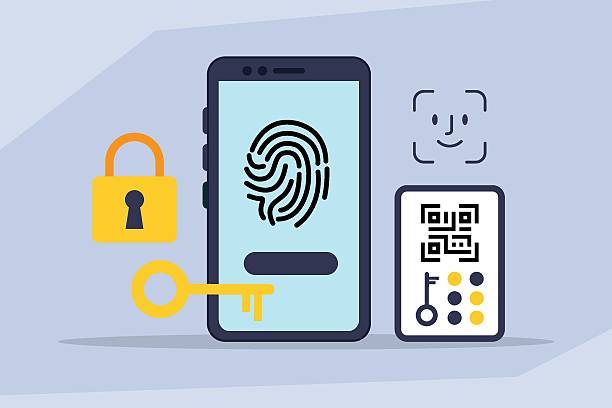
Instead of remembering a complicated string of characters, users typically authenticate with something they already use every day, such as a fingerprint, facial recognition, or a device PIN.
Importantly, these biometric methods usually verify identity only on the local device. Your fingerprint or facial scan is generally not sent to the website as your login credential. Instead, it unlocks access to the private key stored securely on your device.
This distinction is essential for understanding how passkeys protect privacy.
Are Passkeys the Same as Biometrics?
Many people assume passkeys and biometrics are identical, but they are not.
A passkey is the cryptographic credential.
A fingerprint or facial scan is simply one possible method of unlocking access to that credential on your own device.
Some devices allow passkeys to be unlocked with a PIN instead of biometrics.
Others support multiple authentication methods.
This means passkeys do not depend on biometric technology, even though the two are often used together.
What Happens If You Lose Your Device?
One common concern is what happens if a phone or laptop is lost.
Fortunately, modern passkey systems often support secure synchronization across trusted devices using encrypted cloud services provided by device ecosystems. This allows users to recover access after replacing a device without creating entirely new credentials for every account.
Many services also encourage users to register passkeys on more than one trusted device or provide additional account recovery options.
However, recovery procedures vary between services, so understanding an account’s recovery methods remains important.
Can Passkeys Be Hacked?
No authentication system can honestly be described as impossible to hack.
Security always depends on implementation, device protection, software quality, and user behavior.
However, passkeys eliminate many of the attacks that commonly succeed against passwords.
They cannot be guessed through brute force because there is no reusable password to guess.
They cannot easily be stolen through phishing.
They are not exposed during login.
They greatly reduce the value of stolen website databases.
An attacker would generally need to compromise the trusted device itself or exploit another weakness rather than simply stealing a reusable secret.
Where Passwords Still Have Advantages
Despite their weaknesses, passwords remain useful in some situations.
Nearly every online service already supports them.
They work on virtually any internet-connected device without requiring modern authentication standards.
Some organizations continue using legacy software that does not yet support passkeys.
Passwords can also be shared intentionally, although this is usually discouraged from a security perspective.
For these reasons, passwords are unlikely to disappear immediately.
Instead, the internet is currently undergoing a gradual transition toward passkeys.
Are Password Managers Still Useful?
Password managers remain valuable even as passkeys become more common.
Many websites still require passwords.
Password managers help users generate long, unique passwords for every account and securely store them.
Some modern password managers also support storing and managing passkeys.
During the transition period, they may become an important bridge between older password-based systems and newer passkey-based authentication.
The Role of Two-Factor Authentication
Before passkeys became available, two-factor authentication significantly improved password security.
With two-factor authentication, users provide both a password and a second verification step, such as a temporary code or hardware security key.
This additional layer makes stolen passwords much less useful.
Passkeys combine strong cryptographic authentication with a simpler user experience, reducing the need for separate password-based verification in many situations.
Nevertheless, some organizations may continue using additional security measures for highly sensitive accounts.
Privacy and Passkeys
Privacy is another important consideration.
Because passkeys rely on unique cryptographic credentials for each website, they reduce opportunities for tracking users across different services.
Each passkey is specific to one account and one website.
The public key stored by one service cannot generally be used by another service to identify the same user.
This design helps improve privacy while strengthening authentication.
How Major Technology Companies Are Supporting Passkeys
Passkeys are based on open standards developed by the FIDO Alliance and the World Wide Web Consortium (W3C). These standards allow different operating systems, browsers, and devices to support compatible authentication methods.
Major technology companies—including Apple, Google, and Microsoft—have integrated passkey support into their operating systems and browsers. As more websites and applications adopt these standards, users are increasingly able to sign in without creating traditional passwords.
This broad industry support is accelerating the transition toward passwordless authentication.
Will Passwords Eventually Disappear?
Passwords have been part of computing for decades.
Replacing them completely will take time.
Millions of older systems still depend on password-based authentication.
Businesses must update software, educate users, and redesign login processes.
For many years, passwords and passkeys will likely coexist.
However, the long-term trend is clear.
As more websites adopt passkeys, fewer users will need to remember complex passwords for their most important accounts.
The internet is gradually moving toward authentication that is both stronger and easier to use.
Which Is More Secure?
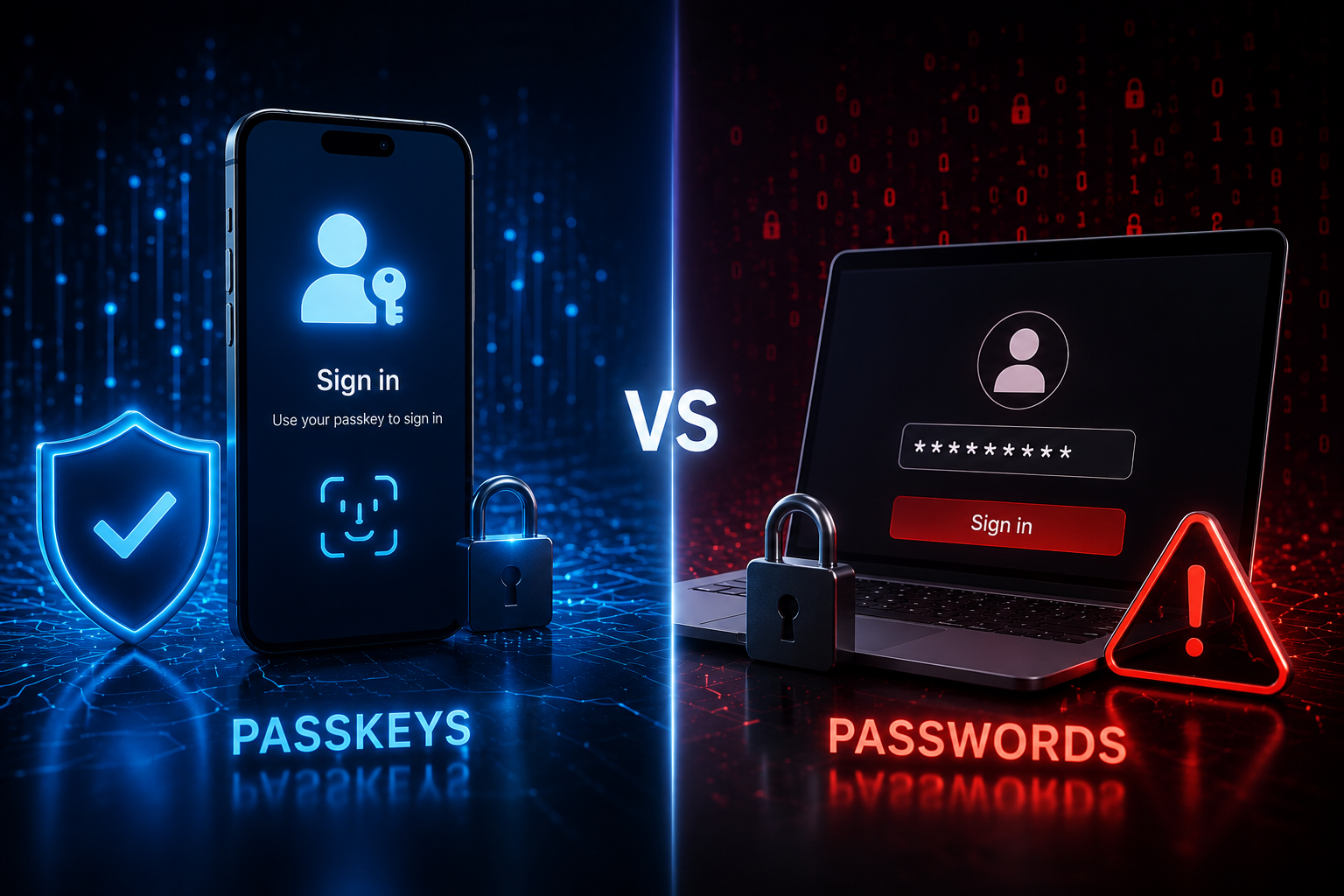
From a cybersecurity perspective, passkeys provide stronger protection than traditional passwords in most real-world situations.
Passwords depend heavily on human memory and behavior. People often choose weak passwords, reuse them across accounts, or accidentally reveal them through phishing attacks. Even carefully created passwords remain reusable secrets that attackers can target.
Passkeys work differently. They rely on well-established cryptographic principles rather than shared secrets. The private key stays on the user’s trusted device, authentication is tied to the legitimate website, and stolen server databases do not expose reusable login credentials.
While no security technology can eliminate every possible threat, passkeys significantly reduce many of the most common attacks that compromise online accounts today.
The shift from passwords to passkeys represents more than a simple technological upgrade. It reflects a fundamental change in how digital identity is protected. Instead of asking people to remember increasingly complex secrets, modern authentication allows mathematics and cryptography to provide security in the background. As adoption continues to grow, passkeys are poised to become the foundation of a safer, more user-friendly internet.