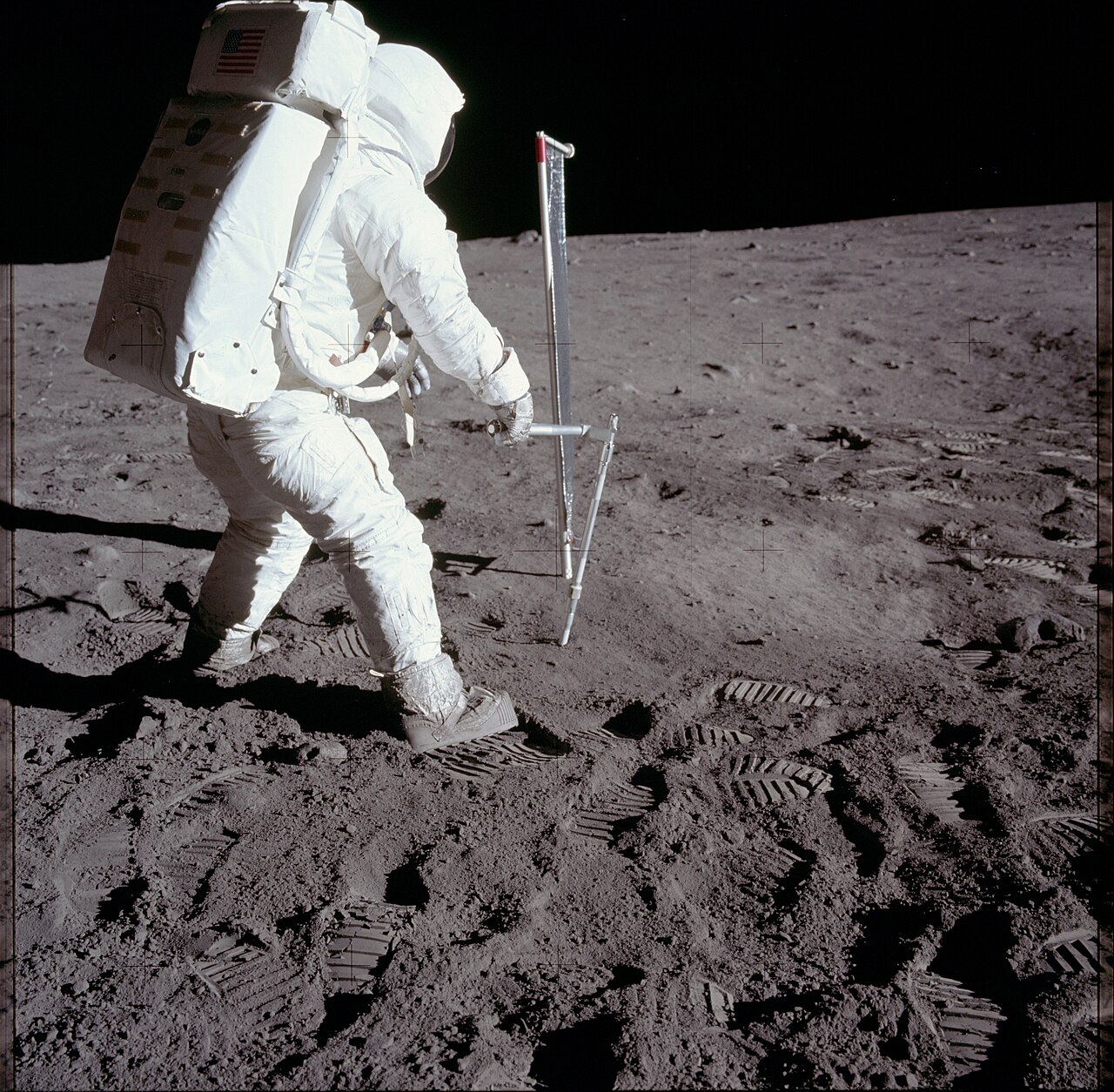
For thousands of years, people have looked up at the night sky with wonder. The stars appeared distant and unreachable, the Moon seemed mysterious, and the planets were little more than bright points of light moving across the heavens. Ancient civilizations created stories about the cosmos, while early astronomers carefully mapped the skies. Yet no one could have imagined that one day humans would walk on the Moon, send robotic explorers to every major planet in our Solar System, and place powerful telescopes far beyond Earth’s atmosphere.
Today, humanity stands at the beginning of a remarkable new chapter in space exploration. Unlike the Space Race of the twentieth century, which focused mainly on proving technological superiority, the future of space exploration is driven by scientific discovery, international cooperation, commercial innovation, and the dream of expanding humanity’s presence beyond Earth.
Powerful rockets are becoming reusable, spacecraft are growing more advanced, artificial intelligence is helping explore distant worlds, and scientists are preparing missions that may one day answer one of humanity’s oldest questions: Are we alone in the universe?
The future of space exploration is no longer just about visiting space. It is about learning to live there.
A New Era Beyond the Space Race
The first decades of space exploration were dominated by competition. The launch of the first artificial satellite, the first human in space, and the first Moon landing marked extraordinary achievements that transformed history.
Today, the goals have evolved.
Scientists now focus on understanding the origins of the universe, searching for signs of past or present life, studying planets beyond our Solar System, protecting Earth from cosmic hazards, and developing technologies that could allow humans to live on other worlds.
Governments remain major participants, but private aerospace companies are also playing an increasingly important role. Their innovations are making launches more frequent, reducing costs, and opening new possibilities for scientific research and commercial activity in space.
Why Humans Continue Exploring Space
Some people ask why we spend resources exploring space when challenges remain here on Earth.
The answer lies in both practical benefits and human curiosity.
Space exploration has led to countless technological advances that improve everyday life. Satellite communications, weather forecasting, GPS navigation, medical imaging technologies, improved materials, and Earth observation systems all owe much to space research.
Beyond these practical benefits, exploration is deeply connected to human nature.
Every generation has sought to discover what lies beyond the known horizon. Space represents the greatest frontier humanity has ever faced.
By exploring the universe, we also gain a better understanding of our own planet and our place within the cosmos.
Returning Humans to the Moon
The Moon is once again becoming one of humanity’s most important destinations.
Rather than making brief visits, future missions aim to establish a long-term human presence on the lunar surface.
Scientists are especially interested in the Moon’s polar regions, where permanently shadowed craters are believed to contain significant amounts of water ice. Water is valuable because it can provide drinking water, oxygen for breathing, and hydrogen and oxygen that can be used as rocket fuel after appropriate processing.
Living and working on the Moon will teach engineers how to build habitats, generate power, recycle resources, and support astronauts during long-duration missions.
The Moon may become an important stepping stone for deeper exploration of the Solar System.
Building Permanent Moon Bases
Future lunar bases could become scientific laboratories unlike any ever built.
Astronauts may live there for months while conducting experiments in geology, astronomy, biology, and materials science.
Robots could assist with construction, mining, and maintenance.
Buildings might even be made using lunar soil, known as regolith, reducing the need to transport construction materials from Earth.
Although many engineering challenges remain, permanent Moon bases are becoming realistic long-term goals rather than distant dreams.
The Journey to Mars
If the Moon is humanity’s first destination beyond Earth, Mars is perhaps the ultimate goal.
Mars has fascinated scientists because it shares several similarities with Earth. It has seasons, polar ice caps, ancient river valleys, volcanoes, and evidence that liquid water once flowed across its surface.
Future missions hope to determine whether microscopic life ever existed there.
Sending humans to Mars, however, presents enormous challenges.
The journey takes many months using current propulsion technology.
Astronauts would face exposure to cosmic radiation, reduced gravity, psychological isolation, and the need to produce food, water, and oxygen far from Earth.
Despite these difficulties, scientists and engineers continue developing the technologies needed for future human missions.
Searching for Life Beyond Earth
One of the greatest scientific goals of future space exploration is finding evidence of life elsewhere in the universe.
Scientists are investigating several promising locations.
Mars may preserve signs of ancient microbial life beneath its surface.
Jupiter’s moon Europa likely contains a vast liquid ocean beneath an icy shell.
Saturn’s moon Enceladus also hides a global ocean and ejects water-rich plumes into space, allowing spacecraft to sample material without drilling through ice.
These worlds contain some of the ingredients considered important for life as we know it.
Future missions will search for chemical signatures and environmental conditions that could reveal whether life exists—or once existed—beyond Earth.
Exploring the Giant Planets
The outer planets remain among the Solar System’s greatest mysteries.
Jupiter, Saturn, Uranus, and Neptune are vastly different from the rocky planets closer to the Sun.
Scientists hope future spacecraft will study their atmospheres, magnetic fields, rings, and numerous moons in far greater detail.
Understanding these giant planets also helps astronomers interpret the many large exoplanets discovered around other stars.
Each new mission deepens our understanding of how planetary systems form and evolve.
Discovering New Worlds Around Other Stars
One of the most exciting developments in modern astronomy is the discovery of exoplanets—planets that orbit stars beyond our Solar System.
Thousands have already been confirmed.
Some are enormous gas giants.
Others are rocky worlds similar in size to Earth.
Future space telescopes will analyze the atmospheres of these distant planets by studying the tiny amounts of starlight that pass through them during planetary transits or reflect from their surfaces.
Scientists hope to detect gases such as oxygen, methane, carbon dioxide, and water vapor, which may provide clues about planetary environments and, in some cases, possible biological activity.
Although detecting these gases alone would not prove the existence of life, they could guide future investigations.
More Powerful Space Telescopes
Every generation of telescopes reveals a universe more astonishing than the one before.
Future observatories will look farther into space and further back in time than ever before.
They may observe the earliest galaxies that formed after the Big Bang, investigate the birth of stars and planets, study black holes in unprecedented detail, and examine the atmospheres of distant exoplanets.
Some telescopes may operate in visible light, while others will observe infrared, ultraviolet, X-ray, or radio wavelengths, allowing scientists to study different aspects of the universe.
Each new telescope expands humanity’s cosmic vision.
Artificial Intelligence Will Transform Exploration
Artificial intelligence is becoming an increasingly valuable tool in space exploration.
Future spacecraft may use AI to navigate complex environments, analyze scientific data, identify interesting geological features, monitor spacecraft health, and assist astronauts during long missions.
Because communication with distant spacecraft can take minutes or even hours, intelligent onboard systems will become increasingly important.
AI can help robotic explorers make decisions independently when immediate guidance from Earth is impossible.
However, human scientists will continue to play the central role in interpreting discoveries and directing missions.
Robots Will Go Where Humans Cannot
Robotic spacecraft have already transformed our understanding of the Solar System.
Future robots will become even more capable.
They may climb cliffs on Mars, drill deep beneath icy surfaces, fly through alien atmospheres, swim beneath frozen oceans, or explore volcanic environments that would be too dangerous for human astronauts.
Robots can operate in extreme temperatures, intense radiation, and environments lacking breathable air.
Their discoveries often prepare the way for future human missions.
New Rocket Technologies
Reaching space has traditionally been extremely expensive.
One of the biggest changes in recent years has been the development of reusable rocket technology.
Instead of discarding rockets after a single launch, engineers are increasingly designing systems that can return to Earth, be refurbished, and fly again.
Reusability has the potential to reduce launch costs while increasing the frequency of missions.
Scientists are also studying advanced propulsion systems that could shorten travel times for future deep-space missions.
Although concepts such as nuclear propulsion are still under development and require careful consideration of engineering and safety challenges, they may eventually help astronauts travel farther into the Solar System.
Living in Space
Long-duration space missions require more than transportation.
Astronauts need safe habitats, reliable food supplies, clean water, breathable air, and protection from radiation.
Future spacecraft and planetary habitats will rely heavily on recycling systems that recover water, regenerate oxygen, and minimize waste.
Scientists are studying how plants grow in space because future explorers may produce some of their own food during extended missions.
Closed-loop life support systems will become increasingly important as humans travel farther from Earth.
Space Stations of the Future
Space stations have served as laboratories where scientists study how living and nonliving systems behave in microgravity.
Future stations may be larger, more modular, and designed for longer missions.
Some could orbit the Moon, serving as staging points for lunar and Martian expeditions.
Others may support scientific research, technology testing, commercial activities, and international cooperation.
Experience gained aboard these stations will help prepare humanity for permanent settlements beyond Earth.
Mining Resources in Space
Asteroids contain metals, minerals, and other materials that formed during the early history of the Solar System.
Some researchers believe these resources could one day support space exploration by providing materials for construction or fuel production away from Earth.
However, asteroid mining remains largely a future possibility.
Significant technological, economic, and legal challenges must be overcome before large-scale resource extraction becomes practical.
Even so, studying these ancient objects provides valuable scientific information about the formation of planets.
Protecting Earth from Space Hazards
Space exploration also helps defend our own planet.
Astronomers continuously search for near-Earth asteroids whose orbits bring them close to Earth.
Most pose no immediate danger, but identifying potentially hazardous objects early provides time for careful study and, if ever necessary, the development of strategies to alter an asteroid’s trajectory.
Planetary defense is becoming an important part of modern space science.
Understanding Earth’s Climate
Looking outward has also improved our understanding of Earth.
Earth-observing satellites monitor weather systems, oceans, forests, glaciers, wildfires, sea levels, atmospheric composition, and many other environmental changes.
These observations help scientists improve climate models, forecast storms, monitor natural disasters, and better understand the changing planet.
In many ways, exploring space has become one of the best ways to study Earth itself.
Space Tourism and Commercial Spaceflight
Space is no longer reserved exclusively for professional astronauts.
Commercial companies are beginning to offer private spaceflight experiences, and research into commercial space stations and future orbital businesses continues.
Although space tourism remains expensive and accessible to relatively few people today, technological progress may gradually broaden opportunities in the coming decades.
Commercial investment is also accelerating innovation in launch systems, spacecraft design, and space infrastructure.
International Cooperation
No single nation possesses all the resources needed to explore every part of the universe.
Future exploration will increasingly depend on cooperation among countries, scientists, engineers, universities, and private organizations.
International partnerships allow missions to combine expertise, share costs, and expand scientific capabilities.
The universe belongs to no single nation, making space exploration one of humanity’s most collaborative scientific endeavors.
The Challenges That Remain
Despite remarkable progress, many obstacles remain before humans become a truly spacefaring civilization.
Radiation exposure during deep-space missions must be reduced.
Life support systems must become more reliable.
Spacecraft need greater efficiency and longer operational lifetimes.
Astronauts must remain healthy during missions lasting months or even years.
The costs of exploration must continue to decrease without compromising safety.
Engineers, physicians, physicists, biologists, computer scientists, and many other experts are working together to solve these complex challenges.
Each solution brings humanity one step closer to exploring the wider universe.
A Future Limited Only by Curiosity
History shows that every generation has expanded humanity’s understanding of the cosmos.
We once believed Earth was the center of the universe.
Later, we learned that our planet orbits the Sun.
Then we discovered billions of stars, billions of galaxies, black holes, gravitational waves, exoplanets, and the vast cosmic web stretching across the observable universe.
Each discovery has revealed that the universe is even larger and more fascinating than previously imagined.
Future generations may witness the first human footsteps on Mars, the discovery of life beyond Earth, permanent settlements on the Moon, or entirely new technologies that transform space travel in ways we cannot yet predict.
Conclusion
The future of space exploration promises one of the most exciting periods in human history. Advances in rocket technology, robotics, artificial intelligence, astronomy, and planetary science are opening doors that once existed only in imagination. From building lunar bases and sending astronauts to Mars to exploring the hidden oceans of icy moons and studying distant exoplanets, humanity is steadily extending its reach into the cosmos.
Yet the greatest significance of space exploration is not simply traveling farther from Earth. It is the knowledge we gain along the way. Every mission teaches us more about the universe, our own planet, and ourselves. As technology continues to evolve and international cooperation grows, the future of space exploration will not only reshape science—it will inspire generations to keep asking questions, pushing boundaries, and reaching for the stars.