Imagine trying to solve a puzzle so enormous that even the world’s fastest supercomputer would need thousands, millions, or even billions of years to find the answer. Now imagine a new kind of computer designed to approach certain problems in a completely different way—one that uses the strange and fascinating rules of quantum physics instead of relying solely on the familiar logic of ordinary computers.
This is the promise of quantum computing. It is one of the most exciting areas of modern science and technology, not because it will replace every computer we use today, but because it could solve specific problems that are currently beyond the reach of even the most powerful classical computers.
Quantum computing is still in its early stages, but researchers around the world believe it has the potential to transform medicine, chemistry, materials science, logistics, artificial intelligence, and many other fields. To understand why quantum computing matters, we first need to understand why today’s computers have limits—and why nature itself may offer a different way to compute.
The Limits of Today’s Computers
Modern computers are extraordinary machines. They power smartphones, laptops, satellites, hospitals, airplanes, weather forecasting systems, and the internet. Every photo you take, every video you stream, every email you send, and every online purchase you make depends on classical computers.
These machines process information using bits. A bit is the smallest unit of information and can have only one of two values: 0 or 1. Every piece of software, every image, every game, and every website is ultimately represented as combinations of these zeros and ones.
As engineers have improved computer technology over the decades, processors have become dramatically faster and more efficient. Today’s supercomputers can perform quadrillions of calculations every second.
Yet even these incredible machines face fundamental challenges.
Some scientific problems become so complex that adding more computing power is no longer enough. The number of possible solutions can grow so quickly that even a supercomputer would take an impractically long time to examine them all.
Nature itself is often more complicated than our computers can easily simulate.
This is where quantum computing enters the picture.
A Different Way of Thinking About Computation
Quantum computers do not simply perform calculations faster than ordinary computers. Instead, they process information using the unusual rules of quantum mechanics, the branch of physics that describes how matter and energy behave at extremely small scales, such as atoms and subatomic particles.
In the quantum world, particles behave in ways that seem strange from an everyday perspective. They can exhibit behaviors that have no direct equivalent in our daily experience.
Quantum computers are designed to take advantage of these behaviors.
Instead of bits, they use quantum bits, or qubits.
This difference changes everything.
What Is a Qubit?
A classical bit is straightforward.
It is either a zero or a one.
A qubit is fundamentally different.
Because it follows the laws of quantum mechanics, a qubit can exist in a quantum state that allows it to represent combinations of possibilities until it is measured. This property is known as superposition.
Superposition does not mean that a qubit is simply both zero and one in the everyday sense. Rather, quantum mechanics describes its state using probabilities that allow quantum algorithms to explore certain computational possibilities in ways that differ from classical computation.
When many qubits work together, they can represent highly complex quantum states.
This gives quantum computers their unique potential.
The Strange Connection Between Qubits
Another remarkable property of quantum mechanics is entanglement.
When qubits become entangled, their quantum states become correlated in ways that cannot be described independently, even if the qubits are separated by large distances.
Entanglement allows quantum computers to coordinate information across multiple qubits in ways that classical systems cannot directly replicate.
Scientists consider entanglement one of the most important resources in quantum computing because many quantum algorithms rely on it.
Quantum Computers Are Not Magic
Popular headlines sometimes suggest that quantum computers will instantly solve every difficult problem.
This is not true.
Quantum computers are not magical machines.
They cannot perform every calculation faster than ordinary computers.
For many everyday tasks—writing documents, watching videos, browsing the internet, playing music, or editing photos—classical computers are expected to remain the best choice.
Quantum computers are valuable because they may excel at certain specialized problems that are exceptionally difficult for classical machines.
Their strength lies in solving particular kinds of scientific and mathematical challenges.
Understanding Molecules More Deeply
One of the greatest opportunities for quantum computing is the simulation of molecules.
Everything around us is made of atoms.
Atoms combine to form molecules.
Molecules determine the properties of medicines, plastics, batteries, fertilizers, fuels, and living cells.
Ironically, molecules themselves follow quantum mechanics.
Trying to simulate them accurately on classical computers becomes increasingly difficult as molecular systems grow more complex.
Quantum computers are naturally suited to modeling quantum systems because they also operate according to quantum principles.
This could allow researchers to better understand chemical reactions that are currently too difficult to simulate with high accuracy.
A New Era for Medicine
Many diseases remain difficult to treat because biology is extraordinarily complex.
Designing a new medicine often requires understanding how thousands of atoms interact inside proteins, enzymes, and cells.
Researchers must test countless molecular combinations before finding one that safely and effectively treats disease.
Quantum computing could improve our ability to model molecular behavior, helping scientists identify promising drug candidates more efficiently.
This would not eliminate laboratory experiments or clinical trials, which remain essential, but better simulations could make the early stages of drug discovery more effective.
Scientists hope this approach could contribute to future treatments for cancer, neurological disorders, infectious diseases, and many other medical conditions.
Better Materials for a Better World
Every technology depends on materials.
Cars require strong metals.
Solar panels require efficient semiconductors.
Aircraft require lightweight composites.
Smartphones require advanced electronic materials.
Battery performance depends on chemical structures inside the battery cells.
Finding improved materials often involves enormous amounts of experimentation.
Quantum computing could help scientists predict how new materials behave before they are manufactured.
This could accelerate the development of more efficient batteries, stronger construction materials, improved solar cells, and advanced superconductors.
Fighting Climate Change
Climate change is one of humanity’s greatest challenges.
Reducing greenhouse gas emissions requires better technologies for generating, storing, and using energy.
Quantum computing may contribute by improving simulations related to chemistry and materials science.
Researchers are investigating whether quantum methods could assist in developing more efficient catalysts, improved battery chemistry, better carbon capture materials, and cleaner industrial processes.
Although quantum computing alone will not solve climate change, it may become one valuable tool among many scientific efforts.
Improving Artificial Intelligence
Artificial intelligence has advanced rapidly during the past decade.
Modern AI systems recognize speech, translate languages, generate images, and assist scientific research.
Some researchers are exploring whether quantum computing might enhance certain machine learning methods.
This field, known as quantum machine learning, remains an active area of research.
Scientists are investigating where quantum algorithms may provide practical advantages, but many questions remain open.
Rather than replacing today’s AI systems, future quantum techniques may complement them in specialized applications.
Making Transportation More Efficient
Imagine coordinating millions of deliveries, flights, shipping routes, trains, and trucks.
Finding the most efficient schedule becomes incredibly complicated.
These problems belong to a class known as optimization problems.
Optimization seeks the best possible solution among enormous numbers of possibilities.
Quantum algorithms may eventually improve certain optimization tasks, helping industries reduce fuel use, shorten delivery times, and improve supply chains.
More efficient transportation could lower costs while reducing environmental impacts.
Helping Scientists Explore the Universe
Physics itself may benefit enormously from quantum computing.
Many mysteries remain unsolved.
Scientists continue investigating dark matter, nuclear interactions, exotic materials, and the earliest moments of the universe.
Quantum simulations could provide new ways to study physical systems that classical computers struggle to model accurately.
In this sense, quantum computing could help us understand nature at its deepest level.
Protecting Information in a Quantum Age
One reason quantum computing attracts so much attention is cybersecurity.
Much of today’s internet security relies on mathematical problems that are difficult for classical computers to solve.
Researchers have shown that a sufficiently capable quantum computer could efficiently solve some of these problems using known quantum algorithms.
For this reason, scientists, governments, and technology companies are developing post-quantum cryptography—new cryptographic methods designed to remain secure against attacks from both classical and quantum computers.
Preparing for the future is important because sensitive information often needs to remain protected for many years.
Quantum Computing Will Not Replace Your Laptop
It is easy to imagine quantum computers replacing every desktop computer.
That is unlikely.
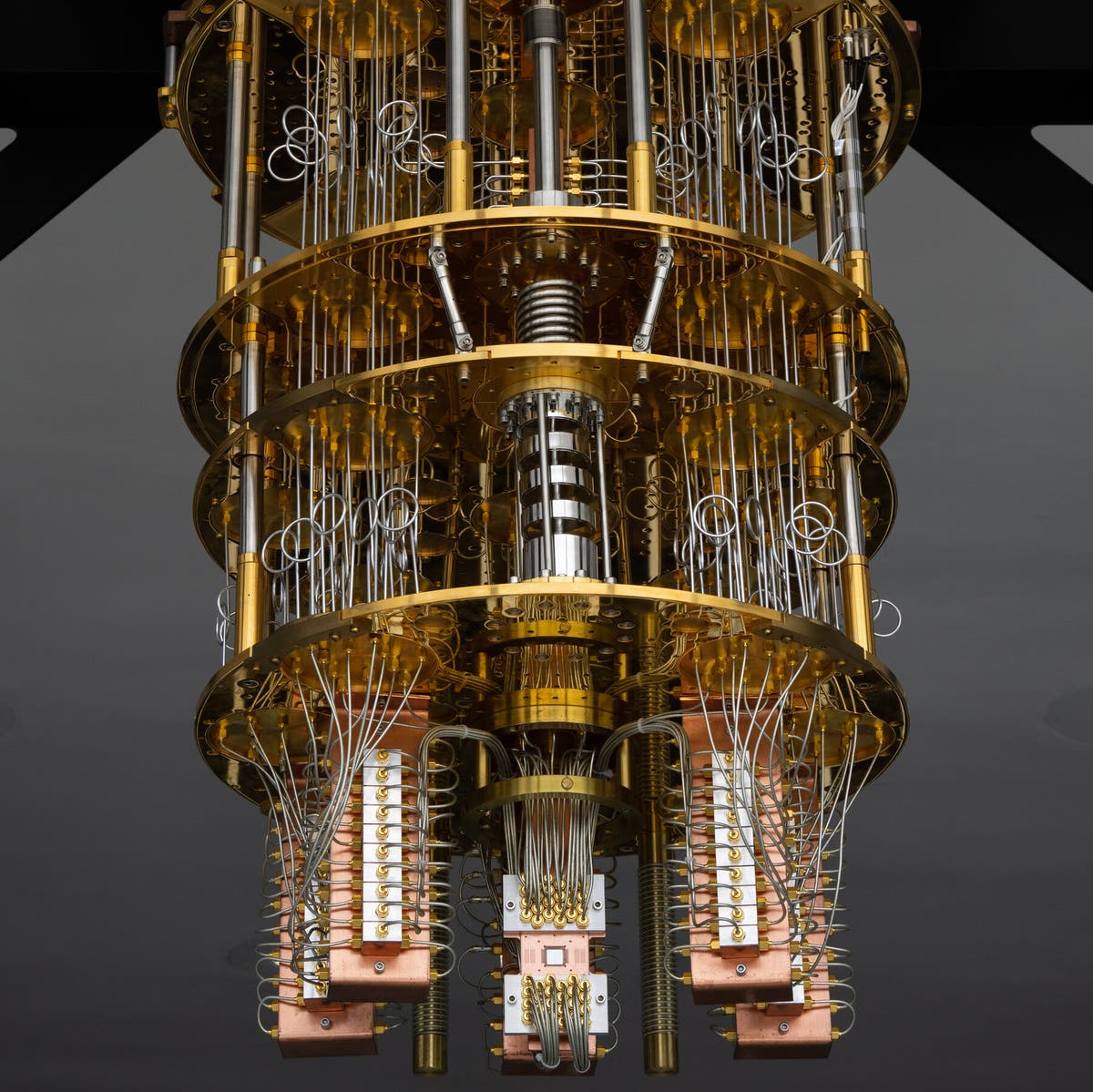
Quantum computers require extremely specialized environments.
Many current systems operate at temperatures only tiny fractions of a degree above absolute zero, making them among the coldest machines ever built.
They also require sophisticated control electronics and careful isolation from environmental disturbances.
Because of these requirements, quantum computers are expected to work alongside classical computers rather than replace them.
Future users may access quantum processors through cloud services while continuing to use ordinary computers for everyday work.
Why Building Quantum Computers Is So Difficult
Creating a useful quantum computer is one of the greatest engineering challenges of our time.
Qubits are extremely sensitive.
Tiny vibrations, heat, electromagnetic interference, or interactions with the surrounding environment can disturb their quantum states.
When this happens, they lose the delicate quantum behavior needed for computation.
This process is called decoherence.
Scientists are developing techniques to reduce errors, improve qubit quality, and implement quantum error correction, which aims to protect quantum information even when individual qubits experience faults.
Achieving reliable, large-scale quantum computing requires overcoming these engineering challenges.
Progress Is Happening Around the World
Universities, national laboratories, and technology companies across many countries are investing heavily in quantum research.
Researchers continue improving qubit quality, increasing processor sizes, and developing new quantum algorithms.
Each year brings important advances, although significant technical challenges remain before large-scale, fault-tolerant quantum computers become widely available.
Progress is steady, but the field is still evolving.
Quantum Computing and Education
As quantum technology grows, education becomes increasingly important.
Students studying physics, mathematics, computer science, engineering, chemistry, and information science are helping shape the future of quantum technologies.
Learning about quantum computing does not require becoming a physicist.
Curiosity is enough to begin.
Understanding its basic ideas helps people appreciate one of the most exciting scientific frontiers of the twenty-first century.
Separating Reality from Hype
Whenever a revolutionary technology appears, excitement often grows faster than reality.
Quantum computing is no exception.
Some claims suggest it will immediately revolutionize every industry.
Others claim it will make all existing computers obsolete.
Neither extreme reflects the current scientific understanding.
Quantum computing has enormous potential, but realizing that potential requires continued research, engineering advances, and careful evaluation of where quantum methods truly offer advantages.
The future is promising, but it is still being built.
Why Quantum Computing Matters to Humanity
Throughout history, new ways of processing information have transformed civilization. The invention of writing preserved knowledge across generations. The printing press spread ideas around the world. Electronic computers accelerated science, communication, and technology. The internet connected billions of people.
Quantum computing may become another important step in that long journey.
Its greatest value lies not in making today’s computers obsolete, but in expanding the kinds of problems humanity can solve. It offers new possibilities for understanding nature, discovering medicines, designing advanced materials, improving industrial processes, strengthening future cybersecurity, and deepening our knowledge of the universe.
Perhaps the most inspiring aspect of quantum computing is what it represents. It shows that even the strange and counterintuitive laws governing the smallest particles can become tools for solving real-world challenges. Ideas that once seemed purely theoretical are now guiding the development of entirely new technologies.
The road ahead will not be simple. Building practical quantum computers remains a demanding scientific and engineering challenge. Yet history has repeatedly shown that persistent curiosity, careful experimentation, and collaboration can turn bold ideas into reality.
Quantum computing matters because it reminds us that science is not only about explaining the world as it is—it is also about discovering new ways to shape the future. As researchers continue to unlock the remarkable possibilities hidden within the quantum world, they are opening doors to discoveries that may influence medicine, industry, communication, and scientific exploration for generations to come.