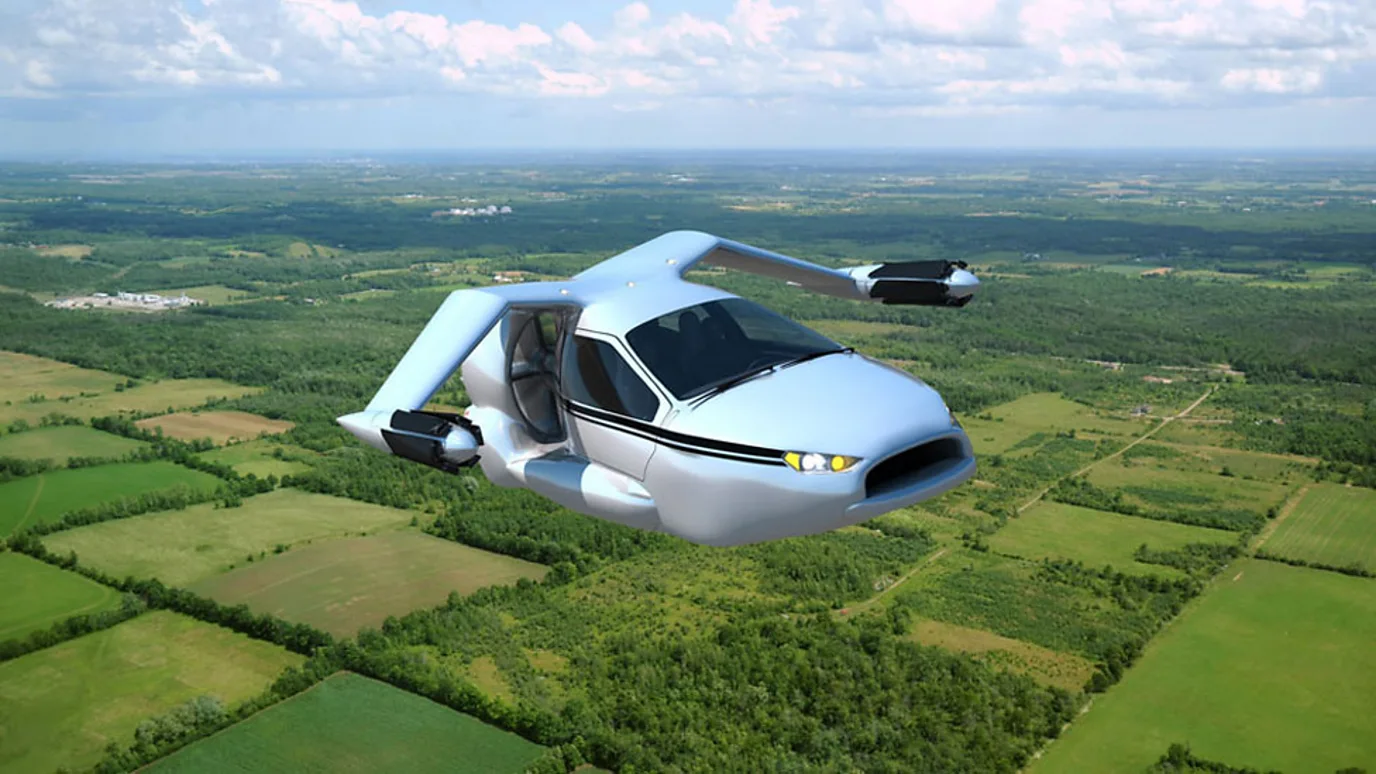
For generations, people have dreamed of a future where cars no longer remain stuck on crowded roads but instead rise effortlessly into the sky. Science fiction films, futuristic artwork, and imaginative novels have painted vivid pictures of cities filled with flying vehicles soaring between skyscrapers. Today, that dream is no longer confined to fiction. Engineers around the world are designing and testing flying cars, and several prototypes have already completed successful test flights.
Yet despite these exciting achievements, flying cars are still far from becoming a common sight in everyday life. Building a vehicle that can both fly safely and operate efficiently is one of the greatest engineering challenges ever attempted. Unlike ordinary cars, flying vehicles must obey the laws of both road transportation and aviation, making their design far more complicated.
A flying car cannot simply leave the ground because someone wishes it to. Every flight must overcome gravity, remain stable in changing weather, avoid collisions, protect passengers, and operate within strict safety regulations. These challenges involve physics, engineering, computer science, energy technology, urban planning, and even public trust.
Understanding these obstacles helps explain why flying cars are developing more slowly than many people expected—and why solving these problems could transform transportation in the future.
The Challenge of Gravity
One of the greatest obstacles facing every flying vehicle is gravity.
Gravity constantly pulls every object toward Earth. To become airborne, a flying car must generate enough lift to overcome its own weight. Unlike a conventional automobile, which only needs enough power to move along the ground, a flying car must continuously support itself in the air throughout the entire flight.
This requires powerful motors, carefully designed wings or rotors, and an efficient source of energy. Every additional kilogram of weight demands more lift, which in turn requires more energy. Finding the perfect balance between strength and lightness is one of the most difficult engineering problems.
Even small increases in vehicle weight can significantly reduce flight efficiency.
Weight Is the Enemy of Flight
A typical road car contains heavy components such as steel frames, safety structures, engines, batteries, seats, and luggage space.
Aircraft, however, must remain as light as possible.
Flying cars attempt to combine both worlds. They need the safety features expected in automobiles while also being light enough to fly efficiently.
Engineers use advanced materials such as carbon-fiber composites, aluminum alloys, and lightweight titanium in many prototypes. These materials are both strong and relatively light, but they are often expensive to manufacture.
Reducing weight without sacrificing passenger safety remains one of the industry’s biggest challenges.
Batteries Still Have Important Limitations
Many modern flying car designs rely on electric motors powered by rechargeable batteries.
Electric propulsion offers several advantages. It produces no direct exhaust emissions during operation, requires fewer moving parts than many conventional engines, and is generally quieter.
However, batteries present a major limitation.
Although battery technology has improved enormously over the past two decades, today’s batteries store much less energy per kilogram than aviation fuels. This means a battery-powered flying car may only remain airborne for a limited period before needing to recharge.
Adding larger batteries might increase flight range, but larger batteries also add weight, reducing efficiency.
Scientists continue developing batteries with higher energy density, faster charging, longer lifetimes, and improved safety.
Flight Requires Much More Energy Than Driving
Driving along a road is very different from remaining suspended in the air.
A car on the ground only needs enough energy to overcome rolling resistance and air resistance.
A flying vehicle must constantly produce lift while also moving forward.
Vertical takeoff is especially demanding because all of the aircraft’s weight must be lifted directly against gravity.
As a result, flying cars consume much more energy during takeoff and landing than during ordinary driving.
Improving energy efficiency is essential if flying cars are to become practical for everyday transportation.
Safety Must Be Nearly Perfect
People generally accept occasional mechanical problems in automobiles because drivers can usually pull over to the side of the road.
An aircraft does not have that luxury.
If a serious failure occurs during flight, the consequences can be far more severe.
This means flying cars must meet extremely high safety standards.
Every motor, battery, flight computer, navigation system, and control mechanism must operate reliably.
Many prototype designs include multiple independent electric motors. If one motor stops working, the remaining motors may continue providing enough control for a safe landing, depending on the aircraft’s design and operating conditions.
Building reliable backup systems adds complexity, cost, and weight.
Weather Can Make Flying Dangerous
Road vehicles can usually operate during rain, light snow, or moderate wind.
Aircraft face much greater challenges.
Strong winds may destabilize smaller flying vehicles.
Heavy rain can reduce visibility.
Fog makes navigation more difficult.
Thunderstorms produce dangerous turbulence, lightning, and strong updrafts.
Ice forming on aircraft surfaces can reduce aerodynamic performance.
Flying cars will need advanced weather monitoring systems and clear operational limits to avoid unsafe conditions.
Weather remains one of aviation’s greatest natural challenges.
Air Traffic Could Become Extremely Complex
Imagine thousands of flying cars moving above a large city.
Without careful coordination, the skies could quickly become chaotic.
Future flying vehicles will require sophisticated traffic management systems that organize flight paths, assign altitudes, prevent collisions, and respond to changing weather.
Unlike roads, where traffic follows clearly marked lanes, the sky is three-dimensional.
Vehicles can move forward, backward, upward, downward, left, and right.
Managing this complex environment safely will require advanced communication networks, automation, and coordination between aircraft and ground control systems.
Avoiding Midair Collisions
Collision avoidance is one of the most critical safety challenges.
Flying cars must continuously detect nearby aircraft, buildings, towers, birds, drones, and other obstacles.
Modern prototypes often combine cameras, radar, satellite navigation, and sometimes laser-based sensors to monitor their surroundings.
Onboard computers analyze this information in real time and may automatically adjust flight paths if necessary.
These systems must operate accurately under many different weather and lighting conditions.
Even a brief sensor failure could create significant risks.
Computer Reliability Is Essential
Modern flying cars depend heavily on computers.
Unlike traditional automobiles, many flying vehicles require computers to maintain stability throughout the flight.
These systems monitor motor speeds, battery performance, aircraft orientation, altitude, wind conditions, and navigation.
They make thousands of calculations every second.
Because computers perform such critical tasks, their software must undergo extensive testing.
Engineers must ensure that unexpected software errors do not compromise flight safety.
Cybersecurity also becomes important, as connected aircraft must be protected from unauthorized access.
Noise Pollution
Helicopters are well known for their loud rotor noise.
Flying cars must be much quieter if they are to operate regularly in cities.
Electric motors are generally quieter than conventional aircraft engines, but spinning propellers still generate noticeable sound.
If thousands of flying vehicles operated over residential neighborhoods every day, noise pollution could become a serious concern.
Engineers are working to design quieter propellers, improved motor systems, and flight paths that reduce community disturbance.
Finding the right balance between performance and quiet operation remains an active area of research.
High Manufacturing Costs
Developing a flying car is extremely expensive.
Unlike mass-produced automobiles, most flying car prototypes are built in relatively small numbers.
They require advanced materials, powerful electric motors, sophisticated sensors, complex flight computers, and precision manufacturing techniques.
All of these increase production costs.
As with many new technologies, prices may decrease if production expands, but widespread affordability is likely to take time.
Initially, flying cars may be used mainly for commercial air taxi services rather than private ownership.
Infrastructure Does Not Yet Exist
Today’s cities are designed primarily for roads.
Flying cars require different infrastructure.
Vehicles capable of vertical takeoff need specially designed landing areas called vertiports.
These locations may include charging stations, passenger waiting areas, maintenance facilities, and air traffic communication systems.
Cities will also need designated flight corridors and systems to safely integrate flying vehicles with existing aircraft.
Building this infrastructure requires careful urban planning and significant investment.
Regulations Must Be Developed
Flying cars operate somewhere between automobiles and aircraft.
This creates regulatory challenges.
Governments must decide who may operate these vehicles, what training is required, how maintenance should be performed, and what safety standards manufacturers must meet.
Rules will also determine where flying cars may fly, how high they can travel, and how they interact with airports and other aircraft.
Developing these regulations takes time because public safety must remain the highest priority.
Pilot Training and Automation
Most people know how to drive a car, but far fewer know how to fly an aircraft.
If every flying car required a fully trained pilot, widespread adoption would become difficult.
To address this challenge, manufacturers are developing highly automated flight systems.
These systems may assist with takeoff, navigation, obstacle avoidance, and landing.
However, achieving safe and reliable automation is an enormous technical challenge.
Even highly automated vehicles will likely require human supervision for the foreseeable future.
Emergency Landings
Every aircraft must be prepared for unexpected situations.
Mechanical failures, medical emergencies, sudden weather changes, or battery problems may require immediate landing.
Finding a safe landing location in a crowded city can be difficult.
Some designs include emergency systems that help the aircraft descend safely if problems occur.
Engineers carefully study how flying cars can protect passengers during emergencies while minimizing risks to people on the ground.
Public Acceptance
Even if engineers solve every technical problem, another challenge remains.
People must trust flying cars.
Passengers need confidence that these vehicles are safe.
Communities need assurance that they will not create excessive noise or increase risks.
Governments must convince the public that appropriate regulations are in place.
History shows that many revolutionary technologies—including airplanes, elevators, automobiles, and even electric vehicles—required time before becoming widely accepted.
Flying cars are likely to follow a similar path.
Environmental Considerations
Flying cars have the potential to reduce certain environmental impacts, especially if powered by electricity generated from low-carbon energy sources.
However, they also raise important environmental questions.
Battery production requires raw materials.
Manufacturing aircraft consumes energy.
Electricity generation varies from one region to another.
Flying generally requires more energy than driving the same distance because aircraft must continuously produce lift.
Scientists continue studying how flying cars can become more energy-efficient while minimizing their overall environmental footprint.
Maintenance and Reliability
Aircraft require careful inspections and maintenance.
Flying cars will likely need similar attention.
Motors, batteries, propellers, sensors, software, structural components, and safety systems must all be inspected regularly.
Routine maintenance helps prevent failures before they occur.
Keeping maintenance costs reasonable while maintaining aviation-level safety standards is another important challenge for manufacturers.
Balancing Road and Flight Requirements
Designing a vehicle that performs well both on roads and in the air is surprisingly difficult.
Cars are optimized for stability, comfort, and crash protection.
Aircraft are optimized for lightweight construction, aerodynamic efficiency, and flight performance.
These goals sometimes conflict.
A vehicle that is ideal for driving may be too heavy to fly efficiently.
A design that flies exceptionally well may not perform as comfortably or safely on ordinary roads.
Finding the right compromise remains one of the greatest engineering puzzles.
The Pace of Technological Progress
Although many challenges remain, progress is happening steadily.
Battery technology continues to improve.
Electric motors become more efficient every year.
Artificial intelligence is advancing rapidly.
New lightweight materials are making aircraft stronger while reducing weight.
Computer simulations allow engineers to test designs more quickly than ever before.
Each scientific breakthrough brings flying cars a little closer to practical reality.
The journey is gradual, but it is moving forward.
Looking Toward the Future
Many experts believe that the first widespread use of flying vehicles will not involve privately owned flying cars but rather commercial air taxi services operating along carefully managed routes.
These services could help engineers gain operational experience while allowing governments to develop regulations and infrastructure.
Over time, improvements in technology may make personal flying vehicles more practical and affordable.
Exactly when this will happen remains uncertain, but research continues around the world.
Conclusion
Flying cars represent one of the most ambitious transportation projects ever attempted. They promise faster travel, reduced traffic congestion, and new possibilities for connecting people and places. However, turning this vision into everyday reality requires overcoming enormous scientific, engineering, economic, and regulatory challenges.
From generating enough lift and improving battery technology to ensuring safety, managing air traffic, reducing noise, building infrastructure, and earning public trust, every obstacle demands careful research and innovation. These are not problems with simple solutions, but they are challenges that scientists and engineers are steadily working to solve.
The dream of flying cars has inspired people for more than a century. Today, that dream is closer than ever before. While it may still take years before flying cars become a common part of daily life, each successful test flight, technological breakthrough, and engineering achievement brings humanity one step closer to a future where the sky is not just a place for airplanes, but an extension of the roads below.