Imagine waking up in a city where traffic lights automatically adjust to reduce congestion before morning rush hour begins. Public buses arrive exactly when needed because their routes change based on real-time passenger demand. Streetlights become brighter when pedestrians walk by and dim when roads are empty, saving energy without compromising safety. Sensors detect water leaks before they become major problems, while emergency services receive instant alerts about accidents, allowing them to respond more quickly. This vision is no longer science fiction. Around the world, artificial intelligence (AI) is helping cities become smarter, more efficient, and better prepared to meet the needs of growing populations.
As more people move into urban areas, cities face increasing challenges. Roads become crowded, energy demand rises, waste management becomes more complex, and public services must serve millions of residents every day. AI is emerging as one of the most powerful technologies for solving these challenges. By analyzing enormous amounts of data in real time, AI can help city leaders make better decisions, improve public services, and create healthier, safer, and more sustainable communities.
A smart city is not simply a city filled with advanced technology. It is a place where technology works quietly in the background to improve everyday life. AI plays a central role in making this possible.
What Is a Smart City?
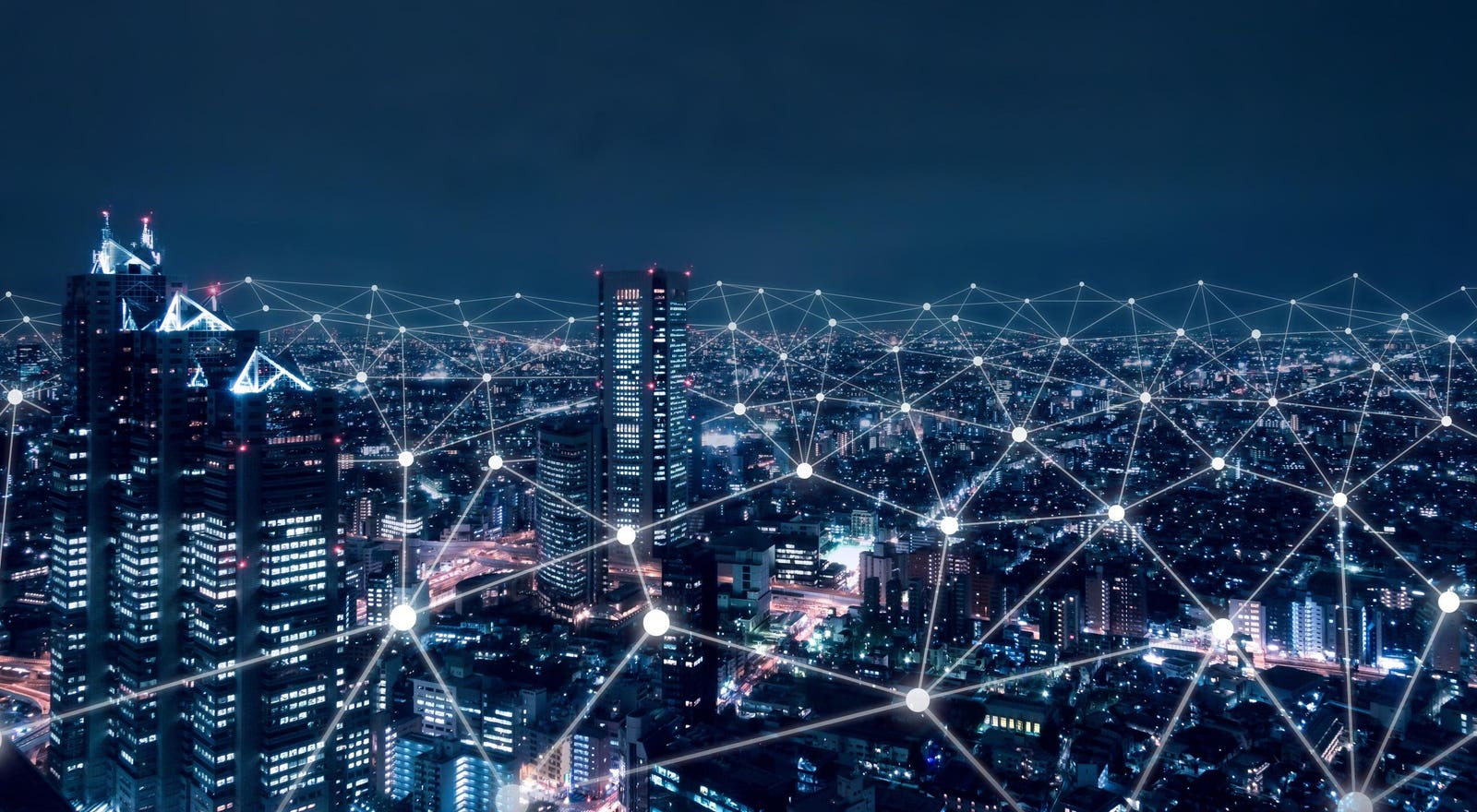
A smart city is an urban area that uses digital technologies to improve how city services operate. These services include transportation, energy systems, healthcare, public safety, waste collection, water management, environmental monitoring, and many other aspects of daily life.
The goal is not to replace people with machines. Instead, technology helps governments and organizations make faster, more informed decisions while providing better services for residents.
Artificial intelligence is especially valuable because it can recognize patterns, learn from data, make predictions, and support decision-making much faster than traditional computer systems.
Unlike conventional software that simply follows fixed instructions, AI systems can improve their performance as they process more information. This ability makes AI particularly useful for managing the constantly changing conditions found in modern cities.
Why Cities Need Artificial Intelligence
Cities are becoming larger and more complex every year. According to the United Nations, more than half of the world’s population already lives in urban areas, and this proportion is expected to continue growing over the coming decades.
As populations increase, cities must manage more vehicles, buildings, hospitals, schools, power systems, water supplies, and communication networks.
Traditional management methods often struggle to keep pace with this growth because they rely heavily on manual monitoring and delayed responses.
AI changes this approach by continuously collecting and analyzing information from cameras, sensors, satellites, weather stations, smartphones, traffic systems, and public infrastructure.
Instead of reacting after problems occur, AI helps cities anticipate issues before they become serious.
This shift from reactive management to predictive management is one of the defining features of smart cities.
AI and Intelligent Traffic Management
Traffic congestion wastes time, fuel, and money while increasing air pollution.
Artificial intelligence is transforming how cities manage transportation.
Modern traffic systems collect information from road sensors, traffic cameras, GPS devices, connected vehicles, and public transportation networks.
AI analyzes these data streams in real time to understand current traffic conditions.
Instead of operating traffic lights on fixed schedules, AI can adjust signal timing based on actual traffic flow.
If one road becomes unusually busy, nearby traffic lights can automatically stay green longer to reduce delays.
When accidents occur, AI can quickly detect unusual traffic patterns and recommend alternative routes.
Navigation applications also use AI to estimate travel times and guide drivers along less congested roads.
Public transportation benefits as well.
AI helps transit agencies predict passenger demand, allowing buses and trains to be deployed where they are needed most.
This improves efficiency while reducing overcrowding and unnecessary operating costs.
Smarter Public Transportation
Reliable public transportation is essential for sustainable cities.
Artificial intelligence helps improve every stage of transit operations.
AI predicts when buses or trains may experience delays by analyzing weather conditions, traffic, maintenance records, and passenger demand.
Transit operators receive early warnings, allowing them to make adjustments before disruptions become widespread.
Passengers also benefit from more accurate arrival predictions through mobile applications and digital displays.
Some cities are exploring AI-powered autonomous public transportation systems that can safely navigate predefined routes while continuously monitoring their surroundings.
Although fully autonomous public transit is still developing in many regions, AI already assists drivers through advanced safety systems that detect obstacles and reduce accident risks.
Making Roads Safer
Road safety is another area where AI is making a significant difference.
Computer vision systems powered by AI can analyze live video feeds from traffic cameras.
These systems can detect dangerous driving behaviors, vehicles traveling in the wrong direction, accidents, or pedestrians entering hazardous areas.
Emergency responders can receive alerts within seconds, allowing faster assistance.
AI also supports intelligent speed monitoring and identifies road conditions that may increase accident risks, such as heavy rain, fog, or icy surfaces.
Rather than replacing human decision-making, AI provides valuable information that helps authorities respond more quickly and effectively.
AI and Energy Efficiency
Cities consume enormous amounts of electricity.
Homes, offices, hospitals, factories, transportation systems, and public facilities all require reliable energy.
Artificial intelligence helps optimize energy production and consumption.
Smart electrical grids use AI to balance electricity supply and demand in real time.
When electricity demand suddenly increases, AI helps utilities adjust power generation while maintaining system stability.
Renewable energy sources such as solar and wind produce variable amounts of electricity depending on weather conditions.
AI forecasts energy production using weather predictions and historical performance, helping utilities integrate renewable energy more efficiently.
Smart buildings also benefit from AI.
Heating, ventilation, air conditioning, and lighting systems automatically adjust based on occupancy, weather, and indoor conditions.
This reduces unnecessary energy use while maintaining comfort.
Intelligent Street Lighting
Streetlights traditionally remain fully illuminated throughout the night, even when streets are empty.
AI-powered lighting systems operate more efficiently.
Motion sensors detect pedestrians, cyclists, or vehicles approaching.
Lights brighten only where activity occurs and dim when areas are unoccupied.
Weather conditions, sunrise and sunset times, and seasonal changes can also be considered automatically.
This intelligent approach reduces electricity consumption while maintaining public safety.
Cities adopting smart lighting systems often lower maintenance costs because AI predicts when equipment may require repairs before failures occur.
Improving Water Management
Water is one of every city’s most valuable resources.
Artificial intelligence helps reduce waste and improve water distribution.
Sensors installed throughout water networks monitor pressure, flow rates, and water quality.
AI analyzes this information continuously.
If an underground pipe begins leaking, AI may detect subtle pressure changes long before visible damage appears.
Early detection reduces water loss, repair costs, and infrastructure damage.
AI also predicts future water demand by considering weather patterns, seasonal trends, and population growth.
Utilities can prepare more effectively for periods of high demand or drought.
Smarter Waste Management
Collecting waste efficiently is more challenging than many people realize.
Traditional collection schedules may send trucks to half-empty bins while overflowing containers remain unattended elsewhere.
AI improves this process.
Smart waste bins equipped with sensors monitor how full they become.
AI analyzes these data and determines the most efficient collection routes.
Waste collection vehicles travel only where necessary, reducing fuel consumption, traffic, emissions, and operating costs.
AI also helps improve recycling by identifying different materials using computer vision systems, making sorting processes faster and more accurate.
Monitoring Air Quality
Clean air is essential for public health.
Many smart cities operate networks of environmental sensors that continuously measure pollutants, temperature, humidity, and other atmospheric conditions.
Artificial intelligence processes this information to identify pollution hotspots.
If pollution levels rise unexpectedly, city officials can investigate possible causes such as traffic congestion, industrial emissions, or wildfires.
AI also predicts future air quality based on weather forecasts and historical data, allowing residents to prepare for periods of poor air conditions.
Scientists continue improving these predictive models as more environmental data become available.
AI and Public Safety
Public safety extends far beyond crime prevention.
Artificial intelligence supports emergency management, disaster response, infrastructure monitoring, and community protection.
Computer vision systems can detect smoke, unusual crowd behavior, flooding, or damaged infrastructure.
Emergency operations centers receive alerts immediately, allowing faster responses.
During natural disasters such as hurricanes, floods, or earthquakes, AI analyzes satellite imagery, weather forecasts, and sensor data to help emergency planners allocate resources where they are most needed.
Importantly, many experts emphasize that AI systems used for public safety should operate with strong privacy protections, transparency, and human oversight to reduce the risk of misuse or bias.
Healthcare in Smart Cities
Healthcare systems generate enormous amounts of information every day.
Artificial intelligence helps hospitals manage patient flow, predict resource needs, and support medical decision-making.
AI can forecast increases in emergency department visits during heatwaves, disease outbreaks, or major public events.
Hospitals can prepare additional staff and equipment before demand rises.
Wearable health devices also contribute valuable information.
With appropriate privacy protections and patient consent, AI can analyze health trends across populations, helping public health officials identify emerging risks more quickly.
AI supports healthcare professionals but does not replace their clinical expertise or judgment.
AI in Emergency Response
Every second matters during emergencies.
Artificial intelligence helps emergency services respond more efficiently.
AI analyzes incoming emergency calls, traffic conditions, road closures, and hospital availability.
Dispatch systems recommend the fastest routes for ambulances, fire engines, and police vehicles.
Some AI systems also assist emergency operators by identifying key information during calls, allowing responders to prepare before arriving at the scene.
During large-scale emergencies involving multiple incidents, AI helps coordinate resources across different agencies.
Maintaining City Infrastructure
Cities depend on bridges, tunnels, roads, railways, pipelines, and public buildings.
Keeping this infrastructure safe requires constant inspection.
Artificial intelligence supports predictive maintenance.
Sensors installed on bridges or buildings measure vibration, stress, temperature, and structural movement.
AI detects subtle changes that may indicate developing problems.
Instead of waiting for visible damage, maintenance teams receive early warnings and can perform repairs before failures occur.
This approach improves public safety while reducing repair costs.
Supporting Sustainable Cities
One of AI’s greatest contributions is helping cities become more environmentally sustainable.
By improving transportation efficiency, reducing energy waste, optimizing water use, and supporting renewable energy, AI helps lower greenhouse gas emissions.
Urban planners use AI models to evaluate future development projects.
They can simulate how new parks, buildings, roads, or transit systems may affect traffic, air quality, energy demand, and population growth.
These simulations support better long-term planning decisions.
The Role of the Internet of Things
Artificial intelligence works most effectively when combined with the Internet of Things (IoT).
IoT refers to networks of connected devices that collect and exchange information.
Sensors placed throughout a city monitor traffic, weather, water systems, electricity networks, environmental conditions, and public infrastructure.
AI transforms this enormous stream of information into useful insights.
Without IoT devices, AI would have much less data to analyze.
Without AI, IoT devices would simply collect information without making intelligent decisions.
Together, these technologies form the foundation of many smart city systems.
Digital Twins and Urban Planning
An increasingly important innovation is the digital twin.
A digital twin is a virtual representation of a real city or part of its infrastructure.
Artificial intelligence continuously updates the model using real-world data.
City planners can test different scenarios without affecting the actual city.
For example, they can simulate how a new highway, subway line, or residential district might influence traffic, pollution, and energy consumption.
This helps decision-makers evaluate multiple options before investing in costly construction projects.
Challenges and Ethical Considerations
Despite its enormous potential, AI is not a perfect solution.
Smart cities collect large amounts of information, raising important questions about privacy and data security.
Cities must ensure that personal information is protected and collected responsibly.
Another challenge involves algorithmic bias.
If AI systems are trained using incomplete or unrepresentative data, their recommendations may unintentionally disadvantage certain communities.
For this reason, experts emphasize transparency, fairness, regular evaluation, and human oversight.
Cybersecurity is equally important.
Connected infrastructure must be protected against cyberattacks that could disrupt transportation, power systems, or communication networks.
Building trustworthy AI requires not only advanced technology but also responsible governance and public accountability.
The Future of AI-Powered Smart Cities
Artificial intelligence is still evolving rapidly.
Future smart cities may include autonomous public transportation operating alongside traditional vehicles, buildings that automatically optimize their own energy use, drones assisting with infrastructure inspections, robotic systems supporting public services, and advanced environmental monitoring that predicts problems before they affect residents.
Cities may also use AI to improve education, cultural services, disaster preparedness, biodiversity conservation, and climate resilience.
However, successful smart cities will not be defined solely by the amount of technology they contain.
Their success will depend on how well technology serves people.
AI should enhance quality of life, promote sustainability, support economic growth, and make cities more inclusive, accessible, and resilient.
A New Chapter in Urban Living
Cities have always evolved alongside human innovation. From ancient roads and aqueducts to electric power, telecommunications, and the internet, each technological breakthrough has reshaped urban life. Artificial intelligence represents the next major step in that journey.
By helping manage transportation, energy, healthcare, water, waste, environmental protection, public safety, and infrastructure, AI enables cities to respond more intelligently to the challenges of a rapidly changing world. Rather than replacing human decision-making, AI provides powerful tools that help governments, engineers, healthcare professionals, urban planners, and citizens make better-informed choices.
The smartest cities of the future will not simply be those with the most advanced technology. They will be the cities that use artificial intelligence responsibly, ethically, and transparently to create healthier, safer, more sustainable, and more connected communities. As AI continues to advance, its greatest achievement may not be building cities filled with machines, but creating urban environments where people can live, work, and thrive more effectively than ever before.