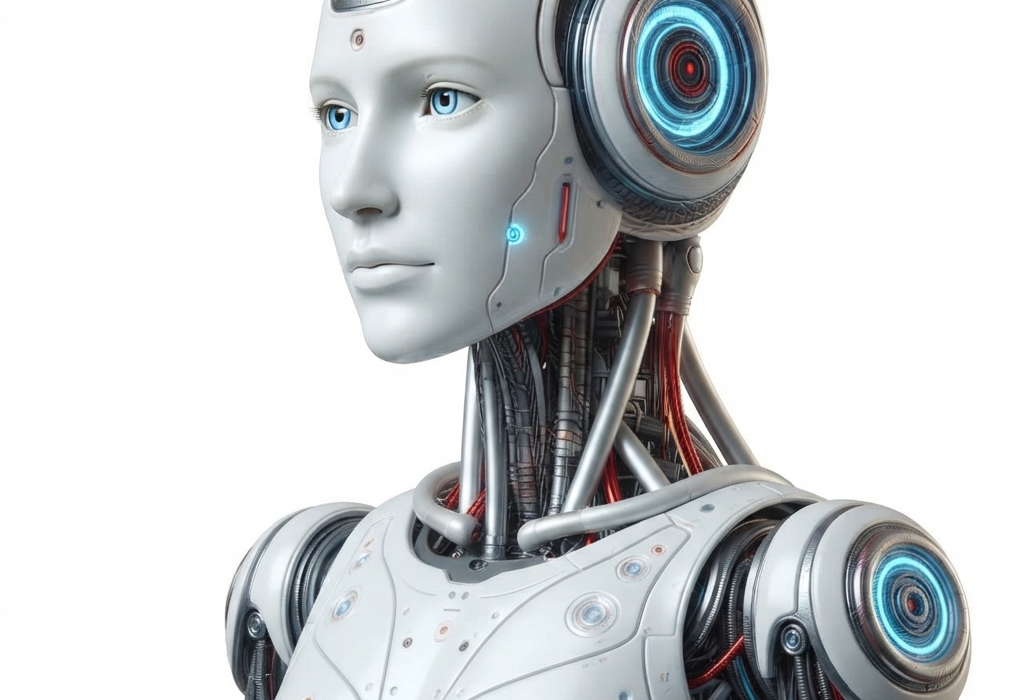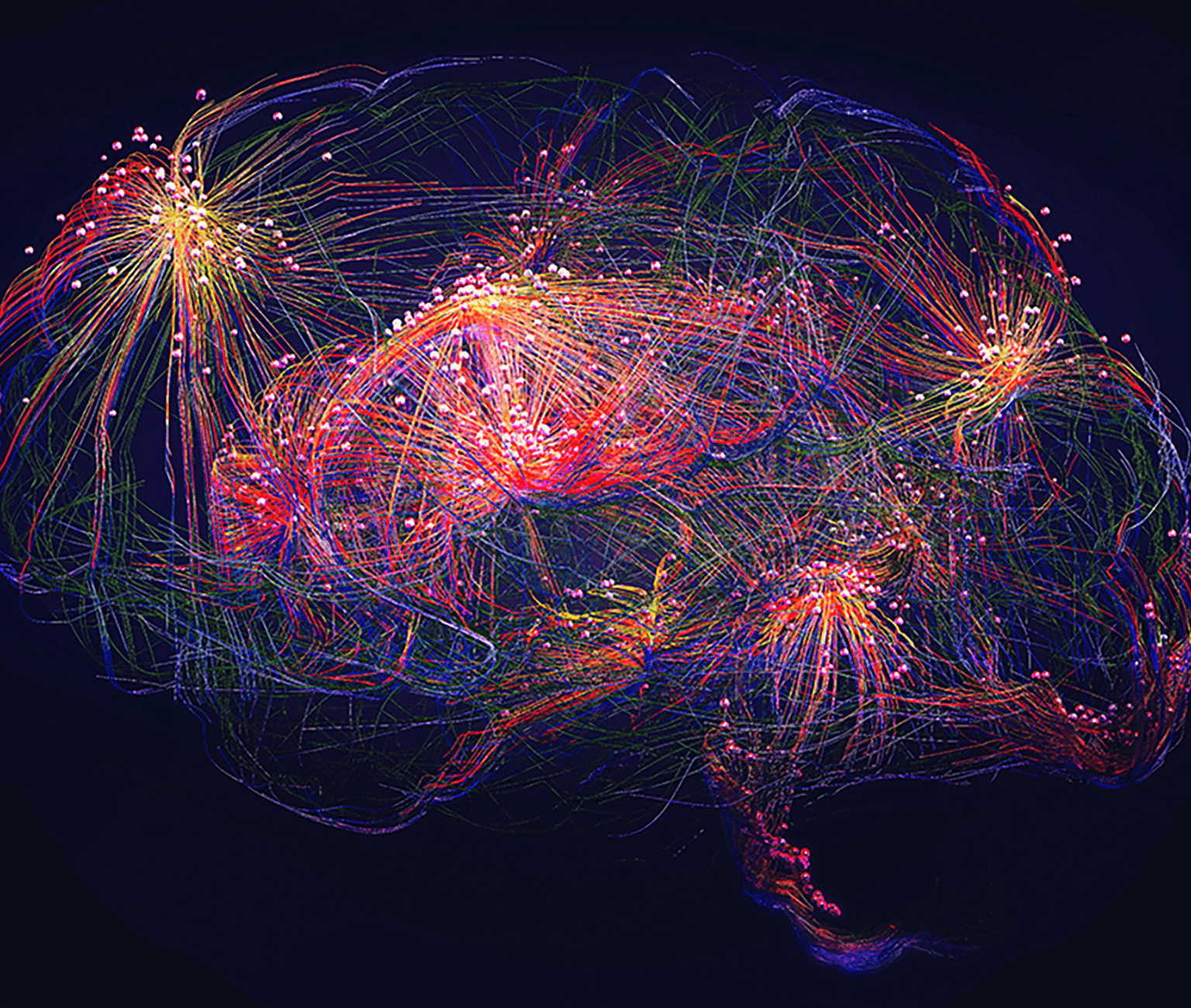
Imagine a computer that does not simply follow instructions one after another but instead processes information in a way that resembles the human brain. Picture a machine that can recognize a face almost instantly, learn from experience without requiring enormous amounts of data, and make decisions while using only a tiny fraction of the energy consumed by today’s most powerful computers. This is the fascinating vision behind neuromorphic computing, one of the most exciting frontiers in modern computer science and artificial intelligence.
For decades, computers have become faster, smaller, and more powerful. Yet despite these remarkable advances, even the world’s most advanced supercomputers still struggle to match the brain’s extraordinary combination of intelligence, flexibility, and energy efficiency. The human brain, weighing only about 1.4 kilograms and consuming roughly 20 watts of power—about the same as a dim light bulb—can recognize objects, understand language, remember experiences, control movement, and adapt to new situations with remarkable ease.
Neuromorphic computing seeks to learn from nature’s greatest computing system: the human brain. Instead of building ever-faster traditional computers, scientists and engineers are designing entirely new kinds of hardware and software inspired by the way biological brains process information. Although this field is still developing, it has the potential to transform artificial intelligence, robotics, medicine, autonomous vehicles, and many other technologies in the coming decades.
Understanding Neuromorphic Computing
Neuromorphic computing is a branch of computer engineering that designs computer systems based on the structure and functioning of biological nervous systems, particularly the human brain. The word neuromorphic combines “neuro,” referring to nerves or the nervous system, and “morphic,” meaning form or structure. Together, the term describes computer systems that imitate the organization and behavior of biological neural networks.
Unlike conventional computers, which process information in a mostly sequential manner through a central processor, neuromorphic systems distribute computation across large numbers of interconnected artificial neurons. These neurons communicate using signals that resemble the electrical impulses, or spikes, produced by neurons in living brains.
Rather than simply becoming faster versions of today’s computers, neuromorphic machines represent a fundamentally different way of computing.
Why Scientists Looked to the Brain
Modern computers are astonishingly capable. They perform billions or even trillions of calculations every second. They excel at arithmetic, storing enormous amounts of data, and carrying out repetitive tasks with incredible precision.
However, many tasks that humans find effortless remain surprisingly difficult for traditional computers.
A toddler can recognize a parent’s face from different angles and under different lighting conditions. A person can identify a friend’s voice in a noisy room, catch a ball, or learn a new skill after only a few attempts. Performing these same tasks often requires conventional artificial intelligence systems to use vast amounts of computing power and enormous datasets.
The human brain approaches these challenges very differently. Instead of relying on continuous, high-speed calculations, it processes information through billions of interconnected neurons working simultaneously. These neurons exchange information only when necessary, making the brain remarkably energy efficient.
Scientists realized that copying some of these biological strategies might help create computers that are faster for certain tasks while consuming far less electricity.
How the Human Brain Works
To understand neuromorphic computing, it helps to first understand how the brain functions.
The human brain contains roughly 86 billion neurons. Each neuron is a specialized cell capable of receiving, processing, and transmitting electrical signals. Every neuron forms connections called synapses with thousands of other neurons, creating an enormously complex communication network.
When a neuron receives enough input from neighboring neurons, it generates a brief electrical pulse known as an action potential or spike. This spike travels to connected neurons, allowing information to spread through the network.
Importantly, neurons do not continuously send signals. They remain mostly inactive until needed, communicating only when meaningful information must be transmitted. This event-driven style of communication is one of the reasons the brain operates so efficiently.
Learning occurs because the strengths of synaptic connections change over time. Frequently used connections become stronger, while less active connections may weaken. This process allows memories to form and enables the brain to adapt to new experiences.
Neuromorphic computing attempts to reproduce many of these principles in electronic systems.
How Traditional Computers Process Information
Most computers today follow the von Neumann architecture, named after mathematician John von Neumann. In this design, the processor and memory are physically separate components.
The processor repeatedly retrieves data from memory, performs calculations, and writes results back to memory. Although this architecture has powered computing for decades, constantly moving information between processor and memory consumes considerable time and energy. This limitation is often called the von Neumann bottleneck.
For many artificial intelligence applications, moving data can require more energy than performing the calculations themselves.
Neuromorphic systems attempt to reduce this bottleneck by placing memory and computation much closer together, more closely resembling how neurons both store and process information.
Artificial Neurons and Synapses
Instead of using ordinary computer circuits alone, neuromorphic chips contain electronic components that mimic neurons and synapses.
Artificial neurons receive signals from many neighboring neurons. When incoming signals exceed a certain threshold, the neuron produces an output spike.
Artificial synapses determine how strongly one neuron influences another. Just as biological synapses strengthen or weaken through learning, artificial synapses can often adjust their connection strengths over time.
Because information is represented by spikes rather than continuous streams of numbers, neuromorphic systems naturally process information in an event-driven manner.
This design allows many neurons to work simultaneously, creating highly parallel computation.
What Makes Neuromorphic Computing Different?
One of the most important differences is that neuromorphic computers are not simply faster versions of existing machines.
Instead, they solve problems using an entirely different strategy.
Traditional computers execute instructions step by step according to carefully written programs. Neuromorphic systems often rely on large networks of artificial neurons interacting continuously.
Rather than processing every piece of information at every moment, they react only when meaningful events occur.
This can dramatically reduce energy consumption while increasing efficiency for specific tasks such as recognizing speech, interpreting images, or controlling robots.
Event-Driven Processing
Imagine sitting quietly in a room.
Your brain does not carefully analyze every molecule of air or every tiny change in light. Instead, it pays attention when something important happens, such as hearing your name or seeing someone enter the room.
Neuromorphic systems operate in a similar way.
Instead of continuously processing every input, they become active mainly when significant events occur.
For example, some neuromorphic vision sensors detect only changes in brightness rather than recording complete images many times each second. This reduces unnecessary data processing and allows much faster responses.
Learning More Naturally
Traditional artificial intelligence often requires enormous labeled datasets and lengthy training procedures.
Neuromorphic computing aims to make learning more flexible.
Some neuromorphic systems can continuously adapt while operating. Rather than being trained once and then remaining unchanged, they may gradually improve through experience.
This ability resembles biological learning, where experiences continually reshape neural connections.
Although today’s neuromorphic learning methods are still far less capable than human learning, researchers continue making significant progress.
Why Energy Efficiency Matters
Energy consumption has become one of the greatest challenges in computing.
Modern artificial intelligence systems often require powerful data centers containing thousands of graphics processing units operating continuously.
Training advanced AI models can consume vast amounts of electricity.
The human brain achieves extraordinary intelligence while using approximately 20 watts of power.
Neuromorphic computing aims to narrow this enormous efficiency gap.
Low-power computing is especially important for mobile robots, wearable medical devices, satellites, drones, and autonomous vehicles, where battery life is limited.
A computer that performs sophisticated AI tasks while consuming minimal energy could transform many industries.
Neuromorphic Chips
Researchers have already developed several experimental neuromorphic processors.
These chips contain thousands or even millions of artificial neurons connected through millions of artificial synapses.
Unlike ordinary processors that execute instructions one after another, neuromorphic chips support massive parallel communication among neurons.
Each neuron operates independently while exchanging spikes with neighboring neurons.
Although these systems remain specialized rather than general-purpose computers, they demonstrate how brain-inspired hardware can solve certain problems very efficiently.
Neuromorphic Computing and Artificial Intelligence
Neuromorphic computing is closely related to artificial intelligence, but they are not the same.
Artificial intelligence focuses on creating machines capable of performing tasks associated with human intelligence.
Neuromorphic computing provides one possible hardware foundation for future AI systems.
Many current AI systems run on conventional processors or graphics processing units.
Neuromorphic hardware instead seeks to execute AI algorithms using brain-inspired electronic circuits.
In the future, combining advanced AI algorithms with neuromorphic hardware could produce faster, more adaptive, and more energy-efficient intelligent systems.
Applications in Robotics
Robots must continuously observe their surroundings, recognize objects, avoid obstacles, and make rapid decisions.
Traditional computing can accomplish these tasks but often requires significant computing power.
Neuromorphic processors may allow robots to respond more naturally while using much less energy.
Because neuromorphic systems process information in parallel and respond quickly to changing conditions, they are well suited for robots operating in dynamic environments.
Future household robots, industrial robots, and planetary exploration robots may increasingly rely on neuromorphic technologies.
Autonomous Vehicles
Self-driving vehicles constantly analyze information from cameras, radar, lidar, and other sensors.
Every second, enormous amounts of data must be processed safely and rapidly.
Neuromorphic systems could help perform some of these perception tasks more efficiently.
Fast recognition of pedestrians, traffic signs, road markings, and moving vehicles may become possible while reducing power consumption.
Although conventional computing remains dominant today, neuromorphic approaches continue attracting interest for future transportation technologies.
Smarter Vision Systems
Human vision remains one of biology’s greatest achievements.
Our eyes and brain rapidly detect movement, recognize familiar faces, judge distances, and adapt to changing lighting conditions.
Neuromorphic vision systems attempt to imitate these abilities.
Instead of capturing complete images frame by frame like ordinary cameras, some neuromorphic sensors detect only changes occurring within a scene.
This event-based sensing dramatically reduces unnecessary data while allowing rapid responses.
Such technology may prove valuable for drones, autonomous robots, surveillance systems, and scientific instruments.
Medical Possibilities
Neuromorphic computing may also contribute to healthcare.
Researchers are investigating brain-inspired processors for advanced prosthetic limbs that respond more naturally to neural signals.
Neuromorphic devices may improve brain-computer interfaces by processing neural activity with extremely low power consumption.
Wearable medical sensors could continuously monitor health while operating for long periods using small batteries.
Scientists are also exploring whether neuromorphic systems can assist in analyzing medical images and detecting diseases more efficiently.
Space Exploration
Space missions require computers that are reliable, efficient, and capable of operating with limited power supplies.
Neuromorphic processors may allow spacecraft and planetary rovers to make more autonomous decisions without constantly communicating with Earth.
This could become especially valuable during future missions to Mars or more distant destinations where communication delays become significant.
Challenges Facing Neuromorphic Computing
Despite its promise, neuromorphic computing remains an active area of research.
Designing artificial neurons and synapses that accurately reproduce biological behavior is extremely challenging.
The brain’s complexity far exceeds anything engineers have created.
Scientists still do not fully understand many aspects of how biological intelligence emerges from neural networks.
Programming neuromorphic hardware also requires new software tools and algorithms that differ from conventional computing methods.
Furthermore, many existing AI applications are already optimized for traditional processors and graphics processing units, making widespread adoption of neuromorphic hardware a gradual process.
Can Neuromorphic Computers Think Like Humans?
This question often appears in discussions about brain-inspired computing.
The answer is no—not today.
Neuromorphic computers imitate certain structural and functional features of biological brains, but they do not possess consciousness, emotions, self-awareness, or human understanding.
They are specialized computing systems designed to perform particular tasks efficiently.
While future advances may produce increasingly capable artificial intelligence, today’s neuromorphic hardware remains far from matching the full complexity of the human brain.
Scientists continue studying both neuroscience and computer engineering to better understand intelligence itself.
The Future of Neuromorphic Computing
Many researchers believe neuromorphic computing could become one of the next major revolutions in information technology.
As artificial intelligence becomes increasingly integrated into daily life, demand will continue growing for computers that are faster, more adaptable, and far more energy efficient.
Future neuromorphic systems may power intelligent robots, wearable devices, smart cities, environmental monitoring systems, advanced medical equipment, autonomous vehicles, and scientific instruments capable of processing information almost as naturally as living organisms.
Progress will likely come gradually rather than overnight. Traditional computers will continue serving countless important roles, while neuromorphic processors may excel in tasks involving perception, learning, and real-time decision-making.
Why Neuromorphic Computing Matters
Neuromorphic computing represents much more than a new type of computer chip. It reflects a shift in how scientists think about intelligence itself. Instead of forcing machines to solve every problem through ever-greater processing speed, researchers are learning from the remarkable efficiency of the natural world.
The human brain demonstrates that extraordinary intelligence does not necessarily require enormous energy consumption. By studying how billions of neurons cooperate, adapt, and communicate, scientists are discovering new principles that could reshape the future of computing.
Although many challenges remain, neuromorphic computing has already shown that brain-inspired designs can process information in ways that differ fundamentally from conventional computers. As research advances, these systems may help build machines that learn more naturally, respond more quickly, and operate with remarkable efficiency.
In the years ahead, neuromorphic computing is unlikely to replace traditional computers entirely. Instead, it may complement them, providing powerful new tools for solving problems that demand perception, adaptation, and intelligent decision-making. Just as the brain inspired this new generation of computing, it may also guide the next great leap in humanity’s technological journey, bringing us closer to machines that interact with the world in ways once thought possible only in living minds.