The internet has become an essential part of modern life. We use it to work, learn, stream movies, play online games, make video calls, and connect with people around the world. As our digital lives continue to grow, the demand for faster, more reliable internet has never been greater. Traditional internet technologies that once seemed incredibly fast are now struggling to keep up with today’s data-heavy applications.
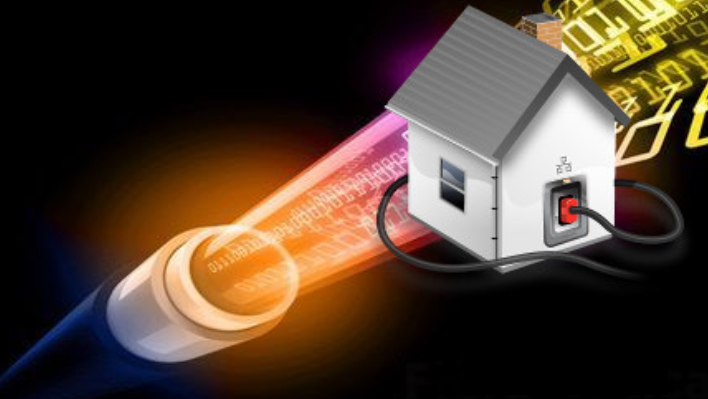
This is where FTTH (Fiber to the Home) comes in. FTTH is one of the most advanced broadband technologies available today, delivering internet through thin strands of optical fiber directly to homes. Instead of relying on electrical signals traveling through copper cables, FTTH uses pulses of light to transmit enormous amounts of information at incredible speeds.
The result is an internet connection that is not only faster but also more stable, more reliable, and better prepared for the future. As more countries expand fiber-optic infrastructure, FTTH is becoming the gold standard for home internet access.
What Is FTTH?
FTTH stands for Fiber to the Home. It is a type of broadband internet connection in which an optical fiber cable runs directly from an internet service provider’s network to an individual residence.
Unlike older broadband systems that use copper telephone lines or coaxial television cables for the final connection to a house, FTTH uses fiber-optic cable all the way to the customer’s home. Because the entire connection remains optical until it reaches the home, there is very little signal loss, allowing users to enjoy extremely high internet speeds and excellent reliability.
In simple terms, FTTH creates a direct, high-capacity highway for internet data between your home and your internet provider.
Understanding Fiber-Optic Technology
To understand FTTH, it helps to understand how fiber-optic communication works.
A fiber-optic cable contains extremely thin strands of glass or specially designed plastic. These strands are so thin that many are about the same diameter as a human hair.
Instead of carrying electricity like traditional cables, optical fibers carry pulses of light generated by tiny lasers or light-emitting diodes (LEDs). Each pulse of light represents digital information.
As these light signals travel through the fiber, they continuously reflect from the inner walls of the cable by a physical phenomenon called total internal reflection. This allows light to travel over very long distances while losing very little signal strength.
Because light travels incredibly fast and optical fibers can carry enormous amounts of data simultaneously, fiber-optic communication has become the backbone of the modern internet.
What Does “Fiber to the Home” Mean?
The phrase “Fiber to the Home” refers to the physical path that the internet connection follows.
The optical fiber begins at the internet provider’s central office or local distribution network. From there, the fiber travels through underground ducts or utility poles until it reaches the customer’s property.
Instead of switching to older copper wiring before entering the house, the fiber cable continues directly into the home.
Inside the home, the fiber connects to a device called an Optical Network Terminal (ONT) or an optical modem. This device converts the incoming light signals into electrical signals that home networking equipment such as Wi-Fi routers and computers can use.
Because the fiber extends all the way into the house, users receive the full benefits of fiber-optic technology.
How FTTH Works
The journey of internet data through an FTTH network is surprisingly elegant.
When you open a website, stream a movie, or send a message, your request travels from your device to your Wi-Fi router. The router sends the information to the Optical Network Terminal.
The ONT converts the electrical signals into optical signals if necessary and transmits them through the fiber cable.
The light pulses travel through the provider’s fiber network at extremely high speeds until they reach data centers or servers connected to the global internet.
The requested information then travels back along the same optical network, reaches your ONT, and is converted back into electrical signals for your devices.
This entire process usually takes only a few milliseconds.
Why Light Is Used Instead of Electricity
One of the biggest advantages of FTTH comes from using light rather than electricity.
Electrical signals weaken as they travel through copper cables because electrical resistance gradually reduces signal strength.
Light traveling through optical fiber experiences much lower signal loss.
This allows fiber networks to carry information across much greater distances without requiring as many signal boosters or amplifiers.
Light also enables much larger amounts of information to travel simultaneously.
Multiple wavelengths of light can carry separate streams of data through the same fiber, dramatically increasing total capacity.
The Main Components of an FTTH Network
An FTTH system consists of several interconnected components working together.
The internet provider operates a central office where high-speed internet traffic enters the fiber network.
Fiber cables then carry this data through neighborhood distribution networks.
Optical splitters divide a single fiber connection into multiple individual customer connections without requiring electricity. This makes FTTH networks efficient and cost-effective.
Each home receives its own fiber cable connected to an Optical Network Terminal.
Finally, the ONT connects to the customer’s Wi-Fi router or home network.
Together, these components create a seamless path for data from the internet directly into the home.
Active and Passive Optical Networks
Many FTTH deployments use what is known as a Passive Optical Network (PON).
A passive optical network contains no electrically powered equipment between the provider’s central office and the customer’s home.
Instead, passive optical splitters distribute light signals among multiple subscribers.
Because passive components require no external power, they reduce maintenance costs, improve reliability, and consume less energy.
Some fiber networks instead use Active Ethernet, which includes powered switching equipment along the network.
Both technologies can deliver excellent performance, although Passive Optical Networks are more commonly used in residential FTTH deployments.
FTTH vs Traditional Copper Internet
Older internet technologies often depend on copper cables.
DSL uses telephone wiring.
Cable internet typically uses coaxial television cables.
Although these technologies have served millions of homes for decades, they have physical limitations.
Copper cables experience greater signal loss over long distances.
Electrical interference from nearby equipment can also reduce performance.
Bandwidth is more limited, especially as more users share the same infrastructure.
FTTH avoids many of these problems because optical fibers carry light instead of electricity.
As a result, fiber connections usually provide higher speeds, greater stability, and lower latency.
Download Speed and Upload Speed
One reason many people appreciate FTTH is its ability to provide high upload speeds as well as download speeds.
Download speed determines how quickly you receive information from the internet.
Streaming videos, loading websites, and downloading files all depend on download speed.
Upload speed measures how quickly information leaves your device.
Video conferencing, cloud backups, online gaming, file sharing, and livestreaming all rely heavily on upload performance.
Many traditional broadband services offer much slower upload speeds than download speeds.
FTTH often provides symmetrical connections, meaning upload and download speeds are equal or nearly equal.
This makes a noticeable difference for remote work and modern online activities.
Latency: Why Fast Isn’t Just About Speed
Internet speed is only part of the user experience.
Another important measurement is latency.
Latency refers to the time it takes for data to travel between your device and its destination.
Lower latency means faster responses.
Online gaming becomes smoother.
Video calls experience fewer delays.
Cloud applications respond more quickly.
Because light travels efficiently through fiber networks and requires fewer intermediate devices, FTTH generally offers much lower latency than many older broadband technologies.
Why FTTH Is So Reliable
Reliability is one of fiber internet’s greatest strengths.
Fiber-optic cables are immune to electromagnetic interference because they do not carry electricity.
Nearby electrical equipment, lightning, and radio interference have little effect on the optical signals.
Fiber is also resistant to corrosion, making it more durable than copper wiring under many environmental conditions.
These characteristics help FTTH deliver stable internet connections even during periods of heavy network usage.
How FTTH Supports Modern Homes
Today’s homes contain far more internet-connected devices than ever before.
Smart TVs stream ultra-high-definition video.
Security cameras upload recordings to cloud storage.
Voice assistants answer questions instantly.
Gaming consoles download large software updates.
Smart thermostats, lighting systems, appliances, and doorbells all communicate through the internet.
Several family members may simultaneously attend online classes, work remotely, stream entertainment, and play games.
FTTH provides enough bandwidth to support all of these activities at the same time without significant slowdowns.
FTTH and Video Streaming
Streaming services require increasingly higher data rates.
Standard-definition video uses relatively little bandwidth.
High-definition video requires much more.
Four-K (4K) Ultra HD streaming demands even greater capacity.
Eight-K (8K) video requires still more.
FTTH’s enormous bandwidth allows households to stream multiple high-resolution videos simultaneously while maintaining excellent picture quality.
FTTH and Online Gaming
Gamers often focus on latency as much as speed.
Competitive online games require rapid communication between the player’s device and game servers.
Even small delays can affect gameplay.
FTTH’s low latency and stable connection reduce lag, making online gaming smoother and more responsive.
Large game downloads also finish much more quickly over fiber connections.
FTTH and Remote Work
Remote work has become increasingly common around the world.
Video meetings, cloud collaboration, large file transfers, and virtual private networks all place heavy demands on internet connections.
FTTH allows employees to participate in high-quality video conferences while simultaneously uploading documents and accessing cloud services with minimal interruption.
FTTH and Smart Cities
Fiber networks do more than connect homes.
They also support the infrastructure behind smart cities.
Traffic management systems.
Public Wi-Fi.
Connected hospitals.
Educational institutions.
Emergency communication systems.
Environmental monitoring.
Autonomous transportation research.
Many of these technologies depend upon high-capacity fiber-optic networks forming the backbone of digital infrastructure.
Is FTTH Better Than Cable Internet?
For many households, FTTH offers several important advantages over cable internet.
Because fiber provides greater bandwidth, users often receive faster speeds.
Upload performance is usually significantly better.
Latency is generally lower.
Performance tends to remain more consistent during busy hours.
Cable internet remains an excellent option in many locations, but FTTH offers greater long-term capacity and scalability.
Is FTTH Future-Proof?
One reason governments and internet providers continue investing heavily in fiber infrastructure is its remarkable future potential.
The physical fiber cables installed today can often support much higher speeds in the future simply by upgrading the equipment connected at each end.
Scientists continue developing improved optical communication technologies capable of transmitting even more information through existing fibers.
This means FTTH networks can often evolve without replacing the underground cable itself.
Challenges of FTTH Deployment
Although FTTH offers numerous benefits, building fiber networks is expensive.
Installing underground fiber cables requires construction work.
New ducts, poles, conduits, and distribution equipment may be needed.
In rural or remote areas, long distances between homes increase installation costs.
Because of these challenges, expanding FTTH coverage often takes years.
However, once installed, fiber infrastructure can serve communities for decades.
The Growing Global Adoption of FTTH
Countries around the world are rapidly expanding fiber-optic broadband.
Many governments consider fiber internet essential infrastructure, much like roads, electricity, and clean water.
Telecommunication companies continue replacing older copper networks with fiber to meet growing demand for faster internet.
As technology advances and installation costs gradually decline, FTTH is reaching more homes every year.
This global expansion is helping support digital education, remote healthcare, cloud computing, and economic growth.
Common Misconceptions About FTTH
Some people believe fiber internet is only useful for gamers or technology enthusiasts.
In reality, almost every internet user benefits from fiber’s speed and reliability.
Others assume fiber is fragile because it is made from glass.
Although the glass fibers themselves are extremely thin, modern fiber-optic cables are protected by multiple layers of strong materials that make them highly durable for everyday use.
Another misconception is that extremely fast internet is unnecessary.
As homes continue adding connected devices and online services become more demanding, higher-capacity connections become increasingly valuable.
The Future of Home Internet
The internet continues evolving rapidly.
Artificial intelligence, cloud gaming, virtual reality, augmented reality, holographic communication, telemedicine, and immersive educational experiences all require faster and more reliable networks.
FTTH provides the foundation needed to support these emerging technologies.
Its enormous capacity ensures that today’s infrastructure can continue serving tomorrow’s digital innovations.
Conclusion
Fiber to the Home represents one of the most significant advances in broadband technology. By delivering internet through optical fiber directly into homes, FTTH provides exceptional speed, low latency, high reliability, and enormous bandwidth that older copper-based technologies cannot easily match.
Behind every video call, online class, movie stream, cloud backup, and smart home device, tiny pulses of light race through incredibly thin strands of glass at extraordinary speeds, carrying vast amounts of information across continents in fractions of a second. As the world becomes increasingly connected, FTTH is more than just a faster internet service—it is the technological foundation for the next generation of digital life, enabling homes to meet both today’s demands and tomorrow’s possibilities with confidence.