Imagine you tap a button on your smartphone to unlock your front door. Or perhaps a self-driving car needs to recognize a pedestrian and apply the brakes instantly. Maybe a doctor is monitoring a patient’s heartbeat through a wearable device that can detect a life-threatening emergency within seconds. In situations like these, even a tiny delay in processing data can make a significant difference.
For decades, most digital services have relied on powerful data centers located hundreds or even thousands of kilometers away. Every time you search the web, stream a video, use a mobile app, or save a file to the cloud, information often travels across the internet to these distant servers before returning with a response. While this approach works well for many applications, it is not always fast enough for technologies that demand immediate decisions.
This challenge has given rise to one of the most important developments in modern computing: edge computing.
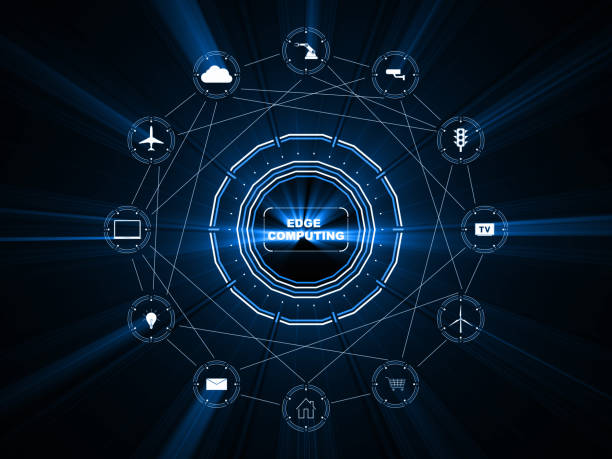
Edge computing is transforming how data is processed by moving computing power closer to where data is created. Instead of sending every piece of information to a distant cloud server, edge computing allows devices or nearby computers to analyze and process data almost instantly. The result is faster performance, lower delays, improved privacy, and greater reliability.
As billions of connected devices become part of everyday life, edge computing is becoming an essential technology that supports everything from smart homes and autonomous vehicles to healthcare, manufacturing, agriculture, and the future of artificial intelligence.
Understanding Edge Computing
Edge computing is a computing model in which data is processed near the location where it is generated rather than being sent entirely to centralized cloud data centers.
The word “edge” refers to the outer edge of a network—the point where users, sensors, machines, smartphones, cameras, and other devices interact with the digital world.
Instead of relying only on distant cloud servers, edge computing places computing resources much closer to these devices. These resources might include a nearby server, a local computer, a gateway device, or even the device itself.
By processing information locally, edge computing reduces the time required for data to travel across networks.
This approach allows applications to respond much more quickly while reducing the amount of data that needs to be transmitted over the internet.
Why Was Edge Computing Developed?
The internet has changed dramatically over the past two decades.
Years ago, most internet traffic came from people browsing websites or sending emails. Today, billions of devices continuously generate enormous amounts of information.
Smartphones capture photos and videos.
Security cameras record around the clock.
Factories monitor thousands of machines.
Hospitals collect patient data from medical equipment.
Cars generate information from cameras, radar, and sensors.
Industrial robots monitor every movement.
Smart cities track traffic, weather, and energy usage.
Sending every bit of this information to distant cloud servers creates several challenges.
Large amounts of data require enormous network bandwidth.
Long-distance communication introduces delays, known as latency.
Internet connections may occasionally become unstable.
Sensitive information may travel through multiple networks, raising privacy concerns.
Edge computing was developed to solve these problems by bringing computing power closer to the source of the data.
How Edge Computing Works
At its core, edge computing follows a simple idea.
A device creates data.
Instead of immediately sending everything to the cloud, the data is analyzed nearby.
Only important results—or data that needs long-term storage or deeper analysis—may later be sent to centralized cloud servers.
For example, imagine a smart security camera installed outside a home.
Without edge computing, the camera might continuously upload every second of video to the cloud.
With edge computing, the camera can analyze the video itself. It can determine whether it detects a person, an animal, or simply leaves moving in the wind.
Only meaningful events, such as someone approaching the front door, need to be transmitted.
This reduces internet traffic while allowing much faster responses.
The Difference Between Cloud Computing and Edge Computing
Cloud computing and edge computing are closely related, but they serve different purposes.
Cloud computing relies on large data centers that provide massive computing power and storage. These centralized facilities handle complex tasks, long-term data storage, software updates, machine learning model training, and large-scale analytics.
Edge computing performs many processing tasks near users or devices before information reaches the cloud.
Rather than replacing cloud computing, edge computing complements it.
Many modern systems use both technologies together.
The edge handles tasks requiring immediate responses.
The cloud performs large-scale analysis, stores historical information, and coordinates systems across many locations.
This partnership combines speed with enormous computing capability.
Why Speed Matters
One of the biggest advantages of edge computing is reduced latency.
Latency is the time it takes for data to travel from one point to another and back again.
For some applications, delays of even a few milliseconds can be critical.
Consider a self-driving vehicle.
Its cameras and sensors constantly detect nearby cars, cyclists, pedestrians, and road signs.
If every decision required sending data to a distant cloud server before returning instructions, valuable time would be lost.
Instead, onboard computers analyze information immediately.
The vehicle can brake, steer, or accelerate without waiting for internet communication.
In situations where human safety depends on rapid decisions, edge computing becomes essential.
Reducing Internet Traffic
Modern devices produce extraordinary amounts of data.
A single industrial machine may generate thousands of measurements every second.
High-resolution security cameras produce enormous video files.
Medical imaging devices create detailed scans.
Factories may operate tens of thousands of connected sensors simultaneously.
Sending all this information across the internet would consume massive network resources.
Edge computing reduces this burden by processing much of the data locally.
Only useful summaries, alerts, or selected information may be transferred to cloud systems.
This approach conserves bandwidth while lowering communication costs.
Improving Reliability
Internet connections are not always perfect.
Storms, damaged cables, equipment failures, or network congestion can interrupt communication.
If a system depends entirely on distant cloud servers, even a temporary connection problem could prevent it from functioning properly.
Edge computing allows many devices to continue operating independently.
A factory machine can keep monitoring production.
A hospital device can continue tracking patients.
A smart traffic system can still manage traffic lights.
Even if cloud connectivity is temporarily unavailable, local processing enables essential services to continue.
Better Privacy and Security
Many organizations handle sensitive information.
Hospitals manage patient records.
Banks process financial transactions.
Businesses protect confidential information.
Smart home devices collect personal data.
Edge computing can improve privacy by reducing the amount of information that leaves local devices or facilities.
Instead of transmitting every detail to external servers, devices can analyze information locally and send only necessary results.
This minimizes data exposure across networks.
However, edge devices themselves must also be protected against cyberattacks.
Strong encryption, secure software, authentication systems, and regular updates remain essential components of edge computing security.
Edge Computing and the Internet of Things
The growth of the Internet of Things (IoT) has been one of the biggest drivers of edge computing.
The Internet of Things refers to physical devices connected to the internet that collect and exchange data.
These devices include smart thermostats, wearable fitness trackers, environmental sensors, industrial machines, agricultural equipment, smart meters, connected vehicles, and countless other technologies.
Many IoT devices generate continuous streams of information.
Edge computing enables these devices to process much of that information nearby instead of relying entirely on remote cloud servers.
As IoT networks continue expanding worldwide, edge computing plays an increasingly important role in managing this vast digital ecosystem.
Edge Computing in Smart Homes
Modern homes contain more connected devices than ever before.
Smart speakers answer questions.
Video doorbells recognize visitors.
Thermostats adjust room temperatures automatically.
Security cameras monitor property.
Smart lighting systems respond to voice commands.
Edge computing allows many of these devices to respond more quickly while reducing dependence on internet connectivity.
Voice recognition, motion detection, facial recognition, and automation routines can often operate locally.
This leads to faster responses and enhanced privacy.
Edge Computing in Healthcare
Healthcare increasingly depends on connected medical devices.
Wearable sensors monitor heart rate.
Glucose monitors track blood sugar.
Medical imaging equipment produces detailed diagnostic images.
Hospital monitoring systems continuously observe patients’ vital signs.
Edge computing enables medical devices to analyze information immediately.
If a patient’s heartbeat becomes dangerously irregular, the system can alert healthcare providers without waiting for distant cloud processing.
Rapid local analysis may improve response times during medical emergencies.
Meanwhile, long-term patient records and large-scale medical research can still benefit from cloud computing.
Edge Computing in Manufacturing
Modern factories use thousands of sensors to monitor machines, temperature, pressure, vibration, and production quality.
Every second, enormous amounts of industrial data are generated.
Edge computing allows factory systems to identify problems immediately.
If a machine begins vibrating unusually, nearby computing systems can detect the issue before equipment fails.
Production lines can automatically adjust operations in real time.
This improves efficiency while reducing downtime and maintenance costs.
Many manufacturers now combine edge computing with artificial intelligence to create smarter, more adaptive factories.
Edge Computing in Transportation
Transportation systems increasingly rely on real-time decision-making.
Autonomous vehicles continuously interpret road conditions.
Traffic management systems monitor congestion.
Railway networks detect equipment faults.
Airports coordinate aircraft movement.
Edge computing enables these systems to process information with minimal delay.
Instead of waiting for cloud responses, local computing systems make rapid decisions that improve safety and efficiency.
As intelligent transportation continues evolving, edge computing remains a critical enabling technology.
Edge Computing in Agriculture
Agriculture has become increasingly data-driven.
Farmers use connected sensors to measure soil moisture, temperature, rainfall, crop growth, and weather conditions.
Drones inspect fields.
Automated irrigation systems adjust water usage.
Livestock monitoring devices track animal health.
Edge computing allows these systems to analyze environmental conditions directly on the farm.
Irrigation systems can respond immediately when soil becomes too dry.
Drones can identify crop stress during flights.
Farm equipment can optimize operations without requiring constant internet communication.
This helps improve productivity while conserving resources.
Edge Computing and Artificial Intelligence
Artificial intelligence and edge computing work remarkably well together.
AI models often require large amounts of computing power during training.
This training typically occurs in cloud data centers.
Once trained, however, many AI models can operate efficiently on edge devices.
A smartphone can recognize faces.
A security camera can identify suspicious activity.
A vehicle can detect road signs.
A drone can avoid obstacles.
A medical device can identify abnormal heart rhythms.
Running AI locally allows faster decisions while reducing internet dependence.
This combination is often called Edge AI.
It is becoming one of the fastest-growing areas of computer science.
The Role of 5G Networks
The expansion of 5G mobile networks is accelerating the adoption of edge computing.
Compared with earlier mobile technologies, 5G offers higher data speeds, greater capacity, and lower communication latency.
These improvements make it easier for edge devices to exchange information quickly with nearby edge servers.
Together, edge computing and 5G support emerging technologies such as autonomous vehicles, smart factories, remote healthcare, immersive virtual reality, and advanced robotics.
Rather than replacing one another, they are complementary technologies that strengthen each other’s capabilities.
Challenges of Edge Computing
Although edge computing offers many advantages, implementing it is not always simple.
Managing thousands or even millions of distributed edge devices can be far more complex than operating a centralized cloud data center.
Each device requires software updates, security protection, monitoring, and maintenance.
Hardware may differ between locations.
Power supplies may be limited.
Environmental conditions may be harsh.
Keeping systems synchronized while maintaining strong cybersecurity requires careful planning.
Organizations must also determine which tasks belong at the edge and which should remain in the cloud.
Finding the right balance is often one of the biggest design challenges.
Edge Computing and Cybersecurity
As more computing occurs outside centralized data centers, cybersecurity becomes increasingly important.
Every connected edge device represents a potential target for attackers.
Manufacturers and organizations must implement secure hardware, encrypted communication, authentication systems, regular software updates, and continuous monitoring.
Physical security also matters because many edge devices operate in remote locations.
Protecting edge infrastructure requires both digital and physical safeguards.
Strong cybersecurity is essential for maintaining trust in edge computing systems.
The Future of Edge Computing
The importance of edge computing continues to grow as the digital world expands.
Artificial intelligence, autonomous systems, robotics, industrial automation, wearable technology, smart cities, connected healthcare, and scientific research all generate increasing amounts of data.
Processing everything in distant cloud servers alone is becoming less practical.
Future edge devices are expected to become faster, more energy-efficient, and more intelligent.
Advances in specialized computer chips, AI accelerators, and communication technologies will allow even smaller devices to perform sophisticated computing tasks.
Instead of relying solely on centralized infrastructure, future networks will distribute intelligence across billions of connected devices.
This decentralized approach promises greater speed, resilience, efficiency, and responsiveness.
Why Edge Computing Matters
Edge computing represents a major shift in how digital systems process information. Rather than treating the cloud as the only place where computation happens, it recognizes that many decisions are best made close to where data is created. By reducing latency, lowering bandwidth requirements, improving reliability, and enhancing privacy, edge computing enables technologies that would otherwise be slow or impractical.
From smart homes and wearable medical devices to autonomous vehicles and intelligent factories, edge computing is quietly becoming part of everyday life. It allows machines to react in real time, supports the growing Internet of Things, and strengthens the capabilities of artificial intelligence. As billions of connected devices continue to generate ever-larger amounts of data, processing information at the edge will become increasingly essential.
In the years ahead, edge computing is expected to play a central role in shaping the next generation of digital innovation. Working alongside cloud computing rather than replacing it, this technology is helping create a world where information is processed faster, systems respond more intelligently, and digital experiences become more seamless than ever before.