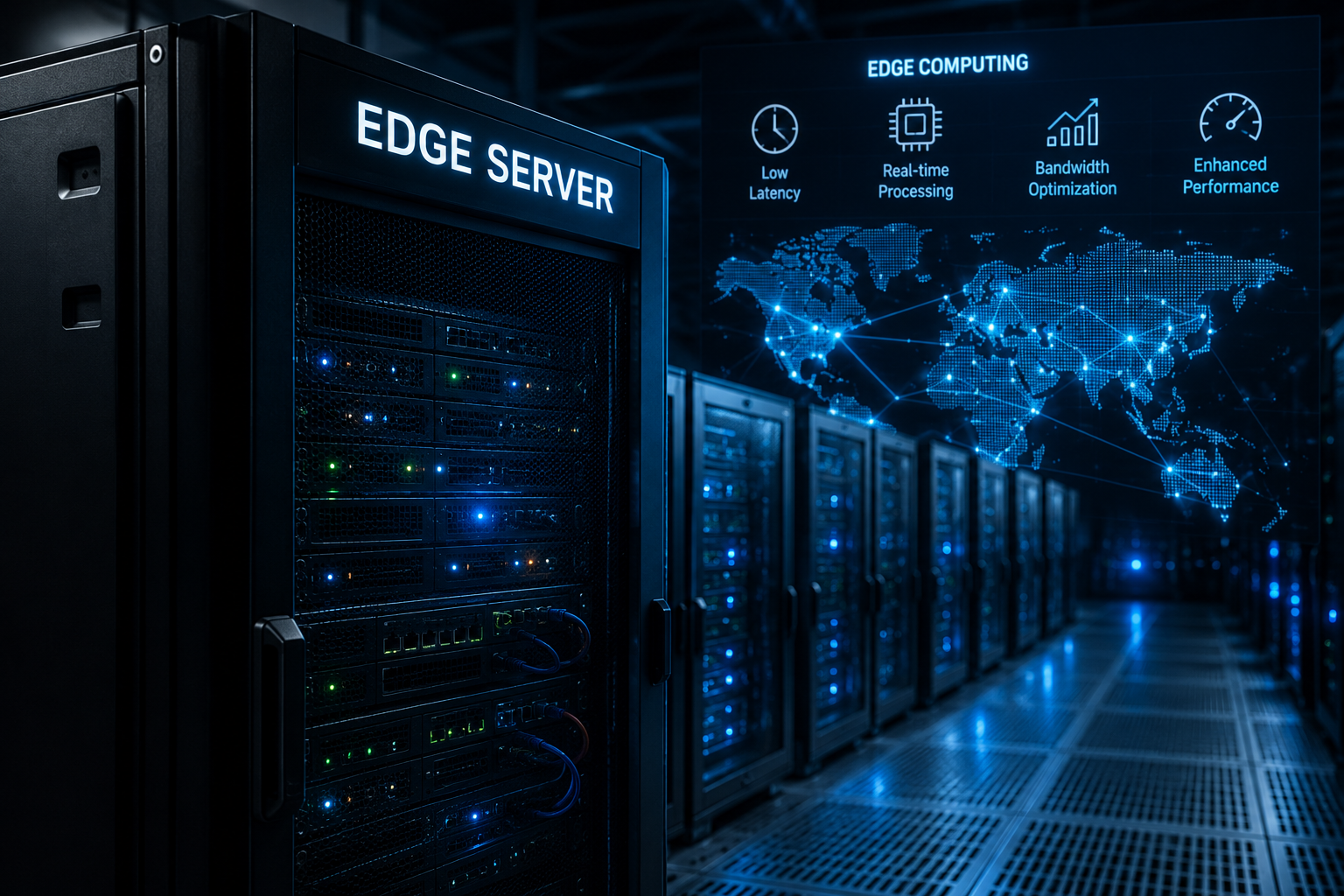
The internet often feels almost magical. You tap a video on your phone, and it starts playing within seconds. You open your favorite website, and it loads almost instantly. You join a video call with someone on the other side of the world, and the conversation feels nearly real time. Behind these seemingly effortless experiences is a vast network of technologies working together—and one of the most important is the edge server.
Most people never think about where a website or video actually comes from. They simply expect everything to work quickly. However, every piece of online content has to travel through networks before it reaches your device. The farther that content has to travel, the longer it usually takes to arrive.
An edge server helps solve this problem by moving data physically closer to users. Instead of sending every request to a distant central server, an edge server delivers content from a nearby location, reducing delays and making the internet feel faster and more responsive.
As websites become larger, videos become higher in quality, and billions of connected devices communicate every day, edge servers have become one of the most important building blocks of the modern internet.
What Is an Edge Server?
An edge server is a computer server located close to internet users that stores, processes, or delivers data on behalf of a central server. Rather than requiring every request to travel all the way to a distant data center, an edge server handles many requests locally, reducing the distance that data must travel.
The word “edge” refers to the edge of the network—closer to where users, smartphones, computers, and Internet of Things (IoT) devices are located.
Think of the internet as a giant transportation system. If every package had to come from a single warehouse on the other side of the country, deliveries would take longer. Instead, companies build local distribution centers in many cities. These local centers allow packages to reach customers much faster.
An edge server works in a similar way. It acts like a nearby distribution center for digital information.
Why Distance Matters on the Internet
Even though data travels incredibly fast through fiber-optic cables—often close to the speed of light—it still takes time to move across long distances.
Every website request involves multiple steps.
When you type a web address into your browser, your request travels through internet service providers, routers, switches, and numerous network connections before reaching the server that hosts the website. The server then sends the requested information back through the network to your device.
If that server is located thousands of kilometers away, every request takes longer.
This delay is known as latency.
Even a delay of just a few hundred milliseconds can make websites feel sluggish, games less responsive, and video calls less natural.
Edge servers reduce latency by placing content much closer to users.
How an Edge Server Works
Imagine you live in New York and want to watch a video stored on a server in California.
Without an edge server, every piece of the video must travel across the United States before reaching your device.
Now imagine that the video has already been copied to an edge server located in New York.
Instead of traveling across the country, the video is delivered from a nearby server.
The result is a much faster experience.
This same principle applies to many kinds of online content, including images, videos, software downloads, web pages, game updates, and application data.
Some edge servers simply store copies of popular files.
Others perform much more advanced tasks, including processing data, running applications, filtering traffic, improving security, or analyzing information before forwarding it to central servers.
Edge Servers and Content Delivery Networks
One of the most common places where edge servers are used is within a Content Delivery Network, or CDN.
A CDN consists of hundreds or even thousands of edge servers distributed across cities and countries around the world.
When someone visits a website that uses a CDN, the network automatically directs the user to the nearest available edge server.
Instead of downloading images, videos, style sheets, and other website files from a distant data center, the browser receives them from a nearby location.
This dramatically improves loading speed.
Popular websites, streaming services, online newspapers, social media platforms, and e-commerce stores rely heavily on CDNs because they serve millions of users simultaneously across many countries.
Without edge servers, these services would struggle to provide consistently fast experiences.
Caching: The Secret Behind Faster Websites
One of the most important jobs of an edge server is caching.
Caching means temporarily storing copies of frequently requested content.
Suppose millions of people visit the same news article today.
Rather than asking the central server to generate and send the article every single time, the edge server stores a copy.
When additional visitors request the page, the edge server immediately delivers the cached version.
This reduces workload on the main server while significantly speeding up delivery.
Cached content often includes images, videos, JavaScript files, CSS files, fonts, and other resources that rarely change.
Because these files are already available nearby, users receive them much more quickly.
Reducing Latency
Latency refers to the time it takes for data to travel between devices.
Low latency has become increasingly important as internet applications become more interactive.
Video conferencing requires conversations to happen almost instantly.
Cloud gaming depends on rapid responses between players and game servers.
Virtual reality applications need extremely low delays to feel natural.
Autonomous vehicles may eventually depend on near-instant communication.
Industrial robots often require real-time decision-making.
Edge servers help reduce latency because nearby servers respond much faster than distant ones.
Even saving a few milliseconds can significantly improve user experience.
Edge Computing and Edge Servers
Edge servers play a major role in edge computing.
Traditional cloud computing sends most processing tasks to centralized cloud data centers.
Edge computing moves some of that processing closer to where data is generated.
For example, a factory equipped with thousands of sensors produces enormous amounts of information every second.
Instead of sending every piece of sensor data to a distant cloud server, a nearby edge server can analyze the information immediately.
Only important results may need to be sent to the cloud.
This reduces bandwidth usage while allowing much faster decision-making.
Edge computing is becoming increasingly valuable in manufacturing, healthcare, transportation, agriculture, retail, telecommunications, and smart cities.
Edge Servers Improve Video Streaming
Streaming services depend heavily on edge servers.
Modern movies and television shows are often delivered in 4K or even 8K resolution.
These files are enormous.
If every viewer downloaded videos directly from one central location, internet congestion would quickly become overwhelming.
Instead, streaming providers distribute copies of popular content across thousands of edge servers.
When you press Play, the video usually begins streaming from a nearby location.
This reduces buffering, improves video quality, and allows millions of viewers to watch simultaneously.
Even live sporting events benefit from edge servers because they help distribute streams efficiently across large audiences.
Online Gaming and Edge Servers
Modern online games require constant communication between players and servers.
Every movement, action, and interaction must be transmitted rapidly.
Even small delays can affect gameplay.
Edge servers reduce the physical distance between players and game infrastructure.
This lowers latency, making controls feel more responsive.
Many multiplayer games deploy regional edge servers so players connect to nearby locations rather than distant global data centers.
This helps create smoother, fairer gaming experiences.
Edge Servers Support Mobile Networks
The expansion of 5G networks has increased the importance of edge servers.
5G offers much higher speeds and lower latency than previous generations of mobile technology.
To fully realize these benefits, many computing tasks need to occur close to mobile users.
Telecommunication companies often place edge servers within or near cellular infrastructure.
These servers help process data quickly for smartphones, connected vehicles, augmented reality applications, and smart devices.
Without nearby edge servers, many advanced 5G applications would lose much of their speed advantage.
The Role of Edge Servers in the Internet of Things
The Internet of Things, commonly known as IoT, connects billions of physical devices to the internet.
These include smart thermostats, security cameras, industrial sensors, wearable fitness devices, medical equipment, agricultural sensors, and connected vehicles.
Many IoT devices continuously generate information.
Sending every data point to distant cloud servers would consume enormous bandwidth and introduce delays.
Edge servers can process much of this information locally.
For example, a smart security camera may use a nearby edge server to analyze video, detect unusual activity, and send alerts immediately without transmitting every second of footage to the cloud.
This makes IoT systems more efficient and responsive.
Edge Servers Improve Website Reliability
An edge server does more than improve speed.
It also increases reliability.
If one server experiences heavy traffic or temporary problems, nearby edge servers can often continue serving users.
Traffic can be distributed across multiple locations instead of overwhelming a single data center.
This redundancy helps websites remain available during periods of exceptionally high demand.
Major online shopping events, breaking news, and global sporting competitions often attract millions of visitors at once.
Edge infrastructure helps manage these traffic surges without causing widespread slowdowns.
Edge Servers Enhance Cybersecurity
Many edge servers include built-in security features that protect websites and online services.
Before requests reach the origin server, edge servers can inspect incoming traffic.
They may identify malicious bots, block suspicious requests, filter harmful traffic, and reduce the impact of Distributed Denial-of-Service (DDoS) attacks.
Because these threats are intercepted closer to users, the main servers remain better protected.
Edge servers may also encrypt communications, enforce access rules, and provide secure content delivery.
As cyber threats continue evolving, edge-based security has become an increasingly important layer of internet protection.
Edge Servers Reduce Bandwidth Costs
Every request handled directly by a central server consumes bandwidth.
As websites grow larger and receive more visitors, bandwidth costs increase.
By serving cached content locally, edge servers reduce the amount of data that must travel long distances.
The origin server processes fewer requests, while internet backbone traffic decreases.
This makes large-scale websites more efficient and often less expensive to operate.
Edge Servers and Artificial Intelligence
Artificial intelligence is increasingly moving toward the edge.
Many AI applications require immediate responses.
Self-driving vehicles cannot wait several seconds for distant cloud servers to analyze road conditions.
Smart factories need instant detection of equipment failures.
Healthcare devices may need real-time analysis of patient information.
Edge servers equipped with AI hardware can process machine learning models locally.
This enables faster decisions while reducing dependence on distant cloud infrastructure.
The combination of edge computing and AI is expected to become even more important in the coming years.
Edge Servers Versus Origin Servers
An origin server is the primary server where a website or application is hosted.
It stores the original version of files and handles core application logic.
An edge server acts as a helper.
It stores copies of frequently requested content, processes nearby requests, and reduces the workload placed on the origin server.
When users request information that is already available on the edge server, the edge server responds immediately.
If the requested content is unavailable or outdated, the edge server retrieves the latest version from the origin server and may cache it for future requests.
Both servers work together to create fast, reliable online experiences.
Where Are Edge Servers Located?
Edge servers are distributed across the world.
They are commonly installed in internet exchange points, regional data centers, telecommunications facilities, and major metropolitan areas.
Large technology companies often operate thousands of edge locations across multiple continents.
The goal is simple: place computing resources as close as possible to users.
As internet usage grows worldwide, more edge servers continue to be deployed in additional cities and regions.
Industries That Depend on Edge Servers
Many industries now rely heavily on edge infrastructure.
Streaming services use edge servers to deliver movies and television programs efficiently.
Online retailers accelerate website performance during shopping seasons.
Banks improve digital services while enhancing security.
Healthcare providers support telemedicine and connected medical devices.
Manufacturing companies process sensor data from smart factories.
Transportation systems analyze traffic information in near real time.
Educational platforms deliver online learning content to students around the world.
Scientific research projects distribute massive datasets through edge networks.
Even weather forecasting and disaster monitoring increasingly benefit from edge computing infrastructure.
The Future of Edge Servers
The demand for edge servers continues growing rapidly.
More people are streaming high-definition video.
Cloud gaming is becoming increasingly popular.
Artificial intelligence is expanding into everyday devices.
Autonomous systems require real-time decision-making.
The Internet of Things continues connecting billions of new devices each year.
Future technologies such as advanced robotics, smart cities, immersive virtual reality, and next-generation communication networks will likely depend even more on edge infrastructure.
Instead of relying solely on a few enormous centralized data centers, the future internet is expected to become increasingly distributed.
Edge servers will play a central role in that transformation.
Why Edge Servers Matter
The internet has evolved far beyond simple web pages. Today it powers global communication, entertainment, education, healthcare, finance, transportation, and scientific research. To keep these services fast, reliable, and secure, data must be delivered as efficiently as possible.
Edge servers make this possible by bringing computing and content closer to users. They reduce latency, improve website performance, support streaming, enable responsive online gaming, strengthen cybersecurity, and help power emerging technologies such as 5G, artificial intelligence, and the Internet of Things.
Although most people never see an edge server, they experience its benefits every day. Every quickly loading website, every smooth video stream, every responsive online game, and every reliable cloud application is a reminder that somewhere nearby, an edge server is quietly helping the modern internet work faster than ever before.