Black holes are among the most mysterious and fascinating objects in the universe. They have inspired countless science fiction stories, movies, and imaginative theories. The idea of falling into a black hole captures our curiosity like few other cosmic mysteries. Would you be crushed instantly? Would you disappear forever? Could you travel to another universe? Or would time itself begin to behave in strange ways?
Modern physics provides some remarkable answers. While scientists still do not know everything about black holes, decades of observations and Albert Einstein’s theory of general relativity allow us to understand many aspects of what would happen if someone were unfortunate enough to fall into one.
The reality is far stranger—and far more fascinating—than fiction.
What Is a Black Hole?
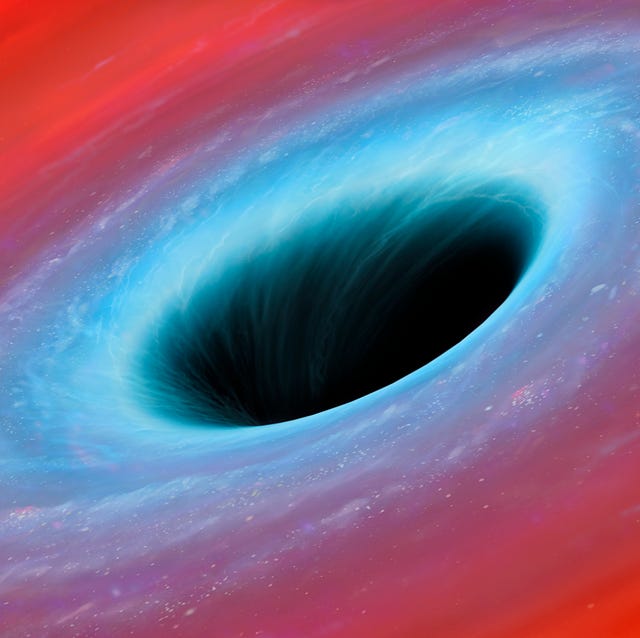
A black hole is a region of space where gravity is so incredibly strong that nothing can escape once it crosses a certain boundary—not even light, which travels at nearly 300,000 kilometers (186,000 miles) per second.
A black hole forms when an extremely massive star runs out of nuclear fuel. Without the outward pressure produced by nuclear fusion, gravity causes the star’s core to collapse under its own weight. If enough mass is packed into a small enough space, a black hole is born.
Not all black holes form this way. Scientists also know that supermassive black holes, containing millions or even billions of times the Sun’s mass, exist at the centers of most galaxies, including our own Milky Way. Exactly how these enormous black holes formed is still an active area of research.
Despite their name, black holes are not empty holes in space. They are objects with mass, just like stars and planets, but compressed into an extraordinarily small region.
Why Black Holes Look Black
Everything we see is visible because light reaches our eyes.
A black hole appears black because its gravity is so powerful that light cannot escape once it passes the event horizon. Without escaping light, the black hole itself cannot be seen directly.
However, scientists can detect black holes by observing their effects on nearby matter. Gas falling toward a black hole becomes incredibly hot, producing enormous amounts of X-rays and other forms of radiation. Stars orbiting an invisible object can also reveal the presence of a black hole through their motion.
In 2019, astronomers even captured the first image of the shadow of a black hole, followed by an image of the supermassive black hole at the center of the Milky Way in 2022.
The Event Horizon: The Point of No Return
The most important boundary around a black hole is called the event horizon.
Think of it as an invisible surface surrounding the black hole.
Outside the event horizon, escape is still possible if you have enough speed.
Once you cross it, escape becomes impossible because every possible path through space and time leads inward toward the center.
Nothing—not rockets, not light, not information—can return once it has crossed this boundary.
If someone were watching you from far away, they would see something very strange happen as you approached the event horizon.
What Someone Watching From Far Away Would See
According to Einstein’s theory of general relativity, gravity affects time.
The stronger the gravitational field, the more slowly time passes compared to regions farther away.
As you approached the event horizon, an observer watching from a safe distance would see your movements gradually slow down.
Your clock would appear to tick more slowly.
Your voice would become deeper as the light and radio waves you emitted lost energy while escaping the black hole’s gravity.
Eventually, you would seem almost frozen just outside the event horizon, becoming dimmer and redder until you gradually faded from view.
From the distant observer’s perspective, it would appear as though you never actually crossed the event horizon.
What You Would Experience
Your own experience would be completely different.
If the black hole were very large, such as a supermassive black hole, you would not notice anything unusual at the exact moment you crossed the event horizon.
There would be no wall.
No sudden impact.
No flashing lights.
No dramatic boundary.
You would simply continue falling.
This surprising prediction comes directly from general relativity. The event horizon itself is not a physical surface but a mathematical boundary in spacetime.
Only later would the effects of the black hole become impossible to ignore.
The Strange Stretching Effect
As you fall deeper toward the black hole, gravity becomes increasingly uneven.
The part of your body closer to the black hole experiences a stronger gravitational pull than the part farther away.
This difference is known as a tidal force.
If your feet point toward the black hole, gravity pulls on your feet more strongly than on your head.
As the difference grows, your body begins to stretch lengthwise while being squeezed sideways.
Scientists sometimes refer to this dramatic process as spaghettification, because objects become stretched into long, thin shapes resembling strands of spaghetti.
No known material, including the human body, could survive such enormous forces.
Does This Happen Immediately?
The answer depends on the size of the black hole.
For a relatively small stellar-mass black hole, tidal forces become deadly before or near the event horizon. You would be stretched apart long before reaching the center.
For a supermassive black hole, however, the event horizon is much farther from the center. Gravity changes more gradually over this larger distance.
In that case, you could cross the event horizon without immediately noticing anything unusual.
Only much later, as you continued falling inward, would tidal forces become overwhelming.
Ironically, larger black holes can actually be less dangerous at the event horizon than smaller ones.
Can You Stop Falling?
Unfortunately, no.
Once you pass the event horizon, every possible future path leads inward.
Even traveling at the speed of light would not allow escape.
This is because the black hole has warped spacetime so severely that moving outward becomes as impossible as traveling backward in time.
The center of the black hole becomes part of your unavoidable future.
What Is at the Center?
According to Einstein’s equations, all the matter inside a black hole eventually collapses into an incredibly tiny region called a singularity.
At the singularity, density becomes unimaginably large, and spacetime appears to curve infinitely.
However, physicists believe this prediction signals that our current theories are incomplete.
General relativity describes gravity extremely well, while quantum mechanics governs the behavior of tiny particles.
Near a singularity, both theories should apply simultaneously, yet they do not fit together.
Scientists therefore suspect that a future theory of quantum gravity will replace the classical idea of an infinite-density singularity with something more realistic.
Exactly what exists at the center of a black hole remains one of the biggest unanswered questions in physics.
Could You Survive Somehow?
Based on everything currently known, the answer is almost certainly no.
The tidal forces inside a black hole eventually become so intense that they would destroy any human body.
Even the strongest spacecraft imaginable would eventually be torn apart.
There is currently no known material capable of withstanding the conditions deep inside a black hole.
Could You Reach Another Universe?
Many science fiction stories imagine black holes as gateways to other universes or distant regions of space.
Some theoretical solutions to Einstein’s equations describe structures called wormholes, which could, in principle, connect different parts of spacetime.
However, there is no observational evidence that real black holes contain traversable wormholes.
Even if wormholes exist, most theoretical models suggest they would collapse too quickly or require forms of exotic matter that have never been observed.
At present, there is no scientific evidence that falling into a black hole would transport you elsewhere.
What About Time Travel?
Black holes affect time in extraordinary ways.
To someone far away, your clock appears to slow dramatically.
To you, however, your own clock continues ticking normally.
This difference demonstrates that time is not absolute but depends on gravity and motion.
Some theoretical models suggest that black holes may allow unusual effects involving time, but none provide a practical way for humans to travel into the past.
Current scientific understanding does not support the idea that falling into a black hole would allow you to become a time traveler.
Would You Feel Weightless?
For much of your fall, yes.
As long as tidal forces remain small, you would experience free fall, much like astronauts orbiting Earth.
Inside a falling spacecraft, objects would float alongside you.
You would not feel your own weight because everything around you would be accelerating together.
Only when tidal forces became large enough would you begin to notice the destructive stretching caused by the black hole’s gravity.
What If the Black Hole Is Feeding?
Many black holes are surrounded by disks of hot gas and dust called accretion disks.
Matter in these disks can reach temperatures of millions of degrees, producing intense X-rays and gamma rays.
If you approached an actively feeding black hole, you would likely encounter deadly radiation and extreme heat long before reaching the event horizon.
In many cases, the environment surrounding the black hole would be more dangerous than the black hole itself.
Can Black Holes Eventually Disappear?
Surprisingly, yes.
In the 1970s, physicist Stephen Hawking showed that black holes are not completely black.
Quantum effects near the event horizon allow black holes to emit a tiny amount of radiation, now known as Hawking radiation.
This process causes black holes to lose energy extremely slowly.
Over incredibly long periods—far longer than the current age of the universe—black holes may gradually evaporate completely.
For stellar-mass and supermassive black holes, this process would take an almost unimaginable amount of time.
Do Scientists Really Study Falling Into Black Holes?
Yes.
Although no human could safely perform such an experiment, physicists use mathematics, computer simulations, and astronomical observations to understand what happens near black holes.
Space telescopes detect radiation from material falling inward.
Gravitational-wave observatories have observed black holes merging.
The Event Horizon Telescope has imaged the shadows of black holes.
Together, these observations continue to confirm many predictions of Einstein’s theory while also helping scientists search for new physics.
What We Still Do Not Know
Black holes remain one of the greatest mysteries in science.
Researchers are still trying to understand how information behaves inside black holes, what truly happens at the singularity, how quantum gravity works, and whether black holes could reveal entirely new laws of nature.
The famous “black hole information paradox” remains an active area of research, exploring whether information that falls into a black hole is truly lost or somehow preserved.
Solving these mysteries could transform our understanding of the universe itself.
A Journey No One Could Return From
Falling into a black hole would be unlike any experience imaginable. For a distant observer, you would appear to slow down and fade near the event horizon. From your own perspective, you would continue falling inward, unaware of crossing the invisible boundary that marks the point of no return. Eventually, the black hole’s immense tidal forces would stretch and crush you in a process predicted by Einstein’s theory of general relativity.
Although science has uncovered many remarkable truths about black holes, they continue to challenge our understanding of space, time, gravity, and the fundamental laws of physics. Every new observation brings us closer to answering some of the universe’s deepest questions, reminding us that black holes are not merely cosmic curiosities but natural laboratories where the known laws of physics are pushed to their limits.
In many ways, black holes represent both the end of a journey and the beginning of one. They mark the boundary where our current understanding fades, inviting future generations of scientists to explore mysteries that remain hidden in the darkest corners of the cosmos.