Look up at the night sky on a clear evening, and you will see thousands of stars scattered across the darkness. Beyond those stars lie billions of other stars, gathered into galaxies that stretch farther than the human mind can easily imagine. Those galaxies themselves are only a tiny fraction of the observable universe, which contains hundreds of billions of galaxies, each home to countless stars, planets, clouds of gas, black holes, and mysteries yet to be discovered.
Now imagine something even more astonishing.
Everything you see—the Earth beneath your feet, the Sun that warms our planet, the Moon, every star in the Milky Way, every distant galaxy, every atom in your body, every drop of water, every mountain, every tree, every living creature, and even space itself—can be traced back to a single cosmic beginning nearly 13.8 billion years ago.
This remarkable idea is known as the Big Bang Theory.
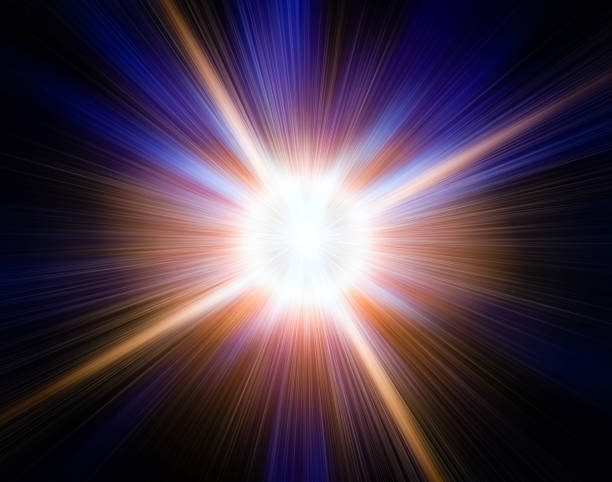
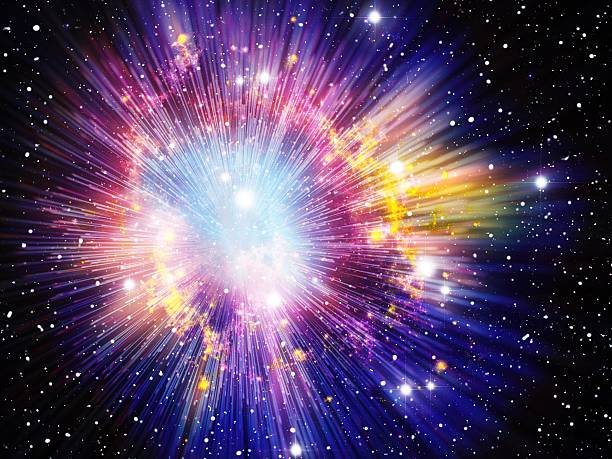
Despite its name, the Big Bang was not a gigantic explosion in space. It was the rapid expansion of space itself from an extremely hot, incredibly dense early state. As the universe expanded, it cooled, allowing particles to form, then atoms, stars, galaxies, planets, and eventually life.
Today, the Big Bang Theory is the leading scientific explanation for the origin and evolution of the observable universe. It is supported by multiple independent lines of evidence gathered through astronomy, physics, and cosmology. Yet despite its success, the theory does not answer every question. Scientists continue investigating what happened during the universe’s earliest moments and whether anything existed before the Big Bang—if the concept of “before” even applies.
The story of the Big Bang is not only a story about the birth of the cosmos. It is also the story of our own origins. Every atom of carbon in our bodies, every oxygen molecule we breathe, and every calcium atom in our bones has a history that stretches back through stars to the earliest moments of cosmic history.
Understanding the Big Bang means understanding how everything we know came to exist.
What Is the Big Bang Theory?
The Big Bang Theory is the scientific model that explains how the observable universe began and evolved over time.
According to this model, the universe started about 13.8 billion years ago in an extremely hot, dense state. Rather than remaining static, space itself began expanding. As expansion continued, temperatures dropped, allowing matter to form and increasingly complex structures to develop.
The Big Bang Theory is not merely an idea or speculation.
It is supported by decades of observations and measurements from telescopes, satellites, particle physics experiments, and astronomical surveys.
Importantly, the theory describes the evolution of the universe from its earliest observable stages onward. It does not claim to explain why the universe exists or what, if anything, preceded its earliest measurable moments.
A Common Misunderstanding
The phrase “Big Bang” often creates an incorrect image.
Many people imagine an enormous explosion occurring inside empty space.
That is not what the theory describes.
An ordinary explosion sends material outward into preexisting space.
The Big Bang involved the expansion of space itself.
Imagine drawing dots on the surface of a balloon.
As the balloon inflates, every dot moves farther away from every other dot.
The dots are not flying through the rubber.
Instead, the rubber itself is stretching.
Similarly, galaxies move farther apart because space between them expands.
There is no center of expansion within the observable universe.
Every observer sees distant galaxies moving away.
How the Idea Developed
For much of history, many people believed the universe had always existed in roughly its present form.
During the early twentieth century, this view began changing.
Albert Einstein’s theory of general relativity showed that the universe could evolve over time.
Initially, Einstein introduced a mathematical adjustment called the cosmological constant because he believed the universe should remain static.
Soon afterward, Belgian priest and physicist Georges Lemaître proposed that the universe had expanded from an extremely dense early state.
His idea was revolutionary.
Then, in 1929, American astronomer Edwin Hubble made a remarkable discovery.
He observed that distant galaxies are moving away from us.
Even more importantly, the farther away a galaxy is, the faster it appears to recede.
This relationship became known as Hubble’s Law.
The expanding universe provided powerful support for Lemaître’s proposal.
Rewinding Cosmic History
Imagine watching a video of fireworks exploding.
Now play the video backward.
Instead of fragments flying apart, everything moves closer together until it forms a single compact point.
Astronomers use a similar idea when studying the universe.
If galaxies are moving farther apart today, then billions of years ago they must have been much closer together.
Continuing this reasoning backward leads to an incredibly hot, dense early universe.
This simple but powerful concept forms the foundation of the Big Bang Theory.
The Earliest Moments
Scientists understand much about the universe shortly after its earliest fractions of a second.
However, the very beginning remains mysterious.
Current physics cannot fully describe conditions during the first tiny fraction of a second known as the Planck epoch.
Temperatures were unimaginably high.
Gravity, electromagnetism, and the nuclear forces may have behaved differently than they do today.
Physicists continue searching for a theory that successfully combines quantum mechanics with gravity.
Until such a theory exists, the universe’s earliest instant remains one of science’s greatest mysteries.
Cosmic Inflation
One of the most important ideas in modern cosmology is inflation.
According to this theory, the universe experienced an extraordinarily rapid burst of expansion during an incredibly tiny fraction of a second after the Big Bang.
During inflation, space expanded far faster than the speed of light itself.
This does not violate Einstein’s theory because it was space expanding, not objects moving through space.
Inflation helps explain why the universe appears remarkably uniform on large scales.
It also accounts for tiny density variations that later became galaxies and galaxy clusters.
Although inflation is strongly supported by several observations, scientists continue studying its exact nature.
The Birth of Fundamental Particles
As the universe expanded, it cooled.
During its earliest moments, temperatures were too high for stable matter to exist.
Energy gradually transformed into fundamental particles.
Quarks, electrons, neutrinos, and other elementary particles appeared.
Quarks combined to form protons and neutrons.
Matter and antimatter were both produced.
For reasons still being investigated, slightly more matter than antimatter survived.
Had equal amounts remained, they would have annihilated each other completely.
The tiny excess of matter eventually formed everything visible in today’s universe.
The First Atomic Nuclei
Within the first few minutes, conditions became cool enough for protons and neutrons to combine.
This process is called Big Bang nucleosynthesis.
The universe produced mostly hydrogen nuclei.
Smaller amounts of helium formed.
Tiny traces of lithium also appeared.
Heavier elements did not yet exist.
These would require billions of years of stellar evolution.
Remarkably, modern measurements of hydrogen and helium throughout the universe closely match predictions from Big Bang nucleosynthesis.
This agreement represents one of the strongest confirmations of the theory.
When Light Finally Traveled Freely
For hundreds of thousands of years, the universe remained filled with extremely hot plasma.
Electrons moved freely rather than orbiting atomic nuclei.
Photons constantly scattered from these charged particles.
As a result, light could not travel far.
Eventually, about 380,000 years after the Big Bang, temperatures dropped enough for electrons to combine with nuclei.
Stable atoms formed.
Photons were finally able to travel freely across space.
This ancient light still exists today.
Astronomers detect it as the cosmic microwave background.
The Cosmic Microwave Background
The cosmic microwave background is often described as the afterglow of the Big Bang.
It fills every direction in space.
Discovered accidentally in 1965 by Arno Penzias and Robert Wilson, this faint microwave radiation transformed cosmology.
Its temperature measures approximately 2.7 degrees above absolute zero.
Tiny variations within this radiation reveal slight differences in density that existed shortly after the Big Bang.
These small fluctuations eventually grew into galaxies.
Space telescopes such as COBE, WMAP, and Planck have mapped the cosmic microwave background with extraordinary precision.
Their observations strongly support the Big Bang model.
The Cosmic Dark Ages
After atoms formed, the universe entered a relatively quiet period.
No stars yet existed.
The universe contained mostly hydrogen and helium gas.
Without stars, visible light was absent.
Astronomers refer to this interval as the cosmic dark ages.
Gravity slowly pulled gas together.
Dense regions gradually grew larger.
Eventually, enough material accumulated to ignite the first stars.
The First Stars
Several hundred million years after the Big Bang, gravity created the universe’s first stars.
These ancient stars were enormous, hot, and short-lived.
Inside their cores, nuclear fusion produced heavier elements.
Carbon, oxygen, nitrogen, silicon, and many other elements essential for planets and life originated inside stars.
When massive stars exploded as supernovae, they scattered these elements throughout space.
Future generations of stars formed from enriched gas.
Planets eventually emerged around many of them.
Our own solar system formed from material recycled through earlier stars.
The Birth of Galaxies
Gravity continued shaping the expanding universe.
Stars gathered into galaxies.
Galaxies clustered together into larger structures.
Today, astronomers observe galaxies of astonishing diversity.
Some are graceful spirals.
Others are giant elliptical systems.
Still others possess irregular shapes caused by collisions or interactions.
The Milky Way, our home galaxy, formed gradually over billions of years through repeated mergers and continuous star formation.
How the Solar System Formed
About 4.6 billion years ago, a cloud of gas and dust within the Milky Way collapsed under gravity.
Most material formed the Sun.
Remaining dust gradually combined into planets, moons, asteroids, and comets.
Earth formed approximately 4.54 billion years ago.
Initially, our planet was extremely hot.
Over time, it cooled.
Oceans appeared.
Life eventually emerged.
Every atom in Earth heavier than hydrogen and helium was forged inside ancient stars that lived and died long before our solar system existed.
In a very real sense, humans are made of stardust.
Evidence Supporting the Big Bang
Science depends upon evidence.
The Big Bang Theory became accepted because observations repeatedly confirmed its predictions.
One major line of evidence comes from the expanding universe.
Nearly every distant galaxy shows redshift, indicating it is moving away.
Another comes from the cosmic microwave background.
Its properties closely match predictions made before its discovery.
A third comes from the abundance of light elements.
Hydrogen and helium throughout the universe exist in proportions remarkably consistent with Big Bang nucleosynthesis.
Additional evidence comes from galaxy evolution, large-scale cosmic structure, and observations made by powerful space telescopes.
Together, these independent discoveries strongly support the Big Bang model.
What About Dark Matter?
Modern cosmology reveals that ordinary matter represents only a small fraction of the universe.
Galaxies rotate too rapidly for visible matter alone to provide enough gravity.
Additional unseen mass appears necessary.
Scientists call this mysterious substance dark matter.
Dark matter does not emit, absorb, or reflect light.
Its presence is inferred through gravitational effects.
Although researchers have not directly detected dark matter particles, evidence for its existence is extensive.
It plays an essential role in current models of galaxy formation.
The Mystery of Dark Energy
In the late 1990s, astronomers made another astonishing discovery.
The expansion of the universe is accelerating.
Instead of slowing due to gravity, cosmic expansion appears to be speeding up.
Scientists attribute this acceleration to something called dark energy.
Dark energy remains one of the greatest mysteries in physics.
Its true nature remains unknown.
Current observations suggest it constitutes nearly seventy percent of the universe’s total energy content.
Did the Big Bang Create Time?
One fascinating implication of modern cosmology concerns time itself.
According to general relativity, space and time form a unified structure called spacetime.
If spacetime originated with the early universe, then asking what happened “before” the Big Bang may resemble asking what lies north of the North Pole.
The question itself may not have a meaningful answer.
However, scientists continue exploring possibilities.
Some theories propose earlier universes.
Others suggest cyclic cosmic histories or quantum processes preceding the observable universe.
No consensus currently exists.
What the Big Bang Does Not Explain
The Big Bang Theory is enormously successful, but it does not answer every question.
It does not explain why the universe exists.
It does not identify what caused the earliest expansion.
It does not fully describe the Planck epoch.
It does not reveal the nature of dark matter or dark energy.
Science progresses by recognizing unanswered questions rather than pretending complete certainty.
The existence of mysteries motivates continued research.
Common Misconceptions
Many misunderstandings surround the Big Bang.
One misconception claims the theory says the universe came from absolutely nothing.
Actually, the theory describes how the universe evolved from an early hot, dense state. It does not establish what, if anything, preceded that state.
Another misconception suggests the Big Bang was an explosion.
As discussed earlier, it was the expansion of space itself.
Some people believe the Big Bang remains “just a theory.”
In everyday language, theory sometimes means a guess.
In science, a theory is a comprehensive explanation supported by extensive evidence.
The Big Bang Theory occupies this scientific meaning.
The Future of the Universe
What lies ahead for the cosmos?
Current evidence suggests expansion will continue.
Galaxies outside our local group will gradually disappear beyond our observable horizon.
Stars will slowly exhaust their nuclear fuel.
Star formation will decline.
Over unimaginable timescales, the universe may approach a cold, dark state sometimes called heat death.
Other possibilities remain under investigation.
Future discoveries about dark energy could alter these predictions.
How Scientists Continue Studying the Big Bang
Modern astronomy has entered an extraordinary era.
Powerful observatories peer deeper into space than ever before.
Because light requires time to travel, looking farther into space means looking farther into the past.
The most distant galaxies appear as they existed billions of years ago.
Advanced telescopes now observe galaxies formed only a few hundred million years after the Big Bang.
Particle accelerators recreate conditions similar to those in the early universe.
Gravitational-wave observatories open entirely new ways of studying cosmic history.
Each new instrument expands humanity’s understanding of our origins.
Why the Big Bang Matters
The Big Bang Theory is far more than an explanation for distant galaxies.
It is the story of every atom around us.
Without the Big Bang, there would be no stars.
Without stars, there would be no heavy elements.
Without those elements, there would be no rocky planets, oceans, atmosphere, or life.
Every breath we take connects us to cosmic history.
Every calcium atom in our bones was forged inside a star.
Every oxygen atom we breathe was created through nuclear fusion billions of years ago.
The universe is not separate from us.
We are part of its ongoing story.
Conclusion
The Big Bang Theory stands as one of the greatest achievements in modern science, offering the best-supported explanation for how the observable universe began and evolved over the past 13.8 billion years. Rather than describing an explosion in empty space, it reveals a universe in which space itself has been expanding from an extremely hot and dense early state. From that remarkable beginning emerged the first particles, the first atoms, the first stars, the first galaxies, and eventually planets capable of supporting life.
Decades of scientific evidence—including the expansion of the universe, the cosmic microwave background, the observed abundance of light elements, and the large-scale structure of the cosmos—have repeatedly confirmed the predictions of the Big Bang model. At the same time, the theory continues to evolve as researchers investigate profound mysteries such as dark matter, dark energy, cosmic inflation, and the nature of the universe’s earliest moments.
Perhaps the most inspiring aspect of the Big Bang is the realization that the history of the universe is also our own history. The atoms that make up our bodies were forged in ancient stars born from material created in the early universe. Every person, every mountain, every ocean, every tree, and every living creature shares the same cosmic origin.
Although many questions remain unanswered, the Big Bang Theory has transformed humanity’s understanding of its place in the cosmos. It reminds us that the universe is not a random collection of disconnected objects but a vast, evolving story stretching across billions of years—a story that began in an unimaginably hot and dense state and continues today with every new discovery. As science advances, our understanding of that extraordinary beginning will undoubtedly deepen, bringing us ever closer to answering one of humanity’s oldest questions: How did everything begin?