Every morning, millions of people leave their homes with the same hope—to reach work, school, or an important appointment on time. Yet in many cities, traffic congestion turns short journeys into frustrating hours spent sitting in slow-moving vehicles. Roads become crowded, buses are delayed, and emergency services often struggle to move quickly through packed streets.
For generations, city transportation has depended almost entirely on roads, railways, and waterways. But what if there were another layer of transportation above them? What if people could safely travel through the sky for short distances without needing a traditional airport?
This vision is at the heart of Urban Air Mobility (UAM), a rapidly developing field that could transform how cities move people and goods. Advances in electric aircraft, battery technology, autonomous systems, and aviation engineering are bringing this idea closer to reality.
Urban Air Mobility is not simply about flying cars. It represents an entirely new transportation system designed to make cities more connected, more efficient, and potentially more sustainable. While many technical and regulatory challenges remain, researchers and engineers around the world are working to make this vision possible.
What Is Urban Air Mobility?
Urban Air Mobility refers to the transportation of people and cargo using small aircraft that operate within and around cities. These aircraft are designed for relatively short trips and often use electric propulsion systems to reduce noise and emissions.
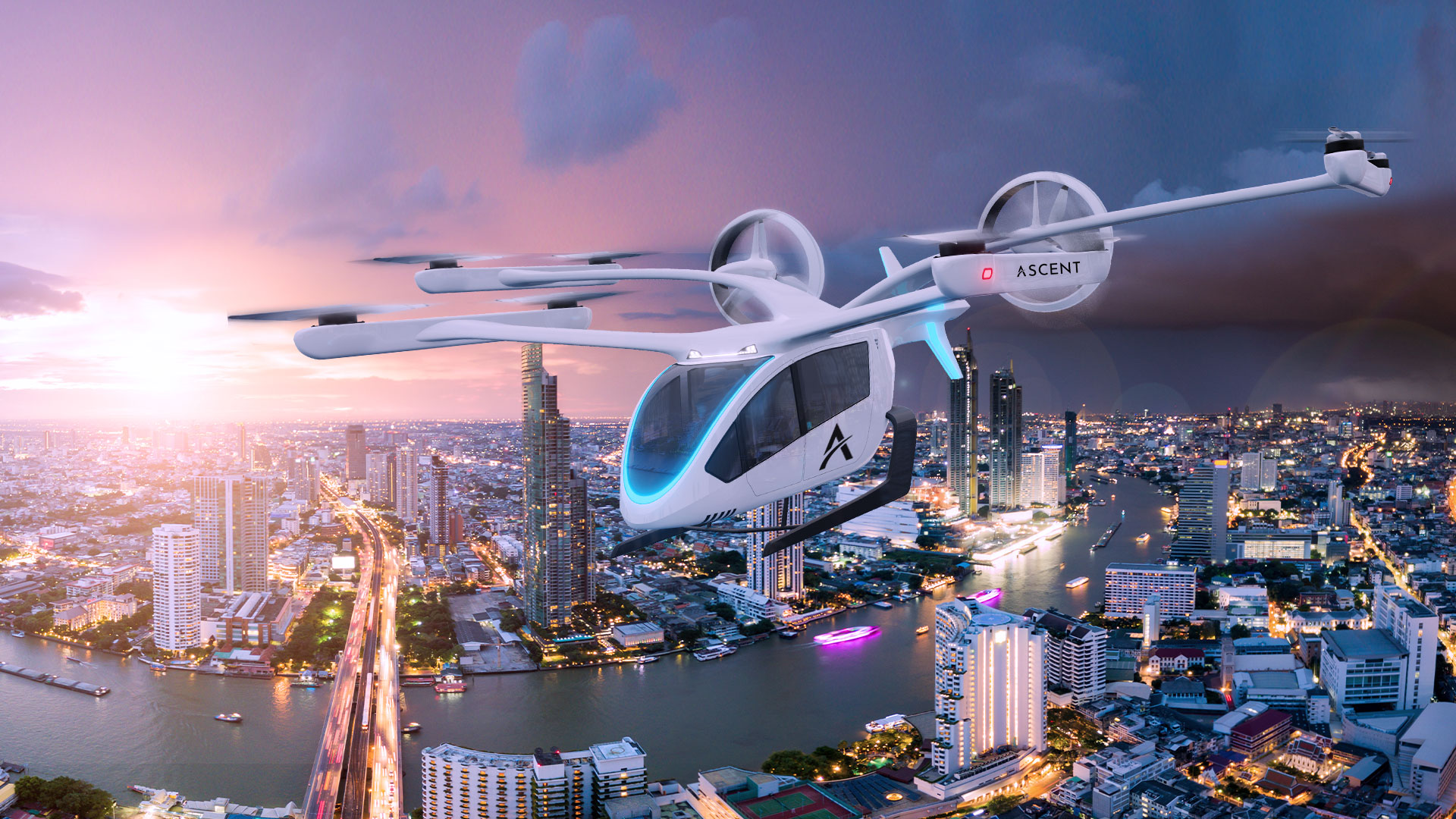
Many of the aircraft being developed for Urban Air Mobility belong to a category called electric Vertical Takeoff and Landing (eVTOL) aircraft. Unlike conventional airplanes, they can take off and land vertically, much like helicopters, but many are designed to be quieter and use electric motors instead of traditional aircraft engines.
Urban Air Mobility also includes the supporting infrastructure needed for these aircraft, such as landing facilities, charging stations, air traffic management systems, maintenance centers, and digital communication networks.
Rather than replacing existing transportation, Urban Air Mobility is expected to complement roads, trains, buses, and subways by offering a faster option for certain journeys.
Why Cities Need New Transportation Solutions
Cities continue to grow as more people move into urban areas. This growth creates enormous pressure on transportation systems that were often designed decades ago.
Building new highways or railway lines is expensive and requires large amounts of land. Expanding roads in densely populated cities is often difficult or impossible because buildings, businesses, and neighborhoods already occupy available space.
Traffic congestion affects not only commuters but also businesses, emergency responders, and public services. Delays increase fuel consumption, reduce productivity, and contribute to air pollution.
Urban Air Mobility offers the possibility of using the largely unused airspace above cities, creating an additional transportation network without requiring entirely new road systems.
The Science Behind Urban Air Mobility
Urban Air Mobility depends on the same scientific principles that allow airplanes and helicopters to fly.
Every aircraft must overcome gravity by generating enough lift. Electric motors or engines provide thrust, while aerodynamic design helps minimize drag and maximize efficiency.
Modern eVTOL aircraft often use multiple electric propellers that work together under computer control. During vertical takeoff, the propellers generate upward lift. Once airborne, some aircraft tilt their propellers or wings to transition into efficient forward flight.
This combination of vertical lift and forward flight allows these aircraft to operate in urban environments where long runways are unavailable.
Electric Aircraft Are Transforming Aviation
Electric propulsion is one of the biggest innovations driving Urban Air Mobility.
Traditional aircraft rely on fuel-burning engines that produce significant noise and emissions. Electric aircraft replace many of these engines with battery-powered electric motors.
Electric motors offer several important advantages.
They operate with fewer moving parts, reducing mechanical complexity.
They respond quickly to control inputs.
They produce no direct exhaust emissions during flight.
They are generally quieter than conventional aircraft engines, an important consideration for flights over cities.
Although battery technology still limits flight range and payload compared with conventional aviation fuel, continuous improvements are making electric aircraft increasingly practical for short urban trips.
Shorter Travel Times
Perhaps the most obvious advantage of Urban Air Mobility is speed.
Imagine a journey across a large metropolitan area that normally takes more than an hour by car during rush hour. A direct flight through carefully managed urban airspace could significantly reduce travel time because the aircraft avoids traffic signals, intersections, and congested highways.
This time savings could benefit commuters, business travelers, tourists, healthcare professionals, and emergency responders alike.
Instead of replacing every car journey, Urban Air Mobility may become especially useful for longer trips within large urban regions where road congestion is severe.
A New Layer of Transportation
Cities already have transportation systems operating at different levels.
Subways move underground.
Roads carry cars and buses at ground level.
Railways connect neighborhoods and regions.
Urban Air Mobility introduces another layer above these existing networks.
Passengers might travel by subway to a transportation hub, then transfer to an electric aircraft for the final stage of their journey.
Rather than competing with public transportation, Urban Air Mobility could strengthen the overall transportation network by filling gaps where ground travel is slow or difficult.
Emergency Medical Services Could Improve
One of the most promising applications of Urban Air Mobility involves healthcare.
During medical emergencies, every minute matters.
Electric aircraft could transport doctors, nurses, medical equipment, blood supplies, organs for transplantation, or critically ill patients more quickly than ground vehicles in congested cities.
Disaster response teams could also benefit.
Following earthquakes, floods, hurricanes, or other emergencies, roads may become blocked or damaged. Aircraft capable of vertical takeoff and landing could deliver supplies to areas that are otherwise difficult to reach.
Faster Delivery of Goods
Urban Air Mobility may also transform how goods move through cities.
Small cargo aircraft could transport urgent medical supplies, replacement machine parts, laboratory samples, or time-sensitive packages.
This would not replace traditional trucks for most deliveries. Instead, aerial transportation would likely focus on shipments where speed is especially important.
Businesses that depend on rapid logistics could benefit significantly from such services.
Airports May Become More Connected
Large international airports are often located far from city centers.
Travelers sometimes spend as much time reaching the airport as they spend on short flights.
Urban Air Mobility could create rapid aerial connections between airports and downtown areas, reducing travel time and improving passenger convenience.
Such services could also connect multiple airports within the same metropolitan region.
New Infrastructure Will Shape Future Cities
Urban Air Mobility requires new infrastructure specifically designed for electric aircraft.
Many cities are planning facilities known as vertiports.
A vertiport is a location where eVTOL aircraft can take off, land, recharge batteries, undergo maintenance, and board passengers.
Some vertiports may be built on rooftops, while others could occupy parking areas, transportation hubs, or specially designed terminals.
These facilities would become an important part of future urban transportation systems.
Smarter Air Traffic Management
Managing thousands of aircraft above cities presents a major challenge.
Unlike today’s commercial aircraft, which usually fly at high altitudes, Urban Air Mobility vehicles would operate much closer to the ground.
To maintain safety, advanced digital air traffic management systems will coordinate aircraft movements.
These systems will continuously monitor aircraft positions, weather conditions, flight paths, and potential hazards.
Artificial intelligence and automated communication networks may assist human controllers by optimizing routes and reducing congestion in urban airspace.
Artificial Intelligence Will Play an Important Role
Artificial intelligence is expected to become one of the key technologies supporting Urban Air Mobility.
AI systems may help monitor aircraft performance, plan efficient routes, avoid obstacles, detect changing weather conditions, and improve overall flight safety.
Some future aircraft may include highly automated flight systems that assist pilots with navigation and decision-making. Depending on technological progress and regulatory approval, increasing levels of automation may become possible over time.
Even as automation advances, human oversight is expected to remain a central part of safe aviation operations.
Cleaner Transportation
Many Urban Air Mobility vehicles are being designed with sustainability in mind.
Electric aircraft produce no direct exhaust emissions during flight.
If charged using electricity generated from renewable energy sources such as solar, wind, or hydroelectric power, their overall environmental impact could be lower than that of vehicles powered by fossil fuels.
However, sustainability depends on the entire life cycle of the technology, including battery manufacturing, electricity generation, aircraft production, and recycling. Researchers continue working to improve these areas so that Urban Air Mobility can become more environmentally responsible.
Reducing Noise in Cities
Noise pollution is a serious concern in many urban areas.
Traditional helicopters are often loud because of their large rotors and powerful engines.
Many eVTOL aircraft are designed with multiple smaller electric propellers that may reduce perceived noise compared with conventional helicopters, although they are not silent.
Engineers carefully study propeller design, motor control, and flight paths to minimize noise while maintaining safety and efficiency.
Reducing noise will be essential for public acceptance of Urban Air Mobility.
Economic Opportunities
Urban Air Mobility could create entirely new industries.
Engineers, pilots, software developers, aircraft technicians, battery specialists, air traffic managers, infrastructure planners, and manufacturing workers may all play important roles in this growing sector.
Universities and research institutions are already developing new educational programs related to electric aviation, autonomous systems, and advanced aerospace engineering.
As the technology matures, many cities may experience economic growth through innovation and job creation.
Challenges That Must Be Solved
Despite exciting progress, Urban Air Mobility still faces significant challenges.
Battery technology must continue improving to increase flight range while keeping aircraft lightweight.
Aircraft certification requires extensive testing to ensure safety.
Cities need new infrastructure, including vertiports and charging facilities.
Air traffic management systems must safely coordinate large numbers of aircraft.
Weather remains another important limitation. Strong winds, heavy rain, thunderstorms, and poor visibility can affect flight safety.
Engineers, regulators, and policymakers continue working together to address these challenges before Urban Air Mobility becomes widespread.
Safety Comes First
Public confidence will depend on safety.
Every aircraft must meet strict aviation standards before carrying passengers.
Multiple backup systems, redundant flight controls, continuous monitoring, and rigorous maintenance procedures help reduce operational risks.
Manufacturers conduct thousands of hours of testing under various operating conditions before commercial aircraft enter service.
Urban Air Mobility vehicles will need to demonstrate similar levels of reliability before becoming common in cities.
Will Everyone Own a Flying Vehicle?
Probably not, at least in the near future.
Instead of personal ownership, many experts expect Urban Air Mobility to begin as shared transportation services, similar to taxis or ride-sharing systems.
Passengers would book flights using digital applications and travel between designated vertiports.
As technology advances and costs decrease, broader access may become possible, but personal ownership will likely remain limited for some time due to cost, regulations, maintenance requirements, and infrastructure needs.
How Cities May Look in the Future
If Urban Air Mobility becomes successful, future cities could operate very differently.
Transportation hubs may combine buses, trains, subways, bicycles, and electric aircraft in one integrated system.
Office buildings and hospitals may include rooftop landing facilities.
Emergency medical aircraft could respond more rapidly to accidents.
Businesses may receive urgent deliveries by air.
Commuters might routinely combine ground transportation with short aerial flights.
The sky itself could become an organized transportation corridor, carefully managed through advanced digital systems.
The Future of Urban Air Mobility
Urban Air Mobility is still in its early stages, but its development is accelerating.
Engineers continue improving aircraft design, battery performance, artificial intelligence, navigation systems, lightweight materials, and safety technologies.
Governments around the world are developing regulations to ensure these aircraft can operate safely within existing aviation systems.
While widespread adoption will take time, many experts believe Urban Air Mobility will gradually become an important part of transportation in the coming decades.
Its success will depend not only on technological breakthroughs but also on thoughtful city planning, environmental responsibility, public acceptance, and strong safety standards.
Conclusion
Urban Air Mobility represents one of the most ambitious transformations in the history of transportation. By introducing safe, efficient, and increasingly sustainable aircraft into urban environments, it has the potential to reshape how people and goods move through cities. Rather than replacing roads, railways, or public transit, it aims to complement them by creating a new layer of mobility in the skies.
Although important challenges remain—including battery technology, infrastructure, air traffic management, weather limitations, and regulatory approval—the scientific and engineering progress made in recent years has been remarkable. As electric aviation, artificial intelligence, and aerospace innovation continue to advance, Urban Air Mobility may one day become as familiar as buses, trains, and taxis, opening a new chapter in the story of modern cities and changing the way future generations experience urban life.