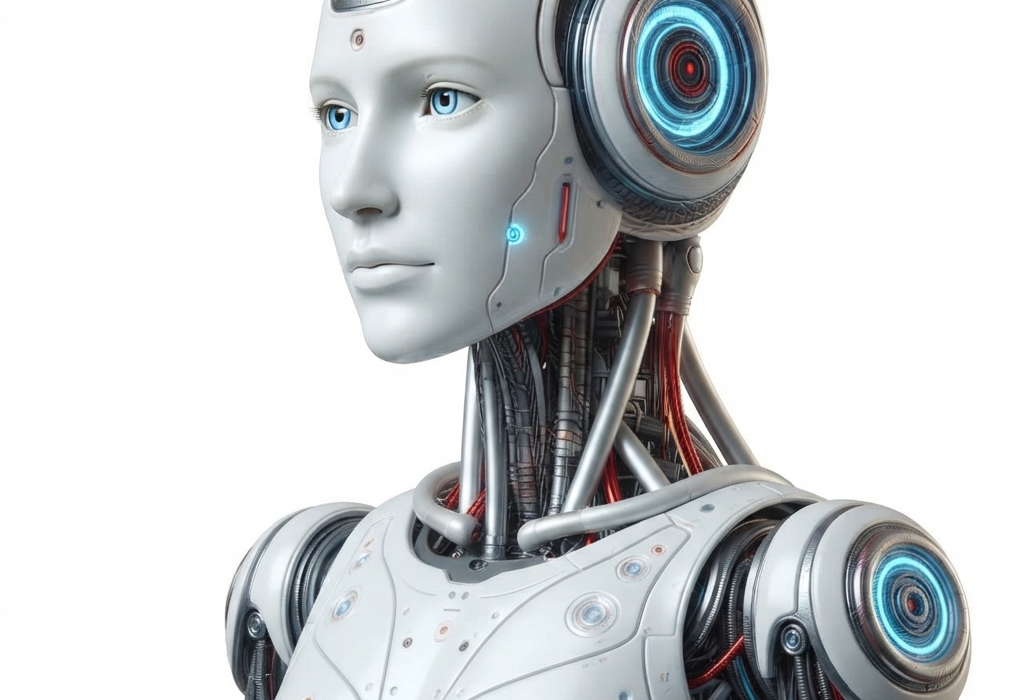
Artificial intelligence has changed the way people create content. Today, AI can write articles, answer questions, summarize research, draft emails, create stories, and even generate computer code within seconds. As these tools become more powerful, distinguishing between human-written and AI-generated content has become increasingly difficult.
At first glance, an AI-written article may appear natural and convincing. It may contain proper grammar, clear sentence structure, and well-organized ideas. However, not everything that sounds fluent is necessarily accurate or written by a human. In many cases, AI-generated content contains subtle patterns that can reveal its origin.
Learning how to identify AI-generated content is becoming an important skill for students, teachers, editors, researchers, businesses, journalists, and everyday internet users. It is not about rejecting AI-written text. Instead, it is about understanding where content comes from, evaluating its reliability, and ensuring that important decisions are based on trustworthy information.
The challenge is that there is no single clue that proves a piece of writing was created by artificial intelligence. Instead, detection relies on examining multiple characteristics together while recognizing that skilled human writers can sometimes resemble AI, and AI systems are becoming increasingly capable of imitating human writing.
Why It Is Becoming Harder to Tell the Difference
Modern AI language models are trained on enormous collections of text from books, websites, articles, and other written materials. During training, they learn statistical patterns in language rather than memorizing facts in the way humans learn.
When someone enters a prompt, the AI predicts the most likely sequence of words based on those learned patterns. This allows it to produce text that often appears coherent, informative, and grammatically correct.
Earlier AI systems produced awkward, repetitive, and obviously artificial writing. Today’s models generate much smoother text, making detection far more challenging.
As a result, readers can no longer rely on obvious grammatical mistakes to identify AI-generated content. Instead, they must evaluate the overall quality, originality, accuracy, and consistency of the writing.
AI Often Sounds Very Confident
One of the most noticeable characteristics of AI-generated writing is its confident tone.
AI frequently presents information as though it is completely certain, even when the information is incomplete, outdated, or incorrect.
Unlike humans, AI does not actually understand whether a statement is true. It predicts likely words based on patterns in its training data.
This means AI can sometimes produce statements that sound authoritative but contain factual errors, incorrect dates, nonexistent references, or misleading explanations. Researchers often refer to these fabricated outputs as hallucinations, although they are not hallucinations in the human psychological sense. Instead, they are incorrect responses generated by the model.
When reading any article, especially one discussing science, medicine, history, or law, it is important to verify important claims using reliable sources rather than relying solely on how confident the writing sounds.
Watch for Generic Explanations
AI often produces broad, general explanations that avoid specific details.
Instead of offering original insights, it may explain concepts using familiar phrases that could apply to many different situations.
For example, rather than discussing unique examples, historical context, or personal experiences, AI may repeatedly describe something as “important,” “significant,” or “transformative” without fully explaining why.
Human writers usually include personal observations, unique perspectives, interviews, real-world experiences, or detailed examples that make their writing feel more distinctive.
Of course, this is not always true. Some human writing is intentionally simple, while some AI-generated content can be highly detailed.
Repetition Can Be a Clue
AI sometimes repeats the same ideas using different words.
An article may explain a concept several times without adding meaningful new information.
Entire paragraphs may appear to restate earlier points with slightly different wording.
Human writers can also repeat themselves, particularly in longer articles, but experienced writers generally build each section by introducing new evidence, examples, or arguments.
Repeated explanations without substantial progress may suggest AI assistance, although repetition alone is never proof.
Extremely Consistent Writing Style
Most people naturally vary their writing.
Sentence lengths change.
Vocabulary changes.
Tone shifts slightly throughout an article.
Personal experiences influence expression.
AI often produces writing with remarkable consistency.
Paragraphs may have nearly identical length.
Sentences may follow similar structures.
Transitions may sound polished but repetitive.
The overall rhythm can feel unusually uniform from beginning to end.
This consistency results from the statistical nature of AI language generation rather than genuine human variation.
Limited Personal Experience
Artificial intelligence does not have memories, emotions, or lived experiences.
Unless a user specifically provides personal information for the AI to include, AI-generated writing cannot honestly describe real experiences.
Human writers often mention observations, mistakes they have made, lessons they have learned, conversations they have had, or situations they personally encountered.
These authentic experiences usually contain specific details that are difficult for AI to invent convincingly without guidance.
If an article discussing personal events remains unusually vague or avoids concrete experiences altogether, AI involvement may be possible.
However, many professional articles are intentionally written without personal stories, so this characteristic should never be considered definitive.
Lack of Original Opinions
AI does not possess beliefs or opinions.
Instead, it generates balanced responses based on patterns found in existing text.
As a result, AI writing often avoids taking strong positions unless specifically instructed to do so.
It may present multiple viewpoints without deeply defending any one perspective.
Human experts often express carefully reasoned opinions supported by years of experience, research, or professional judgment.
These nuanced perspectives are still challenging for AI to replicate authentically.
Errors in Sources and Citations
One important warning sign is incorrect or nonexistent references.
AI sometimes generates citations that appear real but do not actually exist.
It may invent journal articles, authors, publication years, page numbers, or website addresses.
These mistakes occur because language models predict what a citation should look like rather than checking whether it actually exists.
Whenever an article includes references, readers should verify that the sources are genuine.
Academic databases, publisher websites, and official journals provide reliable ways to confirm scientific citations.
Fact-Checking Is Essential
Even when AI-generated content appears convincing, every important factual claim should be verified.
Scientific knowledge changes over time.
Medical recommendations evolve.
Historical discoveries continue to emerge.
AI systems may rely partly on older information or misunderstand recent developments.
Reliable fact-checking involves comparing information with trusted sources such as peer-reviewed scientific journals, government agencies, universities, and recognized professional organizations.
The more important the topic, the more important verification becomes.
AI Detection Tools Have Important Limitations
Several online tools claim they can determine whether text was written by artificial intelligence.
These systems analyze writing patterns using statistical methods and machine learning.
Although they can sometimes identify AI-generated text, they are not perfectly accurate.
Research has shown that AI detectors can produce false positives, incorrectly identifying human writing as AI-generated.
They can also produce false negatives, failing to recognize AI-generated content.
Many factors influence detector performance, including the length of the text, editing by humans, translation, and the specific AI model used.
For this reason, experts generally recommend treating AI detectors as screening tools rather than definitive proof.
No currently available detector can reliably determine authorship with complete certainty.
Human Editing Changes Everything
Many published articles today involve collaboration between humans and AI.
A writer may use AI to generate an outline before rewriting every paragraph.
An editor may use AI only to improve grammar.
A researcher may ask AI to summarize a lengthy report before writing an original article.
In these situations, asking whether the content is entirely human-written or entirely AI-generated becomes difficult because the final work contains contributions from both.
This growing collaboration means that detecting AI-generated content is becoming less about identifying a single author and more about evaluating the overall quality and reliability of the information.
Critical Thinking Matters More Than Ever
Rather than asking only, “Was this written by AI?” readers should also ask more meaningful questions.
Does the article provide evidence?
Are the claims supported by reliable sources?
Does the reasoning make sense?
Are important facts accurate?
Does the author acknowledge uncertainty where appropriate?
Can the information be verified independently?
Critical thinking remains one of the strongest defenses against misinformation regardless of whether the content was produced by a human or an AI system.
Scientific Accuracy Is More Important Than Authorship
A human can write inaccurate information.
An AI can generate accurate information.
Likewise, both humans and AI can make mistakes.
Therefore, the true measure of quality should not simply be who—or what—created the content.
Instead, readers should evaluate whether the information is supported by evidence, consistent with established scientific knowledge, and presented honestly.
This approach reflects how scientists evaluate research itself. Scientific conclusions are judged by the strength of the evidence rather than by assumptions about who produced them.
The Future of AI Detection
Artificial intelligence is improving rapidly.
Newer models generate more natural writing than earlier systems.
At the same time, researchers are developing better techniques for identifying AI-generated text.
Some approaches focus on digital watermarks embedded during text generation.
Others analyze statistical language patterns or examine metadata associated with documents.
Each method has strengths and weaknesses, and none currently provides perfect accuracy across all situations.
As AI technology continues to evolve, detection methods will also improve, creating an ongoing cycle of innovation between text generation and verification.
Responsible Use of AI
Artificial intelligence is a powerful tool that can help people write faster, organize ideas, summarize complex information, and improve communication.
However, responsible use requires transparency, honesty, and careful verification.
Students should follow their school’s policies regarding AI assistance.
Researchers should accurately report how AI was used in their work.
Journalists should verify facts independently.
Businesses should review AI-generated materials before publication.
Editors should carefully examine content for accuracy and originality.
Using AI responsibly means recognizing that it is a tool designed to assist human thinking, not replace careful judgment.
Understanding AI Is Better Than Fearing It
The rapid growth of AI has raised understandable concerns about misinformation, plagiarism, and authenticity. Yet AI itself is neither inherently trustworthy nor inherently unreliable. Like any technology, its value depends on how it is used.
Learning to recognize possible signs of AI-generated content is useful, but it is equally important to understand the limitations of detection. No single clue, writing style, or detection tool can definitively determine whether a piece of text was created by a human, an AI, or a combination of both.
The most reliable approach is to focus on evidence rather than assumptions. Well-supported facts, credible sources, logical reasoning, and transparent communication remain the strongest indicators of high-quality content. As artificial intelligence becomes an increasingly common part of writing and communication, the ability to evaluate information critically will become far more valuable than simply trying to identify its author.
In the years ahead, the question may shift from “Was this written by AI?” to “Is this information accurate, honest, and trustworthy?” That is the question that truly matters, and one that every thoughtful reader should continue to ask, regardless of who—or what—helped produce the words on the page.