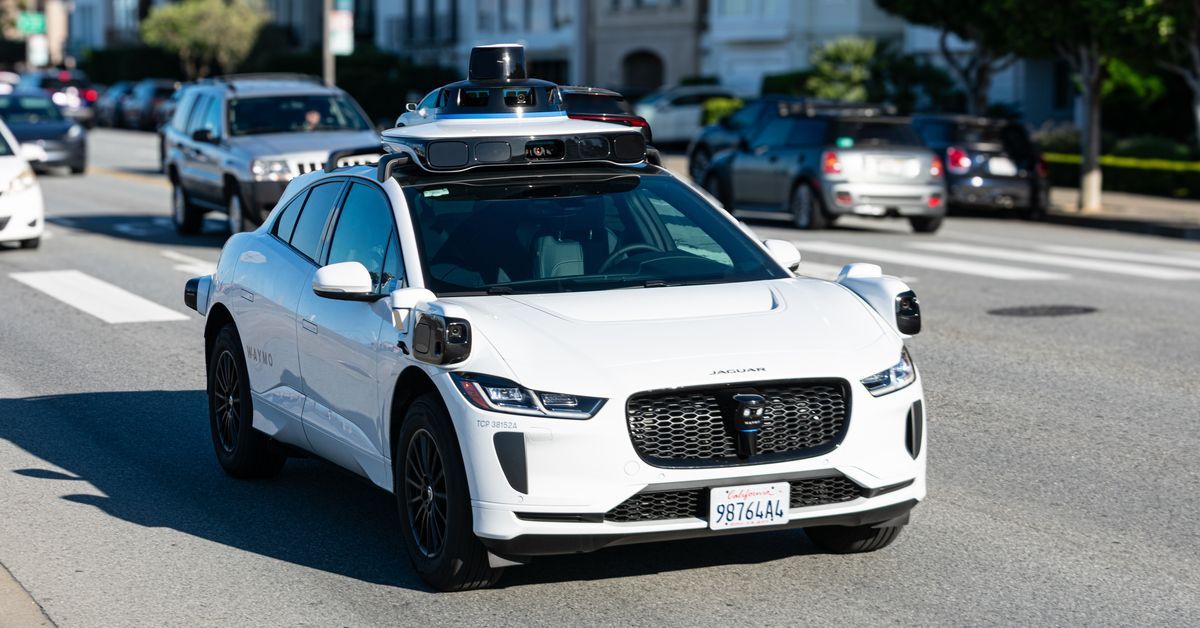
Imagine sitting comfortably inside a car that smoothly pulls away from the curb, carefully avoids traffic, stops for pedestrians, obeys every traffic signal, and safely takes you to your destination—all without you touching the steering wheel or pressing the pedals. For decades, this idea belonged mostly to science fiction. Today, thanks to remarkable advances in artificial intelligence, sensors, robotics, and computer engineering, self-driving cars are becoming a reality.
Although fully autonomous vehicles are still under development and are not yet common on public roads everywhere, the technology has made enormous progress. Many modern cars can already assist with steering, braking, parking, and maintaining a safe distance from other vehicles. These features are stepping stones toward a future where cars may one day drive themselves safely in many situations.
But how can a car “see” the road? How does it know when to stop, turn, or avoid an obstacle? Can a machine really make driving decisions that humans usually make every second?
The answers lie in a fascinating combination of science, engineering, and artificial intelligence.
What Is a Self-Driving Car?
A self-driving car, also called an autonomous vehicle, is a vehicle that can navigate roads and control its movement with little or no direct human input under its intended operating conditions. Instead of relying entirely on a human driver, the vehicle uses sensors, powerful computers, detailed maps, and software to understand its surroundings and make driving decisions.
The goal of autonomous driving is not simply to replace the driver. It is to make transportation safer, more efficient, and more accessible by reducing human error while assisting or automating the driving task.
Some vehicles require a driver to supervise the system at all times, while others are designed to operate independently only in specific environments. Fully autonomous driving in every possible road and weather condition remains an active area of research and development.
Why Are Self-Driving Cars Being Developed?
Every day, millions of people drive through busy streets, highways, and rural roads. Driving demands constant attention, quick decision-making, and careful coordination.
Fatigue, distraction, speeding, and impaired driving contribute to many road accidents. Autonomous driving technology aims to reduce these risks by continuously monitoring the environment and responding rapidly to changing conditions.
Self-driving cars may also improve mobility for older adults and some people with disabilities, reduce traffic congestion through smoother driving, lower fuel or energy consumption, and make transportation more convenient.
While these potential benefits are promising, they depend on safe system design, rigorous testing, and appropriate regulation.
The Science Behind Autonomous Driving
Driving appears simple when performed by an experienced person, but it actually involves countless decisions every minute.
A driver constantly observes traffic lights, road signs, pedestrians, cyclists, weather, lane markings, nearby vehicles, and road conditions.
A self-driving car must perform these same tasks.
To do this, it follows a continuous cycle.
First, it senses the environment.
Next, it interprets what it observes.
Then, it predicts what nearby road users might do.
Finally, it decides how to respond and controls the vehicle.
This entire process repeats many times every second.
The Car Must First See the World
Humans rely primarily on their eyes to drive.
Self-driving cars use a collection of advanced sensors that together provide information about the surrounding environment.
No single sensor can do everything.
Instead, multiple technologies work together because each has different strengths and limitations.
The car combines these sources of information into a detailed understanding of the road ahead.
Cameras Act Like Digital Eyes
Cameras are among the most important sensors in autonomous vehicles.
They capture images of the road, lane markings, traffic lights, road signs, vehicles, pedestrians, cyclists, and other objects.
Computer vision software analyzes these images to identify what the camera sees.
For example, the system can recognize a stop sign, detect a red traffic light, identify a crosswalk, or distinguish a pedestrian from a parked bicycle.
Modern image recognition relies heavily on artificial intelligence trained using large collections of labeled images.
Radar Measures Distance and Speed
Radar uses radio waves instead of visible light.
The system sends out radio signals that bounce off nearby objects and return to the vehicle.
By measuring how long the signals take to return and how their frequency changes because of motion, the car estimates the distance and relative speed of other vehicles and obstacles.
Radar performs well in rain, fog, and darkness, where cameras may face greater challenges.
Because of this reliability, radar is widely used in many advanced driver-assistance systems.
LiDAR Creates a Three-Dimensional Map
Some autonomous vehicles also use LiDAR, which stands for Light Detection and Ranging.
LiDAR emits thousands or even millions of laser pulses every second.
These laser beams reflect from surrounding objects.
By measuring the travel time of each pulse, the system builds a highly detailed three-dimensional map of the environment.
This allows the vehicle to estimate the size, shape, and location of nearby objects with remarkable precision.
Not every self-driving system uses LiDAR, however. Some developers rely primarily on cameras and radar, while others combine all three technologies.
Ultrasonic Sensors Help at Short Distances
Small ultrasonic sensors are commonly mounted around the vehicle.
They emit high-frequency sound waves that humans cannot hear.
These sound waves bounce off nearby objects, helping the vehicle detect obstacles during low-speed maneuvers such as parking.
Although their range is limited, ultrasonic sensors provide valuable information close to the vehicle.
Global Navigation Helps Determine Location
A self-driving car must know exactly where it is.
Satellite-based navigation systems provide approximate geographic position.
However, ordinary satellite positioning alone is usually not accurate enough for autonomous driving because road lanes may be only a few meters wide.
To improve accuracy, autonomous vehicles combine satellite navigation with onboard sensors, digital maps, and continuous measurements of their own movement.
This combination helps the vehicle estimate its position much more precisely.
High-Definition Maps Guide the Journey
Many autonomous vehicles rely on highly detailed digital maps.
Unlike ordinary navigation maps, these contain extremely precise information about lane boundaries, traffic signals, road geometry, speed limits, intersections, and other important features.
As the vehicle moves, it compares sensor observations with these maps to confirm its location.
Even with advanced maps, the vehicle must still observe the real environment because road conditions can change unexpectedly.
Artificial Intelligence Is the Car’s Brain
Collecting information is only the beginning.
The vehicle must also understand what that information means.
Artificial intelligence makes this possible.
Machine learning models analyze camera images, radar data, and other sensor inputs to identify important objects.
The system recognizes cars, trucks, buses, motorcycles, pedestrians, animals, traffic cones, construction zones, and many other road features.
Modern AI systems improve through extensive training using enormous datasets collected under many different driving conditions.
Sensor Fusion Combines Everything Together
Each sensor has strengths and weaknesses.
Cameras provide rich visual detail but can struggle in poor lighting.
Radar works well in difficult weather but produces less visual detail.
LiDAR creates accurate three-dimensional measurements but may perform differently depending on environmental conditions and system design.
Instead of depending on a single sensor, autonomous vehicles combine information from multiple sources.
This process is known as sensor fusion.
Sensor fusion creates a more complete and reliable picture of the surrounding environment than any individual sensor alone.
Understanding the Driving Environment
Once the vehicle has collected sensor information, it must interpret what is happening around it.
It identifies road lanes.
It determines which traffic lights apply to its lane.
It recognizes speed limits.
It locates intersections and crosswalks.
It tracks nearby vehicles and predicts their movement.
It also identifies pedestrians, cyclists, emergency vehicles, and temporary road hazards.
This understanding changes continuously as traffic moves.
Predicting What Others Might Do
Driving safely requires more than observing the present.
Drivers constantly anticipate future events.
A child standing near a parked car might suddenly step into the street.
A nearby vehicle may begin changing lanes.
A cyclist could turn without warning.
Autonomous vehicles attempt to make similar predictions using mathematical models and artificial intelligence.
These predictions are based on probabilities rather than certainty.
The system estimates several possible future actions and prepares safe responses.
Planning the Best Route
After understanding the environment, the vehicle decides what to do next.
This process is known as path planning.
The software calculates a safe route while considering road rules, traffic conditions, nearby vehicles, obstacles, and passenger comfort.
The goal is not simply reaching the destination.
The vehicle must also drive smoothly, avoid sudden movements when possible, and maintain safe distances from others.
Controlling the Vehicle
Once a driving decision has been made, electronic control systems operate the vehicle.
They adjust the steering.
They control acceleration.
They apply the brakes when necessary.
These actions are carried out using electronic actuators connected to the steering, braking, and power systems.
The entire process happens many times every second, allowing the vehicle to respond quickly to changing conditions.
Learning From Massive Amounts of Data
Developing autonomous vehicles requires enormous amounts of driving data.
Engineers collect information from millions of kilometers of real-world driving and from computer simulations.
Artificial intelligence systems learn to recognize countless situations, including unusual events that occur only rarely.
Simulation allows engineers to test dangerous or uncommon scenarios safely without placing people at risk.
Even after deployment, developers continue improving software through additional testing and validation before updates are released.
Weather Remains a Major Challenge
Driving becomes more difficult during heavy rain, snow, fog, or dust storms.
Humans also struggle under these conditions.
Weather can reduce camera visibility, affect road markings, and influence sensor performance.
Snow may cover lane markings.
Heavy rain can reduce visibility.
Fog may limit the distance at which some sensors detect objects.
Engineers continue improving sensor technology and software to increase reliability under challenging weather conditions, but difficult environmental conditions remain one of the biggest technical challenges.
Construction Zones and Unexpected Events
Roads are constantly changing.
Construction work may temporarily alter traffic patterns.
Temporary signs may replace permanent ones.
Police officers may direct traffic differently from normal traffic signals.
Unexpected obstacles can appear without warning.
These situations require flexible decision-making, making them particularly challenging for autonomous systems.
Researchers continue developing AI models capable of handling these complex environments more effectively.
Different Levels of Driving Automation
Not every vehicle described as “self-driving” is fully autonomous.
Many cars available today provide advanced driver-assistance features such as adaptive cruise control, automatic emergency braking, lane-keeping assistance, and parking assistance.
These technologies help drivers but still require human supervision.
Higher levels of automation allow the vehicle to perform more driving tasks under specific conditions.
Fully autonomous driving in all environments without human supervision remains a long-term goal that has not yet been achieved for widespread public use.
Safety Is the Highest Priority
Because autonomous vehicles operate in environments shared with people, safety is central to their design.
Manufacturers include multiple backup systems for critical functions.
Important sensors may have redundancy so that if one component fails, others can continue providing information.
Computers continuously monitor system performance.
If a serious problem is detected, the vehicle is designed to respond in a way that minimizes risk, such as slowing down and stopping when appropriate.
Before new autonomous systems are deployed, they undergo extensive testing in simulations, closed test facilities, and real-world driving under controlled conditions.
Cybersecurity Matters
Modern self-driving cars are sophisticated computers on wheels.
Like other connected technologies, they must be protected against unauthorized access.
Manufacturers use encryption, secure software design, authentication systems, and continuous monitoring to improve cybersecurity.
Protecting vehicle software has become an essential part of autonomous vehicle development.
Ethical Questions
Self-driving technology also raises important ethical and legal questions.
Who is responsible if an autonomous vehicle is involved in a crash?
How should the system respond during situations where every available option carries some risk?
How should governments regulate autonomous transportation?
These questions involve engineers, lawmakers, ethicists, insurers, and society as a whole.
Scientific progress must be accompanied by thoughtful policies and public discussion.
How Self-Driving Cars Could Change the Future
If autonomous driving technology matures safely, transportation could change dramatically.
Traffic may become smoother as vehicles coordinate their movements more efficiently.
Travel could become more accessible for people who cannot drive.
Delivery services could operate more efficiently.
Emergency response vehicles might navigate traffic more effectively.
Cities may eventually redesign roads and parking areas to take advantage of autonomous transportation.
These possibilities depend on continued scientific progress, careful regulation, public trust, and demonstrated safety.
The Road Ahead
The development of self-driving cars is one of the most ambitious engineering projects of the twenty-first century. It combines physics, computer science, robotics, artificial intelligence, mathematics, electronics, and mechanical engineering into a single intelligent system capable of navigating complex environments.
Although impressive progress has been made, fully autonomous driving in every weather condition, on every road, and in every traffic situation remains a difficult scientific challenge. Researchers continue refining sensors, improving artificial intelligence, enhancing cybersecurity, and conducting extensive testing to make autonomous vehicles safer and more reliable.
Conclusion
Self-driving cars work by combining advanced sensors, artificial intelligence, detailed maps, and powerful computers to observe the world, understand their surroundings, predict what other road users might do, and control the vehicle safely. Cameras, radar, LiDAR, satellite navigation, and onboard software work together in a continuous cycle of sensing, thinking, planning, and acting—much like a human driver, but through carefully designed algorithms and engineering systems.
While fully autonomous vehicles are still evolving, the science behind them has already transformed modern transportation. Driver-assistance technologies are becoming increasingly common, and ongoing research continues to bring us closer to a future where intelligent vehicles may help make travel safer, more efficient, and more accessible. The journey toward self-driving cars is not simply about replacing the driver—it is about using science and technology to reshape the way people move through the world.