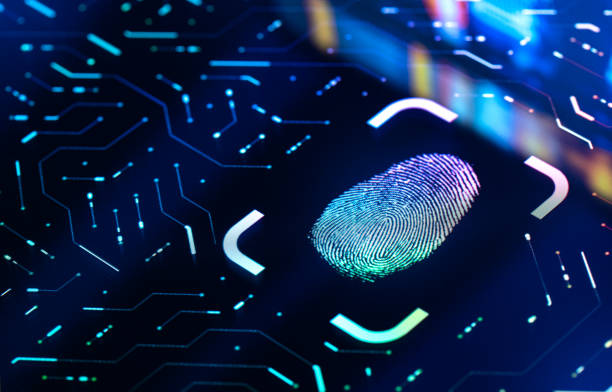
Biometric authentication has quietly become part of everyday life. A simple glance at your phone unlocks it instantly. A quick touch of your finger grants access to your banking app. At some airports, a camera confirms your identity before you board a flight. These actions take only seconds, yet they rely on advanced science and engineering working behind the scenes.
For decades, passwords and PINs were the primary way to protect personal information. While they are still widely used, they have one major weakness: they can be forgotten, guessed, stolen, or leaked. Biometric authentication offers a different approach. Instead of asking what you know, such as a password, or what you have, such as a security token, it asks who you are.
Every person has unique biological characteristics. Your fingerprint patterns, facial features, iris structure, and even the way you speak or walk are different from those of almost everyone else. Biometric authentication uses these distinctive characteristics to verify identity quickly and securely.
Although the technology often feels almost magical, it is based on well-established principles from biology, computer science, mathematics, and artificial intelligence. Understanding how biometric authentication works reveals why it has become one of the most important security technologies in the modern digital world.
What Is Biometric Authentication?
Biometric authentication is a security process that verifies a person’s identity by analyzing measurable physical or behavioral characteristics.
The word “biometric” combines two Greek words: bios, meaning “life,” and metron, meaning “measure.” In simple terms, biometrics means measuring characteristics of living people.
Unlike passwords, which can be shared or forgotten, biometric traits belong naturally to each individual. While no authentication method is perfect, biometric systems use these unique characteristics to determine whether the person requesting access matches the authorized user.
Biometric authentication is now used in smartphones, laptops, banking systems, government services, healthcare, border control, workplaces, and secure research facilities.
Why Every Person Is Unique
Biometric authentication works because every human body develops distinctive features.
Even identical twins, who share nearly the same DNA, have different fingerprints. Their facial structures are also not perfectly identical. Tiny differences arise during development before birth and continue throughout life.
Similarly, the intricate patterns in the colored part of the eye, known as the iris, are highly individual. The network of veins inside the palm, the shape of the ear, and even the rhythm of a person’s voice contain unique characteristics.
Behavioral traits also vary from person to person. People type on keyboards differently, move computer mice in distinctive ways, walk with unique gaits, and sign their names with characteristic motions.
These naturally occurring differences make biometrics useful for identity verification.
The Basic Idea Behind Biometric Authentication
Although biometric systems use sophisticated technology, the basic process is surprisingly simple.
First, the system captures a biometric sample.
Next, it analyzes important features from that sample.
Then, it compares those features with a previously stored biometric template.
If the similarity is high enough, access is granted. If the match falls below the required threshold, access is denied.
This comparison usually happens within a fraction of a second.
Importantly, modern systems generally do not compare actual photographs or images pixel by pixel. Instead, they compare mathematical representations of important biometric features.
Enrollment: Creating a Biometric Template
Before biometric authentication can verify identity, the system must first learn what the authorized user looks like.
This initial setup is called enrollment.
Suppose you set up fingerprint recognition on a new smartphone.
The phone asks you to place your finger on the sensor several times from slightly different angles.
Each scan captures detailed information about fingerprint patterns.
The software identifies important features, such as ridge endings, branching points, and their spatial relationships.
Instead of saving a simple image of your fingerprint, many systems convert these features into a mathematical template. This template is a compact digital representation designed specifically for matching.
The template is then stored securely, often inside a protected hardware component of the device.
The same general process is used for face recognition, iris recognition, voice recognition, and other biometric methods.
Capturing a New Biometric Sample
Whenever you attempt to unlock a device or access a secure system, the authentication process begins again.
A sensor captures a fresh biometric sample.
For fingerprints, this means scanning the finger.
For facial recognition, a camera captures images of the face.
For iris recognition, specialized cameras photograph the eye.
For voice authentication, a microphone records speech.
The system immediately analyzes this new sample.
Because every scan is slightly different, the software must account for changes in lighting, finger position, facial expression, viewing angle, and many other factors.
Advanced algorithms help ensure that these natural variations do not prevent successful authentication.
Feature Extraction
Raw biometric images contain enormous amounts of information.
Not all of it is useful.
The next step is called feature extraction.
During this process, specialized software identifies the most distinctive characteristics needed for identification.
For fingerprints, the software measures ridge patterns and tiny branching structures.
For facial recognition, it analyzes relationships between facial landmarks, such as the eyes, nose, mouth, jawline, and other geometric features.
For iris recognition, the software maps the highly detailed texture of the iris.
For voice recognition, it analyzes vocal frequencies, pitch, resonance, pronunciation patterns, and timing.
These measurements become numerical data that computers can compare efficiently.
Matching the Biometric Template
Once the new biometric sample has been converted into numerical features, the system compares it with the stored template.
This comparison is not usually an exact match.
No two fingerprint scans are perfectly identical. Tiny differences occur because fingers may rotate slightly, cameras may capture different lighting conditions, or facial expressions may change.
Instead, biometric systems calculate how similar the two templates are.
If the similarity score exceeds a predefined threshold, authentication succeeds.
If it falls below that threshold, access is rejected.
The threshold is carefully chosen to balance convenience and security.
Why Biometric Matching Is Probabilistic
Unlike passwords, biometrics are rarely based on perfect agreement.
A password either matches exactly or it does not.
Biometric authentication is different because biological measurements naturally vary.
A fingerprint placed at a slightly different angle still belongs to the same person.
A face photographed under brighter lighting remains the same face.
Therefore, biometric systems use probability rather than exact equality.
The software estimates how likely it is that two biometric samples came from the same individual.
Modern systems are remarkably accurate, but they always involve some degree of statistical decision-making.
Fingerprint Authentication
Fingerprint authentication is one of the oldest and most widely used biometric technologies.
Human fingerprints consist of raised ridges and valleys that form complex patterns before birth.
These patterns remain largely stable throughout life unless the skin is significantly damaged.
Fingerprint sensors use several technologies.
Optical sensors capture detailed images using light.
Capacitive sensors measure tiny electrical differences between fingerprint ridges and valleys.
Ultrasonic sensors use high-frequency sound waves to create detailed three-dimensional images of the fingerprint.
The software analyzes the unique arrangement of ridge endings and branching points before comparing them with the stored template.
Modern fingerprint recognition is both fast and highly accurate.
Facial Recognition
Facial recognition has become increasingly common with smartphones and security systems.
Modern facial recognition does far more than compare photographs.
Instead, sophisticated computer vision algorithms locate key facial landmarks.
The system measures distances, angles, proportions, contours, and three-dimensional relationships between facial features.
Many smartphones use infrared sensors or structured light projection to create depth maps of the face.
This three-dimensional information makes authentication much more resistant to simple photographs.
Artificial intelligence helps recognize faces despite changes in hairstyle, glasses, makeup, facial hair, lighting, or aging.
Iris Recognition
The iris is the colored ring surrounding the pupil.
Its complex patterns develop naturally before birth and remain remarkably stable throughout life.
Iris recognition uses specialized cameras, often with near-infrared illumination, to reveal fine details that ordinary cameras cannot easily capture.
The software maps hundreds of distinctive texture features.
Because iris patterns are extremely detailed and highly unique, iris recognition is considered one of the most accurate biometric methods currently available.
Voice Recognition
Every person’s voice is shaped by unique physical characteristics.
The lungs, vocal cords, throat, tongue, mouth, and nasal passages all influence speech.
Voice authentication analyzes these characteristics along with speaking patterns.
Modern systems study frequency distributions, resonance, rhythm, pronunciation, and other acoustic features.
Advanced systems can often recognize a person even when they say different phrases.
However, illness, background noise, aging, or emotional stress can affect voice quality, making voice authentication more challenging than some other biometric methods.
Behavioral Biometrics
Not every biometric depends on physical appearance.
Behavioral biometrics analyzes how people perform actions.
For example, every individual types with slightly different timing.
The pauses between keystrokes often remain surprisingly consistent.
Similarly, the way someone moves a computer mouse or swipes across a smartphone screen can be distinctive.
Some systems analyze walking patterns using sensors built into smartphones.
Others examine how users normally interact with applications.
Behavioral biometrics often works continuously in the background, helping detect suspicious activity even after a user has successfully logged in.
Artificial Intelligence and Biometrics
Artificial intelligence has greatly improved biometric authentication.
Machine learning algorithms learn from enormous collections of biometric data.
Instead of relying only on manually designed rules, AI systems discover complex patterns that distinguish one individual from another.
Deep learning, a specialized area of artificial intelligence, has significantly improved facial recognition accuracy.
Modern AI systems can recognize faces under different lighting conditions, viewing angles, facial expressions, and partial occlusions.
AI also helps detect fraudulent attempts to fool biometric systems.
Liveness Detection
One important challenge is ensuring that the biometric sample comes from a real living person rather than a fake copy.
This process is called liveness detection.
Without liveness detection, attackers might attempt to use printed photographs, recorded voices, artificial fingerprints, or digital images.
Modern systems use many techniques to verify that the person is genuinely present.
Facial recognition systems may detect blinking, natural eye movements, subtle facial muscle activity, or three-dimensional facial depth.
Fingerprint sensors may measure skin conductivity, tiny pulse signals, or sweat pore characteristics.
Voice systems may ask users to repeat randomly generated phrases.
These techniques make biometric spoofing significantly more difficult.
Where Biometric Data Is Stored
Many people wonder whether their fingerprint or face image is uploaded to the internet.
In many modern consumer devices, especially smartphones, biometric templates remain stored only on the device itself.
Dedicated secure hardware components isolate this sensitive information from the rest of the operating system.
During authentication, the comparison often occurs entirely inside this secure environment.
As a result, the original biometric data usually never leaves the device.
However, some enterprise or government systems may securely store encrypted biometric templates on protected servers, depending on their design and operational requirements.
Are Biometrics Completely Secure?
Biometric authentication is highly secure, but no security system is perfect.
Every authentication method has strengths and limitations.
Passwords can be stolen.
Security keys can be lost.
Biometric systems can occasionally produce errors.
A system might mistakenly reject the correct user, known as a false rejection.
Less commonly, it might incorrectly accept an unauthorized person, known as a false acceptance.
Engineers carefully tune biometric systems to minimize both types of errors.
The appropriate balance depends on the application.
Unlocking a smartphone may prioritize convenience, while access to a nuclear research laboratory requires much stricter security.
Privacy and Ethical Considerations
Biometric information is deeply personal.
Unlike passwords, fingerprints and facial characteristics cannot simply be changed if compromised.
For this reason, protecting biometric data is extremely important.
Organizations that collect biometric information should store it securely, use strong encryption, limit access, and follow applicable privacy laws and regulations.
Many countries have introduced legal frameworks governing how biometric data may be collected, stored, processed, and shared.
Responsible use of biometric technology requires transparency, security, and respect for individual privacy.
Biometrics and Multi-Factor Authentication
Although biometrics are powerful, security experts often recommend combining them with additional authentication methods.
This approach is called multi-factor authentication.
For example, a banking application might require both facial recognition and a one-time verification code.
A workplace computer might require a fingerprint plus a smart card.
Combining multiple authentication factors greatly increases security because an attacker must overcome more than one layer of protection.
Everyday Uses of Biometric Authentication
Biometric authentication is now part of countless daily activities.
People unlock smartphones with fingerprints or facial recognition.
Employees enter secure offices using biometric access systems.
Banks verify customer identities.
Hospitals protect sensitive medical records.
Airports use biometric verification to speed passenger identification.
Border control agencies use biometric passports.
Online services increasingly offer biometric login instead of passwords alone.
As sensor technology becomes more affordable and artificial intelligence continues to improve, biometric authentication is expanding into even more areas of modern life.
The Future of Biometric Authentication
The future of biometrics is likely to become even more intelligent, secure, and convenient.
Researchers are developing systems that combine multiple biometric traits simultaneously, such as fingerprints, facial recognition, voice, and behavioral patterns. These multimodal systems can improve accuracy because they rely on several independent sources of identity.
Artificial intelligence will continue to enhance recognition performance, especially under difficult conditions such as poor lighting, changing appearances, or noisy environments. At the same time, advances in privacy-preserving technologies may allow biometric systems to verify identities while exposing even less personal information.
Scientists are also exploring continuous authentication, where devices quietly confirm a user’s identity throughout a session instead of only during login. This could provide stronger protection without requiring repeated authentication.
Conclusion
Biometric authentication has transformed the way people prove their identities in the digital age. By measuring unique physical and behavioral characteristics, it offers a fast, convenient, and scientifically sophisticated alternative to traditional passwords. Behind every fingerprint scan, facial recognition check, or voice verification lies a complex combination of biology, mathematics, computer science, artificial intelligence, and secure engineering.
Although no authentication method is completely flawless, modern biometric systems have become remarkably accurate and reliable when designed and implemented responsibly. As technology continues to advance, biometric authentication is expected to play an even greater role in protecting personal devices, financial services, healthcare systems, workplaces, and critical infrastructure.
Ultimately, biometric authentication is more than just a convenient way to unlock a phone. It represents a new era of digital security—one in which your own unique biological characteristics help protect your identity, making access both simpler for authorized users and more difficult for those who should not have it.