Artificial intelligence is no longer a futuristic idea found only in science fiction. It has quietly become part of everyday life. Every time you ask a virtual assistant a question, receive personalized recommendations while shopping online, use a translation app, or watch a navigation system find the fastest route, AI is working behind the scenes. What once seemed like distant technology is now transforming homes, schools, hospitals, businesses, and entire industries.
As AI continues to improve, one question has become increasingly important: How will AI change jobs?
For many people, this question brings both excitement and uncertainty. Some imagine a future where machines perform nearly every task, leaving humans without work. Others see AI as a powerful tool that will eliminate repetitive work and create entirely new opportunities. The reality is far more complex than either extreme.
Throughout history, technological revolutions have changed the way people work. The steam engine transformed manufacturing, electricity reshaped industries, and computers revolutionized offices around the world. Artificial intelligence is becoming the next major technological shift. Like previous innovations, it is unlikely to eliminate the need for human workers altogether. Instead, it is changing the kinds of work people do, the skills they need, and the way they collaborate with technology.
Understanding this transformation is essential for workers, students, employers, and governments alike.
What Is Artificial Intelligence?
Artificial intelligence, commonly called AI, refers to computer systems designed to perform tasks that typically require human intelligence. These tasks include recognizing speech, understanding language, identifying patterns, making predictions, solving problems, generating text or images, and learning from data.
Unlike traditional software that follows fixed instructions, many modern AI systems improve their performance by analyzing large amounts of information. This ability allows AI to recognize complex relationships that would be difficult or impossible to program manually.
However, today’s AI does not possess human consciousness, emotions, or independent understanding. Most AI systems are specialized tools designed to perform specific tasks. A medical AI may help analyze medical images, while another system translates languages or recommends products. These systems are powerful within their intended purpose but do not think like humans.
Understanding this distinction is important because it shapes how AI affects the workplace.
Every Technological Revolution Changes Work
History shows that technological innovation consistently changes employment rather than simply eliminating it.
The Industrial Revolution introduced machines that could produce goods much faster than human labor alone. Many traditional occupations declined, but factories created entirely new jobs that had never existed before.
The invention of electricity transformed industries and improved productivity. It also created careers involving electrical engineering, power generation, and manufacturing.
The arrival of computers dramatically changed office work. Typists, accountants, engineers, designers, scientists, and countless other professionals adopted digital tools. Although computers automated many repetitive tasks, they also created entirely new industries, including software development, cybersecurity, digital marketing, and information technology.
The internet connected billions of people and gave rise to online businesses, e-commerce, remote work, cloud computing, and social media careers.
Artificial intelligence follows a similar historical pattern. Instead of simply replacing workers, it is changing how work is organized and creating opportunities that were previously unimaginable.
Why AI Is Different
Although every technological revolution has transformed employment, AI is unique because it can perform certain cognitive tasks rather than only physical ones.
Previous machines mainly automated manual labor. AI can assist with writing reports, analyzing data, generating computer code, translating languages, recognizing images, summarizing documents, and answering customer questions.
This means AI affects not only factory work but also many office-based professions.
However, this does not mean AI can replace all human thinking.
Many jobs involve creativity, emotional understanding, ethical judgment, social interaction, leadership, negotiation, and complex decision-making. These human abilities remain difficult for AI to replicate reliably.
Rather than replacing intelligence itself, AI often serves as a powerful assistant that helps people complete tasks more efficiently.
Jobs Will Not Disappear Overnight
One of the most common misconceptions is that AI will suddenly eliminate millions of jobs within a few years.
In reality, employment changes gradually.
Organizations must invest in new technology, train employees, redesign workflows, meet legal requirements, and ensure AI systems produce reliable results before large-scale adoption becomes practical.
Many industries also require human oversight because mistakes can have serious consequences.
For example, hospitals cannot simply allow AI to make medical decisions independently. Doctors remain responsible for diagnosis, treatment planning, and patient care.
Similarly, legal professionals, engineers, scientists, pilots, teachers, and financial experts continue to make important decisions while using AI as a supporting tool.
Instead of replacing entire professions, AI often automates specific tasks within those professions.
Repetitive Work Will Change the Most
AI performs best when handling tasks that follow recognizable patterns.
Data entry, document classification, invoice processing, appointment scheduling, inventory tracking, transcription, and routine customer support are examples of activities that AI can increasingly assist with.
By automating repetitive work, organizations can reduce errors, improve efficiency, and allow employees to focus on more valuable responsibilities.
For workers, this means daily routines may shift away from repetitive administrative tasks toward problem-solving, collaboration, creativity, and strategic thinking.
The nature of work changes even if the job title remains the same.
Creative Jobs Are Also Changing
Many people assumed creativity would remain untouched by automation.
Modern AI has challenged that assumption.
AI can generate written content, create digital artwork, compose music, edit videos, design graphics, and produce computer code within seconds.
However, creativity involves much more than producing content.
Human creators decide what stories deserve telling, what emotions matter, what audiences need, and what ideas carry meaning.
An AI may generate hundreds of design options, but a human designer chooses which one communicates the intended message.
A writer decides the purpose, tone, accuracy, and emotional impact of an article.
A filmmaker shapes a narrative that connects with audiences.
Creative professionals increasingly use AI as a collaborative tool rather than a replacement.
AI Will Transform Healthcare
Healthcare demonstrates both the potential and limitations of AI.
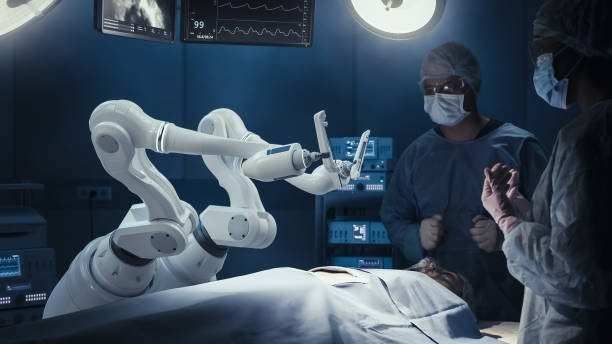
AI systems can analyze medical images, detect certain patterns, assist in identifying possible diseases, summarize clinical notes, and help organize medical records.
These capabilities may improve efficiency and support healthcare professionals in making informed decisions.
Yet medicine depends heavily on human judgment.
Doctors consider medical history, physical examinations, laboratory tests, patient preferences, ethical considerations, and clinical experience when making decisions.
Patients also need empathy, reassurance, communication, and trust—qualities that technology cannot replace.
Healthcare professionals are therefore more likely to work alongside AI than compete against it.
Education Will Evolve
Artificial intelligence is changing education in significant ways.
Students can receive personalized explanations, language translation, instant feedback, and interactive learning experiences.
Teachers may use AI to prepare lesson materials, develop quizzes, summarize educational resources, and monitor student progress.
However, education is about much more than delivering information.
Teachers inspire curiosity, encourage critical thinking, support emotional development, resolve classroom challenges, and build meaningful relationships with students.
These responsibilities remain fundamentally human.
AI may reduce administrative work, giving educators more time to focus on teaching itself.
Manufacturing Will Become Smarter
Factories have used automation for decades.
Artificial intelligence expands these capabilities by improving quality control, predicting equipment failures, optimizing production schedules, and increasing efficiency.
Instead of simply replacing workers, modern manufacturing increasingly requires technicians, robotics specialists, software engineers, maintenance experts, and data analysts who can manage intelligent systems.
Workers may spend less time performing repetitive assembly tasks and more time supervising advanced equipment.
Office Work Is Being Reinvented
Many office employees already use AI-powered tools every day.
AI can summarize meetings, organize calendars, draft emails, analyze spreadsheets, create presentations, generate reports, and assist with research.
These capabilities reduce the time spent on routine administrative work.
As a result, professionals may devote more attention to strategic planning, client relationships, innovation, leadership, and decision-making.
The modern office is gradually shifting from information processing toward higher-value thinking.
New Jobs Will Continue to Appear
Every major technological revolution has created careers that previous generations could not have imagined.
Artificial intelligence is expected to continue this pattern.
As AI becomes more widespread, demand grows for professionals who develop AI systems, maintain infrastructure, evaluate performance, improve security, manage data, ensure ethical use, and integrate AI into business operations.
New careers are also emerging in AI education, policy development, regulation, human-AI interaction, prompt engineering, AI auditing, and responsible technology governance.
Many future occupations have not yet been invented.
History suggests that innovation often creates opportunities that become visible only after new technologies mature.
Human Skills Will Become More Valuable
Ironically, as machines become more capable, uniquely human abilities become even more important.
Communication, empathy, creativity, leadership, ethical reasoning, adaptability, teamwork, negotiation, and critical thinking remain essential across nearly every profession.
AI can process information rapidly.
Humans understand context.
AI recognizes patterns.
Humans understand values.
AI generates possibilities.
Humans decide which possibilities should become reality.
The future workplace will increasingly reward individuals who combine technical knowledge with strong interpersonal skills.
Lifelong Learning Will Become Essential
In previous generations, many people learned one profession and practiced it throughout their careers.
Today’s rapidly changing technologies require continuous learning.
Workers will increasingly update their skills as industries evolve.
Learning may involve understanding AI tools, improving digital literacy, developing communication abilities, or acquiring specialized technical expertise.
Educational institutions, employers, and governments all have important roles in supporting workforce development.
Adaptability may become one of the most valuable professional qualities.
AI Will Not Affect Every Job Equally
Some occupations involve highly repetitive tasks that are easier to automate.
Others depend heavily on human interaction, physical dexterity, creativity, ethical responsibility, or unpredictable environments.
Construction workers, nurses, electricians, emergency responders, psychologists, social workers, researchers, teachers, chefs, scientists, and many skilled trades perform tasks that require flexibility beyond current AI capabilities.
Even within the same profession, some responsibilities may be automated while others remain distinctly human.
Job transformation is therefore likely to occur task by task rather than occupation by occupation.
Challenges Along the Way
The transition toward AI-powered workplaces will not be without difficulties.
Some workers may need retraining as job responsibilities change.
Certain industries may experience temporary job displacement.
Organizations must ensure AI systems are accurate, transparent, secure, and free from harmful biases as much as possible.
Privacy, cybersecurity, intellectual property, accountability, and fairness become increasingly important as AI handles more sensitive information.
Governments, businesses, researchers, and educational institutions must work together to address these challenges responsibly.
Successful AI adoption depends not only on technological capability but also on thoughtful governance.
Human-AI Collaboration
Perhaps the most realistic vision of the future is not humans competing against AI but humans working alongside AI.
In this partnership, AI performs repetitive calculations, analyzes large datasets, identifies patterns, and automates routine tasks.
Humans provide creativity, judgment, ethical reasoning, emotional intelligence, leadership, and innovation.
Together, this collaboration can achieve outcomes neither could accomplish as effectively alone.
Many workplaces are already moving toward this model.
Employees increasingly use AI as a sophisticated assistant rather than viewing it as a replacement.
The Future Workplace
Offices, factories, hospitals, laboratories, schools, farms, and construction sites will likely look very different over the coming decades.
AI may become as common as computers are today.
Workers may routinely collaborate with intelligent software throughout the day.
Meetings may be automatically summarized.
Complex data may be analyzed within seconds.
Routine paperwork may largely disappear.
Decision-making may become faster because professionals have access to more information than ever before.
Yet people will remain at the center of many important decisions.
Technology changes tools.
Humans define purpose.
Why the Human Role Will Continue to Matter
Artificial intelligence is exceptionally powerful at processing information, recognizing patterns, and performing specialized tasks. But work is about more than efficiency alone.
Organizations depend on trust, collaboration, ethics, leadership, creativity, and meaningful relationships. Customers value understanding. Patients seek compassion. Students need encouragement. Teams require inspiration. Communities benefit from responsible decision-making.
These qualities emerge from human experience rather than computational ability.
As AI continues to evolve, the most successful workers are unlikely to be those who compete with machines at tasks machines already perform well. Instead, success will belong to people who learn how to use AI effectively while strengthening the uniquely human abilities that technology cannot easily replicate.
A New Chapter in the History of Work
Artificial intelligence represents one of the most significant technological developments of the modern era. Like the steam engine, electricity, and the internet before it, AI is reshaping industries and redefining the workplace. It will automate some tasks, transform many professions, and create opportunities that are difficult to imagine today.
The future of work is therefore not simply a story about machines replacing people. It is a story about adaptation, innovation, and collaboration. Workers who remain curious, continue learning, and embrace new technologies while developing creativity, communication, and critical thinking will be well positioned for the changes ahead.
Rather than marking the end of human work, artificial intelligence is opening the door to a new era—one in which people and intelligent machines increasingly work together to solve problems, improve productivity, and expand what humanity can achieve.