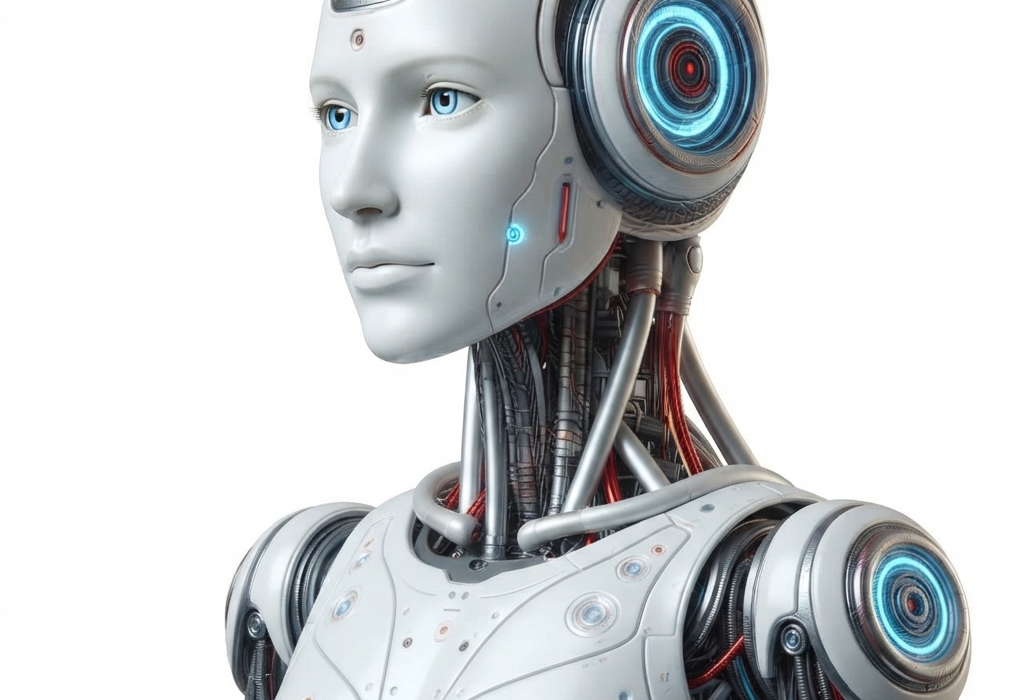
Not long ago, if you read an article, a blog post, or an email, it was almost certain that another human had written every word. Today, that certainty is gone. Artificial intelligence has become capable of writing stories, answering questions, creating marketing copy, summarizing research, and even producing poems and computer code within seconds.
This rapid transformation has sparked an important question: Can you really tell whether a piece of content was written by a human or generated by artificial intelligence?
Many people believe they can instantly recognize AI-generated writing. Others trust online “AI detectors” to reveal the truth. But the reality is much more complicated—and far more interesting.
The truth is that identifying AI-generated content is not as simple as spotting a few repeated phrases or running text through a detection tool. Modern AI language models have become remarkably sophisticated, and human writing itself is incredibly diverse. As a result, the line between human and AI writing has become increasingly blurred.
Understanding what AI-generated content looks like, how it differs from human writing, and why detection is so difficult can help readers become more informed in a world where AI is becoming part of everyday communication.
What Is AI-Generated Content?
AI-generated content is any text created partially or entirely by an artificial intelligence system. These systems, known as large language models (LLMs), are trained using enormous collections of books, articles, websites, scientific papers, and many other forms of publicly available text.
During training, the AI does not memorize every sentence. Instead, it learns statistical patterns in language. It discovers how words relate to one another, how sentences are structured, how ideas usually flow, and which word is likely to come next in a sequence.
When someone asks the AI to write about a topic, it predicts one word after another based on those learned patterns.
Although this process may seem mechanical, the results can often appear surprisingly natural.
Modern AI can explain scientific concepts, write stories, summarize documents, answer technical questions, translate languages, and generate educational material with remarkable fluency.
However, despite sounding human, AI does not think, understand, or experience emotions the way people do. It generates language based on patterns rather than conscious understanding.
Why AI Writing Has Become So Convincing
Early AI writing systems often produced awkward sentences, repetitive wording, or obvious grammatical mistakes. Readers could usually recognize them within a few paragraphs.
Today’s systems are dramatically different.
Modern AI has learned from billions or even trillions of words. It can imitate conversational language, academic writing, journalistic reporting, storytelling, and many other writing styles.
It can vary sentence lengths.
It can explain complex ideas clearly.
It can even imitate different tones, from formal reports to casual conversations.
Because of these advances, many AI-generated articles are virtually indistinguishable from human writing during casual reading.
Even experienced editors sometimes struggle to identify them.
The Biggest Myth About AI Writing
One of the most common misconceptions is that AI writing always sounds “robotic.”
Years ago, this was often true.
Today, it usually is not.
People sometimes expect AI to produce perfectly structured paragraphs, repetitive vocabulary, or unusually formal language. While these characteristics may appear in some AI-generated text, they also appear in human writing.
Similarly, many human authors naturally write in organized, consistent ways.
Writing style alone cannot reliably reveal whether AI was involved.
Are There Clues That Suggest AI Assistance?
Although there is no universal signature of AI writing, certain characteristics may sometimes suggest AI assistance.
AI-generated content often maintains a very consistent tone from beginning to end. Human writers sometimes become more emotional, distracted, or inconsistent as ideas develop.
AI also tends to avoid strong personal opinions unless specifically instructed to include them.
Its explanations often remain balanced and neutral.
Another possible clue is unusually broad knowledge presented with equal confidence across many unrelated topics.
Human writers usually have areas of expertise and areas where uncertainty becomes visible.
AI, by contrast, often explains many subjects using the same confident style.
Some AI-generated articles may also contain generic transitions between ideas or repeat concepts using slightly different wording.
However, none of these characteristics prove AI authorship.
Many skilled human writers produce highly polished, consistent, and neutral prose.
Likewise, many AI-generated texts intentionally imitate human imperfections.
Human Writing Is Naturally Imperfect
Humans write differently because humans think differently.
People make unexpected word choices.
They introduce personal experiences.
They occasionally change direction halfway through an idea.
They may include humor, cultural references, emotional memories, or creative metaphors inspired by real life.
Writers also make mistakes.
Typographical errors.
Incomplete thoughts.
Sudden changes in tone.
Unique expressions.
These imperfections often reflect genuine human communication.
However, editing software can remove many of these features, making polished human writing resemble AI-generated text.
The more carefully a human edits, the harder it becomes to distinguish from AI.
Can AI Detectors Really Tell?
Many websites claim they can determine whether text was written by artificial intelligence.
These systems analyze linguistic patterns using statistical methods.
They may evaluate sentence complexity, word predictability, vocabulary diversity, and other mathematical features.
Some detectors estimate how “predictable” a piece of writing appears.
The underlying assumption is that AI often generates highly probable word sequences, while humans introduce greater unpredictability.
Although this idea has scientific foundations, the results are far from perfect.
Why AI Detectors Make Mistakes
Researchers consistently find that AI detectors can produce both false positives and false negatives.
A false positive occurs when human-written content is incorrectly labeled as AI-generated.
A false negative occurs when AI-generated content is mistakenly identified as human-written.
Both types of errors happen regularly.
For example, highly structured academic writing may resemble AI-generated language because scientific papers naturally follow predictable patterns.
Students whose first language is not English may also write in ways that detectors incorrectly interpret as AI-generated.
On the other hand, AI systems instructed to produce more varied writing can often avoid many patterns detectors look for.
As AI improves, reliable detection becomes even more difficult.
Why There Is No Perfect AI Detector
The central challenge lies in how language works.
There is no hidden digital fingerprint inside AI-generated text.
Unlike photographs, which may contain camera metadata, plain text carries no built-in record of who—or what—created it.
Once text exists, it is simply words.
Those words can be copied, edited, rewritten, translated, or combined with human contributions.
A human may write a paragraph, ask AI to improve it, and then edit the result extensively.
Who becomes the author?
The answer is often impossible to determine objectively.
Because human and AI writing can overlap substantially, no detector can achieve perfect accuracy across every situation.
AI Can Hallucinate
One important difference between humans and AI is that AI sometimes produces information that sounds convincing but is completely incorrect.
Researchers call this phenomenon hallucination.
An AI system may invent references, create fictional quotations, misstate scientific facts, or confidently present incorrect information.
This happens because AI predicts likely word sequences rather than verifying facts.
The model does not inherently know whether a statement is true.
For this reason, factual content generated by AI should always be verified using reliable sources, especially in science, medicine, law, finance, and journalism.
Human Writers Can Also Make Mistakes
Although AI hallucinations receive significant attention, humans are not immune to errors.
People misunderstand information.
They misremember facts.
They introduce personal biases.
They unintentionally spread misinformation.
They overlook details during editing.
Accuracy depends not only on who writes the content but also on how carefully it is researched, reviewed, and verified.
A carefully fact-checked AI-assisted article may be more accurate than a poorly researched human-written one.
Likewise, a poorly reviewed AI-generated article may contain serious mistakes.
The quality of information matters more than the identity of the writer alone.
Does AI Lack Creativity?
Many people assume AI cannot be creative.
The answer is more nuanced.
AI can generate original combinations of ideas, produce imaginative stories, compose poetry, and suggest novel designs.
However, its creativity differs from human creativity.
Humans draw upon lived experiences, emotions, memories, cultural understanding, and personal goals.
AI generates new combinations by recognizing patterns learned during training.
Its outputs may appear creative, but they emerge through statistical prediction rather than conscious imagination.
This distinction is important when evaluating artistic or literary works.
Can Humans Always Beat AI at Writing?
Not necessarily.
For straightforward informational writing, AI can produce coherent drafts very quickly.
For repetitive writing tasks, AI may even outperform humans in speed and consistency.
However, humans remain uniquely capable of bringing genuine personal experience, emotional depth, ethical judgment, cultural awareness, and original insight into their work.
Many of the best modern writing workflows combine both strengths.
A writer may use AI to organize ideas, improve grammar, generate outlines, or simplify technical language while remaining responsible for the final content.
Rather than replacing human writers entirely, AI is increasingly becoming a collaborative tool.
Why Context Matters More Than Detection
Instead of asking only whether content is AI-generated, a more useful question is whether the information is trustworthy.
Was the article carefully researched?
Are credible sources cited?
Are scientific claims accurate?
Is uncertainty acknowledged where appropriate?
Does the writing distinguish evidence from opinion?
These questions matter regardless of whether AI participated in the writing process.
High-quality communication depends on accuracy, transparency, and careful review—not solely on authorship.
The Future of AI-Generated Content
As AI continues improving, identifying AI-generated writing will become even more challenging.
Future systems are likely to imitate human writing with greater subtlety, adapt to individual writing styles, and collaborate seamlessly with people.
Many documents will eventually involve both human and AI contributions.
Educational materials.
Business reports.
Scientific summaries.
News articles.
Creative writing.
Marketing content.
Instead of existing in separate categories, human and AI writing may increasingly blend together.
This shift will require new standards for transparency, responsible use, and ethical communication.
Should Readers Be Concerned?
Artificial intelligence is changing how information is created, but it does not eliminate the need for critical thinking.
Readers should approach every article—whether written by a person or generated with AI—with healthy curiosity.
Checking evidence, comparing reliable sources, questioning extraordinary claims, and considering the author’s credibility remain essential habits.
Good information has never depended solely on who wrote it.
It depends on whether the content is accurate, honest, and carefully verified.
The Bottom Line
So, can you really tell if content is AI-generated?
Sometimes—but often, no.
There is no single phrase, writing style, or software tool that can reliably distinguish all AI-generated text from human writing. While certain patterns may offer clues, they are never definitive. Even the most advanced AI detectors can make mistakes, and polished human writing can easily resemble AI-generated prose.
As artificial intelligence becomes more capable, the question of authorship is gradually becoming less important than the quality of the information itself. The most valuable content—whether written by a human, assisted by AI, or created through collaboration between both—will always be the content that is accurate, thoughtfully organized, transparent about uncertainty, and grounded in reliable evidence.
In the years ahead, the ability to evaluate information critically may become far more important than the ability to guess who—or what—wrote it. In a world where AI and humans increasingly write side by side, informed readers will not simply ask, “Was this written by AI?” They will ask the more meaningful question: “Can I trust what I’m reading?”