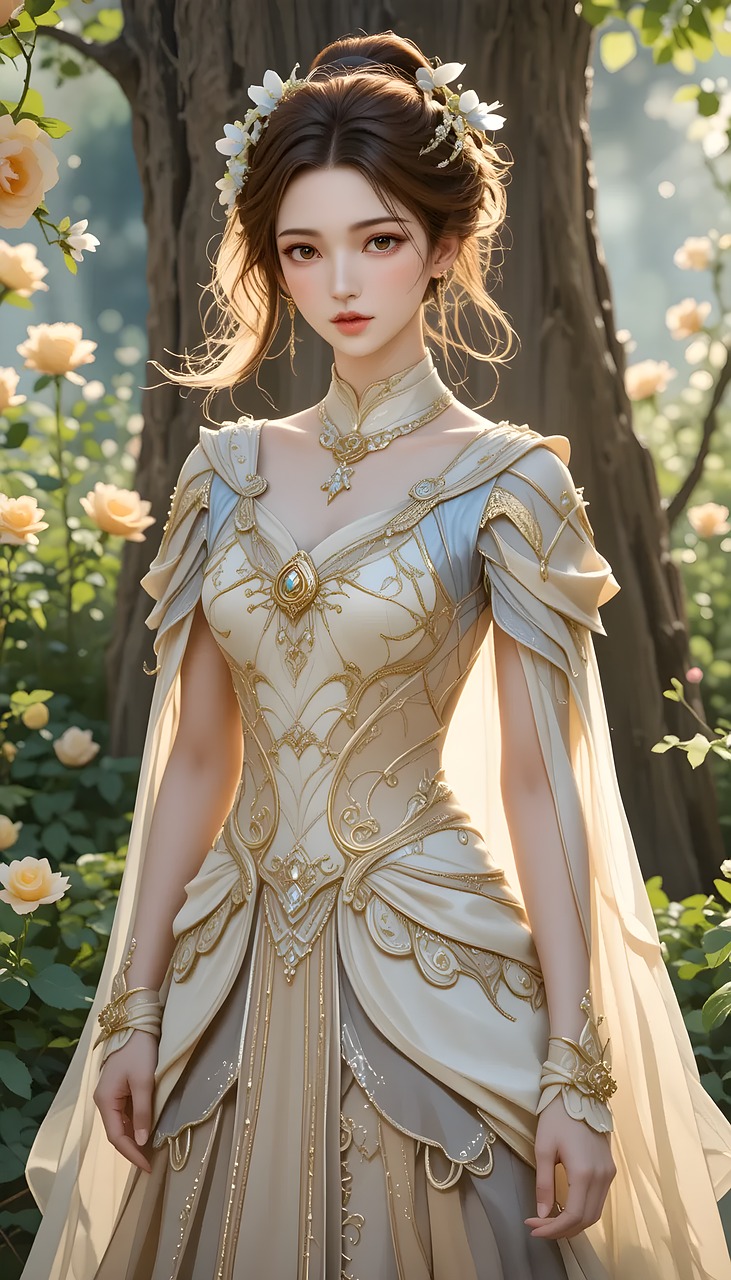
Imagine typing a simple sentence like, “A golden eagle flying over snowy mountains at sunrise,” and within seconds, a completely new image appears on your screen. No artist spent hours painting it. No photographer traveled to the mountains to capture it. Instead, a computer created the image from nothing more than words.
Just a few years ago, this seemed like science fiction. Today, AI image generators can create stunning landscapes, realistic portraits, fantasy worlds, product designs, architectural concepts, and artistic illustrations in moments. They are transforming industries ranging from entertainment and advertising to education, medicine, and scientific visualization.
But how can a computer “understand” a sentence and turn it into a picture? Does artificial intelligence actually imagine scenes the way humans do? Is it copying existing artwork, or creating something entirely new?
The answers lie in one of the most fascinating areas of modern computer science. AI image generators combine mathematics, machine learning, statistics, computer vision, and natural language processing to transform human language into visual content. Although the results often seem magical, the underlying process is based on scientific principles and enormous amounts of computation.
Understanding how AI image generators work not only helps us appreciate this remarkable technology but also reveals how rapidly artificial intelligence is changing the way humans create, communicate, and solve problems.
What Is an AI Image Generator?
An AI image generator is a computer program that creates entirely new images based on text descriptions, reference images, sketches, or other inputs.
Instead of drawing with a pencil or painting with a brush, the system uses a trained artificial intelligence model to predict what an image should look like based on the information it receives.
If you write:
“A futuristic city floating above the clouds at sunset.”
the AI analyzes every important idea in that sentence. It recognizes concepts such as “city,” “floating,” “clouds,” “sunset,” and “futuristic.” It then combines what it learned during training to generate an original image matching those ideas.
Unlike traditional graphic design software, the AI is not following a set of manually programmed drawing instructions. Instead, it has learned statistical patterns from an enormous collection of images and text descriptions.
This ability to learn rather than simply follow rules is what makes modern AI image generation possible.
Artificial Intelligence Does Not “See” Like Humans
One of the biggest misconceptions about AI image generators is that they understand images exactly as humans do.
Humans recognize a cat because our brains combine years of experience, memories, emotions, and sensory information.
AI works differently.
A computer only processes numbers.
Every photograph, painting, or illustration is converted into millions of numerical values representing colors, brightness, positions, textures, and patterns.
Likewise, words are converted into mathematical representations that capture relationships between concepts.
To an AI model, the phrase “red apple” becomes a collection of numbers rather than a mental picture.
The remarkable achievement of modern AI is that it has learned how these numerical descriptions relate to visual patterns.
The Importance of Training Data
Before an AI image generator can create anything, it must first learn.
This learning process is called training.
During training, the AI analyzes an enormous dataset containing millions—or sometimes billions—of image-text pairs.
For example, an image of a dog playing in a park might be paired with a description such as:
“A brown dog running across green grass.”
The AI studies both the image and the accompanying text simultaneously.
Over time, it begins discovering statistical relationships.
It learns that dogs usually have four legs, fur, ears, and tails.
It notices that grass is commonly green.
It discovers that sunsets often contain orange and pink colors.
It recognizes that birds usually appear in the sky rather than underwater.
Importantly, the AI is not memorizing individual pictures.
Instead, it is learning general visual patterns that frequently appear together.
This learning allows it to create new combinations it has never seen before.
Understanding Words Through Language Models
Before an image can be created, the AI must first understand the user’s prompt.
This task is handled by sophisticated language models.
These models analyze grammar, word meanings, relationships, and context.
Consider these two prompts:
“A cat chasing a butterfly.”
“A butterfly chasing a cat.”
Although they contain the same words, their meanings are completely different.
The language model recognizes the relationships between the objects and communicates that information to the image generation system.
Modern AI also understands descriptive words.
If you ask for:
“A tiny blue bird sitting on an enormous ancient tree.”
the AI identifies which words describe the bird, which describe the tree, and how the two objects relate spatially.
This deep understanding of language greatly improves image quality.
Images Become Mathematics
Every digital image is fundamentally a grid of tiny colored squares called pixels.
Each pixel stores numerical values representing color intensity.
A single high-resolution image may contain millions of pixels.
During training, AI does not interpret these pixels as a human sees them.
Instead, it analyzes numerical relationships.
Patterns begin emerging.
Certain groups of pixels frequently form eyes.
Others form leaves.
Others form clouds.
Eventually, the AI learns increasingly complex structures.
Simple edges become shapes.
Shapes become objects.
Objects become scenes.
This gradual understanding forms the foundation of image generation.
Neural Networks: Artificial Brains
At the heart of every modern AI image generator lies a neural network.
A neural network is inspired by the organization of neurons in the human brain, although it is vastly simpler than biological intelligence.
Instead of brain cells, neural networks consist of mathematical units connected together.
Each connection has a numerical weight that changes during learning.
When the AI processes information, millions or even billions of calculations occur simultaneously.
As training progresses, these connections adjust little by little.
Incorrect predictions strengthen or weaken various pathways until the network becomes increasingly accurate.
After enough training, the neural network can recognize incredibly complex visual structures.
Learning Through Prediction
One of the most important ideas in machine learning is prediction.
Rather than memorizing pictures, the AI repeatedly tries to predict missing information.
If part of an image is hidden, the model attempts to guess what belongs there.
If the prediction is wrong, mathematical optimization techniques adjust the network.
This cycle repeats billions of times.
Gradually, prediction improves.
Eventually, the AI develops a sophisticated internal understanding of how visual scenes are structured.
This predictive ability later becomes essential during image generation.
The Rise of Diffusion Models
Most modern AI image generators are based on a technique known as a diffusion model.
Although the mathematics behind diffusion models is highly advanced, the central idea is surprisingly intuitive.
Imagine taking a beautiful photograph.
Now slowly add random visual noise until the picture becomes nothing but static.
Eventually, every recognizable detail disappears.
The original image is completely hidden.
During training, the AI learns the reverse process.
It practices removing tiny amounts of noise step by step.
Eventually, it becomes extremely good at transforming random noise back into meaningful images.
When a user enters a prompt, the AI begins with random visual noise.
Then, guided by the text description, it gradually removes noise while adding meaningful details.
After dozens of refinement steps, the random pixels become a complete image.
Rather than drawing from scratch, the AI slowly uncovers an image hidden inside randomness.
Why the Process Happens Step by Step
Image generation is not instantaneous inside the AI.
Instead, the picture evolves gradually.
At first, only vague color regions appear.
Then rough shapes emerge.
Next come larger objects.
After that, textures develop.
Finally, tiny details like eyelashes, reflections, shadows, and fabric folds become visible.
Each stage builds upon the previous one.
This gradual refinement helps the AI create coherent, realistic scenes.
Understanding Relationships Between Objects
A successful image contains more than isolated objects.
Everything must fit together logically.
If a prompt says:
“A child holding a red balloon while standing beside a lake.”
the AI must understand:
The balloon should appear above the child’s hand.
The child should stand on the ground.
The lake belongs in the background.
Reflections may appear in the water.
Shadows should match the direction of the light.
Maintaining these relationships requires enormous computational sophistication.
Modern AI models have become increasingly skilled at understanding spatial arrangements.
Learning Artistic Styles
AI image generators can produce photographs, oil paintings, watercolor illustrations, pencil sketches, digital art, comic books, and many other styles.
This ability comes from training on diverse visual examples.
The AI recognizes statistical differences between artistic techniques.
Photographs contain realistic lighting and textures.
Watercolor paintings display soft blending.
Oil paintings often contain thick brush strokes.
Ink drawings emphasize outlines.
When a prompt requests a particular style, the AI adjusts its generation process accordingly.
It is not selecting a pre-made filter.
Instead, it predicts visual patterns associated with that artistic style.
Color, Light, and Shadows
Creating believable images requires understanding how light behaves.
During training, AI learns countless examples of lighting conditions.
It observes how sunlight produces shadows.
It recognizes reflections on water.
It learns how clouds soften illumination.
It notices how sunsets create warm orange tones.
Although the AI does not understand physics exactly as a scientist does, it statistically learns many physical relationships from its training data.
As a result, generated images often contain surprisingly realistic lighting.
Faces Are Especially Challenging
Human faces contain incredibly subtle details.
Tiny changes in eye position, mouth shape, or facial proportions can make a face appear unnatural.
Early AI image generators often produced distorted faces, misplaced eyes, or unrealistic expressions.
Modern models have improved dramatically.
They now generate more accurate facial anatomy, expressions, hairstyles, skin textures, and lighting.
Nevertheless, faces remain one of the most demanding challenges in AI image generation.
Hands Have Been Difficult
People often joke about AI-generated hands.
There is a scientific reason for this.
Hands are extraordinarily flexible.
They contain many joints and can appear in countless positions.
Fingers frequently overlap or become partially hidden.
Learning every possible hand configuration requires enormous amounts of data.
Although modern AI models generate hands far better than earlier systems, they can still occasionally produce anatomical mistakes.
The Role of Massive Computing Power
Training an advanced AI image generator requires extraordinary computational resources.
Powerful computers containing specialized processors perform trillions of mathematical operations.
Training may continue for weeks or even months.
Once training finishes, generating a single image becomes much faster.
Even then, millions or billions of calculations occur behind the scenes within seconds.
The remarkable speed users experience is the result of years of research in computer hardware, software optimization, and machine learning algorithms.
AI Does Not Store Every Image
A common misunderstanding is that AI keeps a giant library of photographs and simply combines pieces together.
That is not how modern image generators work.
Instead of storing exact copies, the AI stores learned mathematical relationships.
These relationships capture statistical patterns found across enormous datasets.
When generating a new image, the AI predicts what should appear based on those learned patterns.
The resulting image is usually a newly generated composition rather than a collage assembled from existing pictures.
However, because models learn from vast datasets, researchers continue studying questions involving originality, copyright, and responsible data use.
Why Prompts Matter
The quality of an AI-generated image depends heavily on the prompt.
A vague request leaves many creative decisions to the model.
A detailed description provides clearer guidance.
For example:
“A snowy mountain.”
gives the AI relatively little information.
But:
“A majestic snow-covered mountain at sunrise, reflected in a crystal-clear alpine lake beneath dramatic orange clouds.”
provides far richer guidance.
The AI uses these additional details to create a more specific image.
Learning how to write effective prompts has become an important skill known as prompt engineering.
AI Continues Improving the Image
Many image generators allow multiple refinement stages.
Users can request higher resolution.
They can modify colors.
They can change backgrounds.
They can replace individual objects.
Some systems even allow editing only selected regions while leaving the rest of the image untouched.
This flexibility comes from the AI’s ability to understand both the existing image and the user’s new instructions.
The Science Behind Creativity
Can AI actually be creative?
Scientists continue debating this question.
AI does not experience emotions, imagination, or inspiration the way humans do.
Instead, it generates new combinations based on learned statistical relationships.
Its creativity is computational rather than conscious.
Human artists draw upon personal experiences, memories, culture, emotions, and intentions.
AI relies on mathematical models trained from data.
The resulting images can certainly appear creative, but the underlying process differs fundamentally from human artistic thought.
Applications Across Many Fields
AI image generation extends far beyond entertainment.
Architects use it to visualize buildings before construction begins.
Scientists generate educational illustrations explaining complex biological processes.
Doctors explore medical visualization techniques.
Product designers quickly test new concepts.
Game developers create environments and characters.
Film studios experiment with costumes and special effects.
Teachers prepare engaging educational materials.
Historians reconstruct ancient cities based on archaeological evidence.
Researchers generate synthetic images that help train other AI systems.
As the technology improves, new applications continue emerging.
Limitations of AI Image Generators
Despite their impressive abilities, AI image generators are not perfect.
They sometimes misunderstand prompts.
They may create unrealistic anatomy.
Text appearing inside images is often inaccurate.
Complex scenes involving many interacting objects can confuse the model.
Historical accuracy may be inconsistent unless carefully guided.
Scientific diagrams may contain subtle errors.
Because AI predicts images statistically rather than reasoning like humans, it can sometimes produce visually convincing but factually incorrect content.
For this reason, images intended for education, journalism, medicine, or scientific communication should always be reviewed by knowledgeable experts.
Ethical Challenges
The rapid growth of AI image generation has raised important ethical questions.
Artists have expressed concerns about how training datasets are collected and how their creative work may be used.
Researchers continue developing methods to improve transparency, respect intellectual property, and reduce harmful bias in generated images.
Another challenge involves misinformation.
Highly realistic synthetic images can make it difficult to distinguish genuine photographs from AI-generated content.
This has increased interest in digital watermarking, authentication technologies, and media literacy.
Responsible development and thoughtful use of AI are becoming just as important as the technology itself.
The Future of AI Image Generation
AI image generators are improving at an extraordinary pace.
Future systems will likely produce even higher-quality images with greater realism, consistency, and control. They may better understand complex scenes, accurately render text within images, maintain the same characters across multiple illustrations, and seamlessly combine images, video, and three-dimensional content into unified creative workflows.
Scientists are also working on models that require less computing power, consume less energy, and provide users with more precise control over the creative process. At the same time, ongoing research aims to make these systems safer, fairer, and more transparent.
A New Way to Turn Ideas Into Images
AI image generators represent one of the most remarkable achievements in modern artificial intelligence. By combining machine learning, neural networks, language understanding, and advanced mathematical models, they can transform simple words into entirely new visual creations in a matter of seconds.
Although they do not imagine, dream, or create in the human sense, they have learned to recognize astonishingly complex relationships between language and images. That ability allows them to generate artwork, illustrations, photographs, and designs that often appear surprisingly realistic and imaginative.
The true power of AI image generation lies not in replacing human creativity but in expanding it. Artists, designers, educators, scientists, engineers, and curious learners can use these tools to explore ideas faster, communicate concepts more effectively, and bring visions to life that might otherwise remain only in their imagination.
As research continues, AI image generators will almost certainly become even more capable. Yet behind every breathtaking image they produce is not magic, but an extraordinary combination of mathematics, computer science, and decades of scientific discovery that has taught machines how to translate human language into visual form.