The internet has become an essential part of everyday life. We use it to communicate with friends and family, manage our finances, shop online, work remotely, stream entertainment, and store valuable personal information. Every click, login, and online purchase involves sending data across networks that connect billions of devices around the world.
With this convenience comes an important concern: cybersecurity. Stories about hackers stealing passwords, infecting computers with malware, and exposing personal information appear in the news almost every day. As people search for ways to stay safe online, one tool is mentioned more often than almost any other—the Virtual Private Network, better known as a VPN.
Many advertisements suggest that a VPN can protect you from hackers completely. Some even imply that simply turning on a VPN makes you anonymous and immune to cyberattacks. While a VPN is indeed a valuable security tool, the reality is more nuanced. It can significantly improve your online security in certain situations, but it cannot stop every type of cyber threat.
Understanding what a VPN actually does—and what it cannot do—is the key to making smarter decisions about online safety.
What Is a VPN?
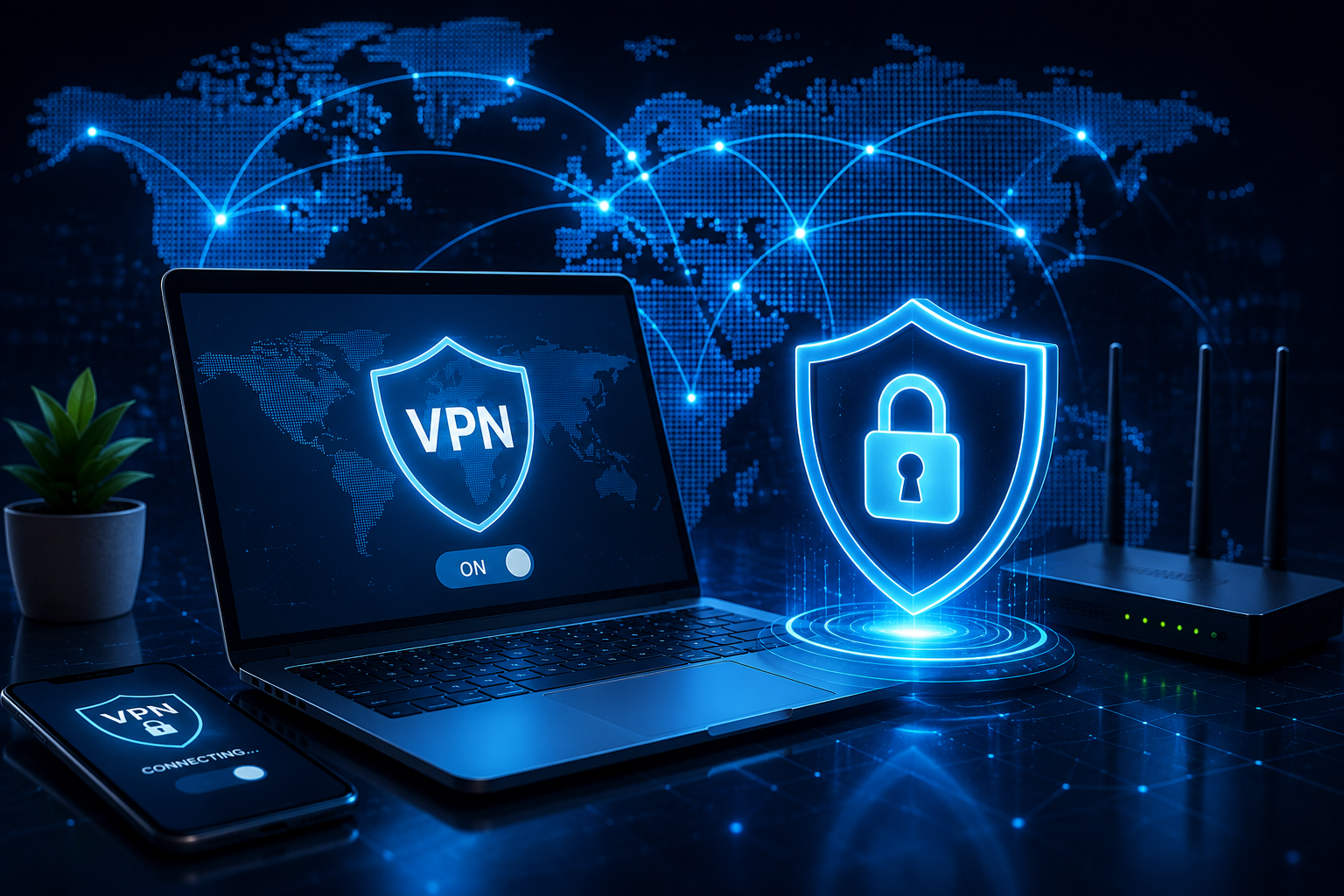
A Virtual Private Network (VPN) is a technology that creates an encrypted connection between your device and a VPN server operated by a service provider. Instead of sending your internet traffic directly to websites or online services, your data first travels through this secure tunnel.
Encryption converts readable information into coded data that cannot easily be understood by unauthorized people. Even if someone intercepts the encrypted traffic, they should not be able to read its contents without the correct encryption keys.
After your data reaches the VPN server, it is sent to its intended destination on the internet. Responses from websites travel back through the same encrypted tunnel before reaching your device.
This process helps protect your information while it travels across networks.
How Hackers Try to Steal Information
To understand how a VPN helps, it is useful to understand how many cyberattacks work.
Hackers use a wide variety of techniques to steal information or gain unauthorized access to devices. Some attacks involve intercepting internet traffic. Others trick users into revealing passwords. Some exploit software vulnerabilities, while others rely on malicious programs that secretly infect computers and smartphones.
Not every attack targets the internet connection itself. In fact, many modern cyberattacks focus on human behavior rather than technical weaknesses.
Because hackers use many different methods, no single security tool can defend against all of them.
How a VPN Protects Your Internet Connection
One of the biggest advantages of a VPN is encryption.
Imagine connecting to a public Wi-Fi network at a coffee shop, airport, hotel, or library. Public wireless networks are convenient, but they may also expose users to additional security risks if the network is poorly secured or if attackers create fake hotspots that imitate legitimate ones.
Without encryption, certain types of network traffic may be vulnerable to interception depending on the website or application being used. A VPN encrypts the connection between your device and the VPN server, making it much more difficult for attackers on the same network to view the contents of your internet traffic.
This protection is especially valuable when using unfamiliar or public Wi-Fi networks.
Protection Against Network Eavesdropping
Some cybercriminals attempt to monitor data traveling across shared networks. This practice is sometimes called network eavesdropping or packet sniffing.
If sensitive information travels without proper encryption, attackers may be able to observe or capture it.
A VPN greatly reduces this risk by encrypting your internet traffic before it leaves your device.
Even if attackers intercept the encrypted data, they generally cannot read its contents because modern VPNs use strong cryptographic protocols designed to resist practical attacks.
Keeping Your IP Address More Private
Every device connected to the internet uses an Internet Protocol (IP) address.
Your IP address helps websites know where to send information. It can also provide an approximate indication of your geographic location.
When using a VPN, websites generally see the VPN server’s IP address instead of your own public IP address.
This adds an extra layer of privacy because your real IP address is not directly exposed to every website you visit.
While this makes tracking more difficult in some situations, it does not make you invisible online.
Can a VPN Stop Hackers Completely?
The simple answer is no.
A VPN is an important security tool, but it cannot prevent every cyberattack.
Think of a VPN as one layer of protection rather than a complete cybersecurity solution.
If someone tricks you into revealing your password, a VPN cannot stop that.
If you download malicious software, the VPN cannot automatically remove it.
If your computer has serious security vulnerabilities, a VPN cannot fix them.
Cybersecurity depends on many different protections working together.
A VPN Cannot Protect You From Phishing
One of the most successful forms of cybercrime is phishing.
In a phishing attack, criminals create fake emails, websites, or messages that appear to come from trusted organizations.
You might receive an email claiming your bank account has been locked. The message includes a link that looks legitimate, but it actually leads to a fake website designed to steal your username and password.
A VPN cannot determine whether a website is genuine or fraudulent.
If you voluntarily enter your password into a fake website, the VPN cannot prevent the theft.
Learning to recognize phishing attempts remains one of the most important cybersecurity skills.
A VPN Cannot Remove Malware
Malware is software created to damage computers, steal information, spy on users, or perform unauthorized actions.
Examples include viruses, ransomware, spyware, worms, and trojans.
If malware is already installed on your device, a VPN does not remove it.
The malicious program can often continue operating locally on your computer regardless of whether your internet connection is encrypted.
Antivirus software, regular updates, and safe downloading habits are essential for reducing malware risks.
A VPN Cannot Protect Weak Passwords
Many online accounts are compromised because people reuse simple passwords across multiple websites.
If one website experiences a data breach, attackers may try the same username and password combination on many other services.
A VPN cannot strengthen weak passwords.
Using unique, long passwords for every account is far more effective against this type of attack.
Password managers can help generate and securely store strong passwords.
A VPN Cannot Fix Software Vulnerabilities
Operating systems and applications occasionally contain security flaws.
Cybercriminals sometimes exploit these vulnerabilities before users install available security updates.
A VPN does not repair software bugs.
Keeping your operating system, browser, smartphone, and applications updated remains one of the most effective cybersecurity practices.
Public Wi-Fi Is Where VPNs Shine
One situation where VPNs provide clear security benefits is public Wi-Fi.
Airports, hotels, restaurants, shopping malls, coffee shops, and other public places often provide free internet access.
Although many modern websites already use HTTPS, which encrypts communication between your browser and the website, a VPN adds another layer of protection by encrypting your internet traffic before it even leaves your device. This can reduce exposure to certain network-based attacks and make it harder for others on the same network to monitor your online activity.
For people who frequently use public Wi-Fi, a VPN is an especially valuable security tool.
Does HTTPS Make VPNs Unnecessary?
Today, most reputable websites use HTTPS, which encrypts communication between your browser and the website.
This has dramatically improved internet security compared with earlier decades.
However, HTTPS and VPNs serve different purposes.
HTTPS protects communication between your browser and an individual website.
A VPN encrypts internet traffic between your device and the VPN server, covering many applications and network activities beyond web browsing.
Rather than replacing one another, HTTPS and VPNs often work together.
Can a VPN Hide Everything You Do Online?
No.
This is one of the biggest misconceptions about VPNs.
Although websites generally see the VPN server’s IP address instead of yours, your online activities may still be visible to the websites you use, the services you log into, or the information you voluntarily share.
For example, if you sign in to your email account or social media profile, those services know who you are because you authenticated with your account.
A VPN increases privacy but does not provide complete anonymity.
Can Hackers Break VPN Encryption?
Modern VPN services typically use strong encryption algorithms such as AES-256 or ChaCha20, along with secure VPN protocols like WireGuard, OpenVPN, or IKEv2/IPsec.
When properly implemented, these encryption methods are considered highly secure by current scientific and industry standards.
Rather than attempting to break the encryption directly, attackers usually focus on easier targets, such as phishing users, exploiting software vulnerabilities, stealing passwords, or infecting devices with malware.
In practice, human error is often a much larger cybersecurity risk than the encryption itself.
Does a VPN Protect Smartphones?
Yes, VPNs can also encrypt internet traffic from smartphones and tablets.
This can improve security when using mobile networks or public Wi-Fi.
However, the same limitations still apply.
A VPN cannot prevent malicious apps from stealing data if they already have excessive permissions.
It cannot stop users from installing fake applications or entering passwords into fraudulent websites.
Safe mobile habits remain essential.
Choosing a Trustworthy VPN
Not every VPN service provides the same level of security.
Some free VPNs collect user data, display advertisements, inject tracking software, or offer weak security protections.
A trustworthy VPN should use modern encryption standards, support secure VPN protocols, maintain a transparent privacy policy, and receive regular independent security audits where possible.
A VPN provider can potentially handle a large amount of your internet traffic, making trust an important factor when choosing a service.
VPNs and Remote Work
Businesses around the world rely heavily on VPN technology.
Employees working from home often connect to company networks using secure VPN connections.
This allows sensitive business information to travel through encrypted channels instead of being exposed on public internet connections.
For organizations handling confidential data, VPNs remain an important component of enterprise cybersecurity.
Building Strong Online Security
Cybersecurity works best when multiple layers of protection work together.
A VPN is only one piece of a much larger security strategy.
Keeping devices updated, enabling multi-factor authentication (MFA), using strong unique passwords, installing reputable antivirus software when appropriate, avoiding suspicious downloads, recognizing phishing attempts, and backing up important files all contribute to stronger protection.
No single tool can eliminate every cyber threat.
Common Misconceptions About VPNs
Many people believe a VPN automatically protects against viruses, blocks hackers from every attack, hides all online activity, or guarantees complete anonymity.
These beliefs are inaccurate.
A VPN primarily protects data while it travels across networks and improves online privacy by masking your public IP address from the websites you visit. It does not replace antivirus software, security updates, safe browsing habits, or critical thinking.
Understanding these limitations allows users to make better security decisions instead of relying on unrealistic expectations.
The Future of VPN Security
As cyber threats continue evolving, VPN technology also continues to improve.
Newer VPN protocols aim to provide stronger security, faster performance, and lower battery consumption on mobile devices.
Researchers continue developing improved encryption techniques to resist future threats, including the potential challenges posed by large-scale quantum computers. At the same time, cybersecurity professionals increasingly combine VPNs with technologies such as Zero Trust security models, hardware-based authentication, and advanced threat detection systems.
VPNs will likely remain an important part of internet security for many years, but they will continue to function as one layer within a broader cybersecurity strategy rather than as a complete solution.
Conclusion
A VPN can absolutely help protect you from certain kinds of hackers, particularly those who attempt to intercept your internet traffic on insecure or public networks. By encrypting your connection and masking your public IP address, it strengthens both your online security and your privacy.
However, a VPN is not a magic shield. It cannot stop phishing attacks, remove malware, repair vulnerable software, or protect accounts secured with weak passwords. Most successful cyberattacks today exploit human mistakes or compromised devices rather than breaking encrypted VPN connections.
The safest approach is to think of a VPN as one essential tool in a much larger cybersecurity toolkit. When combined with strong passwords, multi-factor authentication, regular software updates, cautious browsing, and an understanding of common online scams, a VPN becomes far more effective. Together, these layers of protection create a much stronger defense against the diverse and constantly evolving threats that exist on today’s internet.