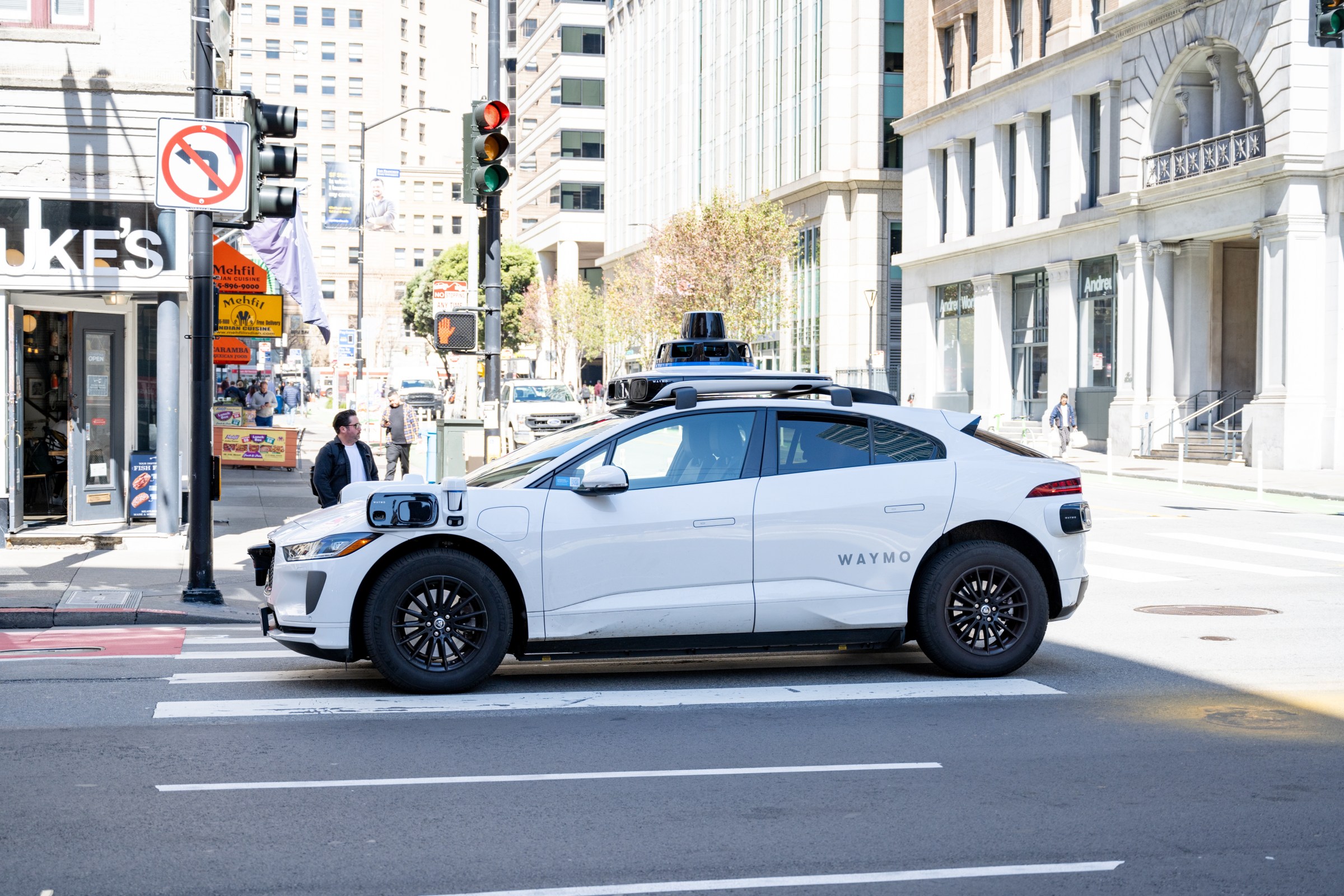
Imagine sitting inside a car that quietly begins moving without anyone touching the steering wheel. The vehicle stops smoothly at traffic lights, changes lanes safely, slows down for pedestrians, and reaches its destination while the passenger simply relaxes. Just a few decades ago, this sounded like science fiction. Today, it is becoming a reality thanks to rapid advances in artificial intelligence, sensors, and robotics.
For more than a century, humans have been responsible for driving vehicles. Every turn of the steering wheel, every press of the brake pedal, and every decision on the road has depended on human judgment. But now, a new competitor has entered the driver’s seat: the self-driving car.
This technological revolution raises an important question. Who is the better driver—a highly trained human with years of experience, or a computer-powered vehicle that never gets tired, distracted, or sleepy?
The answer is not as simple as choosing one over the other. Human drivers and self-driving cars each have remarkable strengths and significant limitations. Understanding these differences helps us appreciate both the incredible abilities of the human brain and the extraordinary progress of modern technology.
What Is a Self-Driving Car?
A self-driving car, also called an autonomous vehicle, is a car designed to operate with little or no human control. Instead of relying primarily on a human driver, it uses computers, sensors, cameras, radar, and sophisticated software to understand its surroundings and make driving decisions.
The vehicle continuously observes nearby roads, other cars, pedestrians, cyclists, traffic lights, road signs, and obstacles. It processes this information almost instantly before deciding whether to accelerate, brake, steer, or change lanes.
Different self-driving systems offer different levels of automation. Some assist human drivers with specific tasks, while others are designed to handle nearly all aspects of driving under certain conditions.
How Human Drivers Control a Car
Driving may seem natural after years of experience, but it is actually one of the most complex tasks the human brain performs.
A human driver constantly gathers information through vision, hearing, and touch. The eyes monitor traffic, road markings, weather conditions, and mirrors. The ears detect emergency sirens, horns, and unusual sounds. The hands feel steering wheel movements, while the feet carefully control acceleration and braking.
The brain combines all of this information with memories, experience, and judgment before making decisions, often within fractions of a second.
Humans also rely on intuition. Experienced drivers can sometimes recognize dangerous situations before they fully develop simply by noticing subtle clues in the behavior of other road users.
How Self-Driving Cars See the Road
Unlike humans, autonomous vehicles do not use eyes or ears.
Instead, they rely on multiple sensors working together.
High-resolution cameras capture detailed images of roads, vehicles, traffic signals, and pedestrians.
Radar systems send radio waves that detect nearby objects and measure their speed and distance.
Some self-driving cars also use LiDAR, which emits laser pulses to create detailed three-dimensional maps of the environment.
Ultrasonic sensors help detect nearby obstacles during low-speed maneuvers such as parking.
Global Navigation Satellite Systems assist with positioning, while highly detailed digital maps provide additional information about road layouts.
The vehicle’s computer continuously combines data from these sources into a single understanding of its surroundings. This process is known as sensor fusion.
The Brain of a Self-Driving Car
The true intelligence of a self-driving car comes from powerful onboard computers running advanced artificial intelligence software.
Machine learning algorithms analyze enormous amounts of sensor data every second.
The system identifies lane markings, traffic lights, speed limits, road signs, pedestrians, bicycles, motorcycles, animals, and other vehicles.
It predicts how nearby road users are likely to move before deciding how the vehicle should respond.
These calculations occur continuously while the car is in motion.
The computer never becomes bored, impatient, or distracted. It remains focused on driving every moment the system is operating.
Reaction Time
One important difference between humans and computers is reaction time.
Human reaction times vary depending on alertness, fatigue, age, experience, distractions, and emotional state.
When an unexpected hazard appears, a driver must first notice it, understand the situation, decide what to do, and then physically move their hands or feet.
Self-driving systems process sensor information electronically, allowing them to begin responding almost immediately after detecting certain hazards. However, their overall effectiveness depends on correctly interpreting the situation. If the system misidentifies an object or encounters a scenario outside its design limits, its response may not always be appropriate.
Both humans and autonomous systems therefore have situations in which they perform well and situations that remain challenging.
Human Experience and Common Sense
One of humanity’s greatest advantages is common sense.
People naturally understand many situations that are difficult to describe mathematically.
A human driver may notice children playing near a street and instinctively slow down before anyone enters the road.
Drivers may recognize that another motorist appears confused or that a cyclist seems likely to change direction.
Humans also interpret body language.
A pedestrian making eye contact and stepping toward a crosswalk may signal an intention to cross.
These subtle social cues can help experienced drivers anticipate danger.
Teaching computers to understand these complex human behaviors remains an active area of research.
Self-Driving Cars Never Get Tired
Fatigue is one of the leading contributors to road accidents worldwide.
Long hours behind the wheel reduce attention, slow reaction times, and impair judgment.
Self-driving cars do not become sleepy.
They do not lose concentration after hours of driving.
They do not become impatient during heavy traffic.
As long as their hardware and software are functioning properly, they maintain the same level of attention throughout the journey.
This consistency represents one of the strongest potential advantages of autonomous driving technology.
Human Emotions Behind the Wheel
Humans experience emotions that influence driving decisions.
Stress may lead to rushed choices.
Anger can encourage aggressive driving.
Fear may cause hesitation.
Overconfidence sometimes results in unnecessary risk-taking.
Excitement or distraction may reduce attention to the road.
Computers experience none of these emotions.
Their decisions are based entirely on programmed rules, sensor data, and learned models rather than feelings.
This emotional neutrality can improve consistency, although it does not guarantee perfect decisions in every situation.
Dealing With Unexpected Situations
Roads are full of surprises.
A tree branch may suddenly fall.
Construction workers may temporarily redirect traffic.
Flooded roads can hide hazards.
Animals may run into traffic without warning.
Police officers sometimes manually direct vehicles when traffic lights fail.
Humans often adapt creatively to unusual situations using reasoning and experience.
Autonomous vehicles can also respond to many unexpected events, but situations unlike those encountered during development or testing may still present challenges. Engineers refer to these as edge cases—rare scenarios that are difficult to anticipate and program for.
Improving performance in such situations remains one of the biggest challenges in autonomous driving research.
Driving in Bad Weather
Weather affects every driver.
Heavy rain reduces visibility.
Snow may hide lane markings.
Fog makes distant objects difficult to see.
Bright sunlight can temporarily impair vision.
Humans adjust by driving more slowly and cautiously.
Self-driving cars also experience difficulties because rain, snow, fog, dirt, or ice can interfere with cameras, LiDAR, and other sensors.
Modern systems are designed to compensate using multiple sensor types, but severe weather can still reduce their performance.
Researchers continue improving sensors and software to handle these conditions more reliably.
Learning From Experience
Human drivers gain experience over many years.
Every journey teaches new lessons.
Experienced drivers recognize patterns and develop better judgment.
Self-driving cars also improve, but in a different way.
Engineers train artificial intelligence using enormous collections of driving data gathered from many vehicles and simulated environments. Updates to software can improve system performance across many vehicles after testing and validation.
Unlike humans, however, autonomous systems do not independently develop human-like understanding simply by accumulating life experience.
Following Traffic Rules
Most drivers try to obey traffic laws, but mistakes happen.
People occasionally exceed speed limits, miss stop signs, forget turn signals, or become distracted.
Self-driving cars are programmed to follow traffic regulations within the environments for which they are designed.
They maintain safe following distances, observe speed limits when appropriate, stop at red lights, and yield when required.
However, unusual real-world situations may require judgment that goes beyond written rules, making this an ongoing area of development.
Accident Prevention
Road safety is one of the primary motivations behind autonomous driving technology.
Many traffic accidents involve human factors such as distraction, fatigue, alcohol impairment, speeding, or poor judgment.
Because self-driving systems do not become intoxicated, sleepy, or distracted by mobile phones, they have the potential to reduce accidents caused by these factors.
At the same time, autonomous systems can experience different types of failures, including software errors, sensor limitations, hardware malfunctions, or incorrect interpretation of complex situations.
For this reason, researchers carefully evaluate both the benefits and the remaining risks before expanding autonomous driving technologies.
Cybersecurity
Human drivers cannot be hacked.
Computers can.
Because self-driving cars depend heavily on software and digital communication, cybersecurity is critically important.
Manufacturers invest heavily in encryption, secure communication, software testing, and continuous monitoring to protect vehicles against unauthorized access.
As autonomous vehicles become more connected, cybersecurity will remain a major engineering priority.
Environmental Impact
Many self-driving cars are being developed alongside electric vehicle technology.
Electric motors produce no direct exhaust emissions while driving.
Autonomous driving software may also improve efficiency by reducing unnecessary acceleration, braking, and traffic congestion.
However, the overall environmental impact depends on factors such as electricity generation, battery manufacturing, vehicle production, and transportation infrastructure.
Autonomous driving itself does not automatically reduce environmental impacts, but it may contribute to more efficient transportation systems.
Accessibility and Independence
One of the most promising benefits of self-driving technology is increased mobility.
Older adults who can no longer drive safely may regain greater independence.
Some people with certain disabilities could experience improved access to transportation if autonomous systems become widely available and are designed to meet their needs.
Communities with limited transportation options may also benefit from autonomous mobility services in the future.
These possibilities have the potential to improve quality of life for many people.
Can Self-Driving Cars Replace Human Drivers?
The answer depends on where and how they are used.
In carefully mapped urban areas or on certain highways, autonomous systems have made remarkable progress.
Yet driving is extraordinarily complex.
Road conditions change constantly.
Construction zones appear unexpectedly.
Weather varies from hour to hour.
Human behavior remains unpredictable.
Because of these challenges, many experts believe that fully replacing human drivers everywhere will require continued advances in artificial intelligence, sensing technology, computing power, infrastructure, and safety validation.
For the foreseeable future, many vehicles are likely to combine automated systems with human supervision rather than eliminate human involvement entirely.
The Future of Driving
The coming decades may transform transportation more dramatically than any period since the invention of the automobile.
Artificial intelligence will continue becoming more capable.
Sensors will become more accurate.
Computers will process information even faster.
Vehicle-to-vehicle and vehicle-to-infrastructure communication may allow cars to share information about traffic, hazards, and road conditions in real time.
Instead of choosing between humans and machines, future transportation may increasingly rely on collaboration. Human drivers will benefit from intelligent driver-assistance systems, while autonomous technologies will continue expanding where they can improve safety, efficiency, and convenience.
Conclusion
The comparison between self-driving cars and human drivers is not a contest with a simple winner. Human drivers possess creativity, intuition, common sense, and the ability to understand complex social situations in ways that computers still struggle to match. Self-driving cars, on the other hand, offer unwavering attention, rapid data processing, freedom from fatigue, and the ability to monitor their surroundings with multiple sensors at once.
Both have strengths and limitations, and both continue to evolve. As technology advances, the future of transportation will likely combine the best qualities of human intelligence with the precision and consistency of artificial intelligence. Rather than replacing people overnight, self-driving technology is gradually reshaping the way we think about mobility, safety, and the roads we travel every day.