Every time you open a website, stream a movie, play an online game, or check your email, something important happens behind the scenes before any webpage appears on your screen. Your device needs to find the correct internet address of the website you want to visit. This process takes only milliseconds, yet it is one of the most essential parts of how the internet works. The technology responsible for this is called the Domain Name System, or DNS.
Most people never think about DNS because it works quietly in the background. However, the DNS server you use can influence how quickly websites begin loading, how securely your internet requests are handled, how well your privacy is protected, and even whether you can access certain websites during outages.
By default, your internet service provider (ISP) automatically assigns a DNS server to your connection. While this usually works well, many users choose public DNS services offered by technology companies and nonprofit organizations. These public DNS servers often provide better reliability, additional security features, improved privacy policies, or advanced filtering options.
The question is: which public DNS server is the best?
The answer depends on what matters most to you. Some services focus on speed, others prioritize privacy, while some are designed to block malware or protect families from inappropriate content. Understanding their strengths and limitations can help you make the best choice for your internet connection.
What Is a Public DNS Server?
A public DNS server is a DNS resolver that anyone can use instead of the one provided by their internet service provider.
Whenever you type a domain name such as example.com, your computer sends a DNS query asking for the corresponding IP address. The DNS resolver receives this request, finds the correct IP address, and sends it back to your device so your browser knows where to connect.
Public DNS servers perform exactly the same basic function as ISP DNS servers. The difference lies in who operates them and the additional features they provide.
Some public DNS providers invest heavily in global infrastructure, allowing them to respond very quickly. Others focus on encrypting DNS requests, blocking malicious websites, or minimizing data collection.
Why People Change Their DNS Server
For many users, switching DNS servers can improve their overall internet experience.
A faster DNS resolver may reduce the time needed to begin loading websites, especially when visiting many different domains throughout the day. Although DNS is only one part of website loading, faster DNS lookups can make browsing feel more responsive.
Reliability is another major reason. Large public DNS providers operate servers around the world with extensive redundancy. If one server experiences problems, another usually takes over automatically.
Security also motivates many users. Some DNS services actively block domains known to distribute malware, phishing attacks, ransomware, or other cyber threats before your device even connects to them.
Privacy-conscious users often prefer DNS providers that promise not to store personally identifiable information or retain logs for extended periods.
Families may choose DNS services that automatically block adult content or harmful websites without requiring additional software.
How DNS Performance Affects Internet Speed
One of the biggest misconceptions about DNS is that changing DNS servers dramatically increases internet speed.
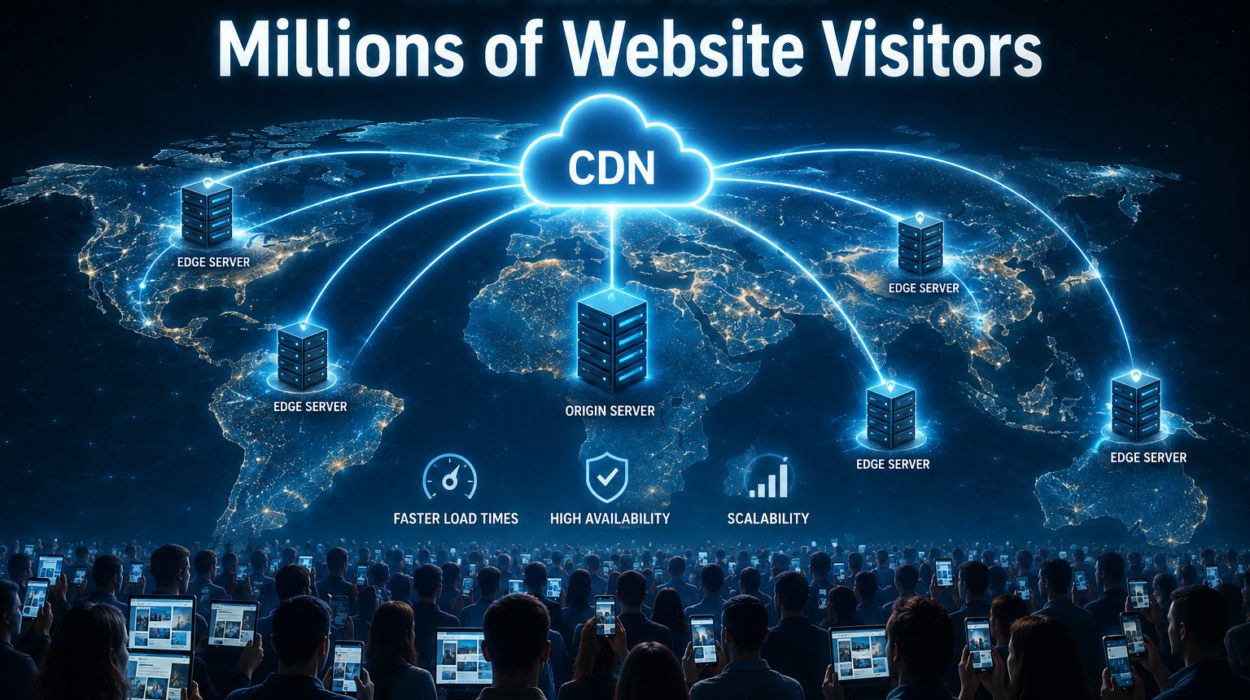
In reality, DNS affects only the initial process of finding a website’s IP address. Once your browser has the address, downloading the website depends primarily on your internet connection, the website’s server, network congestion, and content delivery networks (CDNs).
However, DNS performance still matters.
If your DNS server responds slowly, every new website visit begins with a delay before any data starts downloading.
Modern browsers also make many DNS requests while loading complex websites, so consistently fast DNS resolution contributes to a smoother browsing experience.
Google Public DNS
Google Public DNS is one of the world’s most widely used public DNS services.
Introduced in 2009, it was designed to improve DNS speed, reliability, and security while helping make the internet more resilient.
Its primary IPv4 addresses are:
8.8.8.8
8.8.4.4
Google operates an enormous global network of data centers connected by high-capacity infrastructure. This allows DNS queries to be answered quickly from locations close to users.
Google Public DNS supports modern security standards including DNS-over-HTTPS (DoH), DNS-over-TLS (DoT), DNSSEC validation, and IPv6.
Because of Google’s extensive infrastructure, uptime is extremely high, making it a dependable choice for homes, businesses, and educational institutions.
Privacy is an important consideration for many users. Google states that it temporarily logs certain information to improve performance and security while permanently anonymizing much of its stored data. Users concerned about data collection should carefully review Google’s published privacy policies before choosing the service.
Cloudflare DNS
Cloudflare’s public DNS service quickly became one of the most popular alternatives after its launch in 2018.
Its primary IPv4 addresses are:
1.1.1.1
1.0.0.1
Cloudflare built its DNS network with a strong emphasis on speed and privacy.
Independent performance measurements frequently place Cloudflare among the fastest DNS resolvers worldwide, although actual speed depends on each user’s location and network conditions.
One of Cloudflare’s strongest selling points is its privacy policy. The company states that it does not sell users’ personal information and limits retention of identifying logs. Cloudflare has also arranged for independent audits of its privacy commitments.
The service fully supports DNS-over-HTTPS, DNS-over-TLS, IPv6, DNSSEC validation, and encrypted DNS protocols used by modern operating systems and web browsers.
Cloudflare also offers specialized versions that automatically block malware or both malware and adult content, making it suitable for families.
Quad9
Quad9 is a nonprofit DNS service focused primarily on cybersecurity.
Its primary IPv4 address is:
9.9.9.9
Unlike some DNS providers that emphasize speed above everything else, Quad9 prioritizes protecting users from malicious websites.
The service continuously receives threat intelligence from numerous cybersecurity organizations. When users attempt to visit domains associated with malware, phishing, botnets, spyware, or other malicious activities, Quad9 blocks those connections before they reach the dangerous website.
Importantly, Quad9 performs these security checks without inserting advertisements or redirecting users to commercial pages.
Privacy is another major focus. Quad9 states that it does not collect personally identifiable information from users.
For users who prioritize security over every other feature, Quad9 is often considered one of the strongest public DNS choices.
OpenDNS
OpenDNS, now owned by Cisco, has been providing public DNS services since 2006.
Its primary IPv4 addresses are:
208.67.222.222
208.67.220.220
OpenDNS offers excellent reliability and many advanced features.
One of its most popular capabilities is customizable content filtering. Families, schools, libraries, and businesses can block categories of websites through centralized management.
OpenDNS also includes phishing protection and optional security services that help reduce exposure to malicious domains.
For organizations requiring administrative controls and reporting, Cisco offers commercial versions with expanded capabilities.
Because of its long history, OpenDNS remains a trusted solution for both home users and enterprise networks.
AdGuard DNS
AdGuard DNS focuses on privacy, advertising reduction, and content filtering.
Unlike traditional DNS resolvers that simply translate domain names into IP addresses, AdGuard DNS can block requests to advertising networks and tracking services before they load.
This may reduce webpage clutter while limiting communication with many online tracking systems.
AdGuard also offers family protection options that block adult content and enable Safe Search features for major search engines.
The service supports encrypted DNS technologies including DNS-over-HTTPS and DNS-over-TLS.
For users seeking a cleaner browsing experience without installing browser extensions, AdGuard DNS offers an attractive option.
Control D
Control D is a newer DNS service that provides highly customizable filtering.
Rather than offering only a few predefined protection modes, Control D allows users to configure detailed filtering policies covering malware, phishing, advertisements, social media, gambling, streaming services, cryptocurrencies, and many other categories.
The service also offers advanced routing features that can improve access to certain online services depending on user preferences and local regulations.
Because of its flexibility, Control D appeals to technically inclined users who want precise control over DNS behavior.
CleanBrowsing
CleanBrowsing was developed with families, schools, and educational institutions in mind.
Its DNS servers are specifically designed to filter inappropriate content while maintaining a safe browsing environment.
Different filtering levels allow parents and administrators to choose between basic security filtering and stricter family-friendly internet access.
In addition to blocking adult content, CleanBrowsing can prevent access to phishing websites, malicious domains, and various categories of harmful online material.
The service supports encrypted DNS protocols for improved privacy.
NextDNS
NextDNS combines DNS resolution with advanced security, privacy, and customization.
Instead of providing identical settings for every user, NextDNS allows each account to create personalized filtering rules.
Users can enable malware protection, phishing prevention, advertising blocking, tracker blocking, parental controls, and custom deny or allow lists.
Detailed analytics provide insight into blocked requests, helping users understand how their devices interact with the internet.
Because of its flexibility, NextDNS has become popular among privacy enthusiasts and technically experienced users.
Comparing Speed
Many independent benchmarking projects have compared public DNS performance.
Cloudflare and Google frequently rank among the fastest providers globally because both operate enormous worldwide networks with servers located in hundreds of cities.
However, there is no universally fastest DNS server.
DNS speed depends heavily on geographic location, internet service provider routing, local network congestion, and the distance between your device and the nearest DNS server.
A service that performs exceptionally well in one country may not be the fastest in another.
For this reason, many users test several DNS providers before choosing one.
Comparing Privacy
Privacy policies differ significantly among DNS providers.
Cloudflare emphasizes minimal logging and independent audits.
Quad9 focuses on user privacy while collecting very little identifying information.
NextDNS allows users considerable control over data retention settings.
AdGuard emphasizes blocking tracking systems in addition to resolving DNS queries.
Google Public DNS collects certain operational information to improve performance and security, although much of this data is anonymized according to Google’s published documentation.
Privacy-conscious users should always review each provider’s official privacy policy because these policies may evolve over time.
Comparing Security
Security has become one of the most important features of modern DNS services.
Quad9 is widely recognized for its extensive malware-blocking capabilities.
Cloudflare offers optional malware-filtering DNS addresses.
OpenDNS provides phishing protection and enterprise-grade security services.
NextDNS includes highly configurable threat intelligence and tracking protection.
AdGuard blocks many advertising and tracking domains while also offering malware filtering.
All of these services support DNSSEC validation, which helps protect against certain types of DNS spoofing attacks.
DNS Encryption and Modern Security
Traditional DNS queries were originally transmitted without encryption.
This meant that anyone monitoring the network could potentially observe which websites users were looking up.
Modern DNS services increasingly support encrypted protocols.
DNS-over-HTTPS encrypts DNS traffic inside HTTPS connections.
DNS-over-TLS encrypts DNS queries using Transport Layer Security.
These technologies help prevent unauthorized monitoring or manipulation of DNS requests while they travel across networks.
Most major operating systems, smartphones, and modern browsers now support encrypted DNS.
IPv6 Support
As the internet gradually transitions toward IPv6, support for modern internet protocols has become increasingly important.
Major public DNS providers including Google Public DNS, Cloudflare, Quad9, OpenDNS, NextDNS, AdGuard, and CleanBrowsing all support IPv6 alongside traditional IPv4.
This ensures compatibility with current and future internet infrastructure.
Should You Use Your ISP’s DNS?
Internet service providers generally offer reliable DNS services suitable for most users.
In many cases, ISP DNS servers perform quite well because they are geographically close to customers.
However, some ISP DNS systems may have fewer privacy protections, slower updates, limited security features, or occasional reliability issues compared with large public DNS providers.
Users seeking better privacy, malware protection, or parental controls often benefit from switching to a public DNS service.
Can Changing DNS Improve Gaming?
Gamers sometimes expect changing DNS servers to dramatically reduce ping.
In reality, DNS has almost no effect on game latency after the initial connection has been established.
A faster DNS server may help games connect to servers slightly more quickly when launching or finding multiplayer sessions, but it generally does not reduce ongoing gameplay latency.
Factors such as network routing, internet congestion, server location, and connection quality have much greater influence on gaming performance.
Which Public DNS Server Is Best?
There is no single DNS service that is objectively the best for everyone.
Users who value raw performance often choose Cloudflare because of its excellent global speed and strong privacy commitments.
Those seeking a reliable, widely trusted resolver backed by one of the world’s largest technology companies often prefer Google Public DNS.
People focused primarily on cybersecurity frequently select Quad9 because of its extensive malicious domain blocking.
Families often appreciate OpenDNS, CleanBrowsing, or Cloudflare’s family filtering options.
Privacy enthusiasts and advanced users may prefer NextDNS or AdGuard because of their extensive customization and tracking protection features.
The ideal choice depends on your priorities rather than a universal ranking.
How to Choose the Right Public DNS Server
Choosing a DNS server begins with understanding your own needs.
If your goal is simply fast and reliable browsing, selecting a globally distributed provider with excellent uptime may be sufficient.
If online privacy is your highest priority, carefully examine each provider’s logging practices and support for encrypted DNS.
If you want protection against phishing and malware, choose a resolver with built-in threat intelligence.
Families with children may benefit from DNS services offering automatic content filtering.
Businesses should also consider reliability, security, reporting capabilities, and enterprise management features.
Because changing DNS settings is relatively simple and reversible, many users experiment with several services before deciding which performs best on their own network.
The Future of Public DNS
The Domain Name System continues to evolve alongside the modern internet. As cyber threats become more sophisticated, DNS providers are expanding beyond simple domain name resolution into comprehensive security platforms that detect malicious domains, protect user privacy, and support encrypted communication by default.
At the same time, global internet infrastructure continues to improve through larger anycast networks, faster routing, broader IPv6 adoption, and stronger DNS security standards such as DNSSEC, DNS-over-HTTPS, and DNS-over-TLS. These technologies make DNS not only faster but also more resilient against attacks and surveillance.
Although DNS works quietly behind the scenes, it plays a crucial role in every online activity. Choosing a trustworthy public DNS server can provide greater reliability, stronger security, enhanced privacy, and, in some cases, a noticeably smoother browsing experience. Whether you prioritize speed, privacy, cybersecurity, or family protection, today’s public DNS services offer reliable options designed to meet a wide range of needs while helping keep the internet safer and more dependable for everyone.