Every morning, as the Sun rises above the horizon, its warm light fills the sky and begins another day on Earth. We often take this daily event for granted, but few people stop to wonder about an incredible fact: the sunlight warming your face did not leave the Sun an instant ago. Instead, it began an extraordinary journey across millions of kilometers of empty space before finally reaching our planet.
This means that every sunrise is actually a glimpse into the past. The Sun you see in the sky is not exactly the Sun as it is at this very moment. Rather, you are seeing it as it was a little over eight minutes ago.
This simple fact reveals just how vast our Solar System is and how even the fastest thing in the universe—light—needs time to travel across space.
The Short Answer
On average, sunlight takes about 8 minutes and 20 seconds to travel from the Sun to Earth.
Scientists often round this to about 8 minutes, but the more precise average travel time is approximately 499 seconds, or 8 minutes and 19.8 seconds.
So whenever you look at the Sun, you are actually seeing it as it existed more than eight minutes earlier.
If the Sun were to suddenly change in brightness—which it cannot do dramatically in such a short time—we would not know about it until those eight minutes had passed.
Why Does Sunlight Take Time to Reach Earth?
Light may seem instantaneous in our everyday lives, but it actually travels at a finite speed.
In the vacuum of space, light moves at exactly 299,792,458 meters per second, which is about 300,000 kilometers (186,282 miles) every second.
This is the fastest speed known in the universe according to modern physics.
Although this speed is unimaginably fast, the distance between the Sun and Earth is enormous.
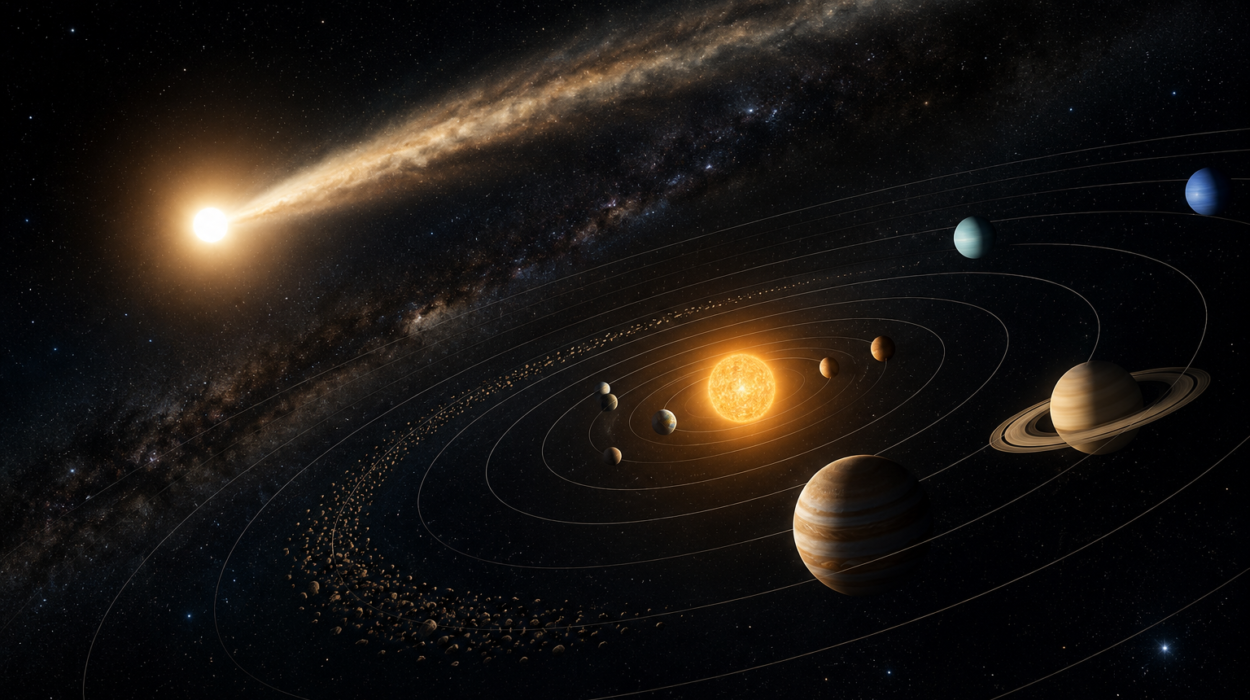
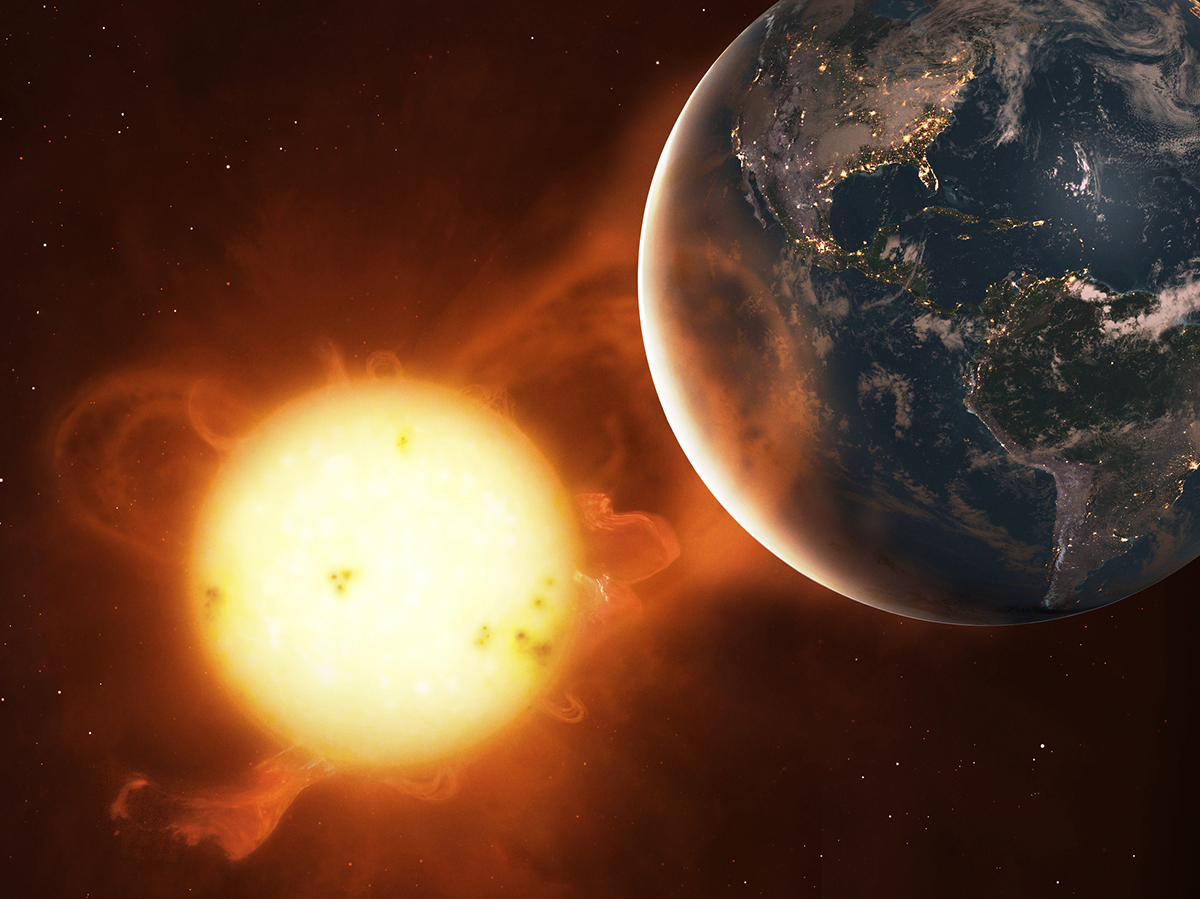
On average, Earth orbits about 149.6 million kilometers (93 million miles) away from the Sun.
When scientists divide this distance by the speed of light, the result is approximately 499 seconds, which equals about 8 minutes and 20 seconds.
The delay is simply the result of light needing time to cross an immense distance.
Understanding the Distance Between the Sun and Earth
The distance separating Earth from the Sun is so large that ordinary numbers quickly become difficult to imagine.
If you could drive a car nonstop at 100 kilometers per hour (62 mph), reaching the Sun would take well over 170 years.
A commercial airplane traveling around 900 kilometers per hour (560 mph) would need roughly 19 years to cover the same distance.
Even spacecraft require months to travel between Earth and the Sun’s neighborhood, depending on their mission.
Light, however, completes this incredible journey in just over eight minutes.
This comparison highlights not only the incredible speed of light but also the immense scale of our Solar System.
What Exactly Is Sunlight?
Sunlight is a form of electromagnetic radiation.
It includes visible light—the colors our eyes can detect—as well as invisible forms of energy such as infrared radiation, ultraviolet radiation, radio waves, microwaves, X-rays, and gamma rays.
The visible portion of sunlight is only a tiny fraction of the entire electromagnetic spectrum.
When sunlight reaches Earth, it provides the energy that powers nearly all life on our planet.
Plants use it during photosynthesis to produce food and oxygen.
It warms Earth’s surface, drives weather patterns, influences climate, and helps regulate biological clocks in living organisms.
Without sunlight, life as we know it could not exist.
Where Does Sunlight Come From?
The light emitted by the Sun is produced deep inside its core.
At the center of the Sun, temperatures reach approximately 15 million degrees Celsius (27 million degrees Fahrenheit).
Under these extreme conditions, hydrogen atoms collide with tremendous energy.
These collisions trigger nuclear fusion, a process in which hydrogen nuclei combine to form helium.
Fusion releases enormous amounts of energy according to Einstein’s famous equation:
E = mc²
This energy eventually escapes the Sun in the form of light and other radiation.
The Sun has been producing energy through nuclear fusion for about 4.6 billion years and is expected to continue doing so for roughly another 5 billion years.
The Long Journey Inside the Sun
One surprising fact is that the eight-minute journey to Earth is actually the final stage of a much longer adventure.
The energy created in the Sun’s core does not immediately escape into space.
Instead, newly produced photons repeatedly collide with particles inside the Sun’s incredibly dense interior.
Each collision changes a photon’s direction.
Rather than traveling straight outward, photons perform what scientists call a random walk.
Because of these countless interactions, the energy produced in the core may take tens of thousands to hundreds of thousands of years to gradually work its way to the Sun’s visible surface, known as the photosphere.
Only after reaching the photosphere does the light begin its rapid eight-minute journey through space to Earth.
So the sunlight shining on your skin today may represent energy that was originally generated deep inside the Sun many thousands of years ago.
Does the Travel Time Ever Change?
Yes, but only slightly.
Earth does not orbit the Sun in a perfect circle.
Instead, its orbit is slightly elliptical.
Because of this, the distance between Earth and the Sun changes throughout the year.
Around early January, Earth reaches perihelion, the point where it is closest to the Sun.
At this time, sunlight takes approximately 8 minutes and 10 seconds to arrive.
Around early July, Earth reaches aphelion, its farthest point from the Sun.
Then sunlight takes about 8 minutes and 30 seconds.
Although this variation is only about twenty seconds, it reflects the changing distance between Earth and the Sun during its yearly orbit.
Looking at the Sun Means Looking into the Past
Since light takes time to travel, astronomers often say that looking into space is looking back in time.
The Sun is the closest star to Earth, so we see it only about eight minutes in the past.
The Moon appears as it was about 1.3 seconds ago.
The nearest star beyond the Sun, Proxima Centauri, is about 4.24 light-years away.
This means we see it as it was more than four years ago.
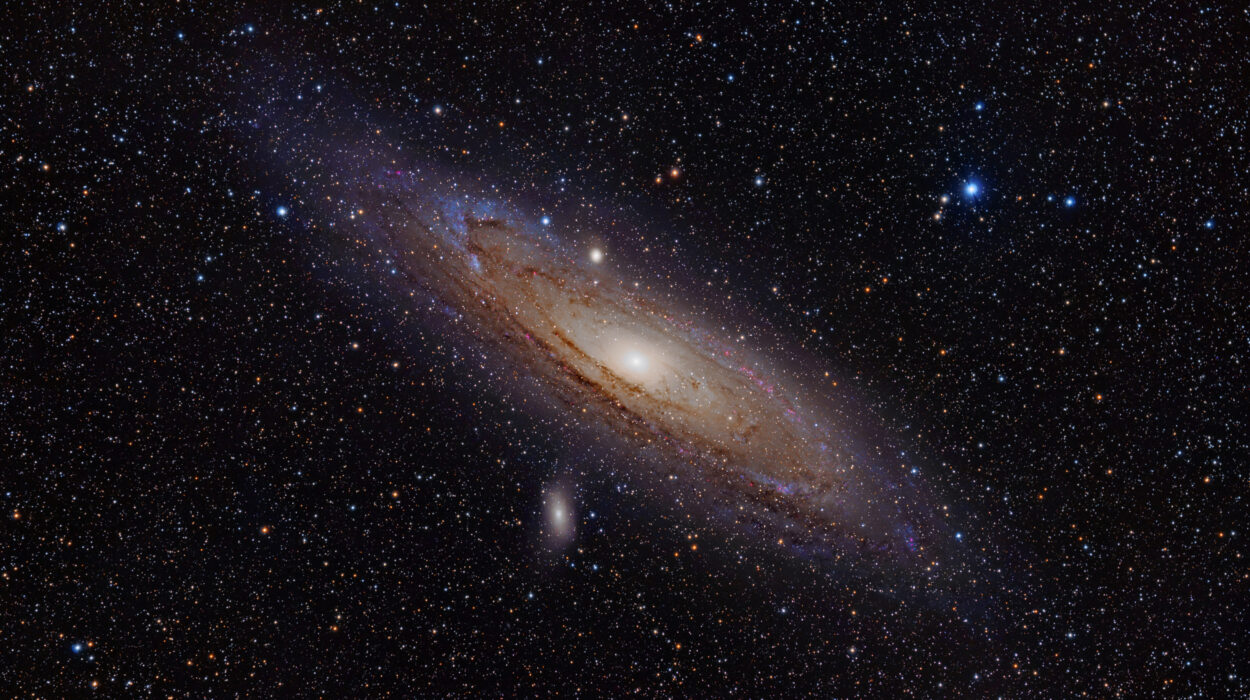
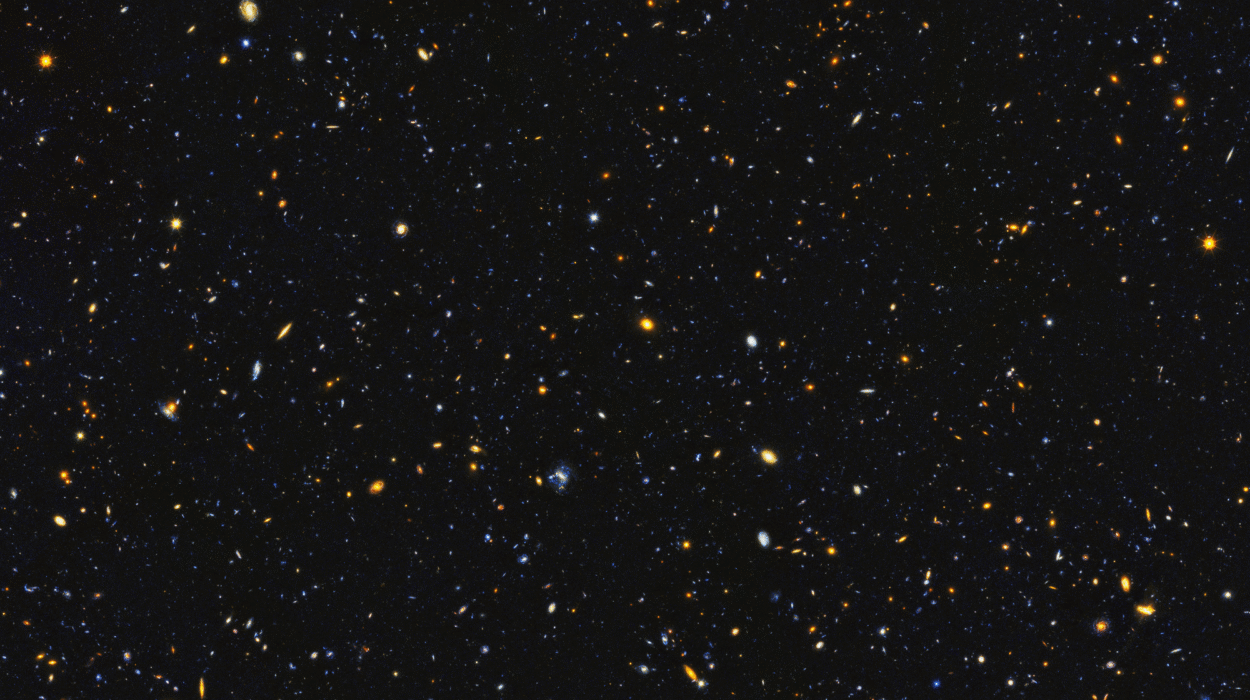
Many galaxies visible through large telescopes are millions or even billions of light-years away.
Some of the most distant galaxies observed today appear as they existed more than 13 billion years ago, when the universe was still very young.
Astronomy is unique among sciences because observing distant objects also reveals their history.
What Is a Light-Minute?
Scientists often describe distances in space using the distance light travels in a certain amount of time.
A light-second is the distance light travels in one second—about 300,000 kilometers (186,000 miles).
A light-minute is the distance light travels in one minute.
Since sunlight takes about 8.3 minutes to reach Earth, scientists sometimes say Earth is about 8.3 light-minutes away from the Sun.
For even greater distances, astronomers use the light-year, which is the distance light travels in one year.
A light-year equals approximately 9.46 trillion kilometers (5.88 trillion miles).
Despite its name, a light-year is a unit of distance, not time.
Why Light Doesn’t Travel Instantly
It might seem surprising that even light needs time to travel.
For centuries, many people believed light moved instantaneously.
However, careful observations eventually proved otherwise.
Today, Einstein’s theory of Special Relativity identifies the speed of light as one of the universe’s fundamental constants.
Nothing carrying information has been observed traveling faster than light in a vacuum.
This universal speed limit plays a central role in modern physics, affecting everything from the behavior of subatomic particles to the structure of space and time itself.
Does Sunlight Slow Down Near Earth?
The speed of light remains constant while traveling through the vacuum of space.
However, when sunlight enters Earth’s atmosphere, it passes through air rather than empty space.
Light travels slightly more slowly in air than in a vacuum because it interacts with air molecules.
This slowing is extremely small and adds only tiny fractions of a second to the journey.
For almost all practical purposes, scientists continue to describe sunlight’s travel time as approximately 8 minutes and 20 seconds.
How Scientists Measured the Speed of Light
Determining the speed of light was one of science’s greatest achievements.
In the seventeenth century, Danish astronomer Ole Rømer noticed that the eclipses of Jupiter’s moon Io occurred slightly earlier or later depending on Earth’s position in its orbit.
He realized this delay could only be explained if light required time to travel across space.
His observations provided the first convincing evidence that light has a finite speed.
Later experiments by scientists such as Armand Fizeau, Léon Foucault, and Albert A. Michelson measured the speed of light with increasing precision.
Today, the speed of light is known so accurately that it is used to define the length of the meter in the International System of Units (SI).
Why This Matters in Everyday Life
The eight-minute travel time of sunlight is not merely an interesting scientific fact.
It reflects a deeper truth about the universe.
Space is vast.
Light has a finite speed.
Information takes time to travel.
These ideas influence many technologies we depend upon every day.
Communication with spacecraft exploring Mars experiences delays because radio signals also travel at the speed of light.
GPS satellites must account for the behavior of light and relativity to provide accurate navigation.
Astronomers study ancient light arriving from distant galaxies to understand how the universe evolved over billions of years.
The simple question of how long sunlight takes to reach Earth opens the door to some of the most profound ideas in modern science.
What Would Happen If the Sun Suddenly Disappeared?
This question often sparks curiosity.
If the Sun could somehow disappear instantly—a hypothetical scenario that does not reflect any realistic physical process—Earth would not notice immediately.
For approximately 8 minutes and 20 seconds, sunlight would continue arriving because the light already on its way would keep traveling toward Earth.
According to Einstein’s theory of General Relativity, changes in the Sun’s gravitational influence would also propagate at the speed of light. As a result, Earth would continue orbiting as usual until information about the change had enough time to arrive.
Although purely hypothetical, this thought experiment illustrates that both light and changes in gravitational fields require time to travel across space.
The Journey That Makes Life Possible
Every ray of sunlight reaching Earth is the final chapter of an extraordinary journey. It begins with nuclear fusion deep inside the Sun, where immense pressure and temperature create the energy that will one day illuminate our world. That energy may spend thousands to hundreds of thousands of years slowly making its way through the Sun before finally escaping into space. Then, traveling at nearly 300,000 kilometers per second, it crosses the 149.6 million kilometers separating the Sun from Earth in just 8 minutes and 20 seconds.
Those few minutes connect our planet to its star. They warm the oceans, drive the winds, nourish forests, power photosynthesis, and make every sunrise possible. The next time you step into the morning sunshine, remember that the light touching your face began its journey across space more than eight minutes ago—and its story began deep within the heart of the Sun long before that.