On a clear night, the Solar System can seem timeless. The Moon rises just as it has for countless generations. The planets follow familiar paths across the sky. The Sun rises every morning with remarkable consistency, making it easy to imagine that our cosmic neighborhood has always looked this way—and always will.
But that impression is an illusion.
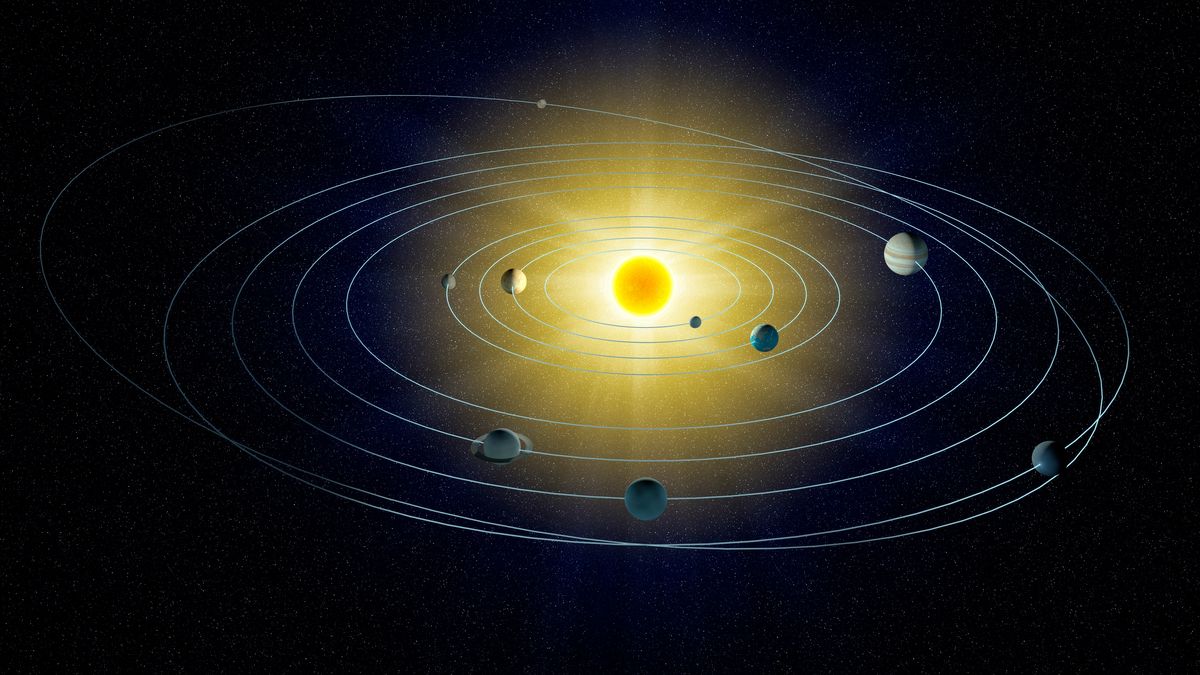
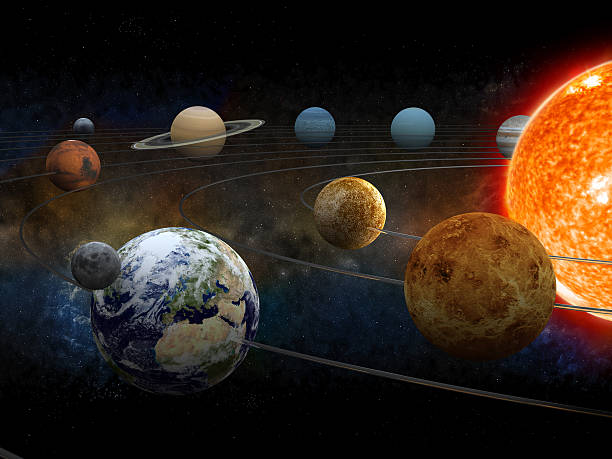
The Solar System is anything but permanent. It is a dynamic, evolving system that has been changing for more than 4.6 billion years, and it will continue to change for billions of years to come. Planets slowly drift in their orbits, asteroids collide, comets appear and disappear, the Sun steadily grows brighter, and distant gravitational forces constantly reshape the architecture of our celestial neighborhood.
Even though these changes often happen over millions or billions of years—far longer than a human lifetime—they are very real. In fact, the Solar System of the distant future will look dramatically different from the one we know today.
The Solar System Has Never Been Static
The Solar System did not begin with neat rows of planets circling the Sun.
Around 4.6 billion years ago, it formed from a giant cloud of gas and dust called the solar nebula. Gravity caused this cloud to collapse, creating the young Sun at its center. The remaining material flattened into a spinning disk, where countless tiny dust grains collided and stuck together.
Over millions of years, these particles grew into larger rocks, then into planetesimals, and eventually into the planets we know today.
The early Solar System was a violent place. Newly forming planets frequently collided with one another. Some worlds were destroyed, while others merged into larger bodies. One enormous collision between the young Earth and a Mars-sized object likely created the Moon.
The peaceful Solar System we see today is the result of billions of years of gradual evolution.
The Planets Are Still Moving
Although planetary orbits appear perfectly stable, they are not fixed forever.
Every planet exerts a gravitational pull on every other planet. These tiny influences slowly alter the shapes and orientations of their orbits over time.
The changes are extremely small over a single year, but over millions of years they become noticeable. Planetary orbits slowly stretch, shrink, tilt, and rotate because of these continuous gravitational interactions.
Astronomers use powerful computer simulations to study these long-term effects. Most calculations indicate that the Solar System is likely to remain stable for billions of years, although predicting planetary motions over extremely long periods becomes increasingly difficult because the system is chaotic. In this context, “chaotic” does not mean random—it means that tiny differences in starting conditions can eventually lead to significantly different outcomes.
Even so, the chance of a major planetary collision within the Sun’s remaining lifetime is considered very small.
The Sun Is Slowly Changing
The biggest source of future change is the Sun itself.
Although it appears constant from day to day, the Sun is gradually evolving.
At its core, hydrogen atoms fuse into helium, releasing enormous amounts of energy. This nuclear fusion powers sunlight and keeps the Sun shining.
As hydrogen is consumed, the Sun’s core slowly changes. Over time, the core becomes denser and hotter, causing the Sun to produce more energy.
This means the Sun is gradually becoming brighter.
Scientists estimate that the Sun’s brightness increases by roughly 10 percent every billion years. That may not sound dramatic, but over geological timescales it has enormous consequences.
Earth Will Become Less Habitable
As the Sun grows brighter, Earth will receive more energy.
Higher temperatures will increase evaporation from oceans and lakes. More water vapor will enter the atmosphere, strengthening the greenhouse effect and causing additional warming.
Eventually, the oceans may begin to disappear.
Long before the Sun reaches the end of its life, Earth’s climate is expected to become increasingly hostile for complex life.
Scientists estimate that in roughly one to two billion years, Earth’s surface may become too warm to support the kinds of ecosystems that exist today. Oceans could gradually evaporate, leaving a much hotter and drier world.
Life, if it survives at all, would likely be limited to microorganisms living in protected environments.
The Moon Is Slowly Moving Away
One of the most surprising ongoing changes is happening much closer to home.
The Moon is slowly drifting away from Earth.
Measurements made using laser reflectors left on the Moon by Apollo astronauts show that the Moon moves away by about 3.8 centimeters (1.5 inches) each year.
This happens because tidal interactions transfer Earth’s rotational energy to the Moon’s orbit.
As the Moon moves farther away, Earth’s rotation also slows slightly. Millions of years ago, days on Earth were much shorter than today’s 24 hours.
Hundreds of millions of years into the future, the Moon will appear slightly smaller in our sky, and Earth’s days will continue to become longer.
Asteroids and Comets Continue to Shape the Solar System
The Solar System is filled with countless smaller objects.
Millions of asteroids orbit primarily between Mars and Jupiter.
Comets spend much of their time in distant icy regions before occasionally visiting the inner Solar System.
These objects sometimes collide with planets and moons.
Most impacts today involve small rocks that burn up in Earth’s atmosphere as meteors.
Larger impacts are much rarer but can have enormous consequences.
The asteroid impact that contributed to the extinction of the non-avian dinosaurs about 66 million years ago is one famous example.
Future impacts are inevitable, although predicting exactly when and where they will occur is impossible.
Planetary Surfaces Never Stop Changing
Even seemingly lifeless worlds continue to evolve.
Mars experiences dust storms that can engulf the entire planet.
Venus remains volcanically active according to growing scientific evidence from spacecraft observations.
Jupiter’s colorful clouds constantly shift and swirl, while giant storms can last for centuries before eventually changing or disappearing.
Saturn’s rings are also evolving.
Data from NASA’s Cassini spacecraft suggest that Saturn’s rings are slowly losing material as tiny particles fall into the planet. Over hundreds of millions of years, the rings may become much thinner or even disappear entirely.
The Solar System is always in motion, even when those changes are subtle.
The Outer Solar System Is Also Evolving
Far beyond Neptune lies a vast region filled with icy bodies.
This area includes the Kuiper Belt, home to dwarf planets like Pluto, and the even more distant Oort Cloud, thought to contain trillions of icy objects.
Occasionally, the gravity of passing stars or the tidal forces of our galaxy disturb these distant bodies.
Some are sent toward the inner Solar System, where they become long-period comets visible from Earth.
Others may be ejected into interstellar space forever.
Even the most distant parts of the Solar System are influenced by the wider Milky Way.
Planets Can Migrate
One of the biggest discoveries in planetary science is that planets do not necessarily stay where they formed.
Evidence suggests that the giant planets in our Solar System migrated during their early history.
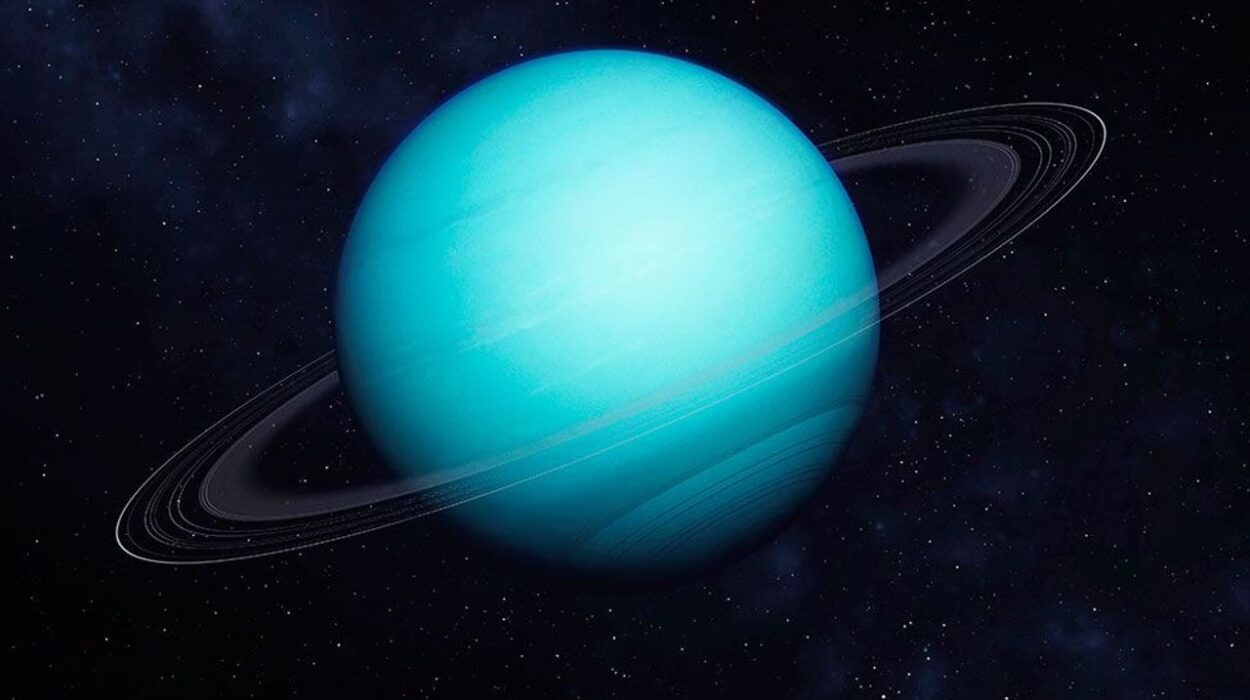
Jupiter, Saturn, Uranus, and Neptune likely moved from their original positions through gravitational interactions with countless smaller bodies.
This migration may explain many features of today’s Solar System, including the distribution of asteroids and the structure of the Kuiper Belt.
Astronomers have also discovered many exoplanetary systems where giant planets orbit extremely close to their stars, providing further evidence that planetary migration is a common process throughout the universe.
The Sun Will Become a Red Giant
The most dramatic future change will occur about five billion years from now.
By then, the Sun will have exhausted most of the hydrogen fuel in its core.
Without sufficient hydrogen fusion, the core will contract while the outer layers expand enormously.
The Sun will transform into a red giant.
Its diameter will grow hundreds of times larger than it is today.
Mercury will almost certainly be engulfed.
Venus will also disappear inside the expanding Sun.
The fate of Earth is less certain. Current models suggest that Earth may either be swallowed by the expanding Sun or survive in a greatly altered orbit as the Sun loses mass. Regardless of the exact outcome, Earth’s surface will become completely uninhabitable long before this stage.
The familiar Solar System will be transformed beyond recognition.
The Sun Will Eventually Become a White Dwarf
The red giant phase will not last forever.
Eventually, the Sun will shed its outer layers into space, creating a beautiful glowing cloud known as a planetary nebula.
The remaining core will become a white dwarf.
Although only about the size of Earth, this stellar remnant will contain roughly half the Sun’s original mass.
It will no longer produce energy through nuclear fusion.
Instead, it will slowly cool over billions and eventually trillions of years.
The surviving planets, if any remain, will orbit a dim, cooling stellar ember instead of the bright Sun we know today.
Could Another Star Disturb the Solar System?
The stars in our galaxy are constantly moving.
Over immense spans of time, other stars occasionally pass relatively close to the Solar System.
Most pass too far away to have much effect.
However, an unusually close encounter could disturb distant icy bodies in the Oort Cloud, increasing the number of comets entering the inner Solar System.
Such encounters are rare, but they are a natural part of the Solar System’s long-term evolution as it travels around the Milky Way.
Could New Planets Appear?
Unlike the early Solar System, there is no large disk of gas and dust left to build entirely new planets.
The era of planet formation ended billions of years ago.
However, dwarf planets continue to be discovered, especially in the distant Kuiper Belt.
Astronomers are also investigating whether an undiscovered large planet—often called Planet Nine—might exist far beyond Neptune. So far, no direct observational evidence has confirmed its existence, making it an intriguing but unproven hypothesis.
Future discoveries may change our understanding of the Solar System’s outer regions, but they would not represent newly formed planets.
The Solar System Is Part of a Larger Galaxy
Our Solar System does not remain fixed in the Milky Way.
It orbits the center of the galaxy at roughly 220 kilometers per second.
Completing one galactic orbit takes about 225 to 250 million years.
During this journey, the Solar System passes through different regions of the galaxy, encountering varying concentrations of stars, gas, and dust.
These galactic motions subtly influence the Solar System over immense timescales and remind us that even our entire planetary system is traveling through space.
Change Is the Natural State of the Universe
It is easy to think of the Solar System as permanent because human lives are so short compared with cosmic time.
The mountains on Earth, the Moon in the night sky, and the familiar arrangement of the planets seem eternal.
But the universe tells a different story.
Stars are born and die.
Planets evolve.
Moons drift.
Asteroids collide.
Galaxies merge.
Nothing in the cosmos remains exactly the same forever.
The Solar System has already experienced billions of years of remarkable transformation, and its greatest changes still lie ahead.
A Cosmic Story Still Being Written
The Solar System is not a finished masterpiece frozen in time. It is an ever-changing cosmic story that continues to unfold with every passing second. The same physical laws that built the planets, ignited the Sun, and shaped Earth’s history are still at work today, quietly guiding the future of our celestial neighborhood.
Although many of these changes occur so slowly that they are invisible within a human lifetime, they remind us that the universe is alive with motion and evolution. Every sunrise, every planetary orbit, every passing comet, and every distant star is part of a grand cosmic process that has been unfolding for billions of years.
Far from remaining unchanged, the Solar System is constantly becoming something new. And as scientists continue exploring the universe with increasingly powerful telescopes and spacecraft, we are discovering that change is not the exception in the cosmos—it is the rule.