On a clear night, the Moon often steals the show. It hangs quietly in the sky, changing shape from one night to the next and inspiring stories, poems, and scientific discoveries for thousands of years. Because Earth has only one natural moon, it is easy to assume that every planet has just one as well.
But the Solar System tells a very different story.
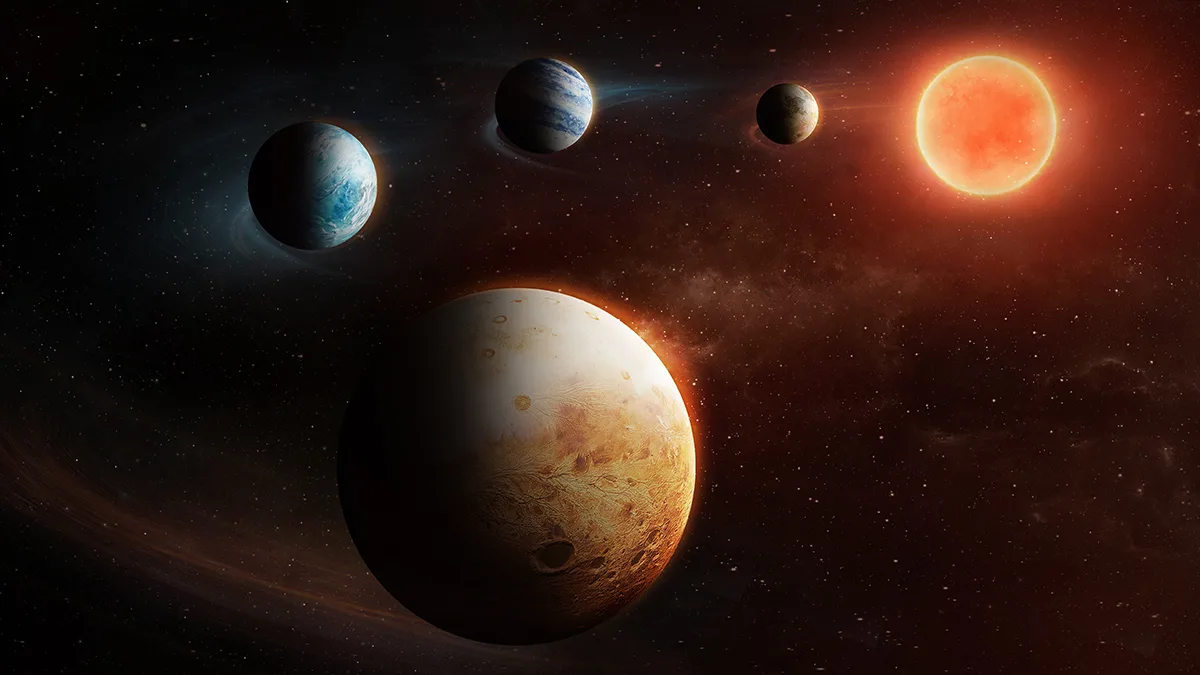
Mercury and Venus have no moons at all. Earth has one. Mars has two tiny moons. Then the numbers suddenly explode. Jupiter has nearly a hundred known moons, Saturn has even more, and Uranus and Neptune also host large families of natural satellites.
Why is there such a dramatic difference? Why does one planet have no moons while another has dozens or even hundreds?
The answer lies in the fascinating history of how planets formed, how gravity works, and how billions of years of cosmic evolution shaped our Solar System.
What Is a Moon?
A moon, also called a natural satellite, is an object that orbits a planet or another larger body under the influence of gravity. Unlike artificial satellites built by humans, natural moons formed through natural processes over billions of years.
Moons come in many shapes and sizes.
Some are small, irregular chunks of rock only a few kilometers across. Others are enormous worlds in their own right. Jupiter’s moon Ganymede, for example, is larger than the planet Mercury. Saturn’s moon Titan has rivers, lakes, rain, and a thick atmosphere, while Jupiter’s moon Europa likely hides a vast ocean beneath its icy surface.
Every moon has its own unique story.
Gravity Is the Biggest Reason
The most important factor that determines how many moons a planet can have is gravity.
Gravity is the force that pulls objects toward one another. The more massive a planet is, the stronger its gravitational pull.
Large planets act like powerful cosmic magnets. They can capture passing objects, hold onto moons over billions of years, and keep many satellites orbiting safely around them.
Small planets have much weaker gravity.
Because of this, they struggle to capture or retain large numbers of moons. Passing objects are more likely to continue their journey through space instead of becoming permanent companions.
This simple difference explains much of the contrast between the giant planets and the smaller rocky planets.
Giant Planets Are Moon Magnets
The four giant planets—Jupiter, Saturn, Uranus, and Neptune—are incredibly massive.
Jupiter alone contains more than twice the mass of all the other planets combined. Its enormous gravity dominates a huge region of space.
When the Solar System was young, countless rocks, icy bodies, and small planetary building blocks were moving around the Sun. Giant planets were able to capture many of these objects, turning them into moons.
Even today, Jupiter and Saturn continue to influence nearby asteroids and comets through their powerful gravity.
Their immense gravitational reach allows them to maintain large systems of natural satellites.
Small Planets Have Less Gravitational Power
Earth is much smaller than Jupiter.
Mars is even smaller.
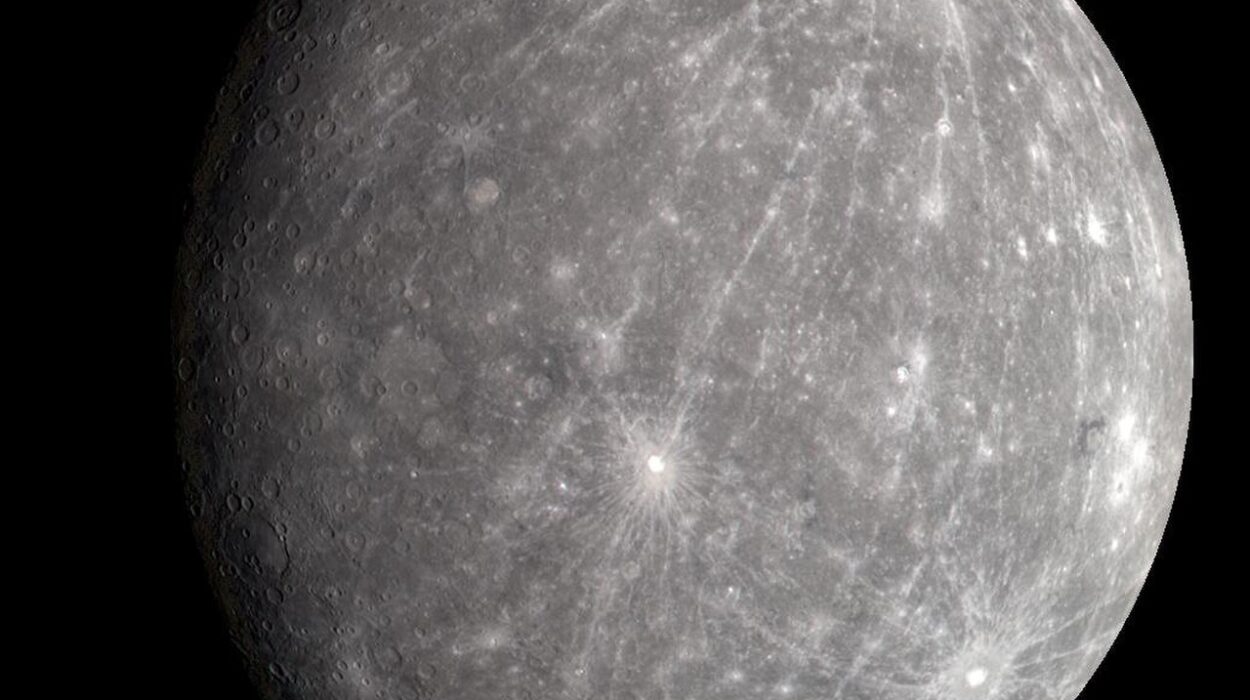
Mercury is smaller still.
Because these planets have weaker gravity, they cannot easily gather or hold many moons.
Mercury, being very close to the Sun, faces an additional challenge. The Sun’s gravity is so strong nearby that it makes it extremely difficult for Mercury to keep a stable moon in orbit.
Venus also has no known natural moons. Scientists think that if Venus once had a moon, gravitational interactions over billions of years may have caused it to collide with the planet or escape into space.
Earth has only one moon, but it is unusually large compared with the size of our planet.
Not Every Moon Was Born the Same Way
One surprising discovery is that moons do not all form in the same manner.
Some moons formed alongside their planets from disks of gas, dust, and ice during the early history of the Solar System.
Others were captured later.
Some were created after enormous collisions.
These different origins explain why moons vary so much in size, shape, and composition.
Understanding how moons form helps explain why some planets ended up with large collections while others did not.
Some Moons Formed Alongside Their Planets
Around young giant planets, swirling disks of gas and dust once existed much like the disk surrounding the young Sun.
Within these smaller disks, new moons gradually formed.
Tiny particles stuck together.
Small rocks became larger bodies.
Eventually, fully formed moons emerged.
This process is similar to how planets themselves formed around the Sun.
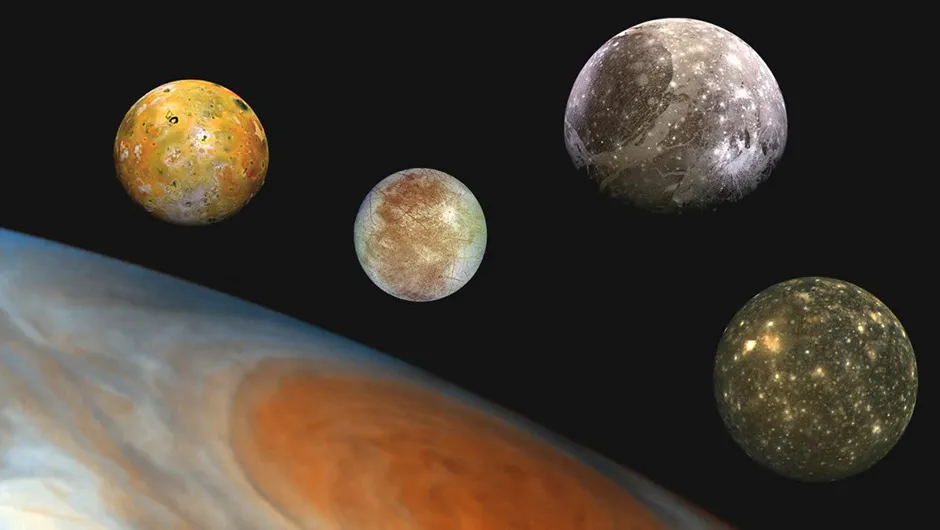
Many of Jupiter’s largest moons—including Io, Europa, Ganymede, and Callisto—likely formed this way.
Saturn’s largest regular moons probably have a similar origin.
Some Moons Were Captured
Not every moon formed near its planet.
Some were wandering objects traveling through space.
If such an object passed close enough to a planet under the right conditions, gravity could trap it into orbit.
These are called captured moons.
Captured moons often have unusual orbits.
Instead of moving in the same direction as the planet rotates, some orbit backward. Others travel in highly tilted or elongated paths.
These strange orbital patterns reveal clues about their dramatic past.
Many of the smaller outer moons of Jupiter, Saturn, Uranus, and Neptune are thought to have been captured objects.
Earth’s Moon Has a Dramatic Origin
Earth’s moon likely formed in a completely different way.
According to the Giant Impact Hypothesis, about 4.5 billion years ago, a Mars-sized object collided with the young Earth.
The collision was unimaginably powerful.
Huge amounts of rock were blasted into space.
Over time, this debris came together under gravity, eventually forming the Moon.
Evidence supporting this idea comes from the similarities between Earth rocks and Moon rocks, as well as computer simulations of giant impacts.
Although researchers continue refining the details, this remains the leading scientific explanation for the Moon’s origin.
Mars Has Two Tiny Moons
Mars has two small moons called Phobos and Deimos.
Unlike Earth’s large Moon, these moons are tiny and oddly shaped.
Many scientists think they may have originated from captured asteroids or from debris produced by an ancient impact involving Mars.
Phobos is gradually moving closer to Mars.
In tens of millions of years, it is expected either to break apart due to tidal forces or crash into the planet.
Even moons can have changing futures.
Jupiter’s Huge Family of Moons
Jupiter is truly the king of moons.
Its immense gravity allows it to hold an extraordinary number of natural satellites.
Some are large enough to resemble small planets.
Others are tiny irregular rocks only a few kilometers wide.
The four largest moons, discovered by Galileo Galilei in 1610, transformed our understanding of the universe.
Their motion around Jupiter showed that not everything revolves around Earth, providing powerful evidence in support of the Sun-centered model of the Solar System.
These four moons remain among the most scientifically fascinating worlds known today.
Saturn Has Even More
Saturn may be best known for its spectacular rings, but it also possesses an enormous collection of moons.
Many are small icy objects.
Some may even have formed from material associated with Saturn’s rings.
Titan, Saturn’s largest moon, is especially remarkable.
It has a dense atmosphere, rivers, lakes, clouds, rain, and dunes. However, unlike Earth, these rivers and lakes are made primarily of liquid methane and ethane rather than water.
Another moon, Enceladus, sprays enormous plumes of water vapor and ice into space from an underground ocean. These discoveries make Saturn’s moons exciting places in the search for environments that could potentially support microbial life.
Why Do Scientists Keep Discovering New Moons?
The number of known moons around the giant planets keeps increasing.
Does this mean new moons are constantly appearing?
Not at all.
Instead, our telescopes continue improving.
Many newly discovered moons are extremely small and faint.
Earlier generations of telescopes simply could not detect them.
Modern observatories, powerful digital cameras, and advanced image-processing techniques now allow astronomers to identify tiny moons that were once invisible.
As technology continues advancing, even more moons may be discovered.
The Role of Distance from the Sun
A planet’s location within the Solar System also matters.
The giant planets formed far from the Sun, where enormous amounts of ice were available during planetary formation.
This gave them access to much more building material than the inner rocky planets.
In addition, the Sun’s gravitational influence is weaker at these greater distances, making it somewhat easier for giant planets to retain distant moons.
Closer to the Sun, maintaining stable moon orbits can be more difficult.
Collisions Have Changed Moon Systems
The Solar System has never been completely peaceful.
Throughout its history, countless collisions have occurred.
Asteroids struck planets.
Moons collided with one another.
Some objects shattered into pieces.
Others merged together.
Some moons were completely destroyed.
These violent events have continually reshaped planetary systems.
Even today, impacts occasionally occur, although they are far less common than during the Solar System’s earliest history.
Rings and Moons Are Closely Connected
Planetary rings and moons are surprisingly connected.
Sometimes a moon breaks apart, creating rings.
In other cases, material within rings may gradually gather together to form small moons.
Gravity continuously influences these processes.
Scientists believe Saturn’s magnificent rings and its moons have evolved together over hundreds of millions of years, with material moving between them through complex gravitational interactions.
Could Earth Ever Capture Another Moon?
In theory, Earth’s gravity can temporarily capture small asteroids.
In fact, this has happened before.
Occasionally, a small asteroid becomes briefly trapped by Earth’s gravity and orbits our planet for a short period before escaping back into space.
However, permanently capturing a large moon is extremely unlikely under present conditions.
Stable capture generally requires energy to be removed from the incoming object’s motion, which is difficult without additional gravitational interactions or other mechanisms.
So Earth’s single Moon will almost certainly remain our planet’s primary natural satellite for the foreseeable future.
Do Other Solar Systems Have Moons?
Astronomers have discovered thousands of planets orbiting other stars.
These worlds are called exoplanets.
If planets around other stars formed in ways similar to those in our Solar System, many of them should also possess moons.
Scientists call these hypothetical worlds exomoons.
Detecting exomoons is extremely challenging because they are small and distant.
Although researchers have identified a few intriguing candidates, no exomoon has yet been confirmed beyond doubt.
Finding one would provide valuable insights into how planetary systems form throughout the galaxy.
Why Studying Moons Matters
Moons are far more than companions to planets.
They preserve clues about the earliest history of the Solar System.
Their surfaces record ancient impacts.
Their interiors reveal how planets evolved.
Some contain hidden oceans.
Others possess active volcanoes or thick atmospheres.
By studying moons, scientists learn not only about individual worlds but also about the processes that shaped our entire planetary neighborhood.
Future space missions will continue exploring these remarkable places, searching for new discoveries and perhaps even environments where life could exist.
Every Planet Has Its Own Story
There is no single rule that determines exactly how many moons a planet should have.
Instead, each planet’s moon system reflects its unique history.
Its size.
Its gravity.
Its distance from the Sun.
Its formation.
Its collisions.
Its ability to capture passing objects.
Together, these factors have created the astonishing diversity we see today.
Some planets travel alone through space.
Others journey alongside dozens or even hundreds of natural companions.
Each moon is a chapter in the story of its planet, and together they reveal that the Solar System is far more dynamic, complex, and beautiful than anyone could have imagined.