Have you ever watched the Sun rise in the morning and wondered why it appears to move across the sky? Or looked up at the stars at night and noticed them slowly drifting overhead? It feels as though the sky is moving around us, but the truth is even more fascinating: our planet is spinning.
Earth is constantly rotating, completing one full turn roughly every 24 hours. This rotation creates the cycle of day and night, influences weather patterns, and even slightly changes the shape of our planet. But Earth is not unique. Every planet in our Solar System rotates, from tiny Mercury to giant Jupiter. Some spin slowly, some incredibly fast, and one even rotates backward compared to most of the others.
This naturally raises an intriguing question: Why do planets rotate at all?
The answer takes us back more than 4.5 billion years, to a time before the planets existed, when the Solar System was nothing more than a vast cloud of gas and dust floating through space.
The Solar System Began as a Giant Cloud
Long before Earth, Mars, or Jupiter formed, our Solar System existed as part of an enormous cloud called a molecular cloud. This cloud was made mostly of hydrogen and helium gas, along with tiny grains of dust produced by earlier generations of stars.
For millions of years, this cloud drifted quietly through the Milky Way Galaxy. Then something disturbed it. Perhaps the shock wave from a nearby supernova or the gravitational pull of another passing cloud caused part of it to collapse under its own gravity.
As gravity pulled the cloud inward, something remarkable happened.
The cloud began to spin.
At first, the rotation may have been incredibly slow—so slow that it would have been impossible to notice. But even the tiniest amount of rotation would become important as the cloud continued collapsing.
This gentle spin would eventually determine the motion of every planet in the Solar System.
Gravity Started the Collapse
Gravity is the force that attracts objects with mass toward one another. Once the cloud began collapsing, gravity pulled more and more material toward the center.
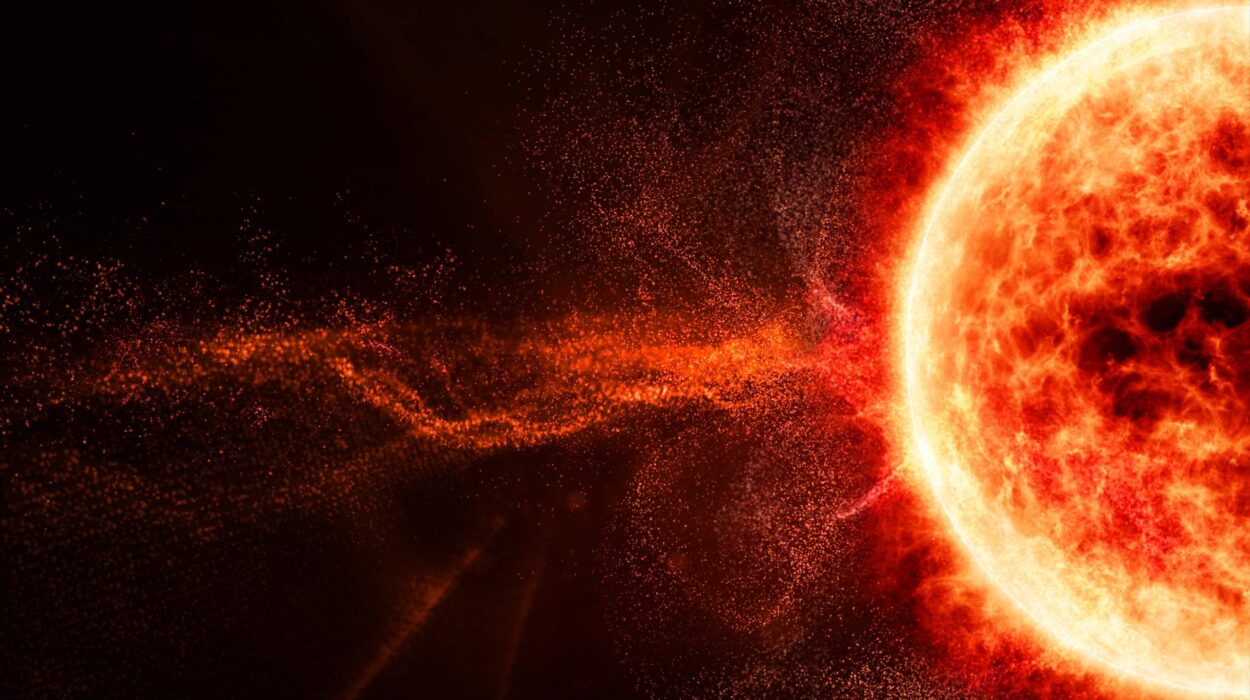
As the cloud became smaller, its density increased. More gas and dust gathered together, eventually forming the young Sun at the center.
Around the growing Sun, the remaining material flattened into a rotating disk known as the protoplanetary disk.
Inside this spinning disk, countless tiny dust particles collided, stuck together, and gradually grew into larger rocks. These rocks merged into planetesimals, then protoplanets, and finally the planets we know today.
Because all this material was already moving around the Sun, the forming planets naturally inherited some of that motion.
But why did their spinning become faster?
The answer lies in one of the most important principles in physics.
The Conservation of Angular Momentum
One of the fundamental laws of nature is called the conservation of angular momentum.
Although the name sounds complicated, the idea is surprisingly easy to understand.
Imagine a figure skater spinning on ice. When the skater stretches out their arms, they rotate more slowly. When they pull their arms close to their body, they suddenly spin much faster.
Nothing is pushing the skater to rotate faster. Instead, because their mass is now closer to the center, the speed of rotation naturally increases.
The collapsing cloud that formed the Solar System behaved in a similar way.
As gravity pulled the cloud inward, its size shrank dramatically. Since angular momentum had to remain nearly constant, the cloud spun faster and faster.
By the time the planets began forming, the entire disk was already rotating rapidly.
Each growing planet inherited some of that spinning motion.
This is why planets rotate today.
Planets Continued Spinning as They Grew
The young Solar System was a chaotic place.
Countless rocks, icy bodies, and clouds of gas collided constantly.
Every collision added material to the growing planets.
These impacts did more than simply increase a planet’s size.
Many collisions struck the young planets at angles rather than straight on. These sideways impacts acted like giant pushes, increasing or changing the planet’s rotation.
Over millions of years, billions of impacts helped shape each planet’s final spin.
Some collisions sped planets up.
Others slowed them down.
A few even changed the direction of rotation entirely.
Why Earth Spins Once Every Day
Earth completes one full rotation in about 23 hours, 56 minutes, and 4 seconds relative to distant stars. This period is called a sidereal day.
However, because Earth also moves around the Sun, the familiar solar day—from one noon to the next—is about 24 hours.
At the equator, Earth’s surface moves at approximately 1,670 kilometers (1,040 miles) per hour due to rotation.
Although this sounds incredibly fast, we do not feel the motion because everything around us—including the atmosphere—is rotating along with the planet.
Earth’s rotation has gradually slowed over billions of years.
The main reason is the gravitational interaction between Earth and the Moon.
The Moon Is Slowly Slowing Earth Down
The Moon’s gravity creates tides in Earth’s oceans.
As Earth rotates, these tidal bulges are pulled slightly ahead of the Earth-Moon line because our planet spins faster than the Moon orbits.
This creates a tiny gravitational tug that transfers some of Earth’s rotational energy to the Moon’s orbit.
As a result, two things happen.
Earth’s rotation slows by about 1.7 milliseconds per century.
At the same time, the Moon slowly moves away from Earth at roughly 3.8 centimeters (1.5 inches) each year.
Billions of years ago, Earth rotated much faster than it does today.
Scientists estimate that a day on the young Earth may have lasted only about six to ten hours.
Why Do Different Planets Spin at Different Speeds?
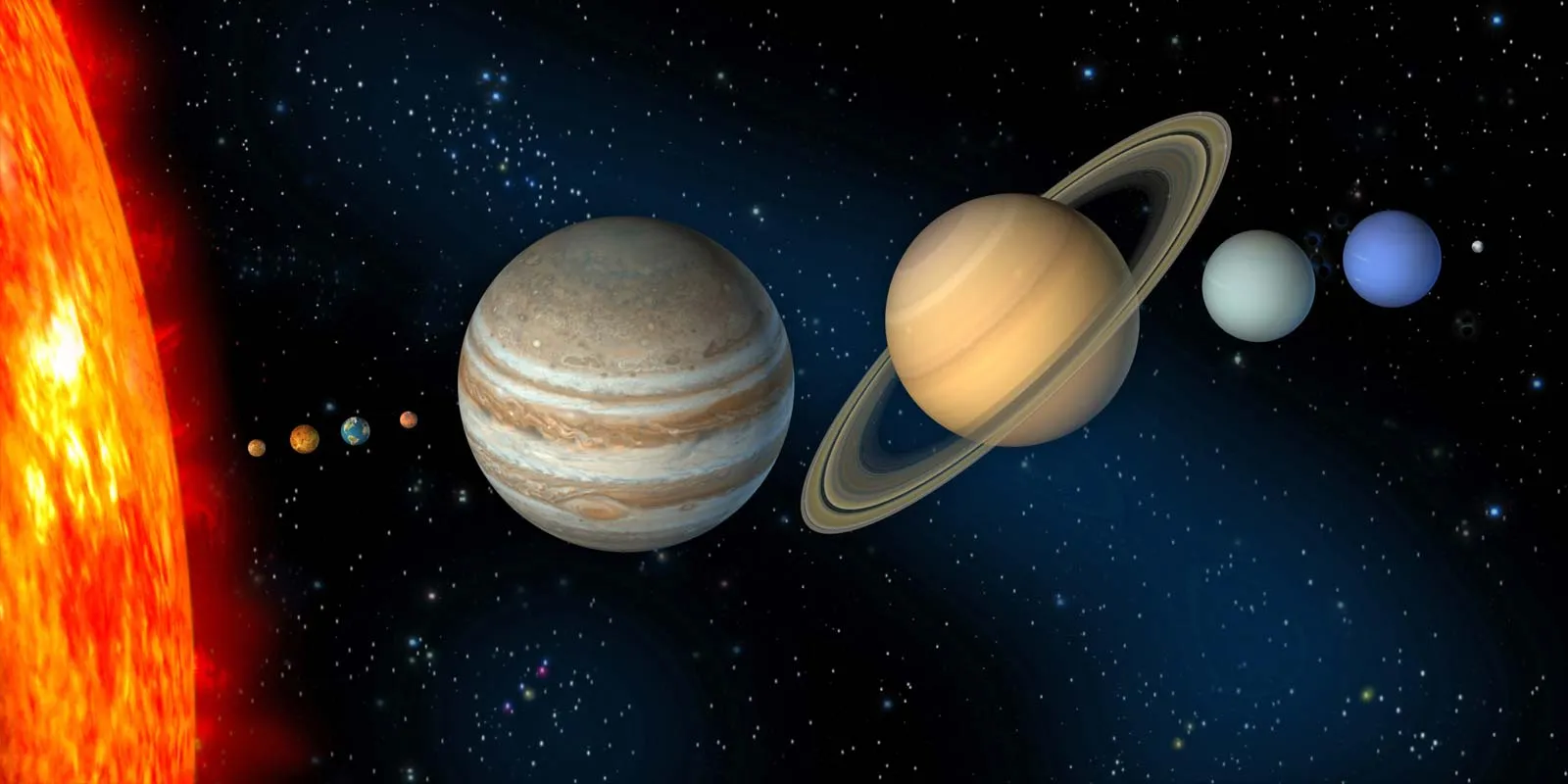
Although every major planet rotates, they do not all spin at the same rate.
Their different rotation speeds reflect the unique events each experienced during formation.
Jupiter is the fastest-spinning planet in the Solar System.
Despite being more than eleven times wider than Earth, it completes one rotation in just under ten hours.
This rapid spin causes Jupiter to bulge noticeably around its equator.
Saturn also rotates very quickly, completing one day in about ten and a half hours.
Earth rotates once every 24 hours.
Mars has a day remarkably similar to Earth’s, lasting about 24 hours and 37 minutes.
Mercury rotates much more slowly.
One day on Mercury lasts about 59 Earth days.
Venus is even slower.
A single rotation takes about 243 Earth days, making its day longer than its year.
These differences arose from variations in planet formation, collisions, gravitational interactions, and tidal effects.
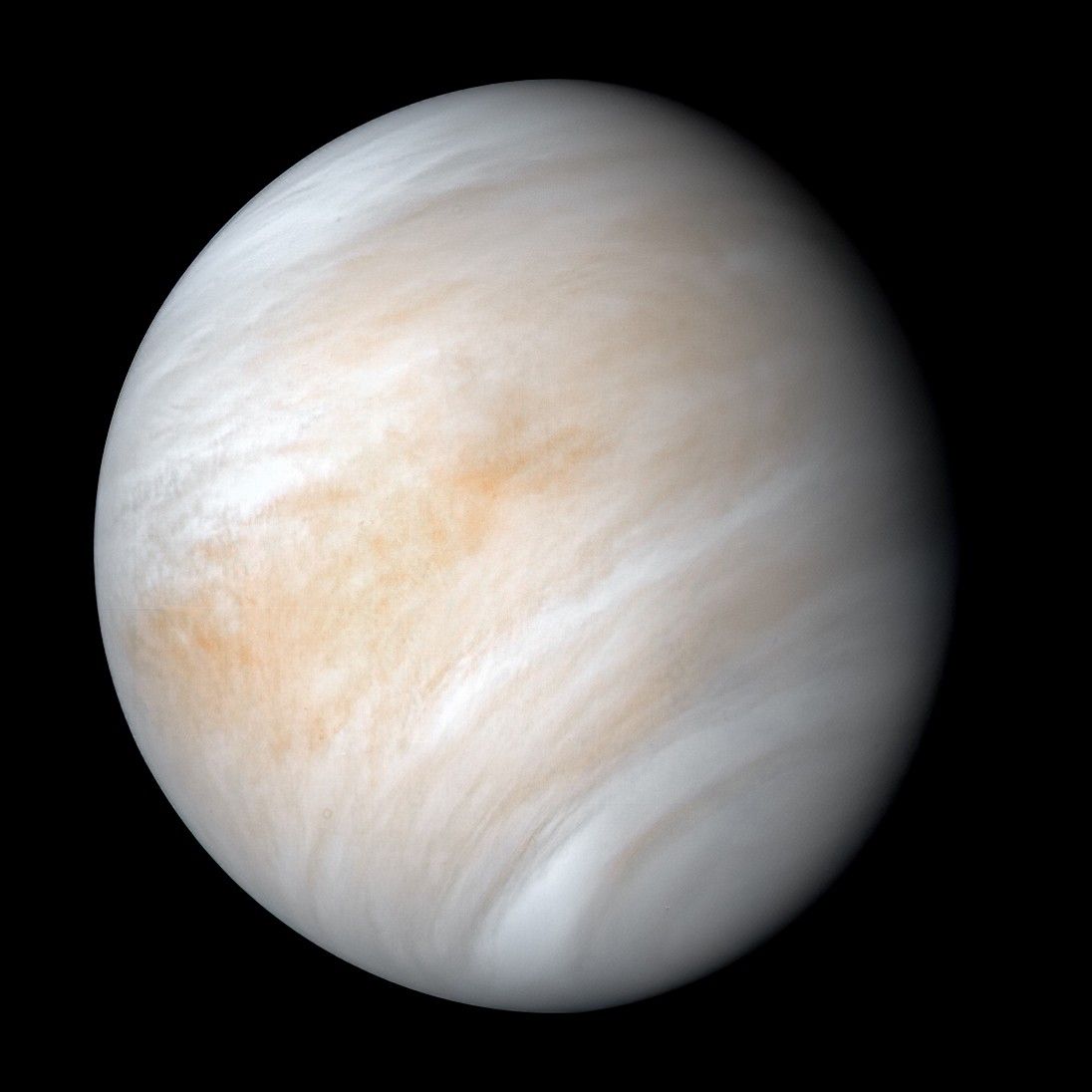
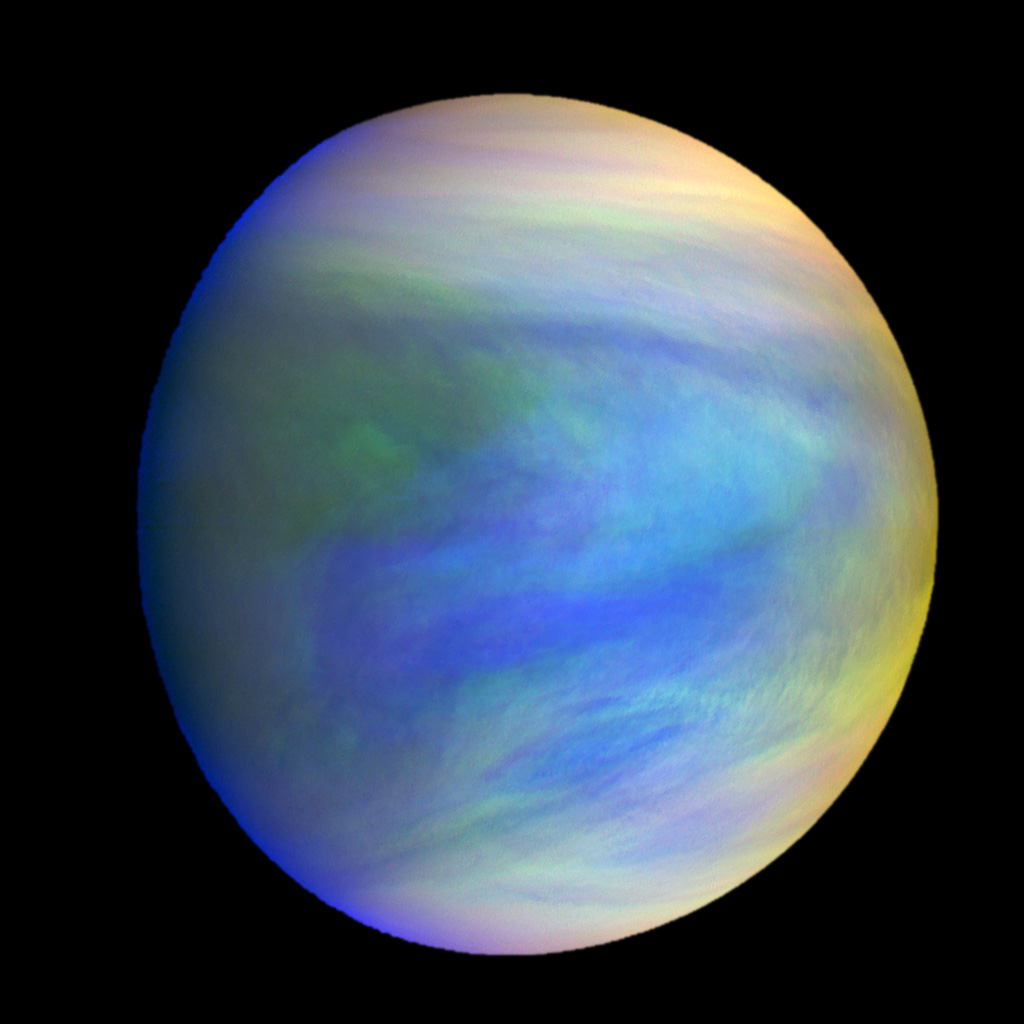
Why Does Venus Rotate Backward?
Venus is one of the strangest planets in the Solar System.
Most planets rotate in the same direction that they orbit the Sun.
Venus does the opposite.
This backward motion is called retrograde rotation.
If you stood on Venus, the Sun would appear to rise in the west and set in the east.
Scientists are still studying exactly why this happened.
One possibility is that Venus experienced one or more enormous collisions early in its history that dramatically altered its spin.
Another idea suggests that long-term gravitational interactions involving its dense atmosphere and the Sun gradually reversed its rotation.
Regardless of the exact cause, Venus demonstrates that planetary rotation can change dramatically under the right circumstances.
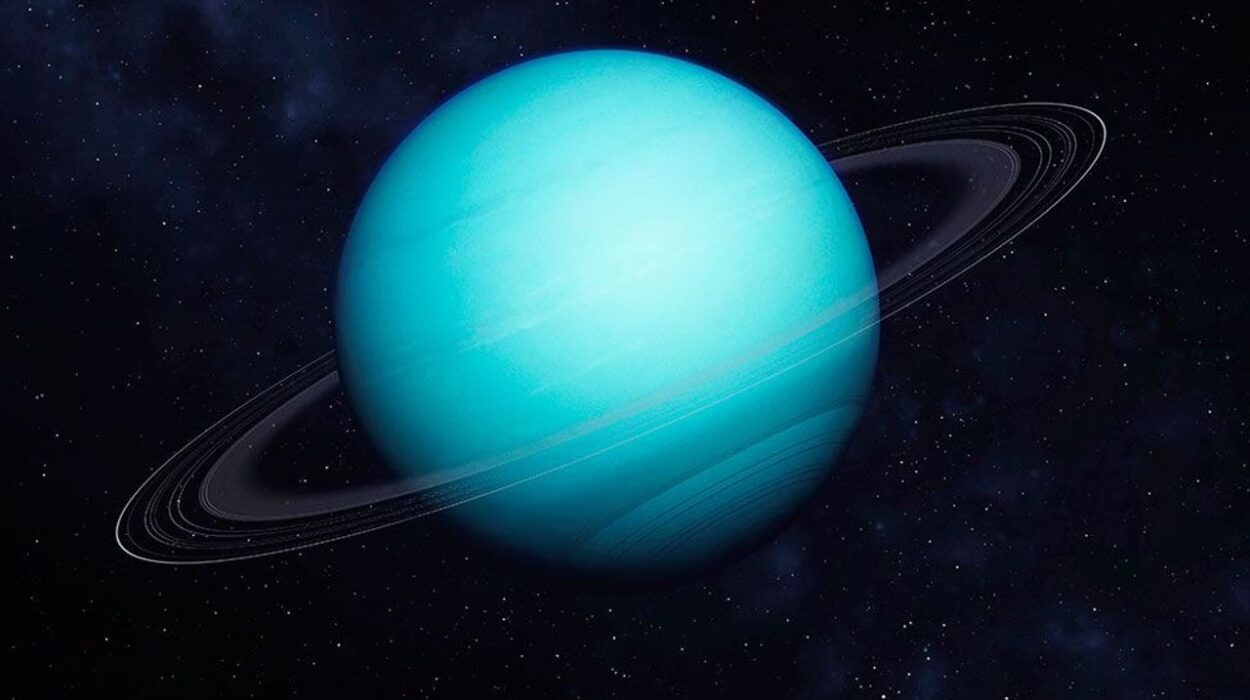
Uranus Spins on Its Side
Uranus presents another fascinating mystery.
Instead of spinning with its poles roughly pointing upward like most planets, Uranus is tilted by about 98 degrees.
It essentially rolls around the Sun like a giant ball.
Scientists believe this unusual orientation likely resulted from one or more massive collisions during the early Solar System.
These impacts probably knocked Uranus onto its side while allowing it to continue rotating.
As a result, each pole experiences decades of continuous sunlight followed by decades of darkness during Uranus’s long journey around the Sun.
Rotation Creates Day and Night
Perhaps the most familiar consequence of planetary rotation is the cycle of day and night.
As Earth spins, different parts of the planet face the Sun.
The side facing the Sun experiences daylight.
The opposite side experiences nighttime.
Without rotation, one side of Earth would remain permanently hot while the other would stay in perpetual darkness.
The regular alternation between light and darkness helps regulate temperatures and supports the conditions necessary for life.
Rotation Influences Weather
Earth’s rotation does much more than create day and night.
It also affects the movement of air and oceans.
Because Earth rotates, moving air appears to curve rather than travel in perfectly straight lines.
This effect, known as the Coriolis effect, helps shape global wind patterns, ocean currents, hurricanes, and large-scale weather systems.
Without Earth’s rotation, weather would look dramatically different from what we experience today.
Rotation Changes the Shape of Planets
Rapidly spinning planets are not perfect spheres.
As they rotate, centrifugal effects cause their equators to bulge outward slightly while their poles become somewhat flattened.
Earth’s equatorial diameter is about 43 kilometers (27 miles) larger than its polar diameter.
Jupiter and Saturn, which rotate much faster, have even more noticeable equatorial bulges.
Their shapes reveal how powerfully rotation influences planetary structure.
Can Planets Stop Rotating?
In theory, yes—but not under ordinary circumstances.
Over extremely long periods, gravitational interactions can slow a planet’s rotation.
Mercury provides an interesting example.
Its rotation has been strongly influenced by the Sun’s gravity, leading to a special relationship called a 3:2 spin-orbit resonance.
Mercury rotates three times for every two trips around the Sun.
Some moons in the Solar System have slowed even further.
Earth’s Moon rotates exactly once during each orbit around Earth.
This is why the same side of the Moon always faces us.
This condition is called tidal locking.
Some planets orbiting very close to other stars may also become tidally locked, with one side permanently facing their star.
Do All Planets Rotate?
Every major planet in our Solar System rotates.
Beyond our Solar System, astronomers have also observed rotation on many exoplanets, although measuring their exact spin rates is much more challenging.
Rotation appears to be a natural consequence of planet formation.
Whenever clouds of gas and dust collapse under gravity, even a tiny initial spin tends to grow stronger as the material contracts.
This makes planetary rotation one of the most common features of planets throughout the universe.
How Scientists Measure Planetary Rotation
Determining how fast a planet rotates depends on the planet itself.
For rocky planets like Mars, scientists track recognizable surface features as they move across the planet.
For giant planets without solid surfaces, researchers observe long-lasting cloud patterns, magnetic fields, or radio emissions produced deep within the planet.
Spacecraft have greatly improved these measurements, allowing scientists to determine planetary rotation with remarkable precision.
Rotation Helps Tell the Story of Planet Formation
Every planet’s spin carries clues about its past.
Fast rotation suggests one history.
Backward rotation suggests another.
Extreme tilts hint at ancient collisions.
Slow rotation may reveal the effects of billions of years of gravitational interactions.
By studying how planets rotate, scientists can reconstruct events that occurred billions of years ago during the birth of planetary systems.
In many ways, a planet’s spin is like a fossil record preserved in motion.
The Never-Ending Spin of Worlds
The rotation of planets is not an accident. It is the natural result of gravity, motion, and one of the most fundamental laws of physics: the conservation of angular momentum. Long before the planets themselves existed, a slowly spinning cloud of gas and dust began collapsing. As it shrank, its rotation accelerated, passing that motion on to every world that eventually formed.
Over billions of years, collisions, gravitational interactions, and tidal forces have modified each planet’s spin, creating the incredible diversity we see today. Some planets rotate in just a few hours, while others take months. Some spin upright, others are dramatically tilted, and one even turns backward.
Yet despite these differences, every rotating planet tells the same remarkable story—a story that began in a swirling cloud of cosmic dust more than 4.5 billion years ago. Every sunrise, every sunset, and every passing day on Earth is a quiet reminder that our planet is still carrying the ancient spin it inherited at the very birth of the Solar System.