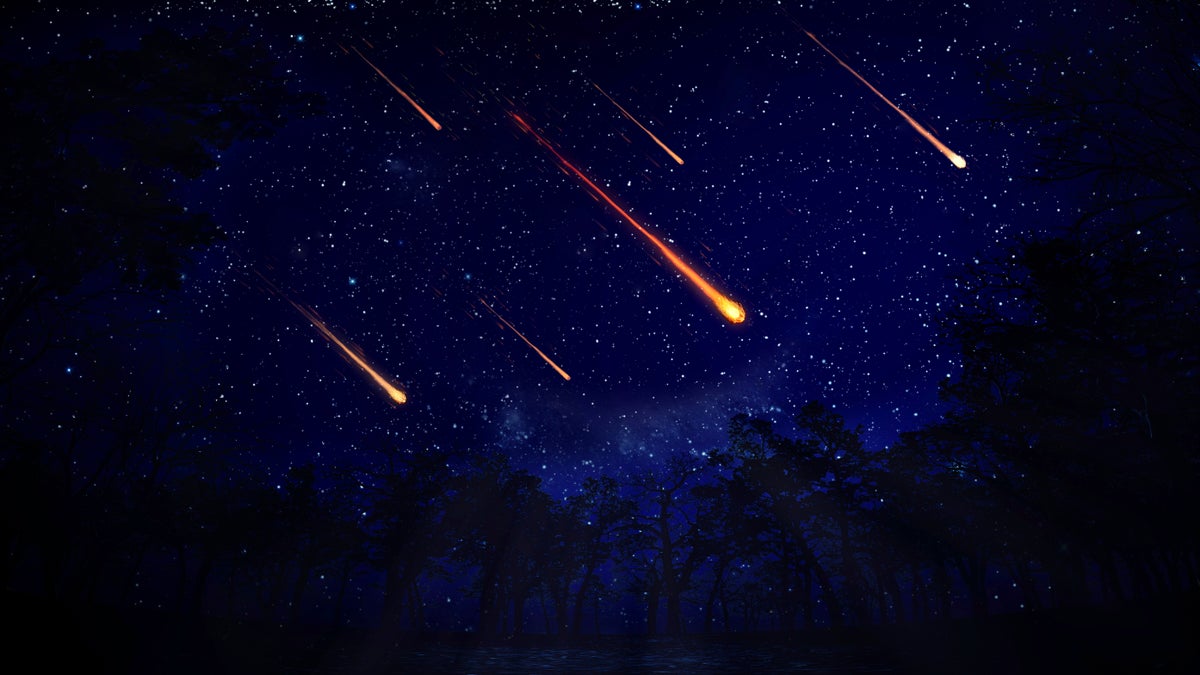
On a clear night, you may suddenly notice a bright streak of light racing across the sky. It appears for only a second or two before disappearing into the darkness. Many people excitedly point at it and call it a “shooting star.” Despite its popular name, however, it has nothing to do with stars. What you have just witnessed is one of the most fascinating natural phenomena in our Solar System.
The words meteoroid, meteor, and meteorite are often used interchangeably in everyday conversation, but in astronomy, they describe three different stages of the same object. Understanding these terms reveals an incredible story that begins in deep space and sometimes ends with a rock landing right here on Earth.
These small visitors from space are more than just scientific curiosities. They are ancient leftovers from the birth of the Solar System over 4.5 billion years ago. By studying them, scientists learn about the earliest history of planets, the formation of asteroids, and even the origins of the ingredients that made life possible.
A Journey That Begins in Space
Imagine a small rocky fragment drifting silently through space. It may have broken off from an asteroid after a collision or been released from a comet as it traveled around the Sun. For millions or even billions of years, this tiny object wanders through the Solar System.
As long as it remains in space, astronomers call it a meteoroid.
If its orbit eventually intersects with Earth’s path, gravity pulls it toward our planet. The moment it enters Earth’s atmosphere at tremendous speed, an entirely new chapter of its journey begins.
The object suddenly encounters air molecules. Although Earth’s atmosphere is extremely thin at high altitudes, the meteoroid is traveling so fast that collisions with air rapidly compress and heat the surrounding gases. This intense heating causes the object and the air around it to glow brilliantly.
At this stage, the glowing streak is called a meteor.
Most of these objects completely burn up before reaching the ground. However, if a portion survives its fiery descent and lands on Earth’s surface, it receives a new name.
It becomes a meteorite.
In other words, the difference between these three terms depends entirely on where the object is during its journey.
What Is a Meteoroid?
A meteoroid is a relatively small natural object traveling through space.
These objects range enormously in size. Some are as tiny as grains of dust, while others can be several meters across. Larger rocky bodies are generally classified as asteroids rather than meteoroids, although there is no universally fixed size boundary between the two categories.
Most meteoroids originate in the asteroid belt between Mars and Jupiter. Asteroids frequently collide with one another, breaking off countless fragments that continue orbiting the Sun.
Other meteoroids come from comets. As a comet approaches the Sun, solar heating causes its icy surface to release gas and dust. These particles spread along the comet’s orbit, creating long streams of debris that Earth sometimes passes through.
Meteoroids are among the oldest objects in the Solar System. Many have remained largely unchanged since the planets formed billions of years ago.
Where Do Meteoroids Come From?
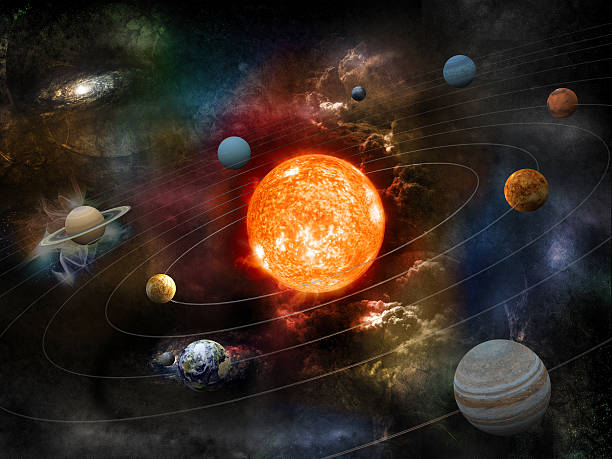
The Solar System is far from empty. It contains billions of rocky and icy objects of every size.
Asteroid collisions are one of the primary sources of meteoroids. Even relatively gentle impacts can send fragments flying into space.
Comets also contribute enormous numbers of tiny particles. As they repeatedly swing around the Sun, they gradually shed material that remains along their orbital paths.
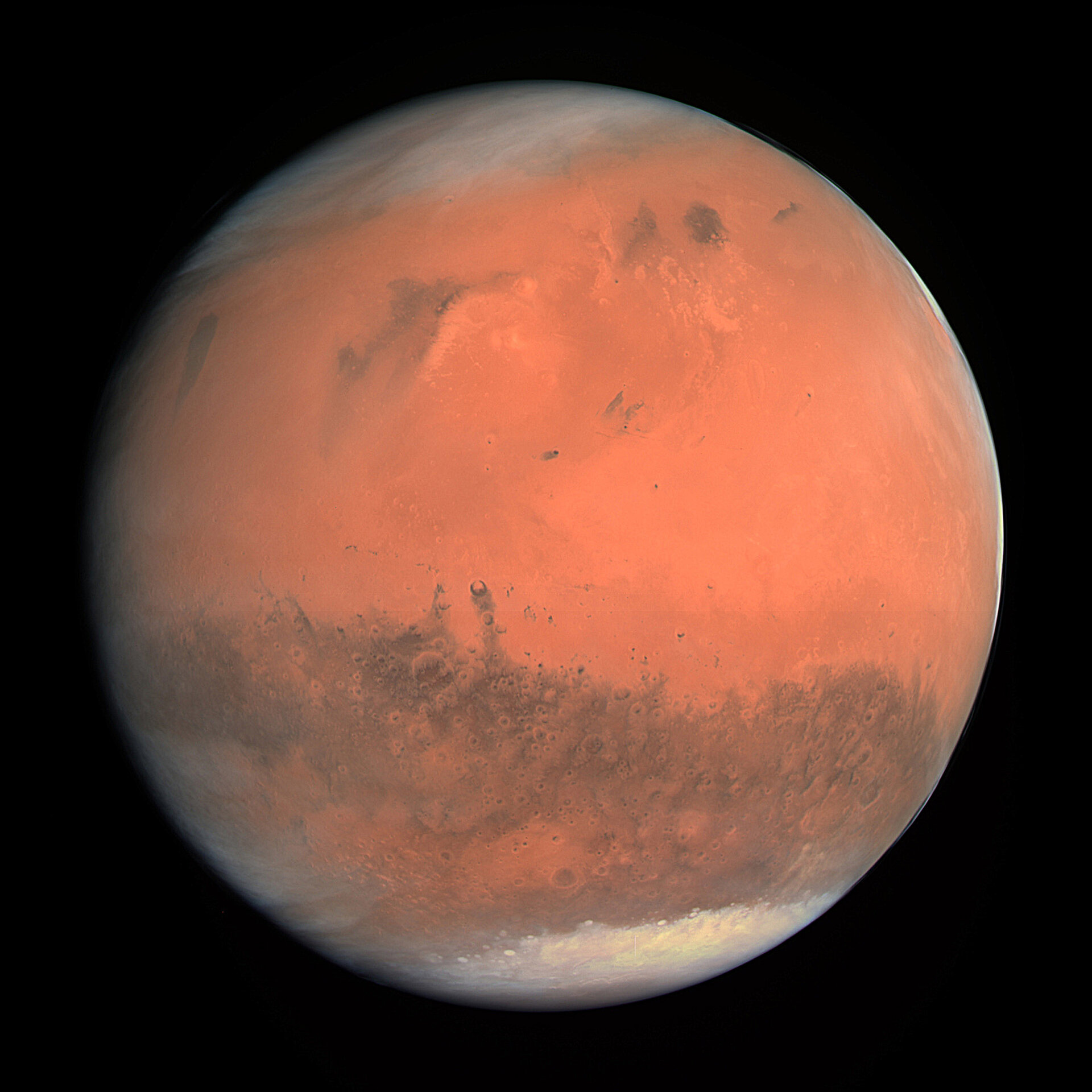
Occasionally, impacts on the Moon or Mars can eject rocks into space. Some of these eventually reach Earth, becoming meteorites that scientists later identify as having originated from those worlds.
This means that not every meteorite found on Earth formed on an asteroid. Some are literally pieces of the Moon or Mars.
What Is a Meteor?
A meteor is the bright flash or streak of light produced when a meteoroid enters Earth’s atmosphere.
Contrary to a common misconception, the glowing light is not simply the rock burning like a piece of wood in a fire.
Instead, the meteoroid’s enormous speed—typically between about 11 and 72 kilometers (7 to 45 miles) per second relative to Earth—compresses the air in front of it. This compression heats the surrounding gas to extremely high temperatures, causing both the gas and material from the meteoroid to emit light.
As the object loses material through a process called ablation, it often leaves behind a glowing trail that quickly fades.
Most meteors become visible at altitudes between roughly 75 and 120 kilometers (47 to 75 miles) above Earth’s surface.
The vast majority disappear long before reaching the ground.
Why Do Meteors Shine So Brightly?
The spectacular glow of a meteor comes from energy.
A meteoroid moving through space carries enormous kinetic energy because of its incredible speed.
When it enters Earth’s atmosphere, that energy is rapidly converted into heat and light.
Even a particle no larger than a grain of sand can create a visible streak across the night sky.
Larger meteoroids produce brighter meteors because they contain more material and more energy.
Some become dazzling fireballs that outshine the brightest stars and even the planets.
What Is a Fireball?
Not every meteor looks the same.
Exceptionally bright meteors are known as fireballs.
A fireball is generally defined as a meteor brighter than the planet Venus when viewed from Earth.
These spectacular events can illuminate the landscape, cast shadows, and sometimes remain visible for several seconds.
Some fireballs explode high in the atmosphere due to intense stresses created during rapid deceleration.
These explosions are called airbursts.
The famous Chelyabinsk event over Russia in 2013 was an airburst caused by an asteroid roughly 20 meters across. The shock wave shattered thousands of windows and injured more than a thousand people, mostly from flying glass, even though the object exploded high above the ground.
What Is a Meteorite?
A meteorite is the portion of a meteoroid that survives its passage through Earth’s atmosphere and lands on the ground.
Most incoming objects never become meteorites because they completely disintegrate before reaching Earth’s surface.
Only the stronger or larger fragments survive.
Meteorites can range in size from tiny pebbles to enormous boulders weighing many tons.
Some create impact craters, while others land quietly after slowing dramatically in the lower atmosphere.
Once on the ground, they become valuable scientific specimens that preserve clues about the earliest Solar System.
What Happens When a Meteorite Lands?
Contrary to what movies often suggest, freshly fallen meteorites are not usually glowing red-hot.
Although their outer surfaces become extremely hot during atmospheric entry, they spend much of their final descent moving at much lower speeds. Their interiors remain relatively cool because rock is a poor conductor of heat and the intense heating lasts only a short time.
Many recovered meteorites are merely warm—or even cool—to the touch shortly after landing.
Fresh meteorites often have a thin, dark outer coating called a fusion crust, formed when the surface briefly melts during atmospheric entry before solidifying again.
Different Types of Meteorites
Meteorites are not all alike.
Some consist mainly of rocky minerals and are known as stony meteorites. These are the most common type.
Others contain large amounts of iron and nickel. These iron meteorites are extremely dense and often display beautiful crystal patterns when cut and polished.
A third group, called stony-iron meteorites, contains roughly similar amounts of silicate minerals and metal.
Each type provides different insights into the bodies from which they originated.
Some meteorites represent material from the crust of ancient asteroids, while others come from their deep metallic cores.
Why Meteorites Are Scientific Treasures
Meteorites are like time capsules from the early Solar System.
Many formed more than 4.5 billion years ago, making them older than Earth itself.
Because some have remained largely unchanged since their formation, they preserve information about conditions that existed before the planets fully developed.
Scientists analyze their minerals, chemical compositions, and isotopes to reconstruct the history of the Solar System.
Some meteorites contain tiny grains that formed before the Sun existed. These microscopic particles originated around ancient stars that lived and died long before our Solar System was born.
Others contain organic molecules that help scientists study the chemistry that may have contributed to the emergence of life.
Meteor Showers
One of the most beautiful astronomical events is a meteor shower.
Meteor showers occur when Earth passes through streams of dust and small rocky particles left behind by a comet or, in some cases, an asteroid.
As countless meteoroids enter the atmosphere over a short period, observers see numerous meteors appearing to radiate from the same region of the sky.
This apparent point of origin is called the radiant.
Well-known annual meteor showers include the Perseids, Geminids, Leonids, and Quadrantids.
During strong meteor showers, dozens or even hundreds of meteors may be visible each hour under dark skies.
Why Are They Called Shooting Stars?
Long before people understood astronomy, bright meteors looked like stars falling from the sky.
The nickname shooting star survived for centuries.
In reality, stars are enormous balls of hot plasma located trillions of kilometers away.
A meteor, by contrast, is usually produced by a tiny rock entering Earth’s atmosphere.
Even though the name is scientifically incorrect, it remains widely used in everyday language.
Can Meteors Be Dangerous?
Most meteors pose no danger at all.
Every day, Earth’s atmosphere intercepts millions of tiny meteoroids. Nearly all burn up harmlessly high above the surface.
Larger objects are much less common.
Only a small percentage survive to become meteorites.
Very large asteroid impacts capable of causing regional or global damage are extremely rare, occurring over timescales of thousands to millions of years.
Astronomers continuously monitor near-Earth asteroids to identify any objects that might pose future risks.
How Scientists Find Meteorites
Finding a meteorite is not as easy as picking up an unusual-looking rock.
Scientists often rely on eyewitness reports, specialized camera networks, weather radar observations, satellite data, and precise calculations to estimate where a meteorite may have landed.
Some meteorites are discovered in deserts, where dark rocks stand out against light-colored ground.
Others are recovered from Antarctica, where black meteorites are relatively easy to spot on the ice.
These regions have become some of the world’s richest sources of meteorite discoveries.
Meteorites From Other Worlds
Not all meteorites come from ordinary asteroids.
Powerful impacts on Mars or the Moon can launch rocks into space.
After traveling for millions of years, a small fraction eventually reaches Earth.
Scientists identify these extraordinary meteorites by studying their mineral compositions, trapped gases, and isotopic signatures.
Some Martian meteorites contain gases whose composition matches the Martian atmosphere measured by spacecraft, providing strong evidence of their origin.
These rare samples allow researchers to study other planetary bodies without leaving Earth.
How Often Do Meteorites Hit Earth?
Earth is constantly bombarded by material from space.
Scientists estimate that tens of thousands of tons of cosmic dust settle onto Earth each year.
Most of this material is microscopic.
Larger meteorites are much rarer.
Small meteorites land somewhere on Earth almost every day, but because oceans cover about 71% of the planet and many land in remote areas, very few are ever found.
Large impacts capable of creating noticeable craters occur only occasionally over geological timescales.
The Difference in One Simple Journey
The easiest way to remember these terms is to think of one object changing names during different stages of its journey.
While it travels through space, it is a meteoroid.
When it enters Earth’s atmosphere and creates a glowing streak of light, it becomes a meteor.
If any part survives the descent and reaches Earth’s surface, it becomes a meteorite.
The object itself may be the same, but its name changes depending on where it is and what is happening to it.
Why Understanding These Terms Matters
Knowing the difference between a meteoroid, meteor, and meteorite helps us appreciate the remarkable journey these ancient space rocks undertake.
What begins as a tiny fragment drifting through the Solar System can briefly light up Earth’s night sky before, in rare cases, landing at our feet as a messenger from deep space.
Each meteor reminds us that Earth is part of a dynamic cosmic neighborhood filled with moving worlds, drifting debris, and ancient remnants from the Solar System’s formation. Every meteorite recovered by scientists carries a chapter of that history, offering clues about events that occurred billions of years before humans ever looked up at the stars.
The next time you see a brilliant “shooting star” streak across the sky, you’ll know that you are witnessing only one brief moment in an extraordinary cosmic journey—a journey that began in the depths of space, blazed through Earth’s atmosphere as a meteor, and may, if fortune allows, end as a meteorite waiting to tell its story.