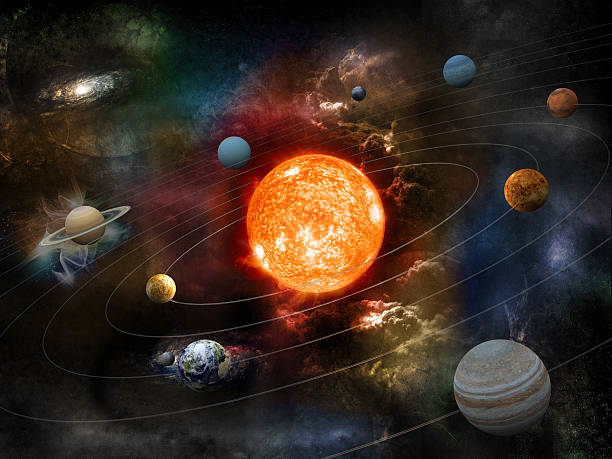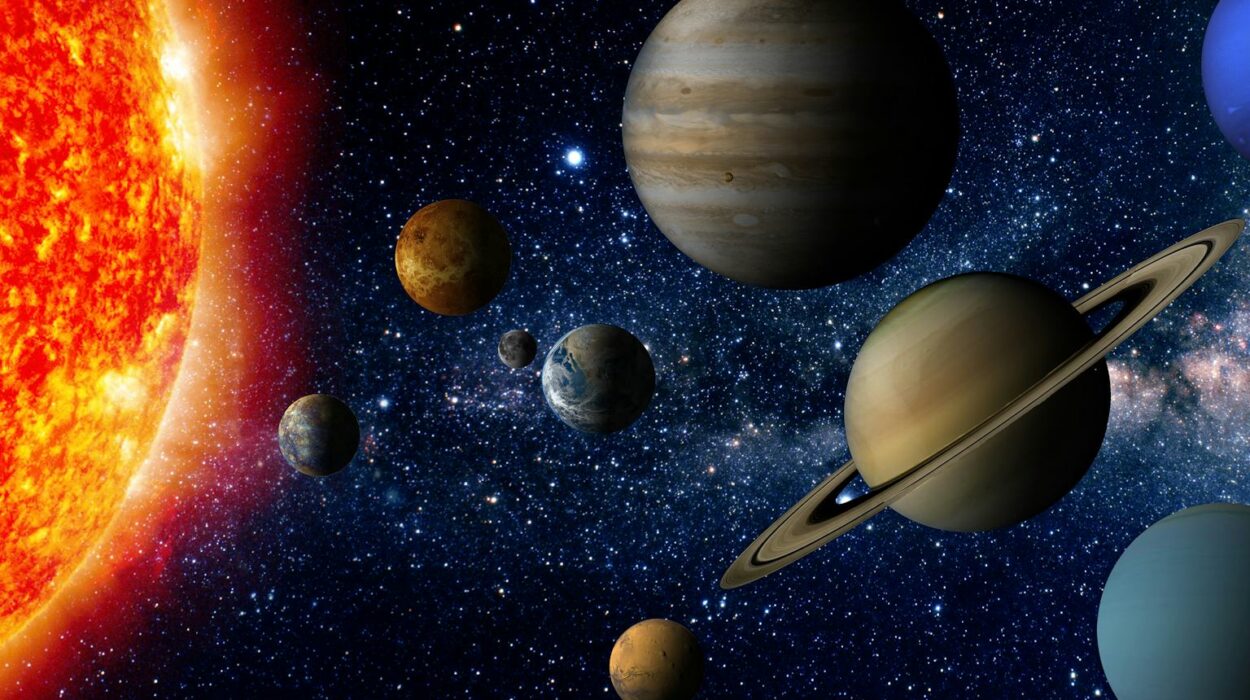
For more than 75 years, children around the world learned that our Solar System had nine planets. The smallest and most mysterious of them all was Pluto, a tiny icy world far beyond Neptune. It appeared in textbooks, classroom posters, science museums, and countless educational programs. Many people grew up memorizing the order of the planets with Pluto proudly included at the end of the list.
Then, in 2006, something unexpected happened.
Astronomers announced that Pluto was no longer considered a planet. Overnight, the Solar System seemed to lose one of its members. The decision sparked debate among scientists, teachers, students, and the public. Some people felt disappointed, while others questioned how a planet could suddenly stop being a planet.
But Pluto itself did not change.
It did not shrink, disappear, or move to another part of space. The only thing that changed was our understanding of the Solar System. As scientists discovered many new worlds beyond Neptune, they realized that the old definition of a planet no longer worked.
Today, Pluto remains one of the most fascinating objects ever discovered. Although it is no longer classified as a major planet, it continues to surprise scientists with its complex geology, towering mountains, frozen plains, thin atmosphere, and hidden mysteries.
To understand why Pluto lost its planetary status, we first need to understand how it was discovered and why it captured the world’s imagination.
The Discovery That Excited the World
In the early twentieth century, astronomers believed another planet might exist beyond Neptune. Tiny irregularities in the orbits of Uranus and Neptune led some scientists to search for a distant object they called “Planet X.”
After years of careful observations, American astronomer Clyde Tombaugh made history on February 18, 1930. While comparing photographs of the night sky taken several days apart at Lowell Observatory in Arizona, he noticed a faint object that had shifted position against the background stars.
That moving object was Pluto.
The discovery quickly became international news. It was the first planet discovered by an American astronomer, and excitement spread around the world.
The name “Pluto” came from Venetia Burney, an 11-year-old schoolgirl in England who suggested naming the new world after the Roman god of the underworld. The name fit perfectly because Pluto orbits in the cold, dark outer reaches of the Solar System.
For decades, Pluto proudly joined Mercury, Venus, Earth, Mars, Jupiter, Saturn, Uranus, and Neptune as the ninth planet.
Pluto Is Much Smaller Than Scientists First Thought
When Pluto was discovered, astronomers knew very little about it.
Because it was so far away and appeared only as a tiny point of light through telescopes, scientists initially assumed it was much larger than it really is.
Over time, better observations revealed the truth.
Pluto is surprisingly small.
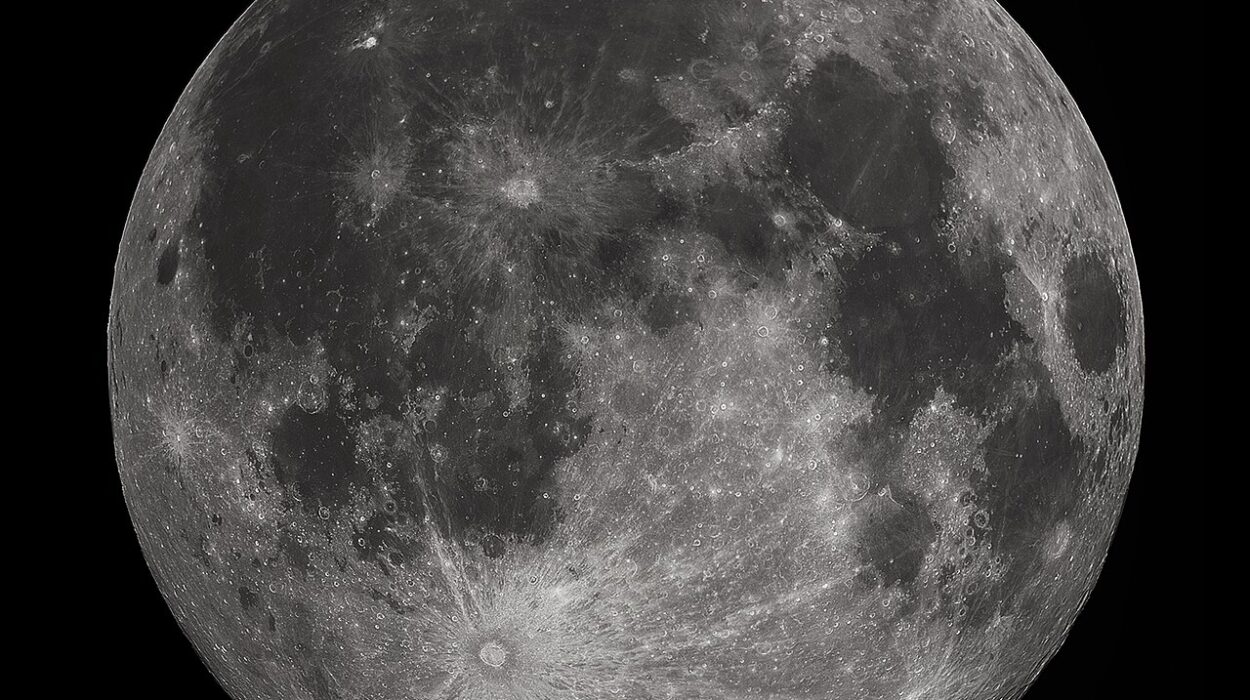
Its diameter is only about 2,377 kilometers (1,477 miles). That makes it smaller than Earth’s Moon, which has a diameter of about 3,475 kilometers (2,159 miles).
If Pluto were placed across the United States, it would stretch only from roughly New York to Denver.
Its mass is also tiny—only about 0.2% of Earth’s mass.
Although Pluto is small, it remains a remarkable world with mountains made of water ice, frozen nitrogen glaciers, and a surprisingly active surface.
A Strange and Distant World
Pluto is unlike the eight major planets in several important ways.
It follows a highly elliptical orbit, meaning its distance from the Sun changes significantly over time.
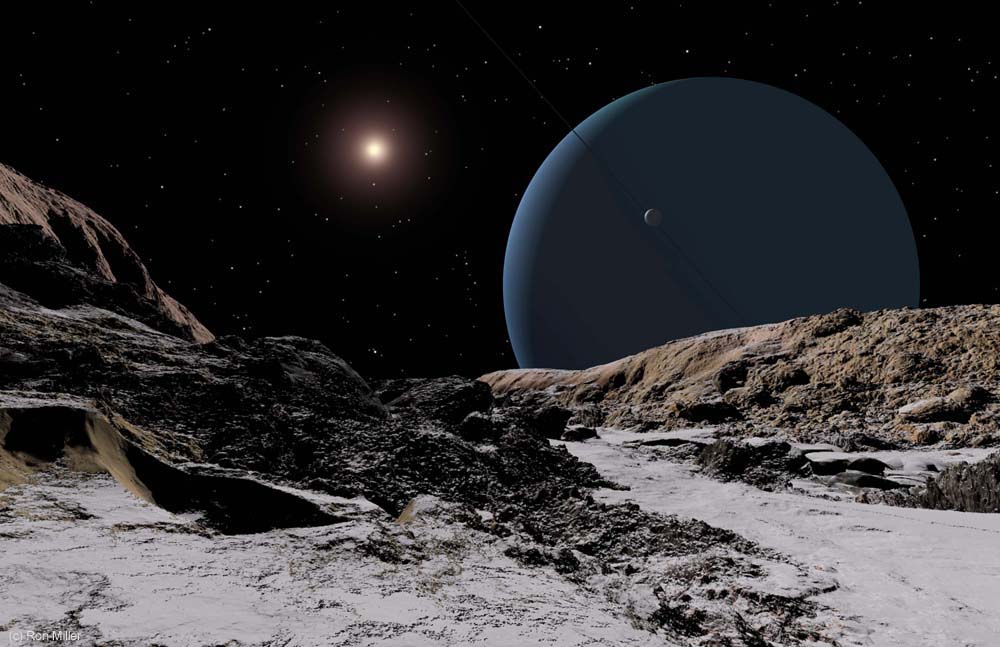
Sometimes Pluto is actually closer to the Sun than Neptune. This happened between 1979 and 1999. Even during this period, however, the two worlds never came close to colliding because Pluto’s orbit is tilted by about 17 degrees relative to the plane in which most planets orbit.
One trip around the Sun takes Pluto about 248 Earth years.
That means a person born on Pluto would never celebrate even one birthday during a human lifetime.
Pluto also rotates differently from many planets.
One day on Pluto lasts about 6.4 Earth days, and it rotates in the opposite direction from Earth, a motion known as retrograde rotation.
Pluto Has Its Own Family of Moons
For many years, scientists believed Pluto traveled alone.
That changed in 1978 with the discovery of its largest moon, Charon.
Charon is enormous compared with Pluto.
It is about half Pluto’s diameter, making it one of the largest moons relative to its parent body anywhere in the Solar System.
Because of their similar sizes, Pluto and Charon actually orbit a point in space located outside Pluto itself. For this reason, some astronomers describe them as a “binary system.”
Later discoveries revealed four additional moons: Styx, Nix, Kerberos, and Hydra.
Together, these moons form a surprisingly complex miniature planetary system.
The Kuiper Belt Changed Everything
For decades after Pluto’s discovery, it seemed unique.
Then astronomers began exploring the outer Solar System more carefully.
Beyond Neptune lies a vast region called the Kuiper Belt.
This enormous ring of icy objects stretches billions of kilometers beyond Neptune and contains countless frozen bodies left over from the formation of the Solar System about 4.6 billion years ago.
Many of these objects are composed of rock, water ice, methane ice, nitrogen ice, and other frozen materials.
As telescopes improved, astronomers discovered hundreds—and eventually thousands—of Kuiper Belt objects.
Some were surprisingly large.
Suddenly, Pluto no longer appeared to be a lonely planet.
Instead, it looked like one of many similar icy worlds.
This discovery forced scientists to ask an important question.
If Pluto is a planet, should all these newly discovered objects also become planets?
The Discovery of Eris
The turning point came in 2005.
Astronomers discovered an object named Eris far beyond Pluto.
At first, Eris appeared to be slightly larger than Pluto, although later measurements showed Pluto is slightly larger in diameter while Eris is more massive because it is denser.
Regardless of the exact comparison, Eris was clearly similar to Pluto.
If Pluto remained a planet, Eris would almost certainly have to become one too.
And if Eris qualified, many other large Kuiper Belt objects might also deserve planetary status.
The number of planets could quickly grow from nine to dozens—or even hundreds—as new discoveries continued.
Astronomers realized they needed a clear scientific definition of the word “planet.”
The 2006 Decision
In August 2006, astronomers from around the world gathered in Prague for the General Assembly of the International Astronomical Union (IAU).
One of the most important topics was defining exactly what makes a planet.
After extensive discussion and debate, the IAU adopted a new definition.
According to this definition, a planet in our Solar System must satisfy three conditions.
First, it must orbit the Sun.
Second, it must have enough mass for its own gravity to pull it into a nearly round shape.
Third, it must have “cleared the neighborhood” around its orbit.
Pluto easily satisfies the first two requirements.
It orbits the Sun.
Its gravity has pulled it into a spherical shape.
However, it does not satisfy the third requirement.
What Does “Clearing the Neighborhood” Mean?
This phrase often causes confusion.
It does not mean a planet must remove every object from its orbit.
Even Earth shares space with asteroids.
Instead, clearing the neighborhood means a body has become gravitationally dominant in its orbital region.
A true planet is overwhelmingly the largest object near its orbit. Its gravity controls nearby smaller bodies over the age of the Solar System by capturing, scattering, or otherwise dominating them.
Earth dominates its orbital zone.
Jupiter dominates its enormous region.
Neptune dominates the space around its orbit.
Pluto does not.
Instead, Pluto shares its orbital region with countless other Kuiper Belt objects that have similar characteristics.
Because it is simply one member of a much larger population rather than the dominant body in its orbital zone, Pluto does not meet the IAU’s third criterion.
Pluto Became a Dwarf Planet
Rather than removing Pluto from scientific importance, astronomers created a new category called dwarf planets.
A dwarf planet orbits the Sun and is nearly round because of its own gravity, but it has not cleared its orbital neighborhood and is not a satellite of another body.
Pluto became the most famous member of this new category.
Other recognized dwarf planets include Ceres, Eris, Haumea, and Makemake.
Scientists continue to search for additional dwarf planets in the distant Solar System.
Did Pluto Actually Change?
No.
Pluto today is exactly the same world it was before 2006.
Its mountains remain.
Its frozen plains remain.
Its moons remain.
Its orbit remains.
Only its scientific classification changed.
This is similar to how biologists sometimes reclassify animals after learning more about evolution. The organism itself does not change—only our understanding of how it fits into the natural world.
Science constantly updates its classifications as new evidence becomes available.
That is one of science’s greatest strengths.
The New Horizons Mission Changed Our View of Pluto
For many decades, Pluto appeared only as a blurry dot in telescopes.
Everything changed on July 14, 2015.
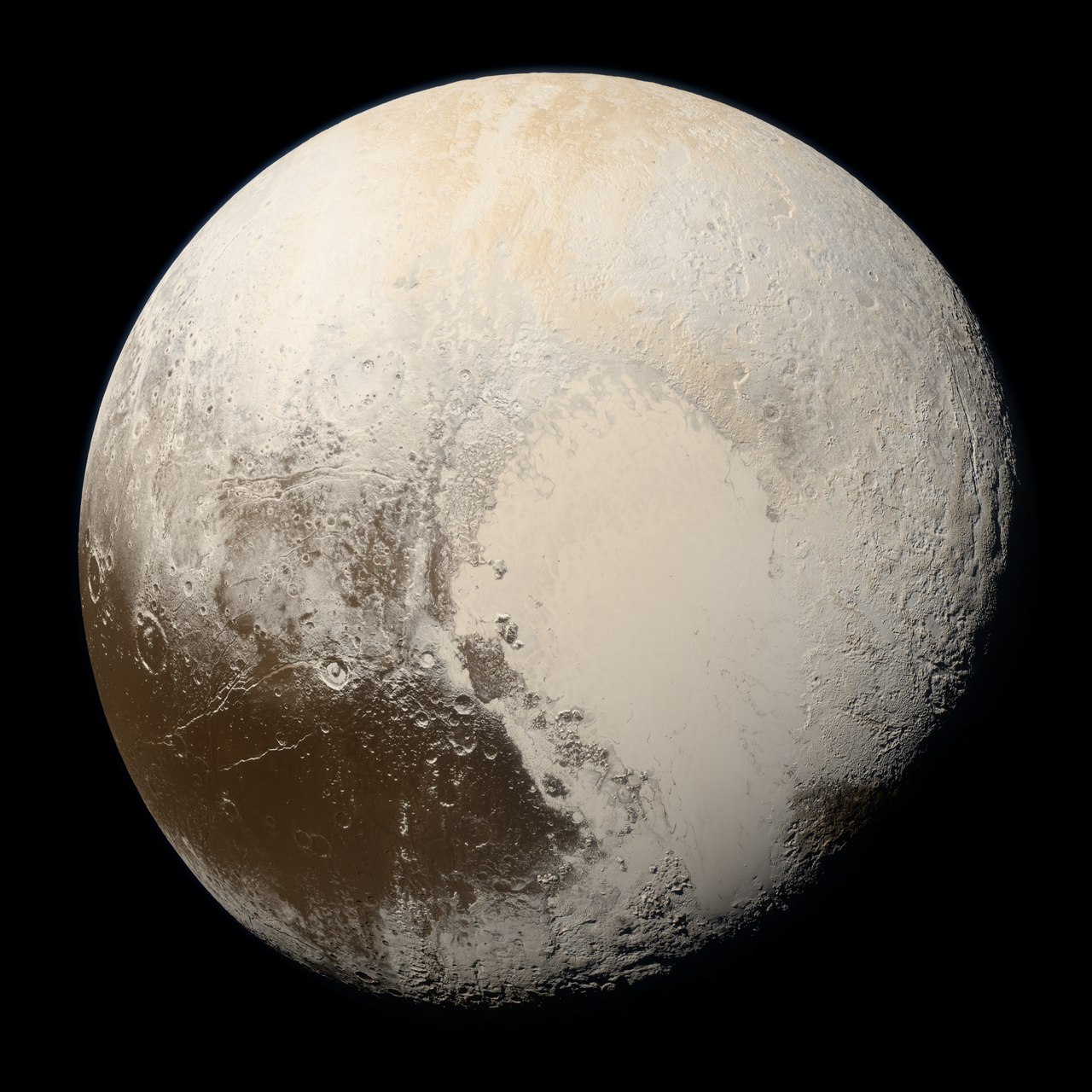
NASA’s New Horizons spacecraft flew past Pluto after traveling for more than nine years across the Solar System.
The images stunned scientists.
Instead of a frozen, inactive world, Pluto revealed astonishing complexity.
Scientists discovered towering mountains made of water ice rising several kilometers high.
They found a giant heart-shaped region called Tombaugh Regio, named after Pluto’s discoverer.
Within this region lies Sputnik Planitia, a vast plain of frozen nitrogen ice that appears surprisingly young, suggesting Pluto remains geologically active.
The spacecraft also observed glaciers flowing across the surface, layers of atmospheric haze extending high above the planet, and evidence that Pluto’s interior may contain a subsurface ocean beneath its icy crust.
These discoveries completely transformed our understanding of distant icy worlds.
Pluto Has Weather
Although Pluto is incredibly cold, it still experiences weather.
Its thin atmosphere consists mainly of nitrogen, along with smaller amounts of methane and carbon monoxide.
As Pluto moves farther from the Sun during its long orbit, much of this atmosphere freezes onto the surface.
When Pluto approaches the Sun again, some of the frozen gases sublimate directly from ice into gas, temporarily rebuilding the atmosphere.
This seasonal cycle is unlike anything seen on Earth.
Could Pluto Become a Planet Again?
Some planetary scientists argue that the current definition is too restrictive.
They believe any round object shaped by its own gravity should qualify as a planet, regardless of whether it has cleared its orbital neighborhood.
Under that definition, Pluto would once again be considered a planet.
Several large moons, including Earth’s Moon, Jupiter’s Europa, and Saturn’s Titan, might also qualify if the definition were expanded beyond objects orbiting the Sun.
Other scientists support the current IAU definition because it distinguishes the eight dominant planets from the many smaller worlds beyond Neptune.
The debate continues today, showing that science is an active process rather than a collection of unchanging facts.
Why Pluto Still Matters
Losing its status as the ninth planet did not make Pluto less important.
In many ways, Pluto has become even more scientifically valuable.
It offers scientists a unique window into the early Solar System.
Because Pluto formed in the cold outer regions and has changed relatively little over billions of years, it preserves clues about the materials and conditions that existed when the planets were forming.
Studying Pluto also helps researchers understand thousands of similar icy worlds in the Kuiper Belt.
Every new discovery there improves our understanding of how planetary systems develop—not only around our Sun but around other stars as well.
What Pluto Teaches Us About Science
Perhaps Pluto’s greatest lesson has nothing to do with planets.
It teaches us how science works.
Science is not based on tradition or popularity. It is based on evidence.
When new observations reveal that an old idea no longer fits reality, scientists revise their understanding.
That process is not a weakness.
It is the reason science continues to advance.
Pluto’s reclassification reminds us that our knowledge of the universe is always growing. As telescopes become more powerful and spacecraft explore farther into space, we will almost certainly discover new worlds that challenge today’s ideas just as Pluto did.
Conclusion
Pluto is no longer classified as one of the Solar System’s eight major planets because it does not meet the modern definition established by the International Astronomical Union in 2006. While it orbits the Sun and is nearly round, it has not become the gravitationally dominant object in its orbital neighborhood, instead sharing the Kuiper Belt with many other icy bodies.
Yet Pluto remains one of the Solar System’s most extraordinary worlds. With its icy mountains, active glaciers, complex atmosphere, intriguing moons, and possible underground ocean, it continues to fascinate scientists and the public alike. Far from being forgotten, Pluto has become a symbol of how scientific understanding evolves. Its story reminds us that the universe is often more surprising than we imagine—and that every new discovery has the power to reshape the way we see our place among the stars.