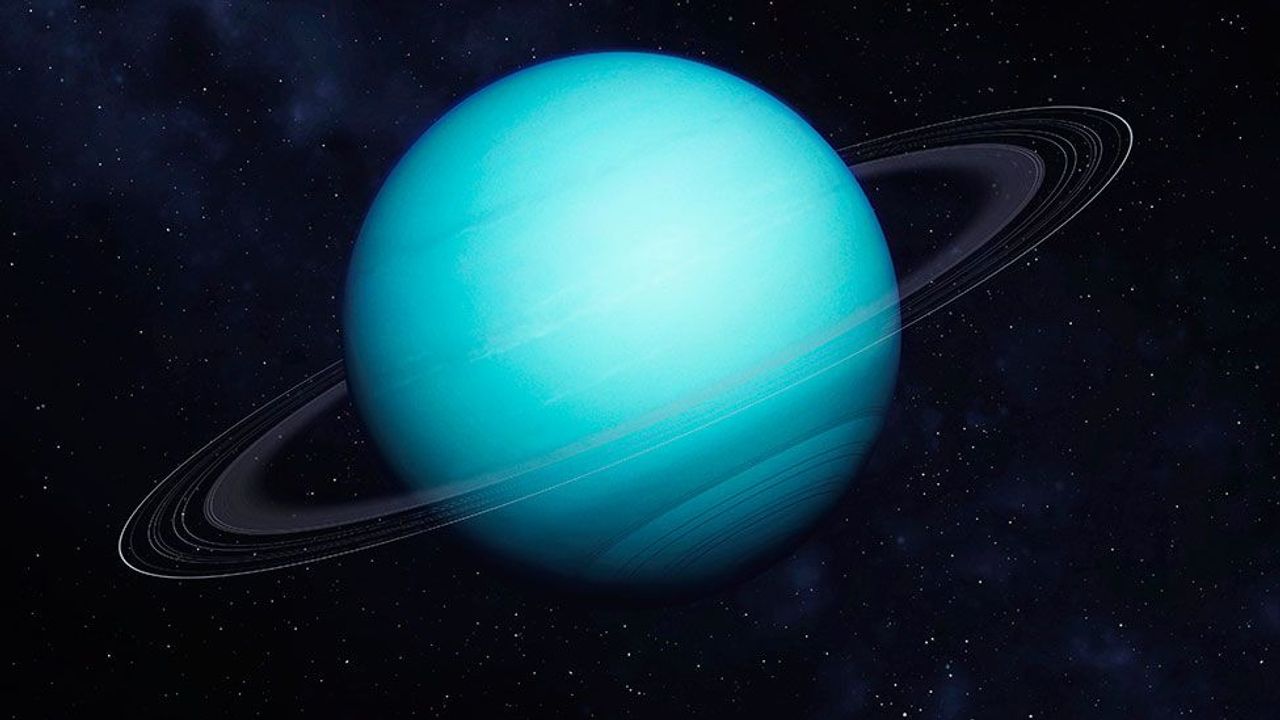
Imagine a world so cold that even the gases we breathe on Earth would freeze into solids. A place where sunlight is so weak that noon feels dim compared to a cloudy day on Earth, and temperatures plunge to levels that challenge our understanding of what “cold” truly means. That world is Uranus, the seventh planet from the Sun and one of the most mysterious planets in our Solar System.
When people think of the coldest planet, many immediately guess Neptune because it is farther from the Sun. Surprisingly, that answer is wrong. Uranus, despite being closer to the Sun than Neptune, is actually the coldest planet in the Solar System.
But just how cold is Uranus? Why is it colder than Neptune? What would happen if you could somehow visit this icy giant? The answers reveal a fascinating story about one of the strangest worlds ever discovered.
Uranus Is the Coldest Planet in the Solar System
Uranus has some of the lowest temperatures ever measured on any planet.
Scientists have recorded temperatures as low as 49 kelvin, which is about −224°C (−371°F) in the upper atmosphere. At these temperatures, Uranus is colder than any other known planet in our Solar System.
To appreciate how incredibly cold that is, consider that Antarctica, the coldest place naturally found on Earth, has reached about −89°C (−128°F). Uranus is more than 130 degrees Celsius colder than Earth’s coldest recorded temperature.
Even liquid nitrogen, commonly used in laboratories to freeze materials, has a temperature of about −196°C (−321°F). Uranus is colder still.
Its atmosphere exists in an environment so frigid that many familiar substances would behave in completely unfamiliar ways.
Why Is Uranus So Cold?
The most obvious reason is its enormous distance from the Sun.
Uranus orbits the Sun at an average distance of about 2.9 billion kilometers (1.8 billion miles). That is roughly 19 times farther from the Sun than Earth.
Because sunlight spreads out as it travels through space, only a tiny fraction of the Sun’s energy reaches Uranus. At that distance, sunlight is approximately 370 times weaker than it is on Earth.
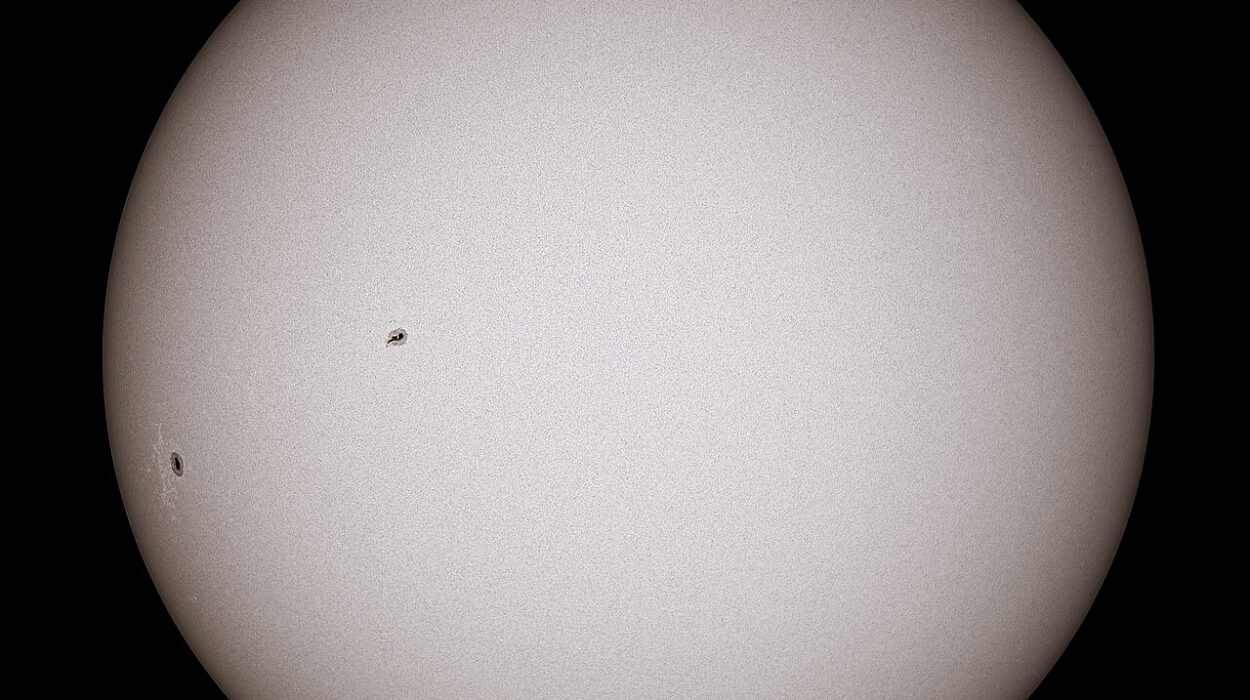
If you stood near Uranus—ignoring the fact that there is no solid surface—you would see the Sun as an exceptionally bright star rather than the large glowing disk we see from Earth.
With so little solar energy arriving, Uranus naturally remains extremely cold.
Why Isn’t Neptune Colder?
This is one of the biggest surprises in planetary science.
Neptune is farther from the Sun than Uranus, so logic suggests it should be colder. Yet measurements consistently show that Uranus has the lower minimum atmospheric temperature.
The reason lies inside the planets themselves.
Neptune emits significantly more internal heat than it receives from the Sun. Deep inside Neptune, heat left over from its formation continues escaping into space. This internal energy warms its atmosphere.
Uranus behaves very differently.
It gives off remarkably little internal heat. Scientists estimate that Uranus radiates only slightly more energy than it receives from sunlight, while Neptune emits much more.
Because Uranus lacks a strong internal heat source, its atmosphere cools to extraordinarily low temperatures.
Exactly why Uranus releases so little heat remains one of the great mysteries of planetary science.
The Atmosphere of Uranus
Although Uranus is often called an “ice giant,” it does not have an icy surface like Antarctica.
Instead, Uranus is surrounded by a thick atmosphere composed mostly of hydrogen and helium, along with a smaller amount of methane.
Methane plays an important role in the planet’s appearance.
It absorbs red wavelengths of sunlight while reflecting blue and green light back into space. This gives Uranus its beautiful pale blue-green color.
The atmosphere also contains clouds made from different materials depending on altitude.
Scientists think the upper atmosphere contains methane ice clouds, while deeper layers may include clouds of hydrogen sulfide and water under immense pressures.
What Lies Beneath the Clouds?
As you descend into Uranus, conditions change dramatically.
The atmosphere gradually becomes denser rather than ending at a solid surface.
Pressure increases rapidly, becoming thousands and eventually millions of times greater than Earth’s atmospheric pressure.
Temperatures also begin rising again deep inside the planet.
Although the upper atmosphere is the coldest part, the interior becomes much hotter because of enormous pressure and leftover heat from the planet’s formation.
Scientists believe Uranus contains a vast mantle rich in water, ammonia, and methane in exotic high-pressure forms often referred to as planetary “ices.” These materials are not frozen like household ice but exist as extremely hot, compressed fluids under immense pressure.
At the center probably lies a rocky core several times the mass of Earth.
Could You Stand on Uranus?
No.
Unlike Earth, Uranus has no solid surface where you could land.
If a spacecraft attempted to descend, it would simply continue falling through increasingly dense layers of gas.
Eventually, crushing pressure and rising temperatures would destroy any known spacecraft.
The transition from atmosphere to deeper layers is gradual, making it impossible to define a clear “surface.”
What Would the Cold Feel Like?
It is difficult to imagine temperatures of −224°C because nothing on Earth naturally reaches such extremes.
At these temperatures, ordinary materials behave very differently.
Many gases become liquids or solids.
Chemical reactions slow dramatically.
Metal can become more brittle.
Human survival would be impossible without extraordinary protection, and even advanced technology faces major engineering challenges under such conditions.
Fortunately, the vacuum of space changes how heat is lost. Without air to conduct heat away, objects mainly cool by radiating energy. Even so, any spacecraft exploring Uranus must be carefully designed to operate in an intensely cold environment.
The Seasons on Uranus
Uranus experiences some of the most unusual seasons in the Solar System.
The planet is tilted by about 98 degrees, meaning it essentially rotates on its side.
Scientists think a massive collision early in the Solar System’s history may have knocked Uranus into this unusual orientation.
As Uranus travels around the Sun, each pole experiences about 42 years of continuous daylight, followed by 42 years of continuous darkness.
A full orbit around the Sun takes about 84 Earth years, so one season lasts roughly 21 Earth years.
Despite these extreme seasonal changes in sunlight, the planet remains astonishingly cold throughout the year.
Winds in a Frozen World
Cold does not mean calm.
Uranus experiences powerful atmospheric winds that can exceed 900 kilometers per hour (560 miles per hour).
These winds move enormous cloud systems around the planet.
Astronomers have also observed storms, bright cloud features, and seasonal atmospheric changes using space telescopes and large observatories on Earth.
Even in one of the coldest places in the Solar System, weather is constantly changing.
How Scientists Measure the Temperature
Scientists cannot simply place a thermometer on Uranus.
Instead, they study the infrared radiation emitted by the planet.
Everything with a temperature above absolute zero emits infrared energy.
Spacecraft and telescopes measure this radiation to estimate atmospheric temperatures.
The Voyager 2 spacecraft, which flew past Uranus in 1986, provided the first close-up measurements of the planet’s atmosphere.
Since then, Earth-based observatories and space telescopes have continued monitoring Uranus to improve our understanding of its weather, composition, and temperature.
Is Uranus Always the Same Temperature?
Not exactly.
Different altitudes and different regions have different temperatures.
The upper atmosphere contains the coldest measured temperatures.
Lower layers become progressively warmer due to increasing pressure.
Seasonal sunlight changes and atmospheric circulation also create temperature variations across the planet.
However, even these warmer regions remain incredibly cold compared with conditions on Earth.
Could Life Exist in Such Cold?
Based on current scientific knowledge, Uranus is considered an extremely unlikely place for life as we know it.
The planet lacks a solid surface, experiences crushing pressures, and has an atmosphere dominated by hydrogen and helium.
The extreme cold in the upper atmosphere and the hostile conditions deeper inside present enormous challenges for biology.
Scientists remain open to the possibility that life could exist in unexpected environments elsewhere in the universe, but no evidence currently suggests that Uranus is inhabited.
Why Scientists Continue Studying Uranus
Despite receiving only one close spacecraft visit, Uranus remains one of the most scientifically intriguing planets.
Researchers hope future missions will investigate why Uranus produces so little internal heat, how its unusual magnetic field works, what its interior is really like, and how its atmosphere changes over time.
Understanding Uranus also helps astronomers study the many ice giant exoplanets now being discovered around other stars. These distant worlds are among the most common types of planets in our galaxy, making Uranus an important natural laboratory for understanding planets beyond our Solar System.
A World of Extraordinary Cold
Uranus challenges our everyday ideas about temperature. It is a giant planet wrapped in pale blue clouds, bathed in faint sunlight nearly three billion kilometers from the Sun, and home to the coldest atmospheric temperatures known among the planets in our Solar System.
With temperatures falling to about −224°C (−371°F), Uranus demonstrates just how extreme the universe can be. Yet beneath its frozen exterior lies a dynamic world of fierce winds, towering clouds, immense pressures, and enduring scientific mysteries.
As future spacecraft eventually return to this distant ice giant, they may finally reveal why Uranus is so unusually cold and what secrets have remained hidden beneath its icy blue clouds for billions of years.