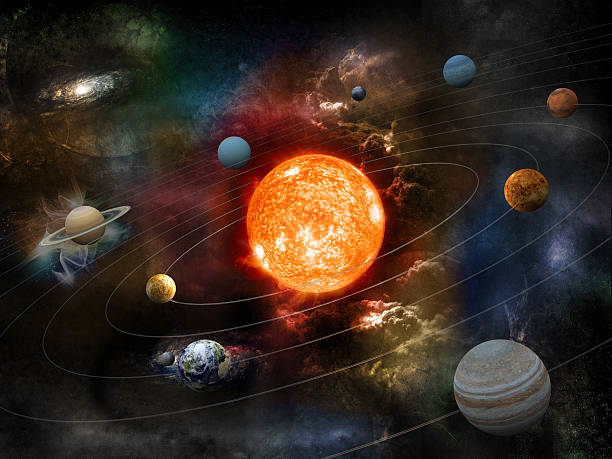
Look up at the night sky, and it is easy to think that our Solar System is simply the Sun surrounded by a handful of planets. After all, textbooks often show neat diagrams with the eight planets arranged in tidy circles around the Sun. But those familiar illustrations hide an astonishing truth: the Solar System is far, far larger than most people imagine.
If the planets were drawn to scale, the page would have to be enormous. If the distances between them were shown accurately, the planets themselves would become almost invisible dots. Beyond the outermost planet lies a vast frontier filled with icy worlds, comets, and mysterious regions that stretch for trillions of kilometers into space.
The Solar System is not just a neighborhood around the Sun. It is an immense cosmic realm that extends so far that even sunlight—the fastest thing in the universe—takes many hours, days, and even more than a year to reach its outer boundaries.
So, how big is the Solar System? The answer depends on what we consider to be its edge. As scientists have learned more about our cosmic neighborhood, they have discovered that the Solar System has no simple ending. Instead, it gradually fades into the vastness of interstellar space.
What Is the Solar System?
The Solar System is the collection of objects that are bound together by the Sun’s gravity.
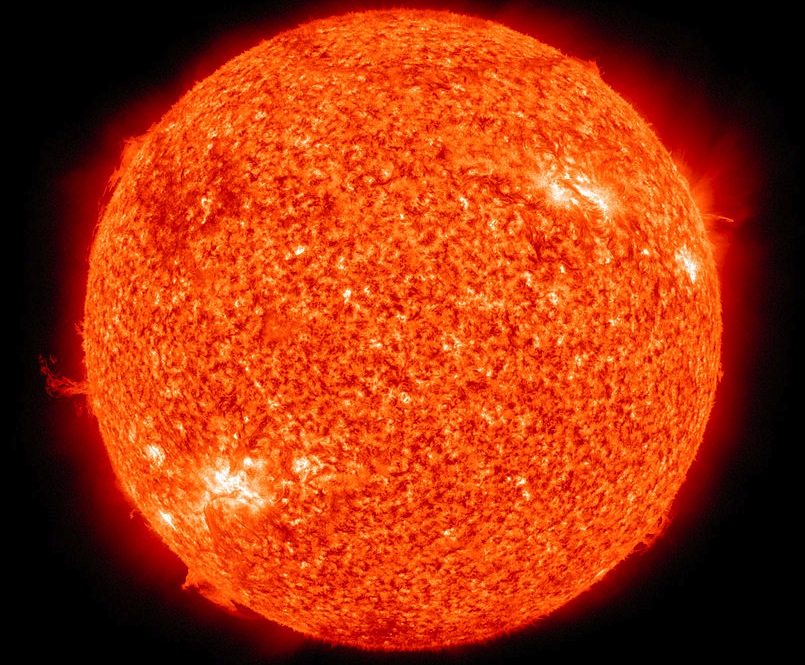
At its center is the Sun, a medium-sized star containing about 99.8% of all the mass in the Solar System. Everything else—including planets, moons, asteroids, comets, dwarf planets, dust, gas, and countless smaller objects—orbits the Sun because of its enormous gravitational pull.
The Solar System formed about 4.6 billion years ago from a giant cloud of gas and dust. As gravity pulled this material together, the Sun formed at the center, while the remaining material gradually became planets and other objects.
Today, the Solar System is home to eight planets, hundreds of moons, millions of asteroids, billions of comets, and countless icy bodies that continue far beyond the orbit of Neptune.
Measuring the Immense Distances
The distances within the Solar System are so enormous that using kilometers alone quickly becomes impractical.
Instead, astronomers often use a unit called the astronomical unit, abbreviated as AU.
One astronomical unit is the average distance between Earth and the Sun.
It equals approximately 149.6 million kilometers, or about 93 million miles.
Using AU makes it much easier to describe planetary distances.
Mercury orbits only about 0.39 AU from the Sun.
Earth is exactly 1 AU away on average.
Jupiter lies about 5.2 AU from the Sun.
Neptune, the most distant planet, orbits at an average distance of about 30 AU.
Even these numbers, however, describe only a small portion of the Solar System.
The Sun: The Heart of the Solar System
Everything begins with the Sun.
The Sun is about 1.39 million kilometers in diameter, making it roughly 109 times wider than Earth.
More than one million Earths could fit inside it by volume.
Despite its enormous size, the Sun is tiny compared with the full extent of the Solar System.
Imagine shrinking the Sun until it is the size of a basketball. At that scale, Earth would be a tiny peppercorn located about 26 meters (85 feet) away. Neptune would be nearly 800 meters (half a mile) from the basketball.
The true boundary of the Solar System would still be many kilometers farther away.
The Inner Solar System
The four inner planets—Mercury, Venus, Earth, and Mars—orbit relatively close to the Sun.
Compared with the entire Solar System, they occupy only a tiny region.
Mercury circles the Sun every 88 Earth days.
Venus completes an orbit in about 225 Earth days.
Earth takes one year.
Mars requires about 687 Earth days.
Although these planets seem widely separated on maps, they are actually clustered together compared with the vast outer reaches of the Solar System.
Crossing the Asteroid Belt
Between Mars and Jupiter lies the asteroid belt, a region containing millions of rocky objects left over from the Solar System’s formation.
Despite what movies often show, the asteroid belt is mostly empty space.
The average distance between large asteroids is so great that spacecraft routinely travel through the belt without coming anywhere near one.
The asteroid belt stretches roughly from about 2.2 AU to 3.2 AU from the Sun.
It marks the transition between the rocky inner planets and the giant outer planets.
The Giant Planets
Beyond the asteroid belt are the giant worlds.
Jupiter, the largest planet, dominates this region. It is more than twice as massive as all the other planets combined.
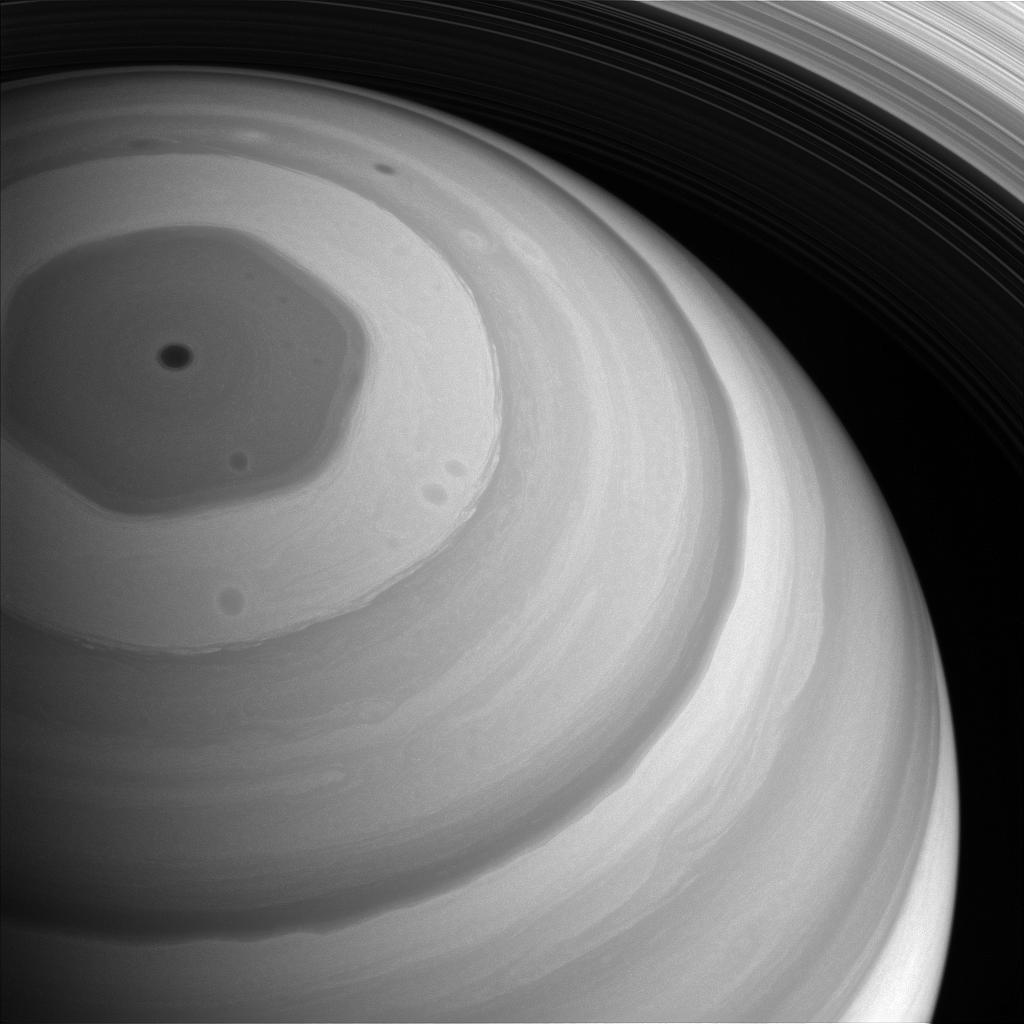
Saturn, famous for its spectacular rings, follows farther out.
Then come Uranus and Neptune, the icy giants that orbit in the cold outer reaches of the planetary system.
Neptune lies nearly 4.5 billion kilometers from the Sun on average.
Sunlight takes about four hours to reach Neptune.
This means that when you see sunlight shining on Neptune, it actually left the Sun roughly four hours earlier.
The Kuiper Belt
Many people assume the Solar System ends with Neptune.
In reality, Neptune is only the beginning of the outer frontier.
Beyond Neptune lies the Kuiper Belt, a vast region filled with icy bodies, dwarf planets, and frozen remnants from the birth of the Solar System.
The Kuiper Belt extends roughly from about 30 AU to around 50 AU from the Sun.
It contains famous dwarf planets such as Pluto, Haumea, and Makemake, along with thousands of smaller icy worlds.
Scientists estimate that there may be hundreds of thousands of objects larger than 100 kilometers across in the Kuiper Belt, along with countless smaller ones.
This region is one of the richest reservoirs of icy bodies in our Solar System.
Pluto Is Not the End
Although Pluto was once considered the ninth planet, astronomers now classify it as a dwarf planet.
Pluto orbits the Sun at an average distance of about 39.5 AU.
Sunlight takes approximately 5.5 hours to reach Pluto.
Even though Pluto feels unimaginably distant from Earth, it lies well within the Solar System.
Beyond Pluto stretches a much larger cosmic wilderness.
The Scattered Disk
Past the Kuiper Belt lies an even more mysterious region known as the scattered disk.
Objects here follow highly elongated and tilted orbits.
Some travel hundreds of astronomical units from the Sun before slowly returning.
These icy worlds were likely scattered outward billions of years ago through gravitational interactions with the giant planets.
The scattered disk gradually blends into an even larger and more distant region.
The Oort Cloud
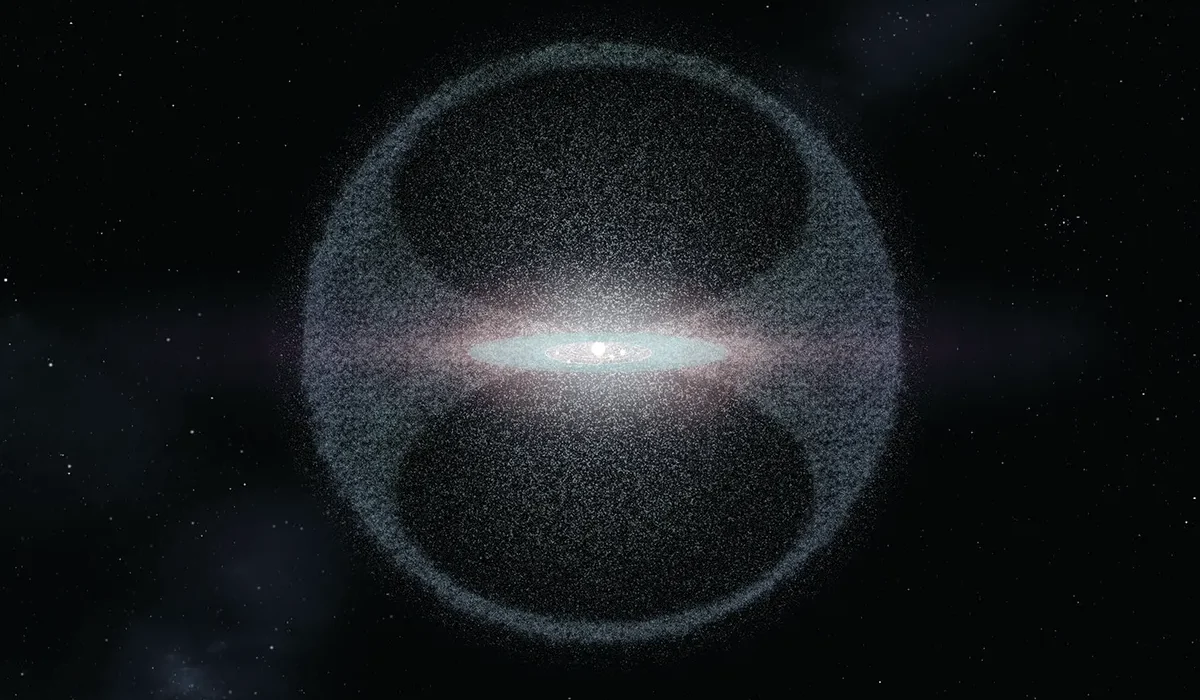
The greatest known reservoir of Solar System objects is the Oort Cloud.
Unlike the flat disk of the planets, the Oort Cloud is thought to form a giant spherical shell surrounding the Solar System in every direction.
Scientists have never observed it directly because its objects are incredibly distant and faint.
However, strong evidence for its existence comes from the long-period comets that occasionally enter the inner Solar System.
The Oort Cloud may begin around 2,000 AU from the Sun and extend as far as 100,000 AU, or perhaps even farther.
That is an almost unimaginable distance.
One astronomical unit is already 149.6 million kilometers.
One hundred thousand astronomical units equals nearly 15 trillion kilometers, or roughly 1.6 light-years.
At those distances, the Sun would appear as just another bright star.
Where Does the Solar System Actually End?
This surprisingly simple question has several scientifically valid answers.
If we define the Solar System as the region containing the planets, it ends at Neptune.
If we include dwarf planets and icy objects, it extends through the Kuiper Belt.
If we include all objects orbiting the Sun, then it stretches through the Oort Cloud.
Another definition uses the Sun’s magnetic influence.
The heliosphere is a giant bubble formed by the solar wind—a continuous stream of charged particles flowing outward from the Sun.
This bubble protects much of the Solar System from incoming cosmic radiation.
Its outer boundary is called the heliopause.
The heliopause lies roughly 120 AU from the Sun, although its exact distance changes as solar activity varies.
Beyond the heliopause begins interstellar space, where the influence of the Sun’s solar wind gives way to the material between stars.
Voyager and the Edge of the Solar System
Humanity has actually sent spacecraft beyond the heliosphere.
NASA’s Voyager 1, launched in 1977, crossed the heliopause in 2012, becoming the first spacecraft to enter interstellar space.
Its twin, Voyager 2, crossed the boundary in 2018.
Even after traveling for decades at extraordinary speeds, both spacecraft remain extremely close to the Sun compared with the estimated size of the Oort Cloud.
If they continue operating, they will still need hundreds of years just to approach the inner Oort Cloud and tens of thousands of years to travel completely through it.
Their incredible journeys highlight just how enormous the Solar System truly is.
How Long Does Sunlight Take to Travel?
Light travels at about 299,792 kilometers per second (186,282 miles per second), the fastest speed known in the universe.
Even at this astonishing speed, sunlight needs time to cross the Solar System.
It reaches Earth in about 8 minutes and 20 seconds.
It arrives at Jupiter after roughly 43 minutes.
It takes about 80 minutes to reach Saturn.
It reaches Neptune in around 4 hours.
If the Oort Cloud extends to 100,000 AU, sunlight would need approximately 1.6 years to travel from the Sun to its outer edge.
Even light cannot cross the Solar System instantly.
Comparing the Solar System to Earth
The distances involved are difficult for the human mind to grasp.
Imagine reducing Earth to the size of a small marble.
At the same scale, the Sun would be about the size of a large beach ball located dozens of meters away.
Neptune would orbit nearly a kilometer from the Sun.
The outer Oort Cloud would extend thousands of kilometers from that same beach ball.
Most of that enormous space would appear almost completely empty.
Yet within this apparent emptiness, gravity quietly governs every object.
Is the Solar System Empty?
Although space is often described as empty, it is not truly vacant.
Tiny dust particles drift between planets.
Charged particles from the solar wind stream outward continuously.
Magnetic fields stretch across vast distances.
Comets occasionally plunge toward the inner Solar System.
Asteroids orbit the Sun.
Invisible gravitational forces shape every orbit.
Even in regions where planets are absent, the Solar System remains an active and dynamic environment.
The Solar System Is Always Moving
The Solar System is not standing still.
As the planets orbit the Sun, the Sun itself is orbiting the center of the Milky Way galaxy.
It travels at roughly 220 kilometers per second.
Completing one trip around the galaxy takes about 225 to 250 million years.
During this immense journey, the entire Solar System moves through interstellar space together.
Could There Be Another Planet Far Away?
Some astronomers have proposed the existence of a hypothetical Planet Nine, a large, distant planet that has not yet been directly observed.
The idea arises from unusual patterns in the orbits of several distant icy objects beyond Neptune.
If Planet Nine exists, it may orbit hundreds of astronomical units from the Sun.
As of today, however, no direct observational evidence has confirmed its existence.
The search continues using some of the world’s most powerful telescopes.
The Solar System Compared With Other Star Systems
Our Solar System is only one planetary system among hundreds of billions in the Milky Way.
Since the 1990s, astronomers have discovered thousands of exoplanets orbiting other stars.
Some planetary systems are much more compact than ours.
Others contain giant planets orbiting extremely close to their stars.
Some appear to have planets much farther out than Neptune.
Studying these distant systems helps scientists understand how common planetary systems are and how unique our own Solar System may be.
Why Understanding Its Size Matters
Learning the true size of the Solar System changes the way we think about our place in the universe.
Earth, despite being our entire world, occupies only a tiny corner of an immense planetary system.
That planetary system itself is just one of countless systems scattered throughout the Milky Way.
The Milky Way is only one galaxy among hundreds of billions in the observable universe.
Yet within this vastness, the Solar System is extraordinary because it is the only known place where life exists.
Its immense scale reminds us not only of the power of nature but also of the remarkable journey of scientific discovery that has allowed humanity to measure distances reaching trillions of kilometers across space.
Conclusion
The Solar System is far larger than the simple diagrams found in many classrooms suggest. While the eight planets occupy only the inner portion of our cosmic neighborhood, the Solar System extends through the Kuiper Belt, the scattered disk, the heliosphere, and likely all the way to the distant Oort Cloud. Depending on how its boundary is defined, it may span nearly 100,000 astronomical units, reaching about 1.6 light-years from the Sun.
These staggering distances reveal a universe that is both breathtakingly vast and beautifully interconnected. Every planet, moon, asteroid, comet, and distant icy body remains linked by the Sun’s gravity, forming an extraordinary cosmic family that has traveled together through the Milky Way for billions of years. The more we explore this immense realm, the more we realize that our Solar System is not merely the space around the planets—it is an enormous and dynamic frontier that continues to inspire wonder, curiosity, and discovery.