Look up at the night sky, and you are looking into a story that began billions of years before the first humans walked the Earth. Every planet, moon, asteroid, and comet in our cosmic neighborhood carries the memory of an ancient past. The Sun that warms our planet, the Moon that lights our nights, the rings of Saturn, the red deserts of Mars, and the icy worlds beyond Neptune all share a common origin.
One of the most fascinating questions in astronomy is surprisingly simple: How old is the Solar System?
The answer is extraordinary. Scientists have determined that the Solar System is approximately 4.57 billion years old, or about 4.567 billion years. This age is supported by decades of research using some of the most precise scientific techniques ever developed. It is not a rough estimate or an educated guess—it is one of the best-established ages in all of science.
Understanding how scientists arrived at this number takes us on a journey from tiny meteorites found on Earth to the birth of the Sun itself.
What Is the Solar System?
Before exploring its age, it helps to understand what the Solar System actually is.
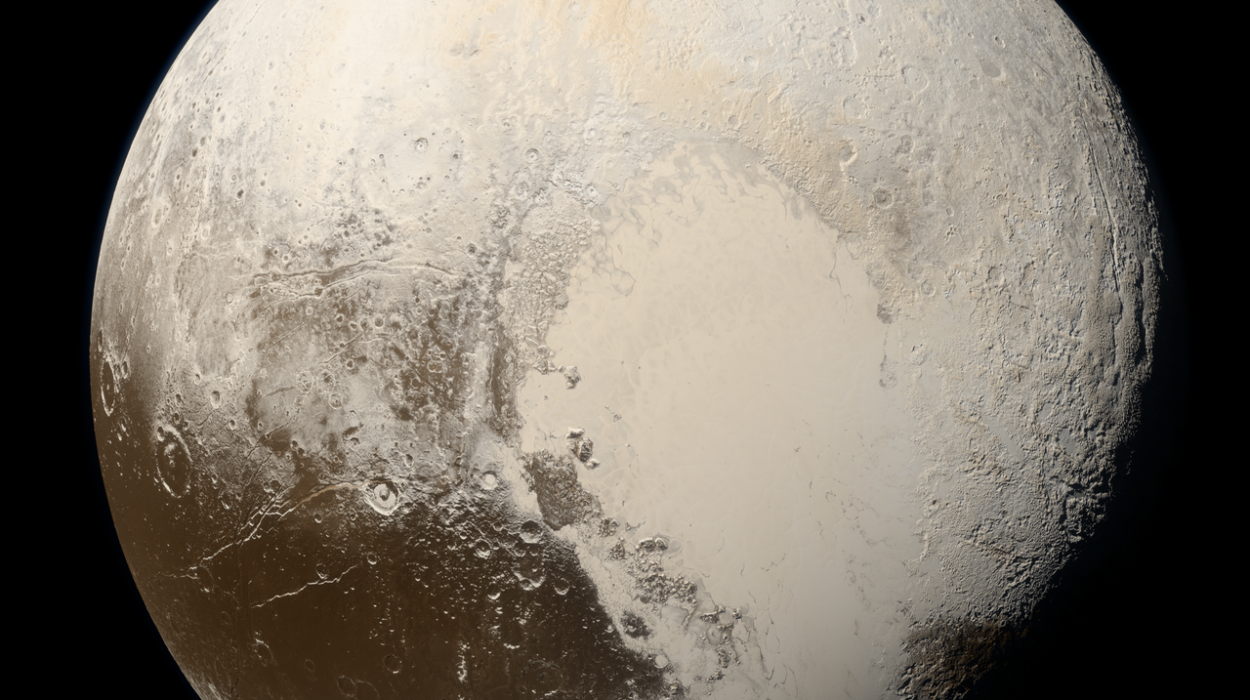
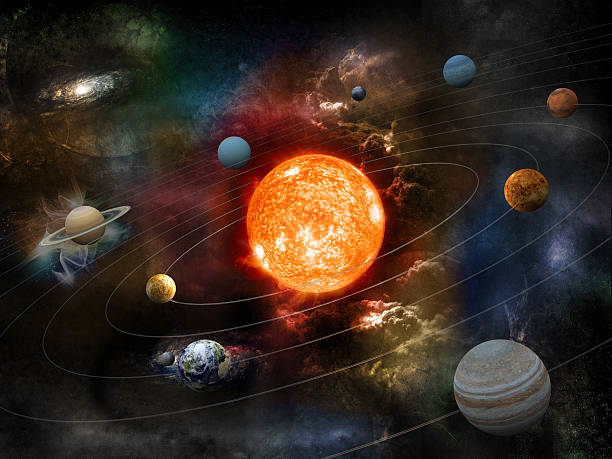
The Solar System consists of the Sun and everything bound to it by gravity. This includes the eight planets, hundreds of moons, dwarf planets such as Pluto, millions of asteroids, countless comets, and vast populations of icy objects in the Kuiper Belt and the distant Oort Cloud.
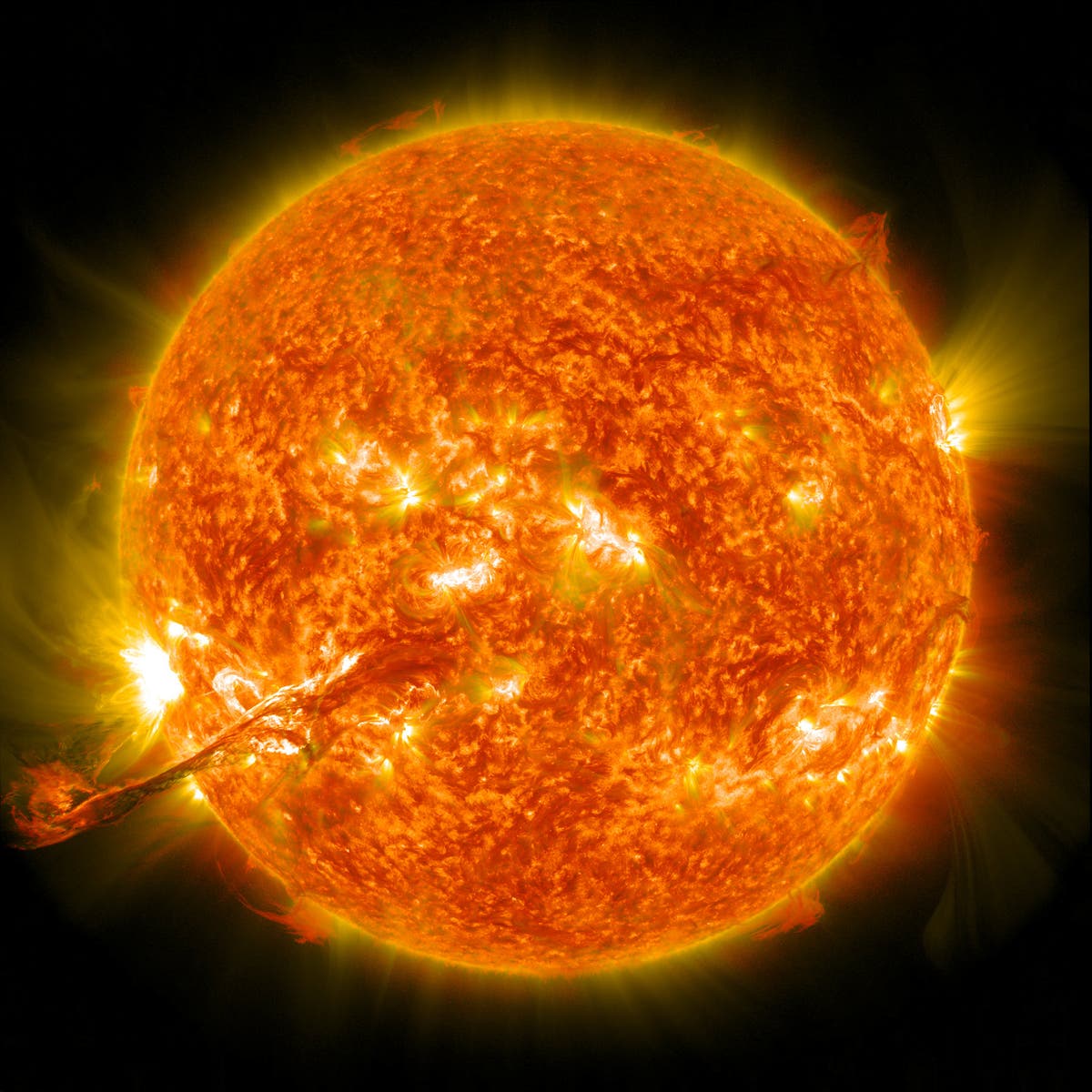
The Sun contains about 99.8% of the Solar System’s total mass, making it the dominant object around which everything else revolves.
Despite the enormous variety of objects, scientists believe they all formed from the same giant cloud of gas and dust billions of years ago.
The Remarkable Age of the Solar System
Today, astronomers estimate that the Solar System formed approximately 4.567 billion years ago, often rounded to 4.6 billion years.
This means the Solar System has existed for more than one-third of the age of the universe itself.
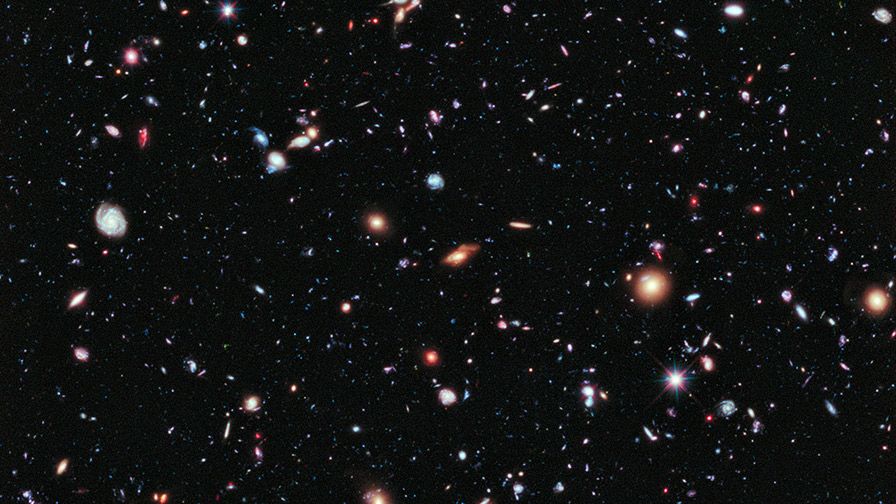
The universe is estimated to be about 13.8 billion years old, so the Solar System formed nearly 9 billion years after the Big Bang.
For comparison, Earth itself is about 4.54 billion years old, meaning our planet formed shortly after the Sun.
Humans, by contrast, have existed for only a tiny fraction of this timeline. Modern humans have lived for roughly 300,000 years—less than a blink of an eye compared with billions of years of Solar System history.
How Do Scientists Know the Solar System’s Age?
No human witnessed the birth of the Solar System. Instead, scientists use clues preserved in ancient rocks that have remained largely unchanged since the Solar System formed.
The most important of these clues come from meteorites.
Meteorites are pieces of rock and metal that travel through space before falling to Earth. Many originated from asteroids that formed during the earliest days of the Solar System.
Unlike Earth, which has active volcanoes, moving tectonic plates, erosion, and weather that constantly reshape its surface, many meteorites have remained remarkably unchanged for billions of years.
They act like natural time capsules.
Scientists analyze these ancient rocks using a technique known as radiometric dating.
Understanding Radiometric Dating
Radiometric dating is one of the most reliable methods for determining the age of ancient materials.
Certain radioactive elements naturally decay into other elements at predictable rates.
For example, uranium slowly transforms into lead over billions of years.
Every radioactive isotope has a known half-life, which is the time required for half of the radioactive atoms in a sample to decay into another element.
By carefully measuring the proportions of the original radioactive isotope and its decay products, scientists can calculate how long the decay has been occurring.
This process works much like a highly accurate natural clock.
Because radioactive decay follows well-understood physical laws, radiometric dating provides extremely precise ages for ancient rocks.
Meteorites Hold the Oldest Clues
The oldest known meteorites have been dated to approximately 4.567 billion years.
These meteorites formed very early, before planets like Earth had fully developed.
One famous group of meteorites contains tiny mineral grains called calcium-aluminum-rich inclusions, often abbreviated as CAIs.
These microscopic minerals are believed to be the first solid materials that formed within the young Solar System.
Their ages consistently fall around 4.567 billion years, making them the oldest directly dated materials known from our Solar System.
Because these inclusions formed almost immediately after the Solar System began, astronomers use their ages to define the Solar System’s birth.
Why Earth’s Rocks Cannot Tell the Whole Story
You might wonder why scientists do not simply date the oldest rocks on Earth.
The reason is that Earth is a geologically active planet.
Wind, rain, rivers, glaciers, volcanoes, earthquakes, and plate tectonics continuously recycle Earth’s crust.
Much of Earth’s original surface disappeared billions of years ago.
Although some ancient rocks on Earth are over 4 billion years old, they formed after the planet itself had already existed for hundreds of millions of years.
Meteorites, on the other hand, often escaped these destructive processes, preserving a much clearer record of the Solar System’s earliest history.
The Birth of the Solar System
Around 4.6 billion years ago, our Solar System did not exist.
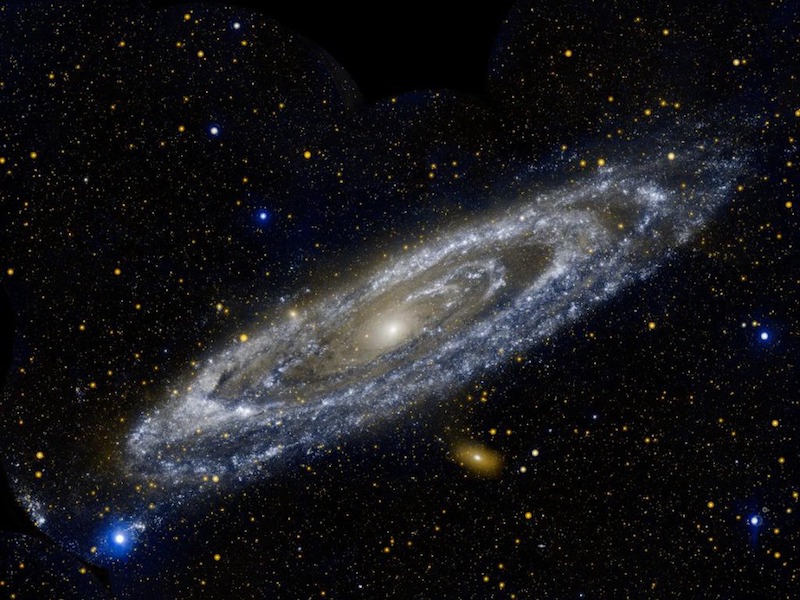
Instead, there was an enormous cloud of gas and dust drifting through one region of the Milky Way Galaxy.
Astronomers call such clouds molecular clouds because they contain molecules, mostly hydrogen, along with helium and tiny particles of dust.
For reasons that scientists continue to investigate, part of this cloud began collapsing under its own gravity.
The collapse may have been triggered by shock waves from a nearby exploding star, known as a supernova, or by other disturbances within the galaxy.
As gravity pulled material inward, the cloud spun faster and flattened into a rotating disk.
Most of the material collected at the center.
This growing central object eventually became our Sun.
The Sun Ignites
As more material fell toward the center, pressure and temperature increased dramatically.
Eventually, temperatures reached millions of degrees.
At this point, hydrogen nuclei began fusing together to form helium.
This process, called nuclear fusion, released enormous amounts of energy.
The Sun was born.
It has continued producing energy through nuclear fusion for approximately 4.6 billion years, shining steadily throughout nearly all of Earth’s history.
Building the Planets
While the Sun formed in the center of the rotating disk, the remaining gas and dust continued circling around it.
Tiny dust grains collided and stuck together.
These particles gradually grew into pebbles, then rocks, then mountain-sized objects.
Over millions of years, gravity caused these objects to merge into larger bodies known as planetesimals.
Planetesimals collided repeatedly.
Some shattered.
Others merged.
Eventually, they formed the planets we know today.
The rocky inner planets—Mercury, Venus, Earth, and Mars—formed close to the Sun, where temperatures were too high for most volatile materials to remain solid.
Farther away, where conditions were much colder, giant planets such as Jupiter and Saturn accumulated enormous amounts of hydrogen and helium gas.
A Violent Early Solar System
The Solar System’s earliest history was anything but peaceful.
Young planets experienced countless collisions.
Asteroids and comets frequently struck planetary surfaces.
Some impacts were so enormous that they reshaped entire worlds.
Scientists believe one giant collision between the young Earth and a Mars-sized object called Theia likely formed the Moon.
Debris blasted into orbit around Earth gradually came together to create our natural satellite.
This event probably occurred within the first 100 million years after the Solar System formed.
How Long Did Planet Formation Take?
Planet formation was not instantaneous.
The earliest solid particles appeared within the first few hundred thousand years.
Large planetesimals formed over the next several million years.
The giant planets likely formed within about 10 million years, while the final stages of building the rocky planets continued for tens of millions of years.
Earth probably reached most of its present mass within about 50 to 100 million years after the Solar System’s formation.
Although these times may seem incredibly long, they are relatively short on cosmic timescales.
The Solar System Has Changed
Although the Solar System is ancient, it has never been static.
Planets continue orbiting the Sun.
Asteroids collide.
Comets occasionally visit the inner Solar System.
Moons interact gravitationally with their planets.
The Sun gradually becomes brighter as it ages.
Even today, our Solar System continues evolving.
Over billions of years, planetary orbits have shifted slightly.
Small bodies have been scattered across space.
Some comets have been ejected into interstellar space, while others remain trapped in distant reservoirs far beyond Neptune.
How Old Is the Sun?
Because the Sun and the Solar System formed together from the same collapsing cloud, their ages are nearly identical.
The Sun is approximately 4.57 billion years old.
It is currently considered a middle-aged star.
Astronomers estimate that the Sun has enough hydrogen fuel remaining to continue shining for another 5 billion years.
Eventually, it will expand into a red giant, shed its outer layers, and leave behind a dense stellar remnant known as a white dwarf.
How Old Are the Planets?
The planets formed shortly after the Sun.
Although each planet assembled over a different period, all of them are approximately 4.5 billion years old.
Mercury, Venus, Earth, and Mars formed relatively quickly from rocky material near the Sun.
Jupiter and Saturn likely accumulated most of their mass early, before the remaining gas in the protoplanetary disk disappeared.
Uranus and Neptune also formed during this early era, although the exact details remain active areas of research.
How Does the Solar System Compare with Other Planetary Systems?
For many years, the Solar System was the only planetary system known.
Today, astronomers have discovered thousands of exoplanets orbiting stars throughout the Milky Way.
Some of these planetary systems are younger than ours, still surrounded by disks of gas and dust where planets are actively forming.
Others are significantly older.
Some stars hosting planets are estimated to be more than 10 billion years old, meaning their planetary systems formed long before our own.
Studying these systems helps scientists understand how common Solar System-like worlds may be throughout the galaxy.
Why Knowing the Solar System’s Age Matters
Determining the Solar System’s age is about much more than assigning a number.
It provides a timeline for understanding nearly every event in planetary science.
Knowing when the Solar System formed helps scientists determine when planets developed, when Earth’s oceans appeared, when the Moon formed, when life first emerged, and how the Solar System has evolved over billions of years.
It also allows astronomers to compare our planetary system with others across the universe.
Without an accurate age, many branches of planetary science and astronomy would lose their chronological foundation.
Could the Estimated Age Change?
Science always remains open to new evidence.
However, the estimated age of approximately 4.567 billion years is supported by multiple independent lines of evidence.
Radiometric dating of meteorites, lunar rocks brought back by Apollo missions, samples collected from asteroids, and sophisticated computer models all point to the same timeframe.
Future measurements may improve precision slightly, but scientists do not expect dramatic changes to the Solar System’s established age.
A Journey That Continues
Although the Solar System began more than 4.5 billion years ago, its story is still unfolding.
Spacecraft continue exploring planets, moons, asteroids, and comets.
New telescopes reveal details of distant planetary systems.
Scientists analyze ancient meteorites in laboratories with ever-increasing precision.
Each new discovery adds another chapter to the history of our cosmic neighborhood.
The Solar System is not simply an ancient collection of worlds. It is a living record of cosmic evolution, preserving the processes that shaped our planet and ultimately made life possible.
Conclusion
The Solar System is approximately 4.567 billion years old, making it one of the oldest and best-understood structures in our corner of the universe. Scientists determined this age primarily by studying ancient meteorites and using radiometric dating, one of the most accurate methods available for measuring geological time. These remarkable space rocks preserve evidence from the earliest moments of Solar System history, allowing researchers to reconstruct events that occurred billions of years before Earth became a habitable world.
Every sunrise, every orbit of the planets, and every distant comet reminds us that we are part of a cosmic family with an incredibly long history. From a collapsing cloud of gas and dust emerged the Sun, the planets, and eventually the conditions that allowed life to flourish on Earth. Even after billions of years, the Solar System continues its journey through the Milky Way, carrying with it the story of its ancient beginnings and the promise of discoveries yet to come.