Look up at the night sky, and it may seem calm and familiar. Tiny points of light sparkle against the darkness, the Moon quietly circles Earth, and perhaps a planet glows among the stars. But beyond that peaceful view lies a universe so vast, mysterious, and astonishing that even the greatest scientists admit there is far more we don’t know than we do.
The observable universe contains hundreds of billions of galaxies, each holding billions of stars. Around many of those stars orbit planets. Somewhere among them may be worlds unlike anything we have ever imagined. Meanwhile, invisible dark matter shapes galaxies, black holes bend space and time, and light from the most distant objects has traveled for more than 13 billion years before reaching our eyes.
Astronomy isn’t just about memorizing facts—it’s about asking questions. Some answers reveal incredible truths. Others lead to even deeper mysteries.
Ready to challenge what you think you know? Here are 50 fascinating questions and scientifically accurate answers that reveal just how extraordinary our universe really is.
1. What Is the Universe?
The universe is everything that exists: all matter, energy, space, time, galaxies, stars, planets, radiation, and the physical laws that govern them. It includes every known object and every known form of energy. Scientists estimate that the observable universe stretches about 93 billion light-years across, although the entire universe may be much larger—or even infinite.
2. How Old Is the Universe?
Current scientific measurements indicate that the universe is approximately 13.8 billion years old. This estimate comes from observations of the cosmic microwave background, the expansion of the universe, and the distribution of galaxies.
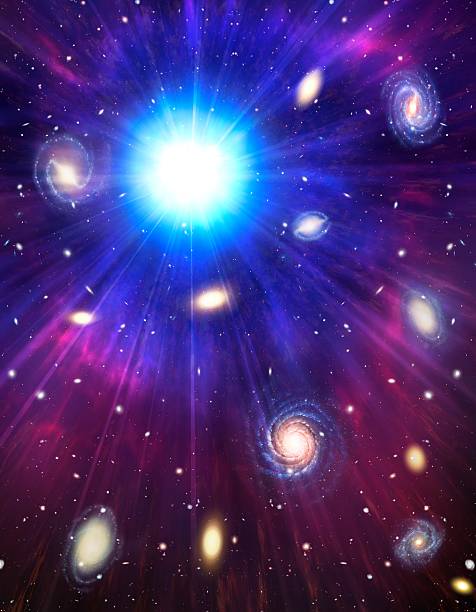
3. Did the Big Bang Happen Like an Explosion?
Not exactly.
The Big Bang was not an explosion into empty space. Instead, it was the rapid expansion of space itself from an extremely hot, dense state. Every region of the universe expanded simultaneously.
4. What Existed Before the Big Bang?
Scientists do not currently know.
Some theories suggest that time itself began with the Big Bang, meaning the concept of “before” may not apply. Other hypotheses propose earlier cosmic phases, but none has been confirmed.
5. Is the Universe Still Expanding?
Yes.
Observations show that galaxies are moving away from one another because space itself continues to expand. Even more surprisingly, this expansion is accelerating.
6. What Is a Galaxy?
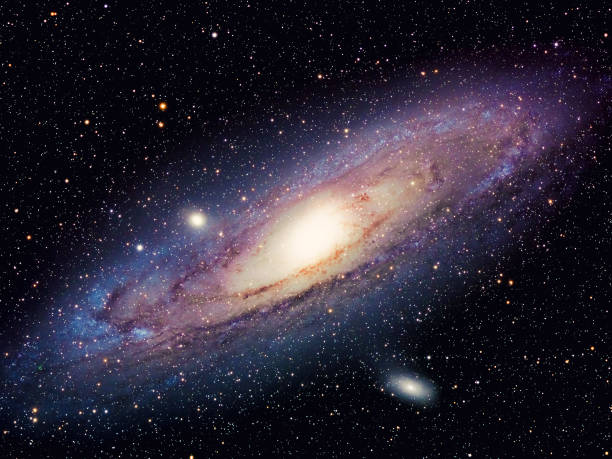
A galaxy is a massive collection of stars, gas, dust, dark matter, and other objects held together by gravity. Galaxies come in many shapes, including spiral, elliptical, and irregular forms.
7. Which Galaxy Do We Live In?
Earth is located inside the Milky Way Galaxy, a barred spiral galaxy containing roughly 100–400 billion stars.
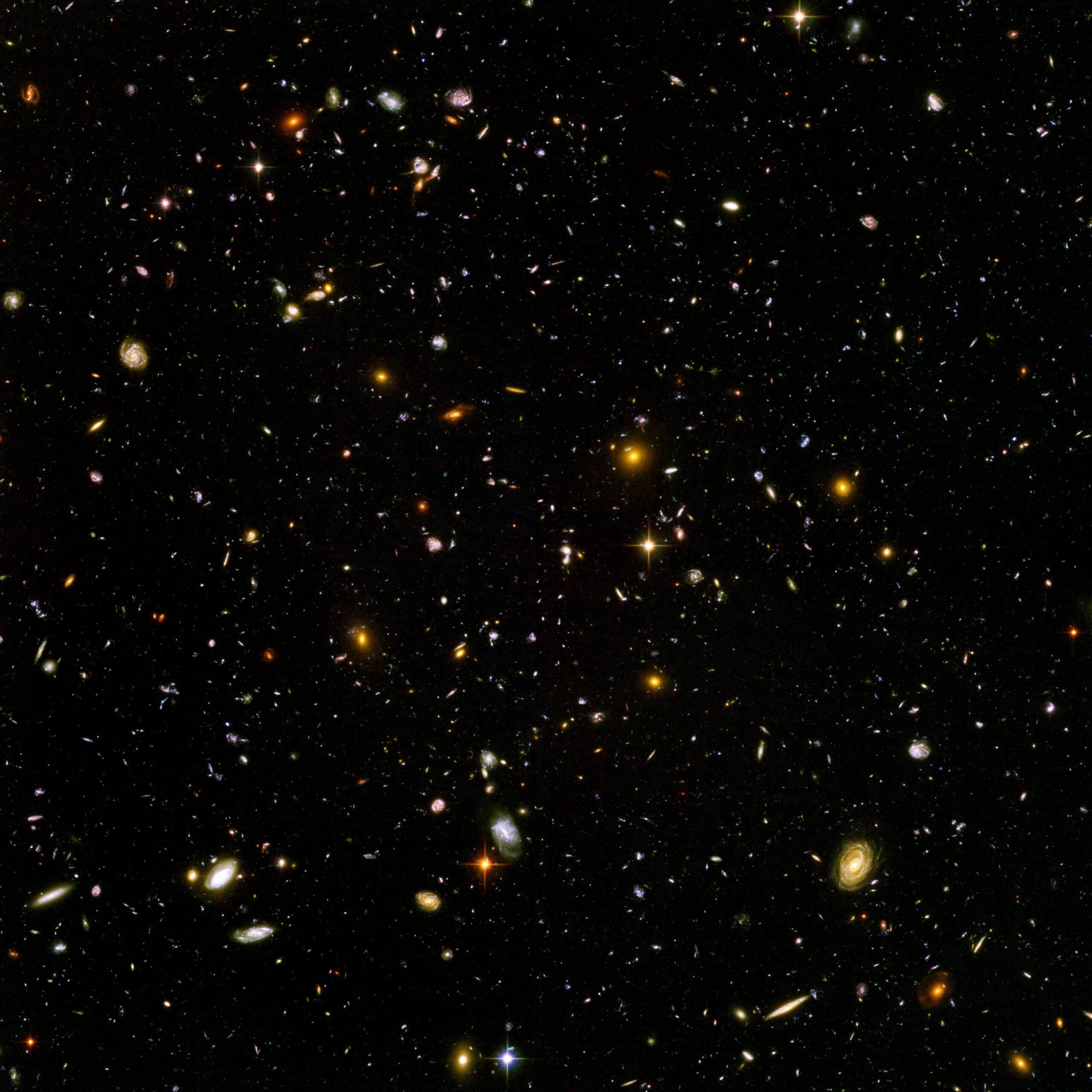
8. How Many Galaxies Exist?
Astronomers estimate that the observable universe contains hundreds of billions of galaxies, with some studies suggesting the number could exceed two trillion when including extremely faint galaxies.
9. What Is a Light-Year?
A light-year is a unit of distance, not time.
It represents the distance light travels in one year—about 9.46 trillion kilometers (5.88 trillion miles).
10. Why Can’t We Travel Faster Than Light?
According to Einstein’s theory of special relativity, objects with mass require increasingly large amounts of energy as they approach the speed of light. Reaching or exceeding light speed would require conditions beyond current physical understanding.
11. What Is a Star?
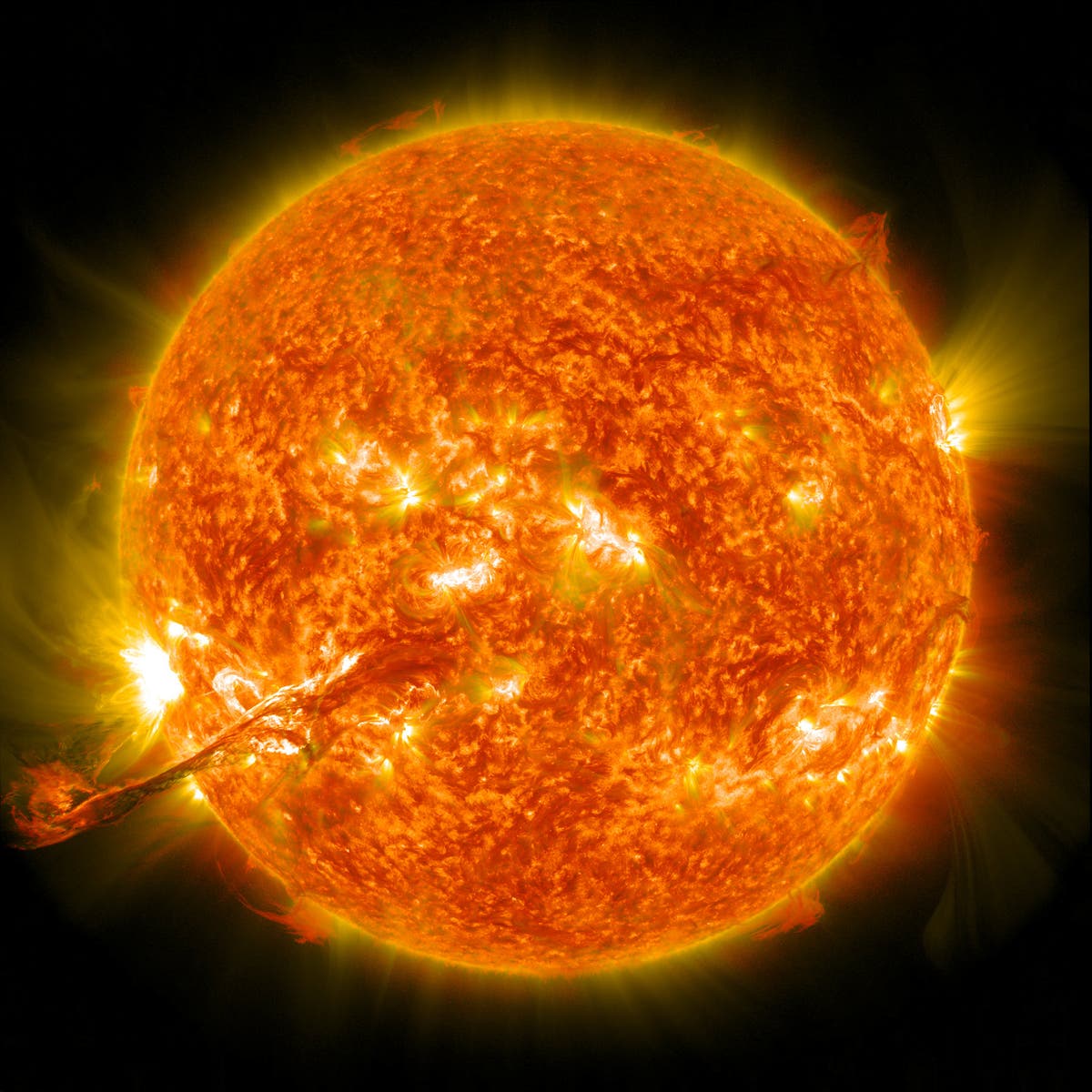
A star is a giant sphere of hot plasma held together by gravity. Its energy comes from nuclear fusion occurring deep within its core.
12. Why Does the Sun Shine?
The Sun shines because hydrogen atoms fuse into helium inside its core, releasing enormous amounts of energy in the form of light and heat.
13. Will the Sun Last Forever?
No.
The Sun has enough hydrogen fuel to continue shining for roughly another 5 billion years before evolving into a red giant.
14. What Is the Brightest Star in Earth’s Night Sky?
The brightest star visible from Earth at night is Sirius, located about 8.6 light-years away.
15. Why Do Stars Twinkle?
Stars appear to twinkle because Earth’s atmosphere constantly bends their light as turbulent air moves overhead.
16. Do Planets Produce Their Own Light?
No.
Planets shine by reflecting light from their parent stars.
17. How Many Planets Are in Our Solar System?
There are eight recognized planets: Mercury, Venus, Earth, Mars, Jupiter, Saturn, Uranus, and Neptune.
18. Why Isn’t Pluto a Planet Anymore?
In 2006, astronomers reclassified Pluto as a dwarf planet because it has not cleared its orbital neighborhood of other objects, one of the criteria established by the International Astronomical Union.
19. What Is an Exoplanet?
An exoplanet is any planet that orbits a star other than the Sun.
Thousands have already been discovered.
20. Could Life Exist on Other Planets?
Scientists do not yet know.
However, given the enormous number of stars and planets in the universe, many researchers consider it scientifically plausible that life exists elsewhere.
21. What Is a Black Hole?
A black hole is a region where gravity is so strong that nothing—not even light—can escape once it passes the event horizon.
22. Can Black Holes Suck Up Entire Galaxies?
No.
Black holes obey gravity just like any other massive object. They only strongly affect nearby objects.
23. What Happens Inside a Black Hole?
No one knows for certain.
Current physics cannot fully describe conditions inside a black hole’s central region, known as the singularity.
24. What Is a Supernova?
A supernova is the powerful explosion of certain stars at the end of their lives. These explosions create many of the heavy elements found throughout the universe.
25. Are We Made of Stardust?
Yes.
Most of the elements in the human body—including carbon, oxygen, calcium, and iron—were created inside ancient stars.
26. What Is a Neutron Star?
A neutron star is the incredibly dense remnant left behind after some massive stars explode as supernovae.
A teaspoon of neutron-star matter would weigh billions of tons on Earth.
27. What Is Dark Matter?
Dark matter is an invisible form of matter that does not emit, absorb, or reflect light but reveals its presence through gravity.
Scientists estimate it makes up about 27% of the universe’s total mass-energy content.
28. What Is Dark Energy?
Dark energy is an unknown form of energy believed to drive the accelerating expansion of the universe.
It accounts for approximately 68% of the universe’s mass-energy content.
29. Can We See Dark Matter?
No.
Scientists detect dark matter indirectly through its gravitational effects on galaxies and galaxy clusters.
30. What Is the Cosmic Microwave Background?
It is faint microwave radiation left over from the early universe, often described as the oldest light we can observe.
31. Why Is Space Mostly Empty?
Gravity pulls matter together into stars and galaxies, leaving enormous regions between them with extremely low densities of matter.
32. Is Space Completely Empty?
No.
Even interstellar space contains atoms, dust, radiation, magnetic fields, and quantum fluctuations.
33. Why Is Space Dark?
Although the universe contains countless stars, most are extremely distant. The finite age of the universe also limits how much light has reached us.
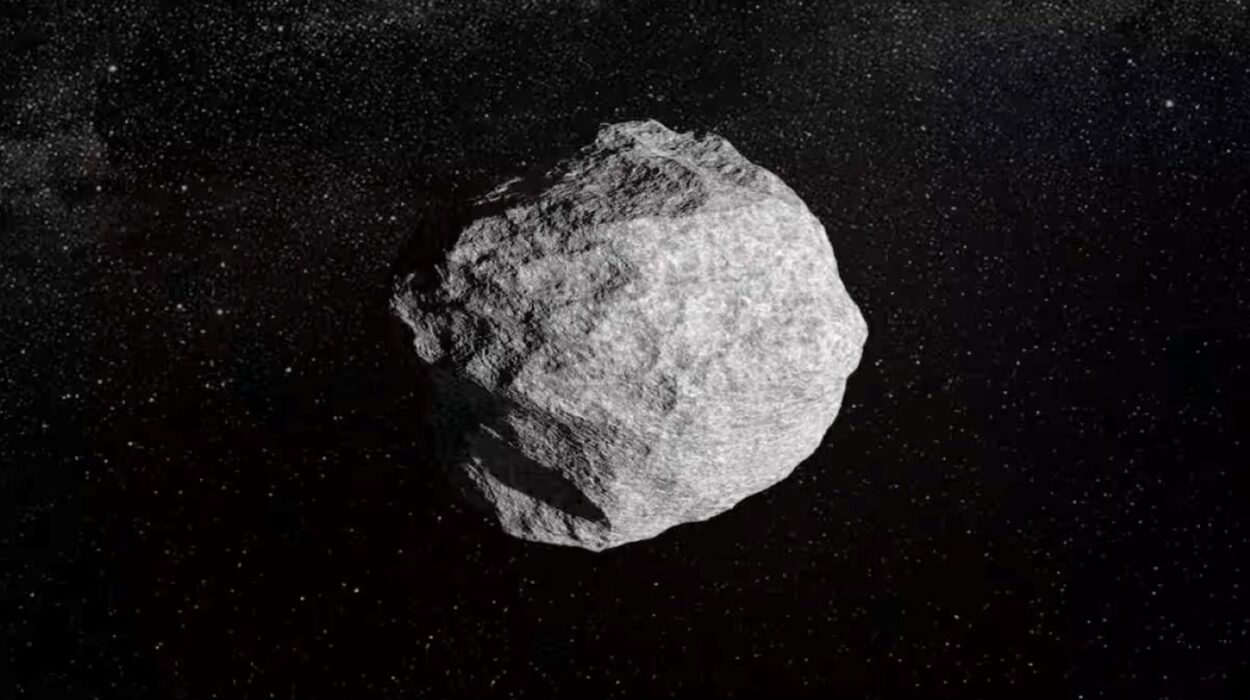
34. What Is an Asteroid?
An asteroid is a rocky object orbiting the Sun, most commonly found in the asteroid belt between Mars and Jupiter.
35. What Is a Comet?
A comet is an icy object that develops a glowing coma and tail when it approaches the Sun.
36. Why Do Comets Have Tails?
Solar radiation and the solar wind heat the comet’s ice, releasing gas and dust that form tails pointing generally away from the Sun.
37. Could an Asteroid Hit Earth Again?
Yes.
Large impacts are rare, but Earth continues to be monitored for potentially hazardous asteroids.
38. What Causes Meteor Showers?
Meteor showers occur when Earth passes through streams of dust left behind by comets.
39. Is Mars Really Red?
Yes.
Mars appears red because iron-rich minerals on its surface have rusted over billions of years.
40. Could Humans Live on Mars?
Not without advanced technology.
Mars has a thin atmosphere, intense radiation, cold temperatures, and no breathable air.
41. What Is the Largest Planet?
Jupiter is the largest planet in the Solar System.
More than 1,300 Earth-sized planets could fit inside it by volume.
42. Which Planet Has the Most Spectacular Rings?
Saturn possesses the Solar System’s largest and most prominent ring system, composed mainly of ice particles and rocky debris.
43. Can Sound Travel Through Space?
No.
Sound requires a material medium such as air, water, or solids. Space is too empty for ordinary sound waves to travel.
44. Why Is the Sky Black in Space?
Without Earth’s atmosphere to scatter sunlight, astronauts see a black sky even when the Sun is shining.
45. Could the Universe End?
Possibly.
Scientists have proposed several scenarios, including continued expansion leading to a “heat death,” a hypothetical “Big Crunch,” or other possibilities. Current evidence most strongly supports continued expansion.
46. Is Time the Same Everywhere?
No.
Einstein’s theory of relativity shows that time passes differently depending on gravity and relative motion.
47. What Is the Fastest Thing in the Universe?
Light travels at approximately 299,792 kilometers per second (186,282 miles per second) in a vacuum, the fastest speed currently known according to modern physics.
48. Why Do Scientists Keep Building Bigger Telescopes?
Larger telescopes collect more light, allowing astronomers to observe fainter, more distant objects and study the earliest stages of the universe.
49. Have We Found Another Earth?
Astronomers have discovered several rocky exoplanets located within the habitable zones of their stars, but no planet has yet been confirmed to be an Earth twin capable of supporting life as we know it.
50. What Is the Greatest Mystery in the Universe?
There is no single answer.
Some of the greatest unsolved mysteries include the nature of dark matter, the identity of dark energy, how gravity fits with quantum mechanics, whether life exists elsewhere, what happened before—or at—the beginning of the universe, and why the fundamental laws of physics have the values they do.
The More We Learn, the More We Discover
Astronomy has a remarkable way of changing our perspective. Every major discovery has revealed that the universe is far larger, older, and more complex than people once believed. Earth is not the center of the Solar System. The Solar System is not the center of the Milky Way. The Milky Way is only one galaxy among hundreds of billions. Even the matter we can see makes up only a small fraction of the cosmos.
Yet these discoveries do not make humanity insignificant. Instead, they highlight one of our greatest achievements: the ability to understand a universe that stretches billions of light-years beyond our world. Through observation, mathematics, experimentation, and imagination, scientists have uncovered extraordinary truths about space and time—while recognizing that many profound questions remain unanswered.
Perhaps that is what makes astronomy so captivating. Every answer opens the door to new mysteries. Every telescope reveals objects never seen before. Every spacecraft expands the boundaries of exploration. And every generation of scientists builds upon the discoveries of those who came before.
The universe still holds countless secrets. Somewhere among distant galaxies, hidden worlds, invisible matter, and unexplored cosmic phenomena may lie the answers to questions we have not yet learned to ask. That endless journey of discovery is what makes the study of the universe one of humanity’s greatest adventures.