Every star has a beginning, a lifetime, and an end. Although stars can shine for millions or even billions of years, they do not live forever. Like living things, they are born, they grow and change over time, and eventually they exhaust the fuel that keeps them alive. Their final moments are among the most spectacular events in the universe. Some stars fade quietly into glowing embers called white dwarfs, while others end in unimaginably powerful explosions known as supernovas.
The death of a star is not simply an ending. It is also a new beginning. The elements forged inside dying stars become the building blocks of new stars, planets, and even life itself. Every atom of calcium in your bones, the iron in your blood, and much of the oxygen you breathe was created inside stars that lived and died long before the Sun was born.
Understanding how stars die helps us understand where we came from and how the universe continues to evolve.
Every Star Lives in a Delicate Balance
A star is essentially a giant ball of extremely hot gas held together by gravity. Gravity constantly pulls the star’s material inward, trying to make it collapse.
At the same time, the star’s core is an enormous nuclear furnace. Deep inside, hydrogen atoms fuse together to form helium. This process, called nuclear fusion, releases tremendous amounts of energy.
That energy pushes outward as heat and radiation, balancing gravity’s inward pull.
As long as fusion continues, the star remains stable.
The moment this balance begins to fail, the star enters the final chapters of its life.
The Birth Determines the Ending
Not all stars die the same way.
The most important factor that determines a star’s fate is its mass.
Smaller stars live incredibly long lives because they burn their fuel slowly. Some of the smallest stars are expected to survive for trillions of years—far longer than the current age of the universe.
Massive stars, on the other hand, consume their fuel at astonishing rates. Although they contain much more hydrogen, they burn through it so rapidly that many survive only a few million years.
In astronomy, bigger stars actually have shorter lives.
The Long Main Sequence Stage
For most of its lifetime, a star remains in what astronomers call the main sequence.
This is the stable phase when hydrogen fusion powers the star.
Our Sun has been in this stage for about 4.6 billion years and is expected to remain there for roughly another 5 billion years.
During this long period, the star shines steadily, producing the light and heat that can support planetary systems.
Eventually, however, the supply of hydrogen in the core begins to run out.
This marks the beginning of the end.
When Hydrogen Runs Out
As hydrogen becomes scarce in the core, fusion slows.
Without enough outward pressure, gravity begins compressing the core.
The compression raises the temperature dramatically.
Soon, hydrogen begins fusing in a shell surrounding the core instead of inside it.
Meanwhile, the increasingly hot core eventually becomes hot enough for helium fusion to begin.
The outer layers of the star expand enormously.
The star transforms into a red giant.
Despite the name, red giants are not necessarily heavier than before. They become much larger, cooler on the surface, and much brighter than they were during their main-sequence years.
The Future of Our Sun
Our own Sun will someday become a red giant.
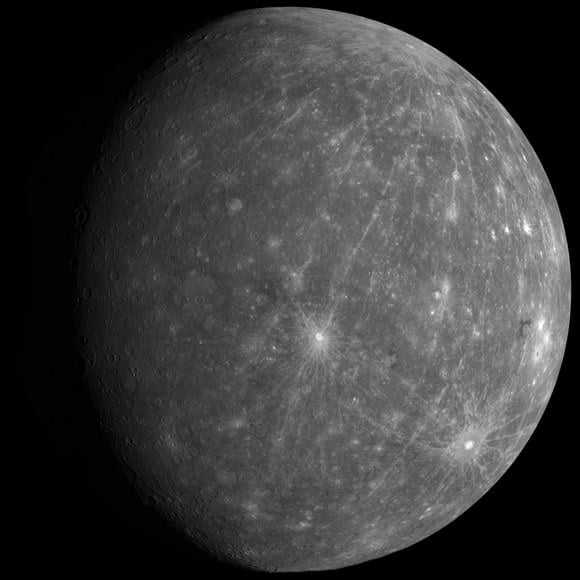
Billions of years from now, it will grow so large that it will likely engulf Mercury and Venus. The fate of Earth remains uncertain. Current models suggest Earth may be swallowed by the expanding Sun or, if it survives physically, become an uninhabitable, scorched world.
The oceans will evaporate.
The atmosphere will disappear.
Life, as we know it, will no longer exist.
Fortunately, this dramatic transformation lies about five billion years in the future.
How Sun-Like Stars Die
Stars with masses up to about eight times that of the Sun do not end in giant explosions.
Instead, they experience a much gentler death.
As helium fusion eventually ends, the star cannot generate enough pressure to support itself.
Its outer layers become unstable and drift away into space.
These colorful expanding clouds of gas are known as planetary nebulae.
Despite their name, planetary nebulae have nothing to do with planets. Early astronomers simply thought they resembled the disks of distant planets through small telescopes.
The glowing gas slowly expands outward, illuminated by the hot stellar core left behind.
The Birth of a White Dwarf
After shedding its outer layers, the remaining core becomes a white dwarf.
A white dwarf is one of the densest objects in the universe.
Although it is roughly the size of Earth, it contains about half to nearly one and a half times the Sun’s mass.
A teaspoon of white dwarf material would weigh several tons on Earth.
Unlike ordinary stars, white dwarfs no longer produce energy through nuclear fusion.
Instead, they shine because they remain incredibly hot from their former life.
Over billions and eventually trillions of years, they slowly radiate away their heat.
Why White Dwarfs Do Not Collapse
One fascinating question naturally arises.
If fusion has stopped, why doesn’t gravity continue crushing the white dwarf?
The answer lies in quantum physics.
Inside the white dwarf, electrons are packed so tightly together that they generate a pressure known as electron degeneracy pressure.
This unusual form of pressure is not caused by heat but by the laws of quantum mechanics.
It is strong enough to resist gravity and prevent further collapse, as long as the white dwarf remains below a certain mass limit.
This remarkable balance allows white dwarfs to survive for immense spans of time.
The Slow Cooling of White Dwarfs
White dwarfs gradually become cooler and dimmer.
Because the universe is only about 13.8 billion years old, none has had enough time to cool completely.
Astronomers predict that after trillions of years, a white dwarf would eventually become a cold, dark object known as a black dwarf.
However, black dwarfs remain purely theoretical because the universe is not yet old enough for any to exist.
The Dramatic Death of Massive Stars
Stars much more massive than the Sun follow a completely different path.
Their enormous gravity creates much higher temperatures and pressures inside their cores.
Instead of stopping after helium fusion, they continue producing progressively heavier elements.
Carbon forms oxygen.
Oxygen forms neon.
Neon forms magnesium.
Eventually, silicon fusion creates iron.
This process builds an onion-like structure inside the star, with different layers producing different elements.
For millions of years, this sequence continues.
Then everything changes.
Why Iron Marks the End
Iron is a special element in stellar evolution.
Fusion of lighter elements releases energy.
Fusion involving iron does not.
Instead of producing energy, iron fusion requires energy.
Once an iron core forms, the star loses its ability to support itself through fusion.
Gravity suddenly gains the upper hand.
The core collapses within seconds.
This collapse triggers one of the most violent events in nature.
The Incredible Power of a Supernova
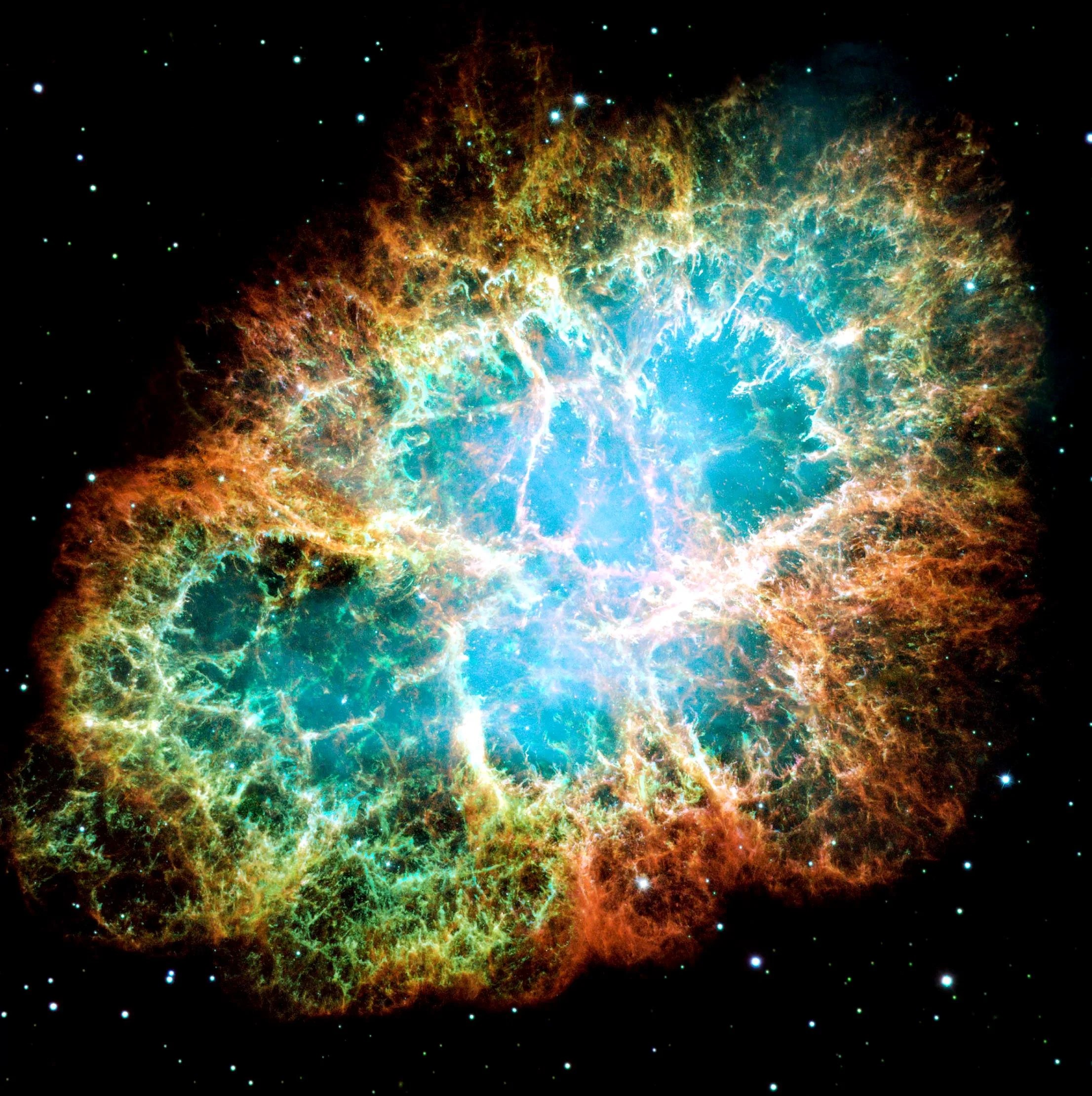
When the collapsing core suddenly rebounds under extreme conditions, an enormous explosion tears through the star.
This explosion is called a supernova.
For a brief period, a single exploding star can outshine an entire galaxy containing hundreds of billions of stars.
The explosion sends enormous amounts of gas, dust, and newly created elements racing into space at thousands of kilometers per second.
Supernovas are among the brightest and most energetic events in the universe.
They release more energy in seconds than the Sun will emit during its entire lifetime.
Creating the Elements of Life
Supernovas do far more than destroy stars.
They create many of the heavy elements that make planets and living organisms possible.
During the explosion, temperatures become so extreme that atomic nuclei rapidly capture neutrons, forming elements heavier than iron.
Gold.
Silver.
Uranium.
Lead.
Many rare elements on Earth owe their existence to supernova explosions.
When these elements spread into interstellar space, they eventually become part of giant clouds of gas.
Later, gravity gathers this material into new stars and planets.
Every generation of stars enriches the universe with more complex elements.
The Birth of Neutron Stars
Not every supernova leaves the same remnant.
If the original star is massive but not extraordinarily massive, its core collapses into a neutron star.
Neutron stars are among the densest known objects.
They typically measure only about 20 kilometers (12 miles) across while containing more mass than the Sun.
Their gravity is so intense that atoms themselves collapse.
Electrons combine with protons to form neutrons, producing an object composed almost entirely of neutrons.
A teaspoon of neutron-star material would weigh billions of tons on Earth.
Some neutron stars rotate hundreds of times every second while emitting beams of radio waves.
When these beams sweep across Earth, astronomers detect them as regular pulses, giving rise to the name pulsars.
When a Black Hole Is Born
If a star begins its life with enough mass, even neutron degeneracy pressure cannot resist gravity.
The collapsing core continues shrinking.
Eventually it forms a black hole.
A black hole’s gravity becomes so strong that nothing—not even light—can escape once it crosses the event horizon.
Black holes are not cosmic vacuum cleaners.
They influence nearby objects through gravity just as any massive object does.
If our Sun were somehow replaced by a black hole of equal mass, Earth’s orbit would remain nearly unchanged. The difference would simply be that there would no longer be sunlight to warm our planet.
Different Types of Supernovas
Although all supernovas are brilliant stellar explosions, astronomers recognize several different types.
The most familiar are core-collapse supernovas, which occur when massive stars exhaust their nuclear fuel.
Another important variety is the Type Ia supernova.
This occurs when a white dwarf exists in a binary star system.
If it gains too much mass from its companion star and exceeds a critical limit, runaway nuclear fusion ignites throughout the white dwarf.
The entire star is destroyed in an enormous thermonuclear explosion.
Unlike core-collapse supernovas, no stellar remnant remains.
Type Ia supernovas are particularly valuable because they have nearly uniform brightness, allowing astronomers to measure vast cosmic distances.
These measurements played a key role in discovering that the expansion of the universe is accelerating.
Supernovas Shape Galaxies
Supernovas profoundly influence the evolution of galaxies.
Their shock waves compress nearby clouds of gas, sometimes triggering the birth of new stars.
The heavy elements they produce enrich future generations of stellar systems.
They also heat the gas between stars and influence the large-scale structure of galaxies.
Without countless supernovas throughout cosmic history, rocky planets like Earth would never have formed.
The universe would consist mostly of hydrogen and helium.
Life, chemistry, and biology would be dramatically different—or perhaps impossible.
Can We See a Star Die?
Yes.
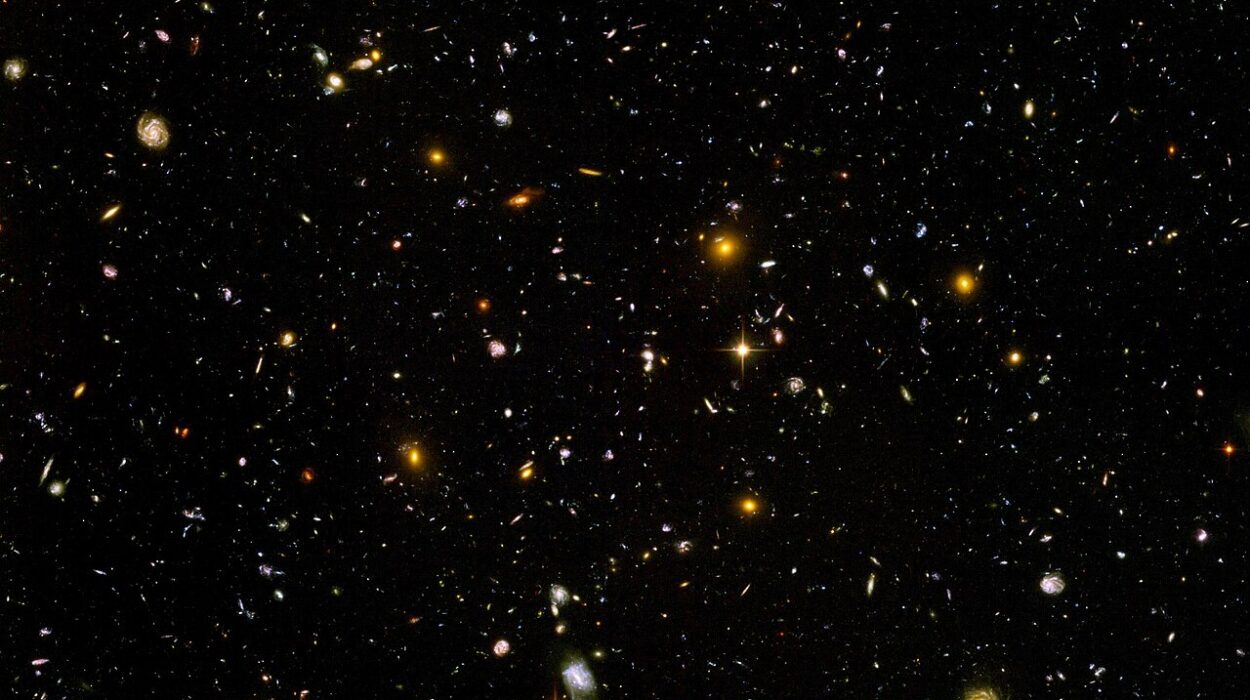
Astronomers regularly observe supernovas in distant galaxies.
Because light takes time to travel, looking into space also means looking back in time.
Some supernovas we observe today actually exploded millions of years ago.
Within our own Milky Way Galaxy, naked-eye supernovas are relatively rare.
The last one clearly visible without a telescope occurred in 1604, observed by astronomer Johannes Kepler.
Astronomers expect another Milky Way supernova eventually, although predicting exactly when is impossible.
One famous candidate is Betelgeuse, the bright red supergiant in the constellation Orion.
It is nearing the end of its life in astronomical terms, but that could still mean tomorrow, a hundred thousand years from now, or even longer.
How Astronomers Study Stellar Death
Modern astronomy uses many different tools to investigate dying stars.
Optical telescopes capture visible light.
Radio telescopes reveal cold gas and expanding remnants.
Space telescopes detect ultraviolet, X-ray, and infrared radiation that cannot easily reach Earth’s surface.
Neutrino detectors can even observe tiny particles released during supernova explosions.
In recent years, gravitational-wave observatories have opened another exciting window into the universe by detecting ripples in spacetime produced by collisions between neutron stars and black holes.
Together, these observations provide an increasingly complete picture of stellar evolution.
The Circle of Cosmic Life
Although the death of a star sounds tragic, it is actually one of nature’s greatest acts of creation.
The gas released by dying stars becomes the raw material for new stellar generations.
New planets form from enriched clouds of dust.
Complex chemistry becomes possible.
Eventually, life can emerge.
Our own Solar System formed from a cloud already enriched by earlier generations of stars.
In a very real sense, every human being carries atoms that once existed inside ancient stars.
As astronomer Carl Sagan famously expressed, we are made of “star stuff.”
The Never-Ending Story of the Stars
Stars are not eternal lights fixed forever in the night sky. They are dynamic, evolving objects that live according to the laws of physics. Some end their lives peacefully, shrinking into dense white dwarfs that slowly cool over unimaginable spans of time. Others die in spectacular supernovas, briefly becoming some of the brightest objects in the universe before leaving behind neutron stars or black holes.
Yet their deaths are not the end of the story. Each dying star enriches the cosmos with the ingredients needed for future stars, planets, and living worlds. Every brilliant supernova lights the way for new beginnings, and every quiet white dwarf stands as a glowing reminder of a star that once illuminated its corner of the galaxy.
When we look up at the night sky, we are witnessing an endless cycle of birth, life, death, and renewal—a cosmic story that has been unfolding for billions of years and continues to shape the universe we call home.