On a clear, dark night, the sky appears as a vast dome filled with countless stars. They seem to be attached to an enormous invisible shell surrounding Earth, moving together from east to west as the hours pass. Although this is only an illusion, it has inspired one of the most useful concepts in astronomy: the celestial sphere.
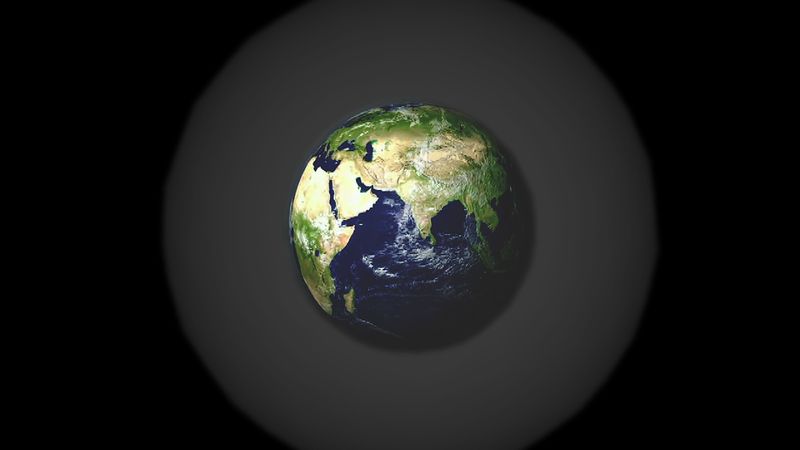
The celestial sphere is not a real object floating in space. It is an imaginary sphere of enormous size centered on Earth—or, more precisely for many astronomical calculations, centered on the observer. Astronomers use it as a convenient way to describe the positions and apparent motions of stars, planets, the Sun, the Moon, and other celestial objects.
Despite being imaginary, the celestial sphere has remained one of astronomy’s most important tools for thousands of years. It helps both beginners and professional astronomers understand the night sky, locate celestial objects, and navigate across the heavens.
Understanding the Celestial Sphere
Imagine standing in the middle of a perfectly round, gigantic globe. The inside surface of this globe is painted with every star, constellation, planet, and galaxy visible in the sky. Wherever you look, you see celestial objects projected onto the inner surface of this enormous sphere.
This imaginary globe is the celestial sphere.
In reality, the stars are not all the same distance from Earth. Some are only a few light-years away, while others lie thousands or even millions of light-years farther. Galaxies can be billions of light-years distant. The celestial sphere ignores these vast differences in distance and simply treats every object as if it were located on the sphere’s inner surface.
This simplification makes it much easier to describe where objects appear in the sky without worrying about how far away they actually are.
Why Astronomers Use the Celestial Sphere
The universe is incredibly large and three-dimensional. Every star occupies its own location in space, moving through the galaxy at its own speed. Trying to map every object’s true position all at once would be extremely complicated.
The celestial sphere solves this problem by focusing only on an object’s apparent position as seen from Earth.
For many observations, astronomers are more interested in where an object appears in the sky than in its actual distance. Whether a star is ten light-years away or a thousand, it still appears in a particular direction. The celestial sphere provides a simple coordinate system for describing that direction.
This concept is similar to looking at distant mountains. Even though some peaks are much farther away than others, they all seem to lie along the horizon from your viewpoint.
The Ancient Origins of the Celestial Sphere
Long before telescopes existed, ancient civilizations carefully observed the night sky.
The stars appeared to rise in the east, move across the sky, and set in the west every night. Since the stars maintained nearly the same patterns relative to one another, many early astronomers believed they were fixed to a giant rotating sphere surrounding Earth.
Ancient Greek astronomers, including Aristotle and Hipparchus, developed detailed models based on this idea. Later, Claudius Ptolemy incorporated the celestial sphere into his influential astronomical system.
Although modern astronomy has shown that Earth rotates while the stars remain at enormous distances, the celestial sphere remains an extremely useful mathematical model.
Today, astronomers understand that the apparent daily motion of the sky results from Earth’s rotation rather than the rotation of an actual celestial sphere.
The Celestial Poles
Earth rotates around an imaginary axis passing through the North Pole and the South Pole.
If this axis is extended far into space, it intersects the celestial sphere at two special points known as the north celestial pole and the south celestial pole.
These points appear fixed in the sky while all other stars seem to circle around them.
Near the north celestial pole lies Polaris, commonly called the North Star. Although Polaris is not exactly at the celestial pole, it is very close, making it an excellent guide for navigation.
Observers in the Northern Hemisphere often notice that stars appear to rotate around Polaris throughout the night.
The Celestial Equator
Earth has an equator dividing the planet into the Northern and Southern Hemispheres.
If Earth’s equator is projected outward into space until it reaches the celestial sphere, it forms the celestial equator.
The celestial equator divides the celestial sphere into northern and southern halves.
Many celestial coordinate systems use the celestial equator as their primary reference line, much like Earth’s equator is used for geographic latitude.
Because Earth rotates, stars appear to rise, cross the celestial equator, and set depending on an observer’s location.
The Ecliptic
Another important circle on the celestial sphere is the ecliptic.
The ecliptic represents the Sun’s apparent yearly path across the sky as Earth orbits the Sun.
This path exists because Earth’s orbit defines a plane in space, and when projected onto the celestial sphere, it becomes the ecliptic.
The Moon and planets also remain close to the ecliptic because the planets orbit the Sun in nearly the same plane.
This is why the zodiac constellations all lie along the ecliptic.
Constellations on the Celestial Sphere
Constellations are familiar patterns of stars that appear on the celestial sphere.
Although the stars forming a constellation often lie at vastly different distances from Earth, they appear close together because they occupy similar directions in the sky.
For example, the stars making up Orion are not clustered together in space. Some are hundreds of light-years farther away than others. Yet from Earth’s perspective, they create one of the most recognizable constellations in the night sky.
The celestial sphere allows astronomers to map these constellations accurately without considering their true three-dimensional positions.
The Daily Motion of the Sky
One of the most noticeable features of the celestial sphere is its apparent daily rotation.
Every day, the Sun rises in the east, moves across the sky, and sets in the west. The stars follow the same general pattern during the night.
This motion is not caused by the stars moving around Earth.
Instead, Earth rotates once approximately every 24 hours from west to east. Because of this rotation, the sky appears to move in the opposite direction—from east to west.
The celestial sphere provides an easy way to visualize this apparent motion.
The Yearly Changes in the Night Sky
The night sky is not exactly the same throughout the year.
Different constellations become visible during different seasons because Earth travels around the Sun.
As Earth changes its position in its orbit, the nighttime side of our planet faces different regions of space.
This gradual change causes winter constellations, spring constellations, summer constellations, and autumn constellations to appear at different times of the year.
The celestial sphere helps astronomers predict these seasonal changes with remarkable accuracy.
Celestial Coordinates
Just as locations on Earth are described using latitude and longitude, objects on the celestial sphere can be located using celestial coordinates.
The most widely used system is called the equatorial coordinate system.
Instead of latitude, astronomers use declination, which measures how far north or south an object lies from the celestial equator.
Instead of longitude, they use right ascension, which measures an object’s position eastward along the celestial equator.
These coordinates allow astronomers anywhere in the world to identify the exact position of stars, galaxies, nebulae, and planets.
Unlike local directions such as north or south, celestial coordinates remain nearly constant over long periods.
How Telescopes Use the Celestial Sphere
Modern telescopes rely heavily on the celestial sphere.
Computerized telescopes store catalogs containing millions of celestial objects identified by their celestial coordinates.
When an observer selects a galaxy, star cluster, or planet, the telescope automatically moves to the correct position using these coordinates.
Even the largest professional observatories use coordinate systems based upon the celestial sphere to track objects across the sky.
Without this common reference framework, astronomical observations would be far more difficult.
Navigation Using the Celestial Sphere
For thousands of years, sailors crossed oceans without GPS.
Instead, they relied on the stars.
By measuring the positions of stars relative to the celestial poles and the celestial equator, navigators could determine both direction and latitude.
The North Star became especially valuable because its height above the horizon closely matches the observer’s latitude in the Northern Hemisphere.
This practical use of the celestial sphere helped explorers travel safely across vast oceans long before modern navigation technology existed.
Is the Celestial Sphere Real?
One of the most common misconceptions is that the celestial sphere is an actual physical shell surrounding Earth.
It is not.
There is no giant sphere holding the stars in place.
The universe is three-dimensional, with stars, planets, galaxies, and nebulae scattered across enormous distances. The celestial sphere simply projects these objects onto an imaginary surface to make their positions easier to describe.
It is similar to drawing countries on a flat map of Earth. The map is not the planet itself, but it provides a useful representation.
Likewise, the celestial sphere is a model—a powerful mental and mathematical tool rather than a physical object.
The Celestial Sphere in Modern Astronomy
Although today’s astronomers understand the true structure of the universe far better than ancient observers did, the celestial sphere remains indispensable.
It is used in astronomy textbooks, planetarium software, star charts, telescope control systems, spacecraft navigation, and astronomical research.
Whether identifying a newly discovered comet, tracking an asteroid, observing a distant galaxy, or planning an eclipse observation, astronomers still rely on the celestial sphere to describe where objects appear in the sky.
Its continued usefulness demonstrates that even simple models can remain valuable long after our understanding of the universe has advanced.
The Difference Between the Celestial Sphere and the Universe
It is important to distinguish the celestial sphere from the universe itself.
The universe is the real, physical cosmos containing billions of galaxies, stars, planets, black holes, gas clouds, dark matter, and dark energy spread across immense distances.
The celestial sphere is only a way of representing how these objects appear from Earth’s perspective.
Two stars may seem adjacent on the celestial sphere while actually being hundreds or thousands of light-years apart in space.
Conversely, stars that appear widely separated in the sky may be relatively close together in the galaxy.
Understanding this distinction helps explain why the celestial sphere is a geometric model rather than a description of the universe’s true structure.
Why the Celestial Sphere Is Important
The celestial sphere is one of astronomy’s most elegant and enduring ideas. It transforms the seemingly overwhelming complexity of the universe into a simple, organized framework that anyone can understand. By imagining the sky as a giant sphere surrounding Earth, astronomers can describe the positions of celestial objects with clarity and precision, making observation, navigation, and scientific research far more manageable.
Although no such sphere exists in reality, its usefulness has never diminished. From ancient stargazers watching the night sky with the naked eye to modern astronomers operating powerful space telescopes, the celestial sphere continues to provide a common language for exploring the heavens. It reminds us that even an imaginary model can reveal profound truths about the real universe, helping us find our place beneath the vast canopy of the stars.