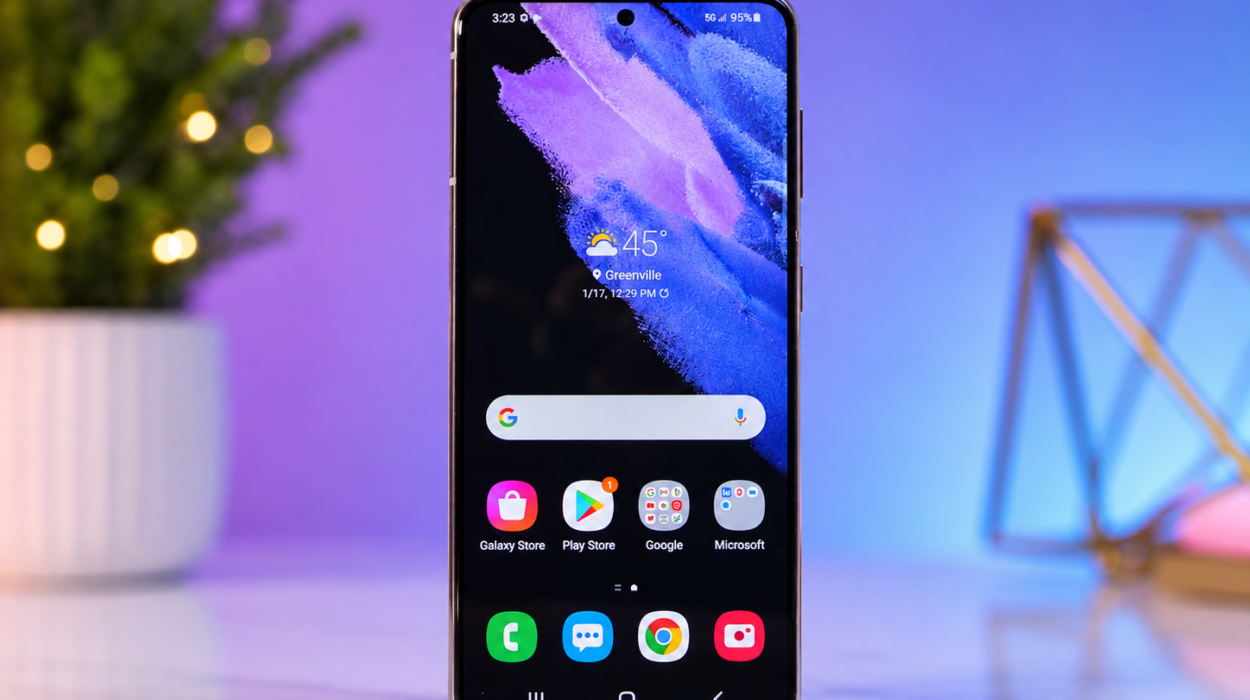
Take a moment to look around you. Your smartphone, laptop, smartwatch, television, Wi-Fi router, calculator, digital camera, car, microwave oven, and even many household appliances have one remarkable thing in common. Hidden deep inside each of them is a tiny piece of silicon that quietly performs billions—or even trillions—of operations every second.
This tiny piece of technology is called an integrated circuit (IC), often referred to simply as a chip or microchip.
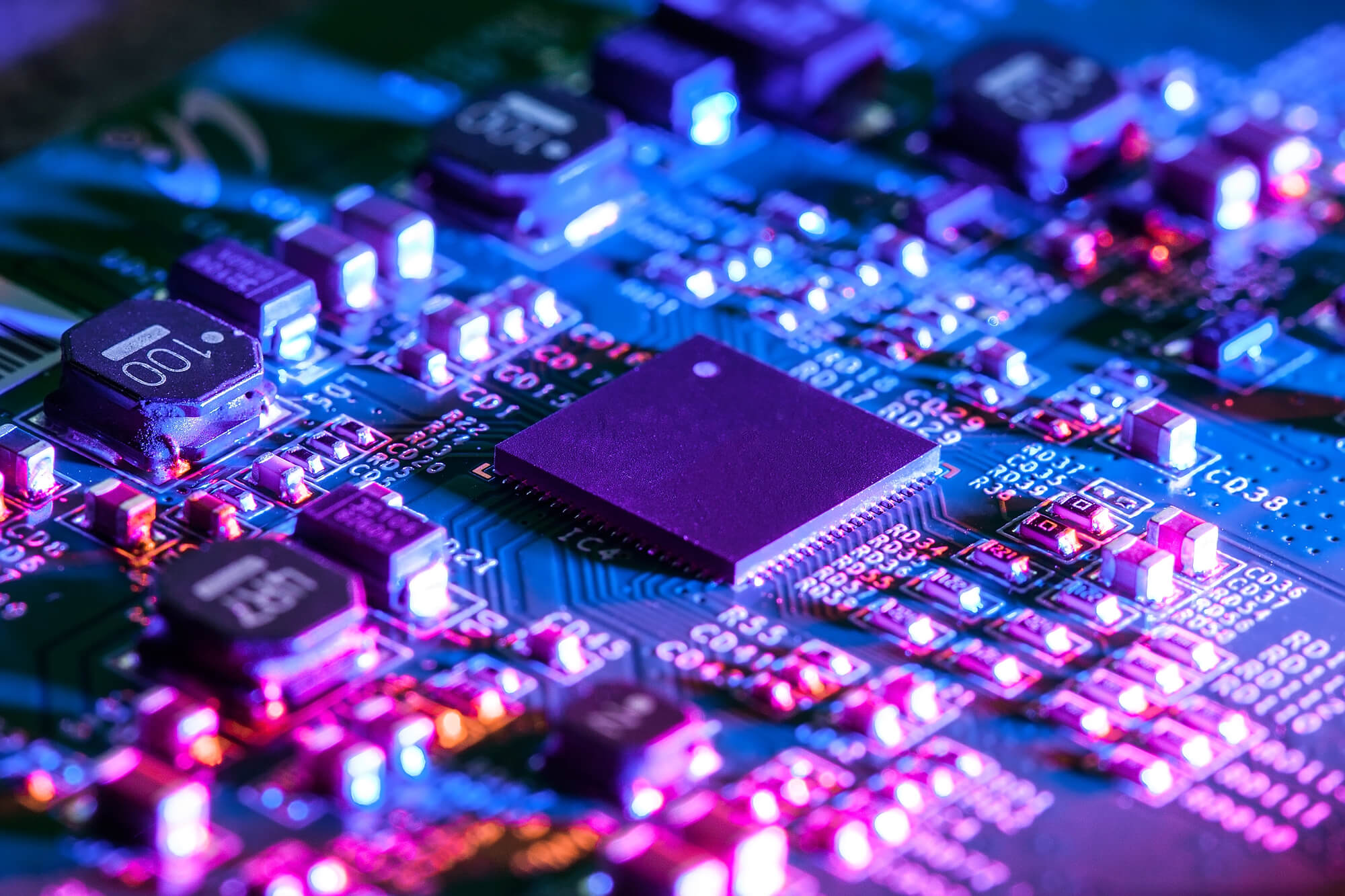
Although an integrated circuit may be no larger than a fingernail, it can contain billions of microscopic electronic components working together with astonishing precision. Without integrated circuits, modern computing, the internet, artificial intelligence, smartphones, satellites, and countless medical devices simply would not exist.
But how can something so incredibly small perform such extraordinary tasks? How does a tiny silicon chip process information, store data, control machines, or display videos? The answer lies in one of the greatest engineering achievements in human history.
What Is an Integrated Circuit?
An integrated circuit is a miniature electronic circuit built onto a single piece of semiconductor material, usually silicon. Instead of connecting thousands or millions of separate electronic components with individual wires, engineers manufacture all of these components together on one tiny chip.
An integrated circuit contains microscopic electronic elements such as transistors, resistors, capacitors, and conductive pathways. These components are carefully arranged so they work together as one complete electronic system.
The word “integrated” means that everything is combined into a single unit. Before integrated circuits were invented, electronic devices had to be assembled using individual transistors, resistors, capacitors, and many wires. This made electronics large, expensive, fragile, and difficult to manufacture.
By placing an entire circuit onto one silicon chip, engineers dramatically reduced size while increasing speed, reliability, and efficiency.
The Invention That Changed Electronics Forever
During the 1950s, electronic systems were becoming increasingly complicated. Computers required thousands of individual components connected by hand, making them expensive and prone to failure.
Scientists realized there had to be a better way.
In 1958, American engineer Jack Kilby demonstrated the first working integrated circuit. Around the same time, Robert Noyce independently developed a practical silicon-based version that could be manufactured more efficiently.
These inventions transformed electronics forever.
Instead of building circuits one component at a time, manufacturers could now produce complete electronic systems on tiny silicon chips.
This breakthrough marked the beginning of the modern semiconductor industry.
Why Silicon Is Used
Almost every integrated circuit is made from silicon.
Silicon is the second most abundant element in Earth’s crust, making it widely available and relatively inexpensive.
More importantly, silicon is a semiconductor.
Unlike metals, which conduct electricity very easily, or insulators, which block electricity almost completely, semiconductors occupy a unique middle ground.
Their electrical conductivity can be precisely controlled.
This remarkable property allows engineers to create electronic switches that can rapidly turn electrical current on and off.
Those switches are called transistors.
The Transistor: The Heart of Every Integrated Circuit
Every integrated circuit depends on transistors.
A transistor is an electronic switch capable of controlling the flow of electricity.
Imagine a light switch in your home.
When the switch is turned on, electricity flows.
When it is turned off, the flow stops.
A transistor performs the same basic function, but instead of being operated by your hand, it is controlled electronically.
The difference is speed.
A human can flip a light switch only a few times per second.
Modern transistors can switch billions of times every second.
Each transistor represents one of two electrical states:
On
Off
Computers interpret these two states as binary digits:
1
0
Everything a computer does—from displaying photos to playing music or running artificial intelligence—ultimately depends on countless transistors switching between these two states.
Billions of Tiny Switches Working Together
One transistor alone cannot perform useful calculations.
However, when billions of transistors are connected together in carefully designed patterns, they become incredibly powerful.
Each transistor performs a tiny operation.
Millions or billions of these tiny operations occur simultaneously.
Together they process enormous amounts of information.
Modern smartphone processors often contain more than ten billion transistors.
High-performance artificial intelligence chips may contain tens or even hundreds of billions of transistors.
Despite their enormous complexity, these chips may be only a few square centimeters in size.
Understanding Binary: The Language of Integrated Circuits
Integrated circuits understand only electrical signals.
They do not recognize letters, pictures, music, or videos directly.
Instead, everything is converted into binary numbers.
Binary uses only two digits:
0
1
These digits correspond to low and high electrical signals.
Every photograph, movie, document, website, video game, and operating system is ultimately represented as long sequences of zeros and ones.
Integrated circuits continuously manipulate these binary values through electronic circuits built from transistors.
Logic Gates: Where Decisions Are Made
Transistors become useful by forming logic gates.
A logic gate performs a simple decision based on electrical inputs.
For example, one gate may produce an output only if two input signals are both present.
Another gate may reverse an electrical signal.
Others compare signals or combine them in different ways.
Although each logic gate performs only a simple task, millions of them working together create powerful digital systems.
Every calculation inside a computer ultimately consists of countless logic gates processing binary information.
Combining Logic Into Complex Circuits
Logic gates can be connected together to perform increasingly sophisticated operations.
Some combinations perform mathematical calculations.
Others compare numbers.
Some store information temporarily.
Others direct data to different parts of the chip.
As engineers connect more logic circuits together, the chip becomes capable of increasingly advanced tasks.
Eventually, an integrated circuit can function as an entire computer processor.
The Clock: Keeping Everything in Perfect Timing
Inside most digital integrated circuits is a clock signal.
This clock is not like the clock hanging on your wall.
Instead, it generates an extremely regular electrical pulse.
Each pulse tells billions of transistors exactly when to perform their next operation.
Modern processors often operate at frequencies exceeding several billion cycles every second.
A processor running at 4 gigahertz receives approximately four billion timing pulses each second.
Without this precise synchronization, the countless electronic operations inside a chip would quickly become chaotic.
How Information Travels Inside a Chip
Electrical signals travel through microscopic metal pathways built into the integrated circuit.
These pathways connect billions of transistors into one coordinated system.
When one transistor changes state, it affects neighboring transistors according to the chip’s design.
Signals spread across the chip at incredibly high speeds.
Although electricity moves rapidly, engineers must carefully design these pathways because even tiny delays become important when billions of operations occur every second.
Memory Inside Integrated Circuits
Many integrated circuits store information.
Some memory exists only while power remains available.
This temporary storage is called volatile memory.
Processors use it to hold data they are actively working with.
Other integrated circuits retain information even after power is turned off.
This non-volatile memory stores operating systems, applications, photographs, and documents.
Whether temporary or permanent, digital memory ultimately depends on transistors storing binary values.
Different Types of Integrated Circuits
Not all integrated circuits perform the same job.
Some chips are designed to process information.
These include central processing units, commonly known as CPUs.
Others specialize in graphics calculations and are called graphics processing units, or GPUs.
Memory chips store data.
Communication chips handle wireless signals.
Power management chips regulate electrical energy.
Audio chips process sound.
Image processors improve digital photographs.
Artificial intelligence accelerators perform machine learning calculations.
Although their functions differ, they all rely on the same fundamental principles of transistors, logic gates, and electrical signals.
How Integrated Circuits Perform Calculations
Imagine adding two numbers together.
To a person, this seems simple.
Inside an integrated circuit, however, the process involves thousands or even millions of tiny electronic operations.
Binary numbers enter arithmetic circuits.
Logic gates compare bits one by one.
Carry values move from one stage to the next.
The final result emerges as another binary number.
This entire calculation may take only a tiny fraction of a billionth of a second.
Millions of such calculations occur simultaneously throughout the processor.
Manufacturing an Integrated Circuit
Building an integrated circuit is one of the most sophisticated manufacturing processes ever developed.
Everything begins with highly purified silicon.
The silicon is formed into a large cylindrical crystal.
Thin circular slices called wafers are cut from this crystal.
Each wafer undergoes hundreds or even thousands of manufacturing steps.
Using advanced techniques such as photolithography, engineers project microscopic patterns onto the wafer.
Special chemicals selectively remove or modify certain regions.
Tiny amounts of carefully chosen elements are introduced into the silicon to create transistors.
Layer after layer of microscopic structures is added.
Finally, intricate metal connections link billions of transistors together.
Each finished wafer contains many individual chips.
These chips are separated, tested, packaged, and prepared for installation into electronic devices.
Why Integrated Circuits Are So Small
Making circuits smaller provides several important advantages.
Shorter electrical pathways allow signals to travel more quickly.
Smaller transistors require less electrical energy.
More components fit onto each chip.
Lower power consumption produces less heat.
Smaller chips also reduce manufacturing costs because more chips can be produced from each silicon wafer.
These advantages have driven continuous miniaturization for decades.
Moore’s Law and Rapid Progress
In 1965, Gordon Moore observed that the number of transistors on integrated circuits appeared to double approximately every two years.
This prediction became known as Moore’s Law.
For many decades, semiconductor manufacturers successfully followed this trend.
As transistor density increased, computers became faster, smaller, cheaper, and more energy-efficient.
Although maintaining this pace has become increasingly difficult because transistors are approaching atomic dimensions, engineers continue developing new manufacturing technologies and innovative chip designs.
Heat: One of the Biggest Challenges
Whenever transistors switch on and off, they consume electrical energy.
Some of this energy becomes heat.
A modern processor containing billions of transistors can generate substantial heat during operation.
If excessive heat accumulates, chip performance may decrease or permanent damage could occur.
For this reason, computers use cooling systems including heat sinks, fans, liquid cooling, and advanced thermal materials.
Engineers also design integrated circuits to maximize energy efficiency while minimizing heat generation.
Why Integrated Circuits Are So Reliable
Integrated circuits are remarkably dependable because they contain very few moving parts.
Unlike mechanical systems, transistors do not wear out through physical motion.
The microscopic components are permanently built into the silicon itself.
Careful manufacturing, extensive testing, and protective packaging allow many integrated circuits to operate continuously for years without failure.
Their reliability has made possible everything from spacecraft and satellites to medical equipment and industrial automation.
Integrated Circuits in Everyday Life
Most people encounter integrated circuits hundreds of times each day without realizing it.
Every smartphone contains dozens of specialized chips.
Modern automobiles include integrated circuits that manage engines, braking systems, airbags, entertainment systems, navigation, and safety sensors.
Medical devices rely on integrated circuits to monitor patients, analyze images, and control life-saving equipment.
Household appliances use chips to regulate temperature, timing, and energy consumption.
Internet routers manage wireless communication through integrated circuits.
Even toys, watches, calculators, and LED light bulbs often contain miniature chips.
Modern society depends on integrated circuits in ways that are almost invisible.
Integrated Circuits and Artificial Intelligence
Artificial intelligence has created new demands for integrated circuits.
Training and running advanced AI models requires enormous numbers of mathematical calculations.
Traditional processors can perform these calculations, but specialized AI chips are designed to execute them far more efficiently.
These processors contain architectures optimized for matrix operations, neural networks, and machine learning algorithms.
As AI continues advancing, integrated circuits are evolving to provide greater computing power while reducing energy consumption.
The Future of Integrated Circuits
Integrated circuits continue becoming more powerful every year.
Researchers are exploring entirely new transistor designs, advanced packaging technologies, three-dimensional chip structures, optical communication within chips, and new semiconductor materials beyond silicon.
Quantum computing may eventually introduce entirely different approaches to computation, although conventional integrated circuits will remain essential for controlling these systems.
Scientists are also developing chips inspired by the human brain, known as neuromorphic processors, which could dramatically improve energy efficiency for artificial intelligence applications.
The future promises even smaller, faster, and smarter integrated circuits capable of powering technologies that today seem almost unimaginable.
Why Integrated Circuits Changed the World
Few inventions have transformed human civilization as profoundly as the integrated circuit. By shrinking entire electronic systems onto tiny pieces of silicon, engineers made computers affordable, portable, reliable, and immensely powerful. This single innovation laid the foundation for the digital age, enabling everything from personal computers and smartphones to satellites, medical imaging, robotics, and artificial intelligence.
Every email sent, every online search performed, every video streamed, every scientific simulation completed, and every spacecraft guided through the solar system depends on integrated circuits working silently behind the scenes. Though invisible to most people, these microscopic chips have become the beating heart of modern technology.
As engineers continue pushing the limits of semiconductor science, integrated circuits will remain at the center of innovation, driving discoveries and inventions that shape the future of humanity. Their story is a reminder that sometimes the smallest creations can have the greatest impact on the world.