Throughout history, technology has transformed the way people live, communicate, travel, work, and understand the universe. The invention of the wheel reshaped transportation. The printing press spread knowledge across continents. Electricity powered the modern age. The internet connected billions of people in ways once considered impossible.
Today, humanity stands at another technological turning point.
The pace of scientific innovation has accelerated dramatically over the past few decades. Advances in artificial intelligence, biotechnology, computing, energy, and space exploration are converging to create technologies that could fundamentally reshape civilization during the twenty-first century. Some are already entering everyday life, while others remain in laboratories and experimental facilities. Together, they promise to solve problems that have challenged humanity for centuries while introducing entirely new opportunities—and new ethical questions.
No one can predict the future with complete certainty. Many promising technologies never achieve widespread adoption, while unexpected breakthroughs often transform society in ways few anticipate. Nevertheless, researchers, engineers, and policymakers broadly agree that several emerging technologies have exceptional potential to influence nearly every aspect of human life.
The following ten technologies represent some of the most important scientific and engineering developments that are likely to shape the future of the world.
1. Artificial Intelligence
Artificial intelligence, commonly known as AI, is rapidly becoming one of the most transformative technologies in human history. Unlike traditional computer programs that simply follow predefined instructions, AI systems can identify patterns, learn from data, recognize images and speech, generate language, and assist in solving complex problems.
Recent advances in machine learning, particularly deep learning and large language models, have dramatically expanded AI’s capabilities. Modern systems can help doctors analyze medical images, assist scientists in discovering new materials, improve weather forecasting, optimize transportation networks, and accelerate scientific research.
Healthcare is one of the areas where AI may have its greatest impact. AI algorithms can analyze millions of medical records to identify disease patterns that humans might overlook. In radiology, AI systems can assist physicians by detecting early signs of cancer or other illnesses in medical scans. Rather than replacing doctors, these systems increasingly serve as powerful decision-support tools.
Education is also undergoing significant transformation. Intelligent tutoring systems can adapt lessons to individual learning styles, helping students progress at their own pace. Language translation tools are breaking communication barriers between cultures, making knowledge more accessible worldwide.
Scientific research is benefiting enormously from AI-driven analysis. Researchers now use AI to predict protein structures, model climate systems, design new pharmaceuticals, and analyze enormous datasets that would otherwise require decades of manual work.
However, AI also raises important challenges. Questions about privacy, algorithmic bias, misinformation, employment, transparency, and responsible governance have become central topics of global discussion. Developing trustworthy and ethical AI systems is now considered as important as improving their technical performance.
Artificial intelligence is not merely another software tool. It represents a new approach to problem-solving that is likely to influence nearly every scientific discipline and industry.
2. Quantum Computing
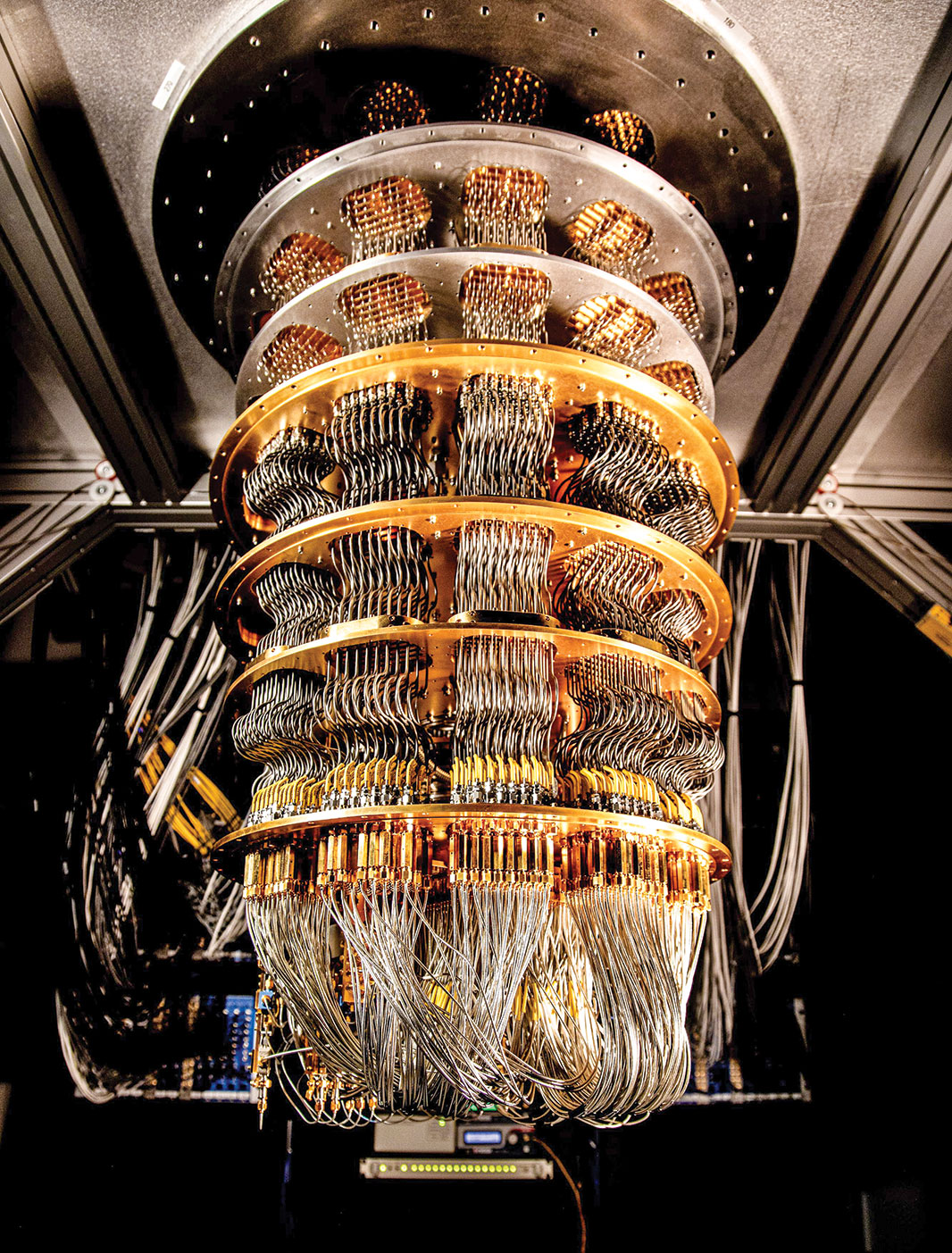
Conventional computers process information using bits that exist as either zero or one. Quantum computers operate according to the principles of quantum mechanics, allowing quantum bits, or qubits, to exist in combinations of states known as superposition.
This unique property enables certain computations to be performed far more efficiently than would be possible with classical computers.
Quantum computing is not expected to replace everyday laptops or smartphones. Instead, it will likely be used for highly specialized problems involving enormous computational complexity.
One of the most promising applications lies in chemistry and materials science. Simulating molecular interactions requires immense computing power because molecules obey quantum mechanical laws. Quantum computers could model these interactions directly, accelerating the discovery of new medicines, advanced batteries, superconductors, and environmentally friendly industrial materials.
Optimization problems also stand to benefit. Designing efficient transportation systems, improving airline scheduling, managing electrical grids, and optimizing supply chains all involve solving highly complex mathematical problems that become increasingly difficult as systems grow larger.
Cryptography represents another important area. Powerful quantum computers could eventually break some existing encryption methods while also enabling entirely new forms of secure communication through quantum cryptography.
Despite remarkable progress, significant engineering challenges remain. Qubits are highly sensitive to environmental disturbances, making error correction extremely difficult. Researchers worldwide continue working to improve stability, scalability, and reliability.
Although practical, large-scale quantum computers are still under development, many experts consider them among the most important technologies of the future.
3. Gene Editing and CRISPR Technology
One of the most revolutionary advances in modern biology is the development of precise gene-editing technologies, particularly CRISPR-Cas9.
Genes contain the instructions that guide the growth, development, and functioning of living organisms. CRISPR allows scientists to modify specific DNA sequences with remarkable precision, making it possible to study gene function and potentially treat genetic diseases.
Researchers are investigating CRISPR-based therapies for inherited disorders such as sickle cell disease, certain forms of blindness, and other conditions caused by specific genetic mutations.
Beyond medicine, gene editing has important applications in agriculture. Scientists are developing crops that are more resistant to drought, disease, and pests while requiring fewer chemical treatments. Such improvements could strengthen global food security as climate change places increasing pressure on agricultural systems.
Conservation biology may also benefit. Researchers are exploring gene-editing approaches to protect endangered species, combat invasive organisms, and preserve biodiversity.
Despite its enormous promise, gene editing raises profound ethical questions. Editing genes in human embryos, altering future generations, and modifying ecosystems require careful scientific oversight and international cooperation.
The technology’s future depends not only on scientific progress but also on responsible governance and public trust.
4. Fusion Energy
For decades, scientists have pursued one of humanity’s greatest technological dreams: harnessing nuclear fusion as a practical energy source.
Fusion powers the Sun and other stars. It occurs when light atomic nuclei combine to form heavier nuclei, releasing enormous amounts of energy.
Unlike nuclear fission, which powers today’s nuclear reactors by splitting heavy atoms, fusion joins lighter atoms together.
If successfully developed at commercial scale, fusion could provide abundant electricity with no direct carbon dioxide emissions during operation and far less long-lived radioactive waste than conventional fission reactors.
Major international research projects continue making progress toward this goal. Experimental reactors have achieved increasingly important milestones, including producing sustained plasma and approaching conditions required for net energy gain.
Engineering challenges remain formidable. Fusion reactions require temperatures exceeding one hundred million degrees Celsius, along with sophisticated magnetic confinement or alternative approaches to control the plasma.
Even so, advances in superconducting magnets, plasma physics, and materials science have accelerated research considerably.
While commercial fusion power plants may still require years or decades of development, many scientists believe fusion could become one of the defining energy technologies of the future.
5. Advanced Robotics
Robots have existed in manufacturing for decades, but modern robotics is evolving far beyond factory assembly lines.
Today’s robots increasingly combine advanced sensors, artificial intelligence, computer vision, and dexterous mechanical systems, allowing them to operate in environments that were previously impossible.
Medical robots assist surgeons during delicate procedures, enabling greater precision while reducing patient recovery time.
Warehouse robots transport goods with remarkable efficiency.
Agricultural robots monitor crops, identify diseases, and perform targeted harvesting.
Disaster-response robots explore hazardous environments too dangerous for humans, including collapsed buildings, nuclear facilities, and deep underwater locations.
Space agencies use robotic explorers to investigate distant planets where human survival remains impossible.
Future robots are expected to become increasingly collaborative, working safely alongside people rather than replacing them entirely.
The goal of modern robotics is often not human substitution but human augmentation—allowing people to perform tasks that are safer, more efficient, or physically impossible without technological assistance.
6. Brain-Computer Interfaces
One of the most fascinating frontiers in neuroscience is the development of brain-computer interfaces, often abbreviated as BCIs.
These systems establish direct communication between the brain and external devices by detecting neural activity.
Current research has already demonstrated remarkable achievements.
People with severe paralysis have used experimental BCIs to control computer cursors, type messages, operate robotic arms, and even communicate through synthesized speech generated from neural signals.
Scientists are also exploring potential treatments for neurological disorders, including epilepsy, Parkinson’s disease, chronic pain, and spinal cord injuries.
Future generations of BCIs may improve rehabilitation, assist communication, and deepen understanding of how the human brain processes information.
However, this technology raises significant ethical considerations involving privacy, informed consent, cognitive liberty, and data security.
Because neural signals represent highly personal biological information, protecting individual rights will remain essential as the technology advances.
7. Nanotechnology
Nanotechnology involves manipulating matter at extremely small scales—typically between one and one hundred nanometers.
At these dimensions, materials often exhibit unique physical and chemical properties that differ dramatically from their larger forms.
Researchers are developing nanomaterials with exceptional strength, electrical conductivity, and chemical behavior.
In medicine, nanoparticles can deliver drugs directly to tumors, potentially improving treatment while reducing side effects.
Nanotechnology is also advancing diagnostic tools capable of detecting diseases at very early stages.
In electronics, nanoscale components continue driving the miniaturization of computer chips while improving performance and energy efficiency.
Environmental scientists are investigating nanomaterials that remove pollutants from water, improve air filtration, and enhance renewable energy technologies.
The field remains highly interdisciplinary, combining physics, chemistry, biology, engineering, and materials science.
Its future applications are likely to expand across nearly every technological sector.
8. Next-Generation Renewable Energy and Energy Storage
The global transition toward cleaner energy depends not only on generating electricity from renewable sources but also on storing that energy efficiently.
Solar panels and wind turbines have become increasingly affordable and widespread. However, their electricity production naturally varies with weather and time of day.
Advanced battery technologies are therefore becoming equally important.
Researchers are developing solid-state batteries, sodium-ion batteries, lithium-sulfur batteries, and other next-generation storage systems designed to increase energy density, improve safety, reduce charging time, and decrease dependence on scarce raw materials.
Grid-scale energy storage will allow renewable electricity to be stored during periods of excess production and delivered when demand increases.
Hydrogen technologies are also attracting growing attention.
Green hydrogen, produced using renewable electricity, could help decarbonize industries that are difficult to electrify directly, including steel production, shipping, and certain chemical processes.
Together, renewable generation and advanced storage technologies have the potential to reshape global energy systems while reducing greenhouse gas emissions.
9. Space Technologies
Space exploration is entering a new era characterized by reusable rockets, commercial launch providers, robotic exploration, and ambitious international missions.
Lower launch costs are making space increasingly accessible for scientific research, telecommunications, Earth observation, and planetary exploration.
Modern satellites provide essential services including navigation, weather forecasting, disaster monitoring, environmental observation, and global communications.
Future missions aim to establish sustained human presence on the Moon while preparing for eventual exploration of Mars.
Scientists continue investigating asteroid resources, planetary geology, and the possibility of life beyond Earth.
Space telescopes are revolutionizing astronomy by observing distant galaxies, exoplanets, and the earliest stages of cosmic history with unprecedented precision.
The technologies developed for space missions often produce innovations that benefit life on Earth, including advances in materials science, telecommunications, robotics, water purification, and medical monitoring.
Space technology is no longer limited to government agencies. Universities, startups, and private companies now play increasingly important roles in expanding humanity’s presence beyond Earth.
10. Extended Reality and the Future of Digital Interaction
Extended reality, often abbreviated as XR, combines virtual reality, augmented reality, and mixed reality into a family of immersive digital technologies.
Virtual reality creates fully computer-generated environments that users can explore.
Augmented reality overlays digital information onto the physical world.
Mixed reality blends digital and physical objects into shared interactive environments.
Although often associated with entertainment, these technologies have much broader applications.
Medical students can practice surgical procedures in realistic simulations before operating on patients.
Engineers can visualize complex machinery before manufacturing begins.
Architects can walk through digital buildings during the design process.
Scientists can explore molecular structures in three-dimensional virtual environments.
Teachers can create immersive educational experiences that make history, astronomy, biology, and physics more engaging.
As hardware becomes lighter, more powerful, and more affordable, immersive technologies are expected to transform education, healthcare, engineering, manufacturing, communication, and remote collaboration.
Rather than replacing reality, these systems increasingly aim to enhance human understanding of it.
Why These Technologies Matter
Technological revolutions rarely occur in isolation.
Artificial intelligence strengthens robotics.
Quantum computing accelerates materials discovery.
Advanced batteries improve renewable energy systems.
Gene editing benefits from AI-driven biological analysis.
Nanotechnology contributes to medicine, electronics, and energy simultaneously.
The future will likely be shaped not by individual inventions alone but by the convergence of multiple scientific breakthroughs working together.
History demonstrates that transformative technologies often produce effects far beyond their original purpose.
The internet began as a communication network.
Today it underpins global commerce, education, entertainment, healthcare, and scientific collaboration.
The same pattern may emerge with today’s emerging technologies.
The Challenges That Accompany Innovation
Every major technological advance brings new responsibilities.
Artificial intelligence raises questions about fairness, transparency, and employment.
Gene editing requires careful ethical oversight.
Brain-computer interfaces demand strong protections for mental privacy.
Quantum computing may require entirely new cybersecurity systems.
Renewable energy technologies depend upon sustainable management of critical minerals.
Space exploration must address orbital debris and planetary protection.
Responsible innovation means ensuring that technological progress benefits society while minimizing unintended consequences.
Scientists, engineers, policymakers, educators, and citizens all play essential roles in guiding these developments.
A Future Being Built Today
The technologies that will shape tomorrow are not distant dreams confined to science fiction. Many already exist in research laboratories, hospitals, universities, technology companies, and engineering centers around the world. Some are entering everyday life faster than anyone predicted, while others continue progressing through decades of careful scientific work.
History teaches that no one can forecast the future with perfect accuracy. Some breakthroughs will exceed expectations, while others will evolve more slowly than anticipated. Unexpected discoveries may emerge from entirely different fields, transforming society in ways that are impossible to predict today.
What remains certain is that science and technology will continue expanding humanity’s ability to understand the universe, solve global challenges, improve health, produce sustainable energy, communicate across continents, and explore worlds beyond our own.
The coming decades may witness one of the greatest periods of technological transformation in human history. How these innovations reshape civilization will depend not only on scientific achievement but also on the wisdom, responsibility, and cooperation with which humanity chooses to use them.