The internet has transformed human civilization in ways that once seemed impossible. It has changed how people communicate, learn, shop, work, entertain themselves, and share ideas across the globe. Every day, billions of people rely on the internet without giving much thought to how it works behind the scenes. Yet the internet has never remained the same. It has evolved continuously over the past few decades, with each new phase bringing new technologies and new possibilities.
Today, a new idea is shaping conversations about the future of the internet. It is called Web3.
Supporters describe Web3 as a new generation of the web where users have greater ownership over their digital identities, data, and online assets. Instead of depending primarily on large centralized platforms, many Web3 applications aim to operate through decentralized computer networks using blockchain technology.
Although Web3 is one of the most discussed topics in modern technology, it is also one of the most misunderstood. Some people see it as the future of the internet, while others argue that many of its promises remain unproven. Understanding Web3 requires separating established technology from ambitious visions.
What Does Web3 Mean?
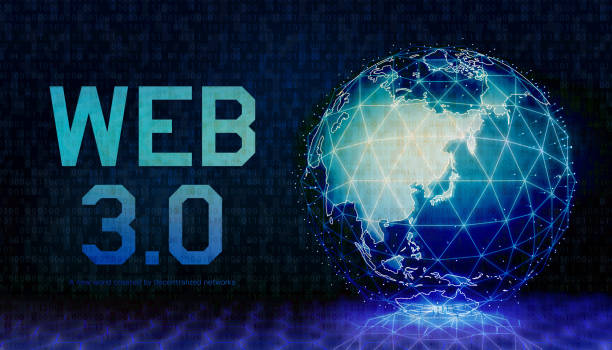
Web3 refers to a broad idea for a more decentralized internet built on blockchain technology and related systems. Rather than representing a single product or company, Web3 describes an ecosystem of technologies, protocols, and applications that attempt to give users greater control over digital interactions.
The term “Web3” is often used interchangeably with “Web 3.0,” although some experts distinguish between them. Historically, “Web 3.0” was sometimes associated with the Semantic Web—a vision of making online information more understandable to computers. Today, however, Web3 most commonly refers to decentralized internet technologies built around blockchains, cryptocurrencies, digital wallets, smart contracts, and decentralized applications.
Unlike today’s internet, where many online services are controlled by centralized companies, Web3 aims to distribute control across many independent computers connected through decentralized networks.
The Evolution of the Internet
To understand Web3, it helps to understand how the internet has evolved.
The earliest stage of the internet is often called Web1.
Web1 emerged during the 1990s. Most websites were static, meaning users mainly read information rather than interacting with it. Websites resembled digital books or brochures. People visited pages, read content, and moved on. Creating websites required technical knowledge, so relatively few people published online.
The next stage became known as Web2.
Beginning in the early 2000s, Web2 transformed the internet into a highly interactive space. Social media, online shopping, video streaming, cloud computing, blogs, and mobile applications allowed users to create and share enormous amounts of content.
Instead of simply reading webpages, people could upload photos, publish videos, write posts, collaborate on documents, and communicate instantly.
Companies such as social media platforms, search engines, streaming services, and online marketplaces became central parts of everyday life.
Web2 dramatically expanded access to information and communication, but it also concentrated large amounts of user data under relatively few companies.
Web3 emerged partly as a response to that concentration.
Why Was Web3 Proposed?
Many discussions about Web3 begin with concerns about the current internet.
Today’s online services often collect large amounts of personal data. User accounts, photos, messages, browsing history, and purchasing habits are commonly stored on centralized servers operated by companies.
These centralized systems have many advantages. They are often fast, convenient, and easy to manage. However, they also create certain challenges.
Users usually do not directly own the platforms they depend upon.
Companies establish the rules for their services.
Accounts may sometimes be suspended.
Policies can change.
Servers may experience outages.
Large databases can become targets for cyberattacks.
Supporters of Web3 believe that distributing data and decision-making across decentralized networks could reduce dependence on individual organizations while giving users greater control over their digital lives.
The Meaning of Decentralization
Decentralization is one of the central ideas behind Web3.
In a traditional centralized system, information is stored and managed by one organization or company.
For example, when someone stores photos on a cloud service, that company operates the servers where the files are kept.
In contrast, decentralized systems distribute information across many independent computers.
Instead of one central authority controlling everything, multiple participants collectively maintain the network.
Because many computers share responsibility, no single machine determines how the entire system operates.
This design can improve resilience because the network does not depend entirely on one location or organization.
However, decentralization can also introduce technical complexity, slower processing in some cases, and governance challenges.
Blockchain: The Foundation of Many Web3 Systems
Most Web3 applications rely on blockchain technology.
A blockchain is a digital ledger that records transactions in chronological order.
Instead of storing records on one central server, identical copies of the ledger exist across many computers called nodes.
When new information is added, participating computers verify the transaction according to the network’s rules.
Once verified, the information is grouped into a block and linked to previous blocks, creating a chain.
Because every block contains information connected to earlier blocks, altering historical records becomes extremely difficult without changing numerous copies across the network.
This structure helps provide transparency and resistance to unauthorized modification.
Different blockchains use different methods for validating transactions, including mechanisms such as Proof of Work and Proof of Stake.
Digital Ownership in Web3
One of the most important goals of Web3 is expanding digital ownership.
On today’s internet, users often own the content they create legally, but access to that content frequently depends on centralized platforms.
In Web3, digital assets may be stored directly in blockchain-based wallets controlled by users through cryptographic keys.
These assets can include cryptocurrencies, digital collectibles, certificates, domain names, and other blockchain-based records.
Instead of relying entirely on platform accounts, users may manage assets through their own wallets.
However, this greater control also brings greater responsibility.
If someone permanently loses access to their wallet’s private cryptographic keys, recovering those assets may be impossible.
Cryptography: The Invisible Security Layer
Cryptography plays a vital role in Web3.
Cryptography is the science of protecting information through mathematical techniques.
Rather than depending on passwords alone, blockchain systems use public-key cryptography.
Each user has two important cryptographic keys.
A public key functions somewhat like an address that others can use to send digital assets.
A private key acts like a highly secure digital signature.
Only someone possessing the private key can authorize transactions associated with that wallet.
Because private keys provide access to valuable assets, protecting them is one of the most important aspects of Web3 security.
Smart Contracts: Programs That Execute Automatically
Web3 introduced widespread use of smart contracts.
A smart contract is a computer program stored on a blockchain that automatically performs specific actions when predetermined conditions are satisfied.
Unlike traditional legal contracts written for human interpretation, smart contracts contain executable code.
For example, a smart contract might automatically transfer digital assets after receiving payment.
It might manage voting procedures, issue digital certificates, distribute royalties, or operate decentralized financial services.
Because the program executes according to predefined rules, participants do not necessarily need a central organization to oversee every transaction.
However, smart contracts are only as reliable as the software written by developers.
Programming errors or security vulnerabilities can sometimes lead to unexpected consequences.
Decentralized Applications
Applications built on blockchain networks are often called decentralized applications, or dApps.
Unlike traditional applications that rely on centralized servers, many dApps interact directly with blockchain networks.
Some decentralized applications focus on finance.
Others support gaming, digital art, identity verification, supply chain tracking, or community governance.
Users often connect through blockchain wallets rather than creating conventional usernames and passwords.
Although many dApps operate without centralized databases for certain functions, many still rely partly on traditional internet infrastructure for speed, storage, or user interfaces.
Cryptocurrencies and Web3
Cryptocurrencies are closely connected to Web3, but they are not identical concepts.
A cryptocurrency is a digital currency secured through cryptographic methods and typically recorded on a blockchain.
Examples include Bitcoin and many other blockchain-based digital currencies.
Web3 uses cryptocurrencies in various ways.
They may pay transaction fees.
They may reward network participants.
They may enable decentralized financial services.
They may also support governance systems where token holders participate in certain network decisions.
However, Web3 extends beyond digital currencies.
Its broader goal involves redesigning how internet services operate and how digital ownership is managed.
NFTs and Digital Assets
Another technology frequently associated with Web3 is the Non-Fungible Token, or NFT.
Unlike cryptocurrencies, where one unit is generally interchangeable with another of the same type, NFTs represent unique digital records on a blockchain.
NFTs can represent artwork, music, collectibles, game items, event tickets, educational certificates, or ownership records for certain digital assets.
Importantly, owning an NFT does not automatically grant copyright or intellectual property rights unless those rights are explicitly transferred.
The NFT itself serves as a blockchain-based record associated with a particular asset according to the conditions established by its creator.
Decentralized Finance
One of the fastest-growing areas of Web3 has been Decentralized Finance, commonly called DeFi.
DeFi refers to blockchain-based financial services that operate through smart contracts instead of relying entirely on traditional financial intermediaries.
Some DeFi platforms allow users to lend digital assets, borrow cryptocurrencies, exchange tokens, or earn rewards according to protocol rules.
Because these systems operate globally through blockchain networks, they can often function continuously without conventional banking hours.
However, DeFi also carries important risks.
Digital asset prices can fluctuate significantly.
Smart contract vulnerabilities may exist.
Regulations vary between countries.
Users remain responsible for understanding the risks before participating.
Decentralized Autonomous Organizations
Web3 also introduced the idea of Decentralized Autonomous Organizations, commonly known as DAOs.
A DAO is a community-governed organization that uses blockchain technology and smart contracts to manage certain decisions.
Instead of relying solely on a traditional management hierarchy, members may vote electronically on proposals.
Voting systems vary depending on the organization’s design.
Some DAOs manage software development.
Others oversee investment funds, community projects, digital ecosystems, or nonprofit initiatives.
While DAOs offer new approaches to governance, they also face practical challenges involving participation, legal recognition, security, and decision-making efficiency.
Digital Identity in Web3
Managing digital identity is another major goal of Web3.
Today, people often create separate accounts for different websites.
Each platform stores usernames, passwords, and personal information independently.
Web3 proposes systems where users maintain greater ownership over digital identities through cryptographic credentials.
Instead of repeatedly creating accounts, users may authenticate using blockchain wallets or decentralized identity technologies.
Researchers continue developing methods that could allow individuals to prove certain information—such as age or qualifications—without revealing unnecessary personal data.
Although promising, these identity systems remain under active development.
The Benefits Often Associated with Web3
Supporters believe Web3 could reshape the internet in meaningful ways.
Greater user ownership is frequently cited as one of its biggest advantages.
Instead of depending entirely on centralized platforms, individuals may control digital assets through their own wallets.
Transparency is another potential benefit.
Many blockchain transactions are publicly recorded, allowing participants to verify network activity.
Because records are distributed across numerous computers, blockchain networks may also offer increased resistance to certain forms of data tampering.
Interoperability is another goal.
Developers hope digital assets and identities will eventually move more easily between different online services.
Open-source software also plays an important role in many Web3 projects, allowing communities to inspect and improve code collaboratively.
The Challenges Facing Web3
Although Web3 has attracted enormous attention, it also faces significant obstacles.
Scalability remains a major technical challenge.
Many blockchain networks process transactions more slowly than centralized systems because decentralized verification requires coordination among many participants.
Transaction fees can become expensive during periods of heavy network activity.
Energy consumption has also been debated, particularly for blockchains using Proof of Work, although many newer networks use more energy-efficient consensus mechanisms such as Proof of Stake.
Usability presents another hurdle.
Managing wallets, safeguarding private keys, and understanding blockchain concepts can be confusing for new users.
Security remains an ongoing concern.
While blockchains themselves are often highly secure, vulnerabilities in smart contracts, wallet software, phishing attacks, or user mistakes can still result in financial losses.
Regulation is another evolving area.
Governments around the world continue developing policies related to cryptocurrencies, digital assets, taxation, financial compliance, and consumer protection.
Common Misunderstandings About Web3
Many misconceptions surround Web3.
One common misunderstanding is that Web3 will completely replace today’s internet.
In reality, Web3 technologies currently coexist with traditional web technologies.
Most blockchain-based applications still rely on aspects of the conventional internet.
Another misconception is that Web3 automatically guarantees privacy.
Blockchain transactions are often transparent, meaning activity may be publicly visible depending on the network.
Privacy depends on the specific technologies and protocols being used.
Some people also assume that every blockchain project represents Web3 innovation.
In practice, projects vary enormously in quality, security, transparency, and usefulness.
Evaluating individual projects requires careful examination rather than broad assumptions.
Web3 Beyond Cryptocurrency
Although cryptocurrency receives much of the public attention, Web3 research extends into many other fields.
Researchers are exploring decentralized identity systems.
Supply chains may use blockchain records to improve product traceability.
Healthcare organizations are studying secure methods for managing medical information while protecting patient privacy.
Educational institutions are experimenting with blockchain-based academic credentials that graduates can verify globally.
Artists are investigating new methods for managing digital ownership and royalties.
Scientists are examining decentralized systems for sharing research data more transparently.
The potential applications continue expanding as technology evolves.
Web3 and Artificial Intelligence
Artificial intelligence and Web3 are increasingly intersecting.
AI systems require enormous amounts of data and computational resources.
Some researchers believe decentralized networks could eventually support more distributed approaches to AI development.
Others are exploring blockchain systems for verifying AI-generated content, protecting digital identities, or managing data access permissions.
At the same time, combining AI with blockchain introduces additional technical complexity.
Both fields continue developing rapidly, making future collaborations an active area of research.
Is Web3 the Future of the Internet?
Perhaps the biggest question surrounding Web3 is whether it truly represents the next stage of the internet.
The honest scientific answer is that no one knows with certainty.
Many underlying technologies—including blockchain, smart contracts, cryptographic identity systems, and decentralized applications—are already functioning successfully in numerous real-world situations.
However, widespread adoption depends on overcoming significant technical, economic, legal, and usability challenges.
Some Web3 ideas may become standard features of future internet services.
Others may evolve substantially before reaching mainstream use.
History shows that technological revolutions rarely unfold exactly as early predictions suggest.
The internet itself changed dramatically between its earliest days and the modern web.
Web3 may follow a similarly unpredictable path.
Why Web3 Matters
Whether or not every vision of Web3 becomes reality, the movement has already influenced important discussions about the future of the internet. It has encouraged researchers, developers, businesses, and policymakers to rethink long-standing questions about digital ownership, privacy, transparency, identity, and control.
Rather than asking only what the internet can do, Web3 asks who should control it, who should benefit from it, and how trust can be established in increasingly digital societies.
These questions extend far beyond technology. They touch economics, law, cybersecurity, governance, and human rights in the digital age.
Ultimately, Web3 is not a finished product but an evolving collection of ideas and technologies. Some aspects are already changing how people interact online, while others remain experimental and continue to be tested, improved, and debated. As research and innovation progress, Web3 may help shape a future internet that combines decentralization with security, transparency with usability, and technological innovation with greater user participation. Understanding Web3 today provides valuable insight into one of the most significant conversations about the future of the digital world.