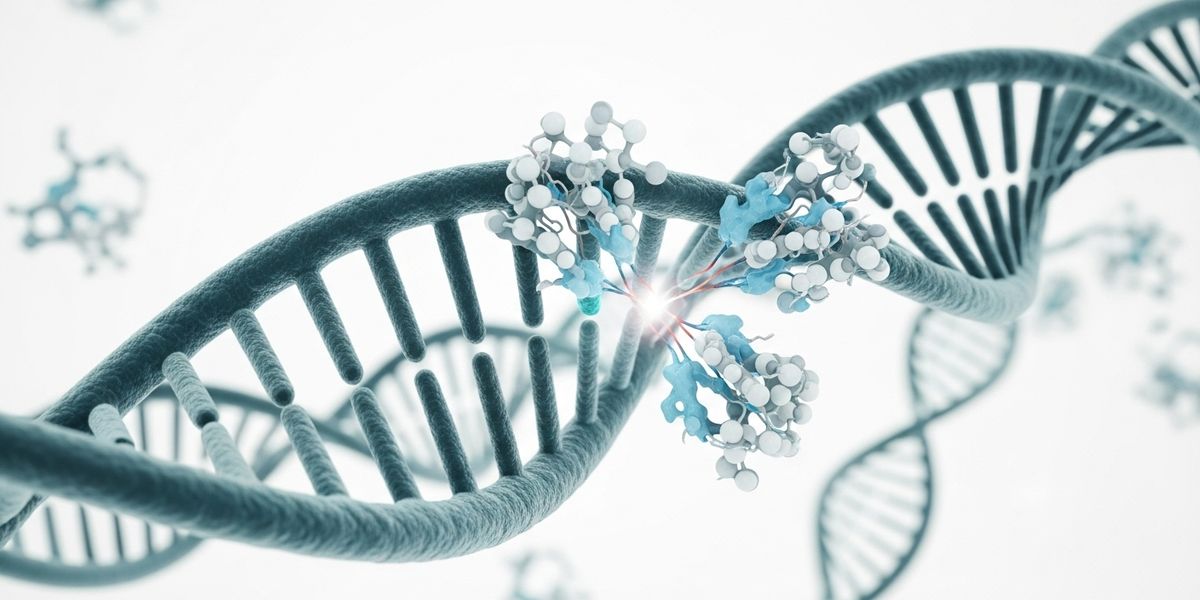
Imagine opening a book and finding a single spelling mistake that changes the meaning of an entire sentence. Now imagine having a tool that allows you to erase that mistake and replace it with the correct word without changing the rest of the story. Gene editing works in a surprisingly similar way. Instead of correcting words in a book, scientists edit the genetic instructions that guide living organisms.
Gene editing is one of the most remarkable scientific breakthroughs of the twenty-first century. It gives researchers the ability to change DNA with extraordinary precision, opening new possibilities for treating diseases, improving agriculture, and deepening our understanding of life itself. At the same time, it raises important ethical questions about how far humans should go in changing the genetic blueprint of living organisms.
The story of gene editing is not just about advanced laboratories or cutting-edge technology. It is also a story about hope, responsibility, curiosity, and the remarkable power of science to solve some of humanity’s greatest challenges.
What Is Gene Editing?
Gene editing is a group of technologies that allow scientists to make specific changes to an organism’s DNA. These changes may involve removing a piece of DNA, adding a new sequence, or replacing one section with another.
DNA, or deoxyribonucleic acid, carries the genetic instructions that tell cells how to grow, function, and reproduce. Every living organism, from tiny bacteria to giant whales and human beings, depends on DNA to survive.
Genes are specific sections of DNA that contain instructions for making proteins. These proteins perform countless jobs inside cells, including building tissues, carrying oxygen, fighting infections, and controlling chemical reactions.
Sometimes a gene contains a change, called a mutation, that affects how it works. Some mutations have little or no effect, while others can cause inherited diseases. Gene editing aims to modify these genetic instructions in a precise and controlled way.
Understanding DNA: The Instruction Manual of Life
To understand gene editing, it helps to understand DNA itself.
Every cell in your body contains an enormous amount of genetic information packed into structures called chromosomes. Human cells usually contain 23 pairs of chromosomes, for a total of 46.
DNA is made of four chemical building blocks known as adenine (A), thymine (T), cytosine (C), and guanine (G). The order of these four bases forms a genetic code, much like letters forming words and sentences in a book.
This code determines many characteristics of living organisms, including how cells function, how organs develop, and how the body responds to its environment.
Although every person shares more than 99 percent of their DNA with every other person, the small differences help make each individual unique.
Why Do Scientists Edit Genes?
Scientists edit genes for many different reasons.
One of the most important goals is to better understand how genes work. By changing a specific gene and observing what happens, researchers can learn its role in growth, development, disease, or normal body function.
Gene editing also offers the possibility of treating certain inherited diseases. If a disease is caused by a harmful mutation in a single gene, correcting that mutation may help restore normal function.
In agriculture, gene editing may help develop crops that resist diseases, tolerate drought, or produce higher yields. Researchers are also studying ways to protect livestock from certain diseases while improving animal welfare.
Gene editing has become an important research tool because it allows scientists to answer biological questions that were once impossible to investigate.
The History of Gene Editing
The journey toward modern gene editing began long before today’s powerful technologies.
In 1953, scientists James Watson and Francis Crick, building on crucial contributions from Rosalind Franklin and Maurice Wilkins, described the double-helix structure of DNA. This discovery transformed biology by revealing how genetic information is stored.
During the following decades, scientists learned how genes function, how DNA is copied, and how mutations occur.
Early genetic engineering methods allowed researchers to move genes between organisms, but these techniques often lacked precision.
As technology advanced, scientists developed increasingly accurate methods for editing DNA. These included zinc finger nucleases and TALENs, which could target specific DNA sequences.
A major breakthrough arrived in the early 2010s with the development of CRISPR-Cas9, a gene-editing system that is simpler, faster, and more versatile than many earlier methods. Since then, gene editing research has expanded rapidly around the world.
How Does Gene Editing Work?
Although different gene-editing technologies operate in different ways, the basic idea is similar.
Scientists first identify the exact DNA sequence they want to change. Specialized molecular tools are then designed to recognize that specific location.
Once the target is found, the editing tool makes a carefully controlled change to the DNA.
Sometimes a faulty section is removed.
Sometimes new DNA is inserted.
In other cases, one DNA letter is replaced with another.
After the edit is made, the cell’s natural repair systems help complete the process.
Modern gene-editing methods aim to make these changes as accurately as possible while minimizing unintended effects elsewhere in the genome.
CRISPR-Cas9: A Revolutionary Tool
Among all gene-editing technologies, CRISPR-Cas9 has attracted the greatest attention.
Interestingly, CRISPR did not begin as a human invention. It originated as part of a natural defense system used by certain bacteria to protect themselves from viruses.
Scientists discovered that bacteria store small pieces of viral DNA. If the same virus attacks again, bacteria use these stored sequences to recognize and cut the invading viral DNA.
Researchers realized this natural system could be adapted to edit genes in many different organisms.
The CRISPR system uses a short piece of guide RNA to locate a specific DNA sequence. The Cas9 protein then acts like molecular scissors, cutting the DNA at the desired location.
After the cut is made, the cell repairs the DNA. During this repair process, scientists can remove, replace, or modify genetic information.
Because CRISPR is relatively easy to design and use compared with many earlier methods, it has become one of the most widely used tools in modern biology.
Can Gene Editing Cure Diseases?
One of the most exciting possibilities of gene editing is treating diseases caused by harmful genetic mutations.
Some inherited disorders result from changes in a single gene. If that mutation can be corrected, healthy protein production may be restored.
Researchers are studying gene-editing approaches for conditions such as sickle cell disease, beta thalassemia, certain inherited forms of blindness, and some rare immune disorders.
In some cases, gene-editing therapies have already shown encouraging results in carefully controlled clinical studies, although not every disease can be treated this way.
Many common illnesses, including diabetes, heart disease, and Alzheimer’s disease, involve complex interactions among numerous genes and environmental factors. These conditions are generally much more difficult to address using gene editing alone.
Gene Editing and Cancer Research
Cancer develops when cells grow and divide uncontrollably due to changes in genes that regulate cell growth.
Gene editing is helping researchers better understand how cancer begins, spreads, and responds to treatment.
Scientists are also investigating ways to modify immune cells so they can recognize and attack cancer cells more effectively.
Although gene editing is not a universal cure for cancer, it has become a valuable tool for developing new treatment strategies and improving our understanding of the disease.
Gene Editing in Agriculture
Gene editing is transforming agriculture in important ways.
Scientists are developing crops that can better withstand drought, resist plant diseases, or tolerate changing environmental conditions.
Some crops are being edited to improve nutritional quality or reduce food waste by extending shelf life.
Unlike traditional breeding, which may require many generations, gene editing allows researchers to make specific changes more quickly while preserving many desirable characteristics of existing crop varieties.
Gene editing is also being explored to improve disease resistance in farm animals and support more sustainable agricultural practices.
Gene Editing and Environmental Conservation
Gene editing may also contribute to conservation efforts.
Researchers are studying whether genetic tools can help protect endangered species, control invasive organisms, or reduce diseases affecting wildlife.
For example, scientists are investigating ways to protect certain tree species from devastating fungal diseases and to better understand diseases threatening amphibians and coral reefs.
These applications remain areas of active research and require careful scientific evaluation before widespread use.
The Difference Between Gene Editing and Genetic Modification
Gene editing and genetic modification are related but not identical concepts.
Traditional genetic modification often involves introducing DNA from another organism into a genome.
Gene editing, in contrast, frequently changes DNA that is already present without necessarily adding genetic material from another species.
However, the exact distinction can vary depending on the technology and the specific application.
Both approaches fall within the broader field of biotechnology.
Gene Editing and Human Embryos
One of the most debated topics in science involves editing genes in human embryos.
Changes made in embryos could potentially be inherited by future generations because they affect reproductive cells.
This type of editing is known as germline gene editing.
Scientists, ethicists, policymakers, and the public continue to debate whether such editing should ever be used and, if so, under what circumstances.
Many countries have strict regulations or legal restrictions on germline gene editing because of scientific uncertainties and ethical concerns.
Somatic Gene Editing
Another form of gene editing is called somatic gene editing.
In this approach, only the cells of a specific patient are edited.
The genetic changes affect that individual alone and are not passed on to future generations.
Most current clinical research involving gene editing focuses on somatic cells because it avoids many of the ethical issues associated with germline editing.
Ethical Questions
Gene editing offers tremendous promise, but it also presents difficult ethical questions.
If scientists gain the ability to alter genes safely, should editing be limited to treating diseases, or could it also be used to enhance physical traits, intelligence, or athletic ability?
Who should decide which genetic changes are acceptable?
How can access to gene-editing therapies be made fair and equitable?
Could genetic technologies increase social inequality if only some people can afford them?
These questions do not have simple answers. Scientists, governments, healthcare professionals, ethicists, and the public all play important roles in shaping policies for responsible use.
Safety Challenges
Although gene editing has become remarkably accurate, it is not perfect.
One challenge is ensuring that edits occur only at the intended DNA location.
Unintended changes, sometimes called off-target effects, may alter other genes in unexpected ways.
Scientists continue developing more precise editing tools to reduce these risks.
Researchers also study how edited cells behave over long periods to ensure that treatments remain safe and effective.
Extensive laboratory research, clinical testing, and regulatory review are essential before new gene-editing therapies become widely available.
Gene Editing Around the World
Research in gene editing is taking place in universities, hospitals, biotechnology companies, and research institutes across many countries.
International scientific organizations encourage responsible research while emphasizing safety, transparency, and ethical oversight.
Because gene editing has global implications, cooperation among nations is important for establishing scientific standards and protecting public trust.
Gene Editing and Personalized Medicine
Medicine is gradually moving toward treatments tailored to individual patients.
Since every person’s genetic makeup is slightly different, doctors hope that understanding these differences will help provide more precise healthcare.
Gene editing may become part of this future by allowing treatments to target the specific genetic causes of certain diseases in individual patients.
Although personalized medicine is still developing, gene editing represents one of its most promising tools.
Common Misunderstandings About Gene Editing
Gene editing is sometimes misunderstood as a technology that can instantly redesign living organisms or create “perfect” humans.
In reality, biology is extraordinarily complex.
Most characteristics, such as height, intelligence, personality, and many diseases, involve interactions among hundreds or even thousands of genes, along with environmental influences.
Changing a single gene rarely changes an entire organism in dramatic ways.
Gene editing is a powerful scientific tool, but it has clear limitations and must be used carefully.
The Future of Gene Editing
The future of gene editing is filled with exciting possibilities.
Scientists are developing newer editing methods that can make even more precise changes to DNA. Techniques such as base editing and prime editing aim to modify genetic information without making the same kinds of DNA cuts used by some earlier approaches.
Researchers continue exploring treatments for rare inherited diseases, improvements in agriculture, and new ways to understand the biology of aging, infections, and cancer.
At the same time, responsible scientific progress will require careful testing, thoughtful regulation, and ongoing public discussion.
As our knowledge grows, gene editing may become an increasingly important part of medicine and biology, but its development must always balance innovation with safety and ethics.
Why Gene Editing Matters
Gene editing represents one of the most significant advances in modern science because it allows researchers to work directly with the genetic instructions of life. It provides new opportunities to understand diseases, develop innovative therapies, improve food security, and expand our knowledge of biology.
Yet its greatest significance lies not only in what it can do today, but in what it teaches us about life itself. Every discovery reveals how remarkably organized, adaptable, and interconnected living systems are. Gene editing reminds us that DNA is not merely a chemical molecule—it is the biological language that has guided life on Earth for billions of years.
As scientists continue exploring this extraordinary technology, the future of gene editing will depend not only on scientific achievement but also on wisdom, responsibility, and global cooperation. Used thoughtfully and ethically, it has the potential to improve countless lives while deepening humanity’s understanding of the living world.