Computers have transformed nearly every aspect of human life. From sending a simple text message to exploring distant planets, computers quietly work behind the scenes, solving problems at incredible speeds. Every smartphone, laptop, gaming console, and supercomputer we use today belongs to the same family of technology known as classical computing. For decades, classical computers have powered scientific discoveries, modern communication, business, healthcare, education, and entertainment.
But in recent years, another revolutionary technology has begun capturing the world’s attention—quantum computing.
Quantum computing is often described as the next great leap in computing technology. It promises to tackle certain problems that are nearly impossible for even the fastest classical supercomputers. This has led to enormous excitement, along with many misconceptions. Some people believe quantum computers will replace every computer we use today. Others imagine they are simply much faster versions of existing machines.
The truth is more fascinating.
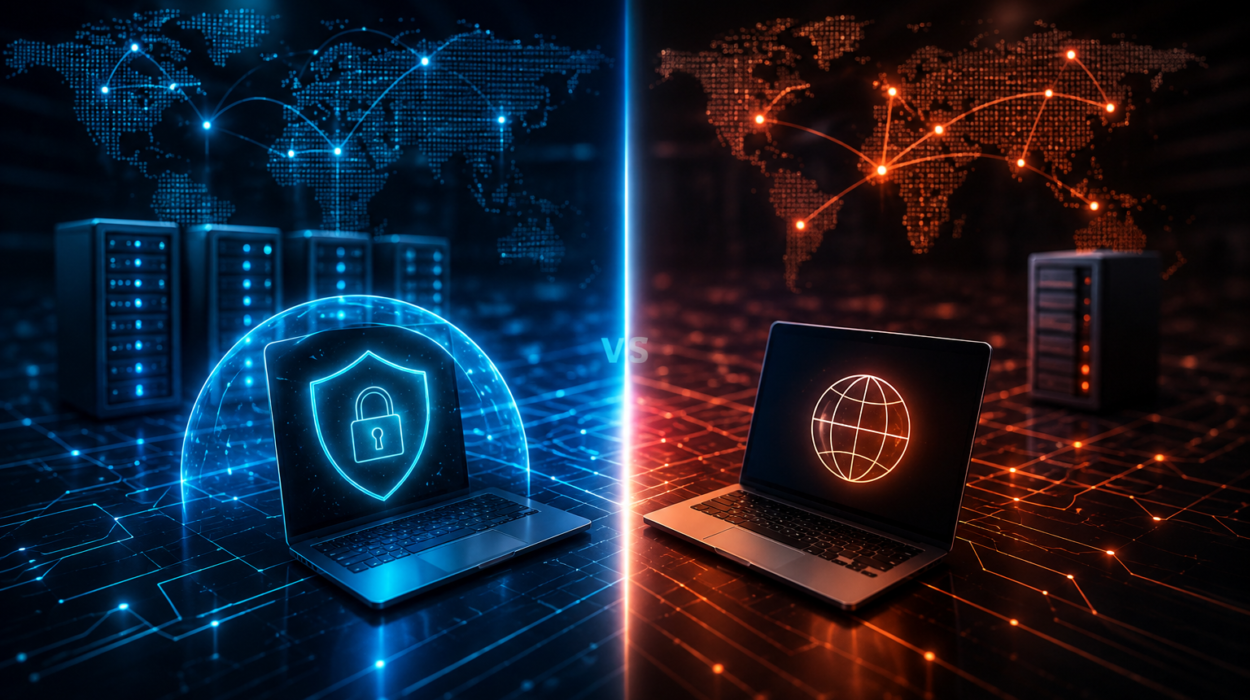
Quantum computers and classical computers are built on entirely different principles. They process information in fundamentally different ways, making each technology suitable for different kinds of tasks. Rather than competing in every area, they are expected to complement one another, each solving problems that match its unique strengths.
Understanding the differences between these two technologies helps explain why quantum computing is considered one of the most important scientific and engineering developments of the twenty-first century.
What Is Classical Computing?
Classical computing refers to the digital computing technology that has powered the modern world since the middle of the twentieth century.
Every traditional computer processes information using tiny electronic switches called transistors. These transistors control the flow of electricity and represent information as bits.
A bit is the smallest unit of digital information.
Each bit can exist in only one of two possible states.
It is either 0 or 1.
Although this system appears simple, billions of bits working together allow computers to perform extraordinary tasks. Every photograph, video, website, spreadsheet, computer game, scientific simulation, and artificial intelligence model ultimately consists of enormous combinations of zeros and ones.
Today’s processors contain billions of microscopic transistors capable of switching between these states billions of times every second.
This remarkable engineering has driven decades of technological progress.
What Is Quantum Computing?
Quantum computing is a completely different approach to processing information.
Instead of relying on ordinary bits, quantum computers use quantum bits, or qubits.
Unlike classical bits, qubits follow the laws of quantum mechanics, the branch of physics that describes nature at the scale of atoms and subatomic particles.
Because of these quantum laws, qubits behave in ways that have no direct equivalent in everyday experience.
They can exhibit quantum phenomena such as superposition, entanglement, and interference, allowing specially designed quantum algorithms to solve certain problems more efficiently than classical algorithms.
Quantum computing does not replace the rules of classical computing. Instead, it introduces an entirely new computational framework built upon the strange but experimentally verified behavior of the quantum world.
The Foundation of Information
The most fundamental difference between classical and quantum computing lies in how information is represented.
A classical computer stores information using bits.
Each bit has a definite value.
It is either 0 or 1.
A quantum computer stores information using qubits.
A qubit is a quantum system that can exist in a superposition of the basis states commonly labeled 0 and 1 until it is measured. This quantum state is described mathematically by probability amplitudes, not by the simple idea of being “both values at once” in the everyday sense.
This difference forms the basis of every other distinction between the two technologies.
How Classical Computers Solve Problems
Classical computers solve problems by performing logical operations on bits.
Every calculation follows a sequence of instructions.
Processors carry out these instructions at astonishing speeds, manipulating billions of bits every second.
For most applications, this approach works exceptionally well.
Classical computers excel at predictable, step-by-step tasks.
They efficiently handle word processing, internet browsing, video streaming, gaming, financial calculations, software development, and millions of everyday applications.
Decades of research have made classical computing incredibly reliable and efficient.
How Quantum Computers Solve Problems
Quantum computers use quantum operations to manipulate qubits.
Instead of following only classical logic, they exploit quantum mechanical effects to process information in ways unavailable to traditional computers.
Quantum algorithms are carefully designed so that quantum interference increases the probability of measuring correct solutions while reducing the likelihood of incorrect ones.
This approach does not mean quantum computers instantly solve every problem.
Instead, they provide computational advantages for specific categories of problems where quantum algorithms outperform the best known classical methods.
Understanding Superposition
One of the defining features of quantum computing is superposition.
In everyday life, objects occupy definite states.
A door is either open or closed.
A coin resting on a table shows either heads or tails.
Quantum systems behave differently.
A qubit can exist in a superposition of its basis states until measurement.
This allows quantum computers to represent and manipulate quantum information in ways that differ fundamentally from classical systems.
It is important not to think of superposition as a magical shortcut that simultaneously evaluates every possible answer. The true advantage comes from combining superposition with interference and carefully designed algorithms.
The Power of Entanglement
Another major difference is entanglement.
Classical bits operate independently unless linked by conventional circuitry.
Qubits can become entangled.
Entangled qubits share quantum correlations that cannot be fully described by considering each qubit separately.
These correlations enable quantum algorithms that have no direct classical equivalent.
Entanglement is one of the essential resources behind quantum computing’s potential power.
Speed Is Not the Whole Story
Many people believe quantum computers are simply much faster than classical computers.
This is not accurate.
Quantum computers are not universally faster.
For many everyday tasks, classical computers remain far more practical.
Opening a web browser, watching videos, editing photos, sending emails, and playing games are tasks that classical computers perform extremely efficiently.
Quantum computers are designed for specialized problems where quantum algorithms offer computational advantages.
The real difference lies in the kinds of problems each machine solves best.
Problems Classical Computers Solve Well
Classical computers are remarkably versatile.
They are excellent at performing routine calculations, managing databases, displaying graphics, processing text, running operating systems, handling internet traffic, and supporting artificial intelligence applications.
They are highly reliable, relatively inexpensive, and easy to manufacture compared with quantum computers.
For nearly every consumer application, classical computers remain the best choice.
Problems Quantum Computers May Solve Better
Quantum computers show promise in solving certain highly specialized problems.
These include simulating quantum systems such as molecules and materials, factoring large integers using specific quantum algorithms, some optimization tasks, and aspects of quantum chemistry and physics.
Scientists continue researching many additional applications, although practical advantages for numerous real-world problems remain an active area of investigation.
Quantum computing is especially attractive where classical computational requirements grow extremely rapidly as problem size increases.
Hardware Differences
The hardware inside classical and quantum computers looks completely different.
Classical computers rely on silicon-based semiconductor technology.
Billions of transistors are etched onto tiny chips using advanced manufacturing techniques.
These chips operate at or near room temperature in everyday devices.
Quantum computers require much more specialized hardware.
Depending on the technology, qubits may be created using superconducting electrical circuits, trapped ions, neutral atoms, photons, or other quantum systems.
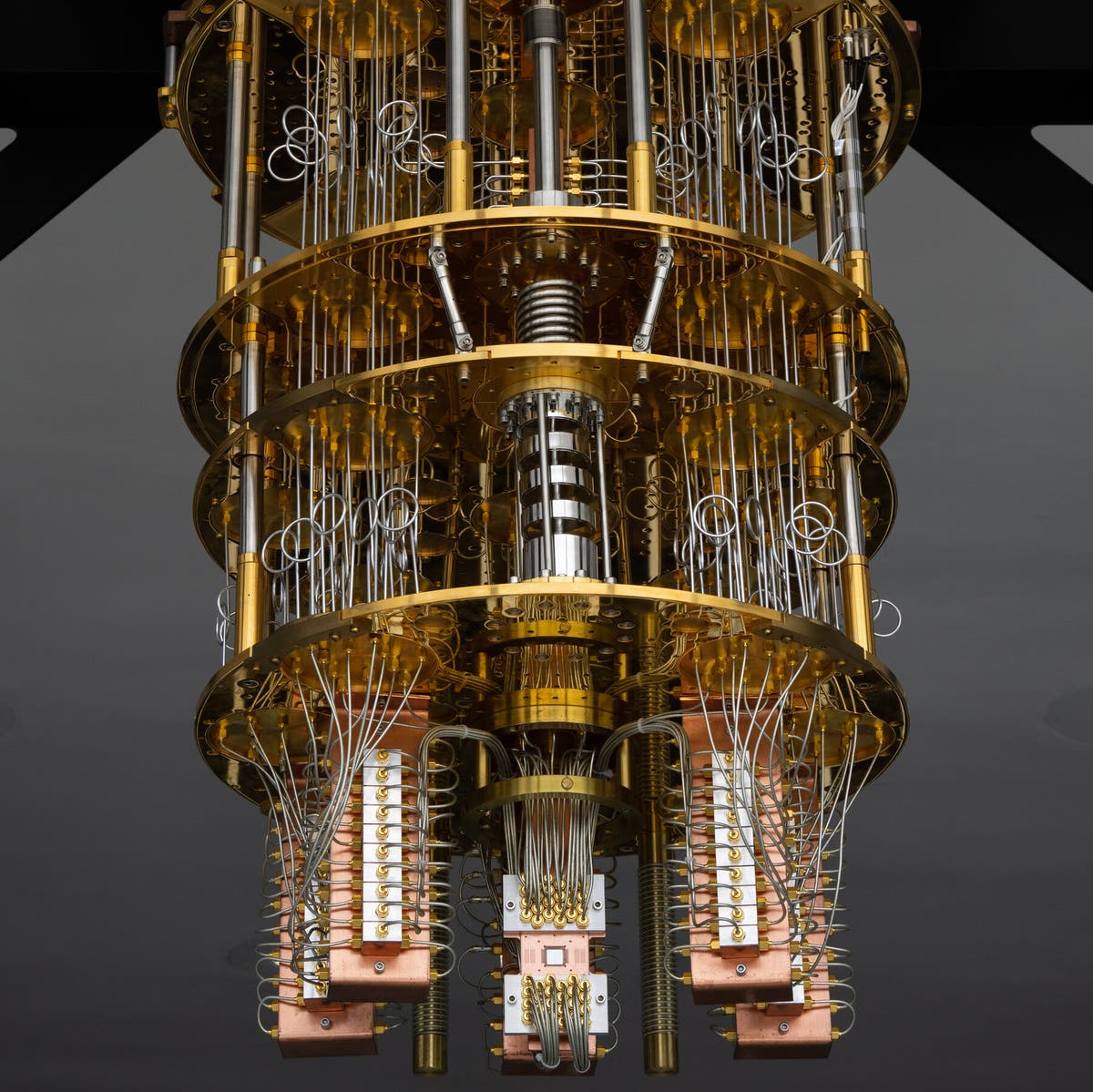
Many quantum processors operate inside dilution refrigerators cooled to temperatures only fractions of a degree above absolute zero.
These extreme conditions help protect fragile quantum states from environmental disturbances.
Stability and Reliability
Classical computers are extremely stable.
Bits remain in well-defined states.
Errors are rare and easily corrected using well-established methods.
Quantum computers face a much greater challenge.
Qubits are fragile.
Interactions with the surrounding environment can destroy quantum information through a process known as decoherence.
Even tiny vibrations, electromagnetic noise, or heat can introduce errors.
Maintaining stable quantum states long enough to complete useful calculations remains one of the biggest engineering challenges in the field.
Error Correction
Error correction works very differently in the two systems.
Classical computers use mature error-correction techniques that require relatively little overhead.
Quantum computers require sophisticated quantum error correction, which distributes quantum information across many physical qubits to create more reliable logical qubits.
Because of this overhead, practical fault-tolerant quantum computers will require many more physical qubits than logical qubits.
Developing scalable quantum error correction is one of the central goals of quantum engineering.
Software and Programming
Programming classical computers is a mature field.
Developers use languages such as C, C++, Python, Java, Rust, JavaScript, and many others.
Quantum programming introduces entirely new concepts.
Instead of writing programs based only on classical logic, developers construct quantum circuits using quantum gates that manipulate qubits.
Several software frameworks allow researchers to develop and test quantum algorithms using simulators and experimental quantum hardware.
However, quantum programming remains a highly specialized discipline.
Energy Consumption
Energy efficiency is becoming increasingly important as computing demands grow.
Classical data centers consume enormous amounts of electricity.
Quantum computers also require significant energy, particularly because many systems must operate at extremely low temperatures using powerful refrigeration equipment.
Although future quantum computers may solve certain calculations more efficiently than classical machines, they are not automatically more energy-efficient for every task.
Energy efficiency depends on the specific computation being performed.
Artificial Intelligence
Artificial intelligence currently relies almost entirely on classical computing.
Modern AI systems train on powerful graphics processing units and specialized AI accelerators.
Researchers are exploring quantum machine learning, a field that investigates whether quantum algorithms can improve certain machine learning tasks.
So far, this research remains largely experimental.
Whether quantum computing will significantly accelerate practical AI applications is still an open scientific question.
Cybersecurity
Cybersecurity illustrates one of the clearest contrasts between classical and quantum computing.
Most current encryption systems were designed assuming attackers use classical computers.
A sufficiently powerful fault-tolerant quantum computer running Shor’s algorithm could efficiently solve mathematical problems underlying some widely used public-key cryptographic systems, including RSA and certain elliptic-curve methods.
To prepare for this possibility, researchers are developing post-quantum cryptography, which aims to provide security against both classical and quantum attacks.
This global transition has already begun.
Scientific Research
Classical supercomputers have revolutionized scientific research.
They model weather systems, simulate galaxies, analyze genomes, and predict earthquakes.
Quantum computers may eventually extend these capabilities by accurately simulating complex quantum systems that are difficult for classical machines.
This could accelerate discoveries in chemistry, condensed matter physics, materials science, and molecular biology.
Rather than replacing supercomputers, quantum computers may become valuable scientific partners.
Cost
Classical computers are relatively inexpensive.
Millions of devices are manufactured every year, making laptops and smartphones widely available.
Quantum computers are very different.
Building one requires advanced laboratories, sophisticated control electronics, specialized refrigeration systems, and highly trained scientists and engineers.
Current quantum computers cost far more than consumer electronics and are generally accessed remotely through cloud services rather than owned by individuals.
Accessibility
Almost everyone uses classical computers daily.
Quantum computers remain primarily research tools.
Scientists, universities, government laboratories, and technology companies conduct most quantum computing research.
As the technology matures, access is becoming easier through cloud-based quantum platforms that allow researchers and students to experiment with real quantum processors.
Even so, widespread consumer ownership of quantum computers is not expected in the foreseeable future.
Scalability
Classical computing has benefited from decades of engineering improvements that dramatically increased processing power while reducing cost and size.
Scaling quantum computers is far more difficult.
Adding more qubits is not enough.
Engineers must also maintain high fidelity, reduce errors, improve coherence times, and implement effective quantum error correction.
Building large-scale fault-tolerant quantum computers remains one of the greatest engineering challenges in modern science.
Everyday Applications
For everyday activities, classical computers remain unmatched.
Writing documents, watching movies, browsing social media, making video calls, shopping online, editing photographs, and managing businesses all depend on classical computing.
Quantum computers are not expected to replace these familiar devices.
Instead, they will likely operate in research centers and specialized facilities, solving problems that classical systems struggle to address.
Their results may eventually improve products and services that consumers use every day, even if those consumers never interact directly with a quantum processor.
The Future Relationship Between Quantum and Classical Computing
The future is unlikely to be a choice between classical computing and quantum computing.
Instead, both technologies are expected to work together.
A classical computer may handle most parts of a computational task while sending particularly difficult calculations to a quantum processor.
After the quantum computation finishes, the classical computer can process and present the results.
This hybrid approach combines the strengths of both technologies.
Many researchers believe this partnership represents the most realistic future of computing.
Common Misconceptions
Public discussions about quantum computing often exaggerate its capabilities.
One common myth is that quantum computers can instantly solve every problem.
In reality, they provide advantages only for certain classes of problems and require specialized algorithms to do so.
Another misconception is that quantum computers violate the laws of physics.
In fact, they operate because they obey quantum mechanics with extraordinary precision.
Some people believe classical computers will soon become obsolete.
There is no evidence for this.
Classical computing will continue powering nearly all everyday digital activities for the foreseeable future.
Others imagine quantum computers thinking like humans or possessing unlimited intelligence.
Quantum computers are not artificial minds.
They are highly specialized machines designed to perform particular mathematical operations using quantum principles.
Understanding these distinctions helps separate scientific reality from popular fiction.
The Scientific Importance of Both Technologies
Classical computing transformed civilization by making information processing fast, reliable, and accessible. It enabled the internet, modern medicine, satellite navigation, artificial intelligence, digital communication, and countless innovations that shape everyday life.
Quantum computing represents a new chapter rather than a replacement. By exploiting the principles of quantum mechanics, it offers powerful new tools for tackling scientific and mathematical problems that remain difficult for classical machines. Its greatest impact is expected in specialized areas such as quantum chemistry, materials discovery, optimization, and certain aspects of cryptography.
Both technologies reflect humanity’s remarkable ability to understand nature and transform scientific knowledge into practical tools.
Conclusion
The comparison between quantum computing and classical computing is not a competition to determine which technology is universally better. Instead, it is a comparison between two fundamentally different approaches to processing information.
Classical computers, built on bits, remain the backbone of the digital world. They are reliable, efficient, affordable, and perfectly suited for the vast majority of tasks people perform every day. From smartphones and laptops to cloud servers and supercomputers, classical computing continues to drive technological progress across nearly every industry.
Quantum computers, built on qubits and governed by the laws of quantum mechanics, represent a new frontier. Their strength lies not in replacing classical systems but in solving specific problems that become extraordinarily difficult for conventional computers. By harnessing quantum phenomena such as superposition, entanglement, and interference, they open new possibilities for scientific discovery, advanced simulation, cryptography, and optimization.
As research continues, the future of computing is likely to be collaborative rather than competitive. Classical computers will remain essential for everyday computing, while quantum computers will serve as powerful specialized tools for challenges that push beyond the limits of classical computation. Together, these two technologies have the potential to expand the boundaries of science, engineering, and human knowledge, shaping a future in which each complements the other’s strengths and helps solve problems once thought impossible.