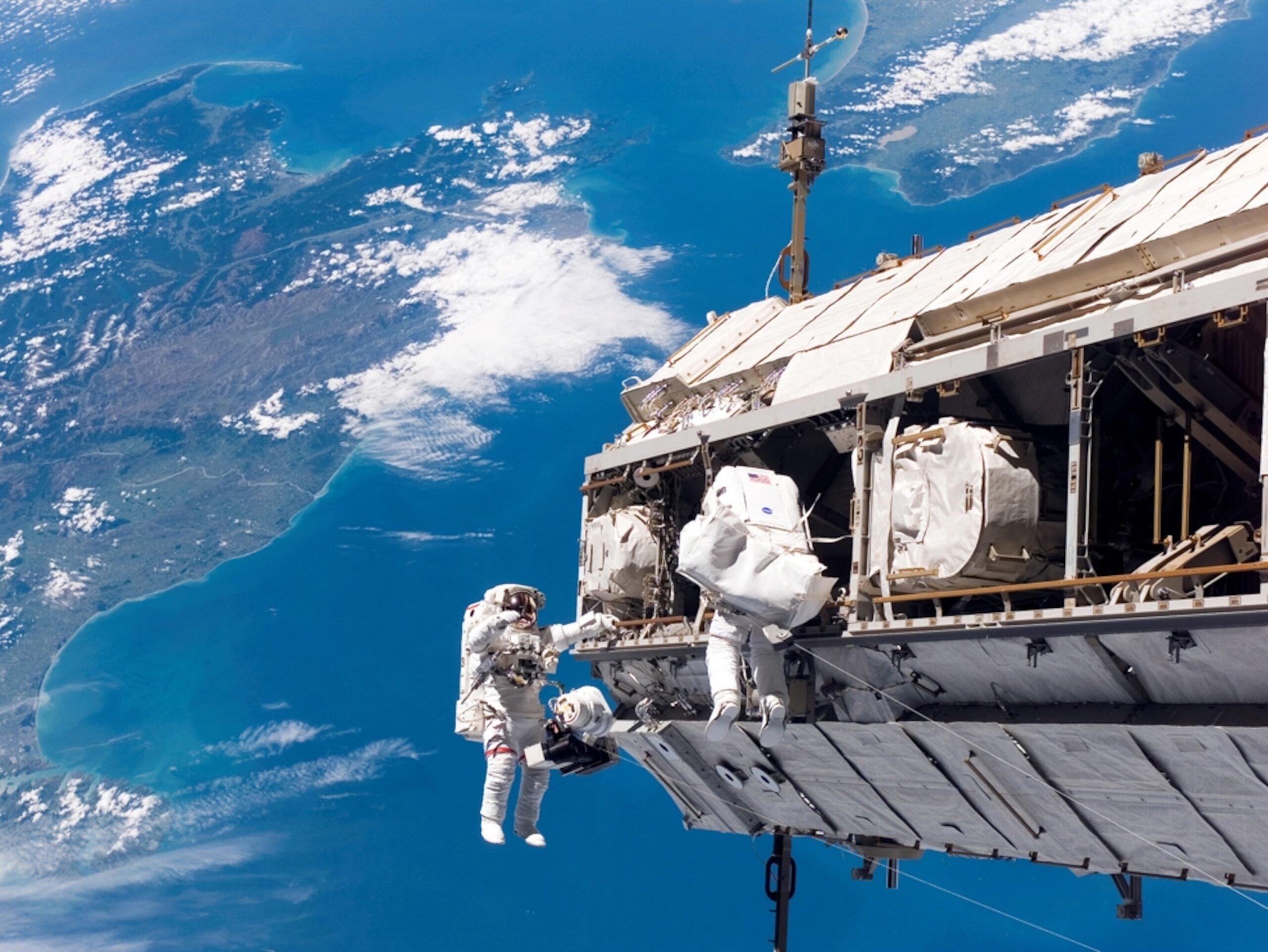
High above Earth, far beyond the clouds and weather, a remarkable structure circles our planet at breathtaking speed. Every ninety minutes, it completes another orbit, watching the Sun rise and set multiple times in a single day. Inside this extraordinary laboratory, astronauts float effortlessly, conduct groundbreaking scientific experiments, repair sophisticated equipment, and live together in one of the most challenging environments humans have ever experienced.
This incredible place is called a space station.
Unlike rockets that launch into space and quickly return, or spacecraft that travel to distant planets, a space station is designed to stay in orbit for long periods. It serves as a home, a laboratory, and a research center where astronauts can live and work for weeks, months, or even longer. Space stations represent one of humanity’s greatest engineering achievements, allowing scientists to study space while preparing for future journeys to the Moon, Mars, and beyond.
But what exactly is a space station? How does it stay in orbit without falling to Earth? How do astronauts survive inside it? And why do countries invest billions of dollars in building these extraordinary structures?
The answers reveal an inspiring story of science, technology, and human curiosity.
What Is a Space Station?
A space station is a large spacecraft designed to remain in orbit around a planet or another celestial body for an extended period. It provides a place where astronauts can live, work, conduct scientific research, and maintain equipment while continuously traveling through space.
Unlike a spacecraft built mainly for transportation, a space station is intended to be a long-term habitat. It contains living quarters, laboratories, communication systems, power supplies, life-support equipment, and docking ports where visiting spacecraft can arrive with new astronauts, supplies, and scientific instruments.
Although today’s space stations orbit Earth, future stations may orbit the Moon or even Mars, supporting deeper exploration of the Solar System.
Why Do We Build Space Stations?
Sending humans into space is difficult, expensive, and risky. A space station provides a permanent platform where scientists can perform experiments that would be impossible during short space missions.
Living in orbit allows researchers to study how the human body changes in microgravity, how materials behave without strong gravitational effects, and how plants, microorganisms, and physical processes respond to the unique environment of space.
Space stations also help engineers test new technologies before using them on longer missions to distant worlds.
Every experiment performed aboard a space station teaches scientists something new about both space and life on Earth.
Where Is a Space Station Located?
A space station does not float randomly in space.
It travels in a carefully planned orbit around Earth.
Many space stations operate in what is called low Earth orbit, which extends from about 160 kilometers to 2,000 kilometers above Earth’s surface. This region allows astronauts to remain relatively close to Earth while still experiencing the conditions of space.
At these altitudes, the station moves at an incredible speed of roughly 28,000 kilometers per hour. Despite this tremendous speed, astronauts inside do not feel the motion because everything around them travels together at nearly the same velocity.
Why Doesn’t a Space Station Fall to Earth?
One of the most fascinating questions about space stations is why they stay in orbit instead of crashing to Earth.
The answer lies in the balance between gravity and motion.
Earth’s gravity constantly pulls the station downward. At the same time, the station moves forward at an extremely high speed.
Imagine throwing a ball. The harder you throw it, the farther it travels before falling. Now imagine throwing it so fast that as it falls toward Earth, Earth’s curved surface bends away beneath it at the same rate. Instead of hitting the ground, the object keeps falling around Earth continuously.
This continuous free fall is called an orbit.
The space station is always falling toward Earth because of gravity, but its forward speed is so great that it keeps missing the planet.
Why Do Astronauts Float?
Many people believe astronauts float because there is no gravity in space.
In reality, gravity is still very strong where most space stations orbit.
Astronauts float because they, along with the space station, are in continuous free fall around Earth.
Since everything inside the station falls together at the same rate, astronauts experience a condition known as microgravity. This creates the sensation of weightlessness, even though gravity is still acting on them.
Microgravity allows scientists to study physical processes that behave very differently than they do on Earth’s surface.
Inside a Space Station
A space station is much more than a metal shell drifting through space.
Inside, it contains everything astronauts need for daily life and scientific work.
Living areas provide places to sleep, eat, and relax.
Laboratories contain advanced scientific equipment for experiments.
Exercise equipment helps astronauts maintain muscle strength and bone health.
Computers control navigation, communications, environmental systems, and research instruments.
Storage compartments hold food, clothing, tools, spare parts, and scientific supplies.
Large windows allow astronauts to observe Earth and space while also supporting certain scientific observations.
Every part of the station is carefully designed to function in the demanding environment of space.
Living in Microgravity
Daily life aboard a space station is unlike anything experienced on Earth.
Without normal gravity, simple tasks become completely different.
Astronauts cannot simply place objects on a table because everything floats away.
Food must be packaged carefully to prevent crumbs or liquid droplets from drifting into sensitive equipment.
Sleeping bags are attached to walls so astronauts do not float around while sleeping.
Moving through the station often involves gently pushing off walls instead of walking.
Even drinking water requires specially designed containers because liquids form floating spheres rather than staying inside cups.
Although these conditions seem unusual, astronauts gradually adapt after spending time in orbit.
How Do Astronauts Breathe?
Space contains almost no breathable oxygen.
Without protection, humans cannot survive there.
A space station includes sophisticated life-support systems that continuously maintain a safe atmosphere.
These systems provide oxygen for breathing while removing carbon dioxide produced by astronauts.
Air circulation fans keep fresh air moving throughout the station since warm air does not naturally rise in microgravity.
The atmosphere inside a space station is carefully monitored every moment to ensure it remains safe.
Where Does Water Come From?
Water is far too valuable in space to waste.
Modern space stations recycle much of their water.
Moisture from the air, water used for hygiene, and even astronauts’ urine can be purified using advanced filtration systems.
These recycling technologies produce clean drinking water while dramatically reducing the amount that must be launched from Earth.
Learning how to recycle water efficiently is also essential for future missions to Mars, where resupply will be extremely difficult.
How Do Astronauts Get Food?
Astronauts cannot grow enough food to meet all their nutritional needs during most current missions.
Instead, cargo spacecraft regularly deliver carefully prepared meals.
Foods are designed to remain safe for long periods while being easy to store and prepare.
Some fresh fruits and vegetables may arrive with supply missions, providing welcome variety.
Scientists are also studying methods for growing crops in space to support future long-duration exploration.
Producing Electricity in Space
A space station requires electricity every second.
Power runs computers, communications, scientific instruments, lighting, life-support systems, and many other essential devices.
Most modern space stations generate electricity using solar panels.
These large panels convert sunlight directly into electrical energy through photovoltaic cells.
Because sunlight in space is not weakened by Earth’s atmosphere, solar panels can produce substantial amounts of electricity.
Rechargeable batteries store energy for use whenever the station passes through Earth’s shadow.
Staying at the Right Temperature
Space is an extreme environment.
Objects facing the Sun can become extremely hot, while shaded areas become intensely cold.
To keep astronauts comfortable and equipment functioning properly, space stations use advanced thermal control systems.
These systems circulate fluids to transfer heat away from electronics and living areas.
Large external radiators release excess heat into space.
Maintaining a stable internal temperature is essential for both human health and scientific instruments.
Scientific Research in Space
One of the main purposes of a space station is scientific discovery.
Microgravity creates unique conditions that cannot be reproduced easily on Earth.
Scientists investigate how crystals grow, how flames burn, how fluids move, and how biological systems function without the influence of normal gravity.
Medical researchers study changes in bones, muscles, the immune system, vision, and the cardiovascular system during extended spaceflight.
These experiments improve our understanding of both human biology and fundamental physics.
Many discoveries made in orbit also contribute to medicine, engineering, and technology on Earth.
Studying the Human Body
The human body evolved under Earth’s gravity.
Removing that constant force produces significant changes.
Bones gradually lose minerals.
Muscles weaken unless exercised regularly.
Body fluids shift toward the head.
The heart adapts to pumping blood under different conditions.
Scientists carefully monitor these changes to understand how humans might remain healthy during future missions lasting months or years.
This research is especially important for planned expeditions to Mars.
Growing Plants in Space
Plants may become essential for future space exploration.
They can provide food, produce oxygen, recycle carbon dioxide, and improve astronauts’ psychological well-being.
Researchers study how plants grow in microgravity, how roots develop without gravity guiding them, and how light influences growth.
These experiments help scientists design future space habitats capable of supporting long-term human settlements.
Spacewalks
Sometimes astronauts must leave the safety of the station.
These excursions are called spacewalks, or extravehicular activities.
During a spacewalk, astronauts wear specially designed spacesuits that provide oxygen, temperature control, communication equipment, and protection from the vacuum of space.
Spacewalks allow crews to repair equipment, install new instruments, upgrade systems, and conduct experiments outside the station.
Although dangerous, spacewalks are essential for maintaining long-term operations.
Docking Spacecraft
A space station does not remain isolated.
Visiting spacecraft regularly arrive carrying astronauts, food, water, scientific equipment, fuel, and replacement parts.
These spacecraft carefully approach the station before connecting through specially designed docking ports.
After docking, astronauts transfer supplies, unload experiments, and sometimes welcome new crew members while others return to Earth.
Docking operations require extraordinary precision and advanced navigation systems.
International Cooperation in Space
Building and operating a space station is one of the most complex engineering projects ever undertaken.
Such missions often involve cooperation among multiple countries.
Scientists, engineers, astronauts, and mission controllers from different nations contribute their expertise.
This international collaboration demonstrates how scientific exploration can unite people across political and cultural boundaries in pursuit of shared knowledge.
Space stations have become powerful symbols of peaceful cooperation.
Challenges of Living in Space
Life aboard a space station is exciting, but it is also demanding.
Astronauts spend months away from family.
They live in confined spaces with limited privacy.
Every task requires careful planning because supplies are limited.
Exposure to increased levels of cosmic radiation presents additional health considerations.
Equipment failures must often be repaired immediately because outside assistance is unavailable.
Despite these challenges, astronauts consistently describe the experience as deeply rewarding.
The View of Earth
Perhaps the most unforgettable aspect of living aboard a space station is the view.
From orbit, astronauts witness vast oceans, mountain ranges, deserts, forests, and glowing cities spread across the planet.
They observe thunderstorms stretching across continents, shimmering auroras dancing near the poles, and thin layers of Earth’s atmosphere protecting all known life.
Many astronauts report that seeing Earth from space profoundly changes their perspective.
National borders become invisible.
The planet appears fragile, beautiful, and interconnected.
This experience has inspired renewed appreciation for protecting Earth’s environment.
Famous Space Stations
Several space stations have played important roles in the history of space exploration.
Early stations demonstrated that humans could live and work in orbit for extended periods.
Over time, larger and more sophisticated stations were developed, allowing increasingly ambitious scientific research.
The International Space Station (ISS) became the largest permanently inhabited space laboratory ever constructed. Orbiting Earth since the late 1990s, it has hosted astronauts from many countries and supported thousands of scientific investigations across fields such as biology, physics, medicine, Earth science, and engineering.
As the ISS approaches the end of its operational life, new commercial and government-led space stations are being planned to continue research and prepare for future exploration.
The Future of Space Stations
The next generation of space stations may look very different.
Commercial companies are developing privately operated orbital laboratories.
Future stations may orbit the Moon, serving as gateways for lunar exploration.
Eventually, stations around Mars could support human missions to the Red Planet.
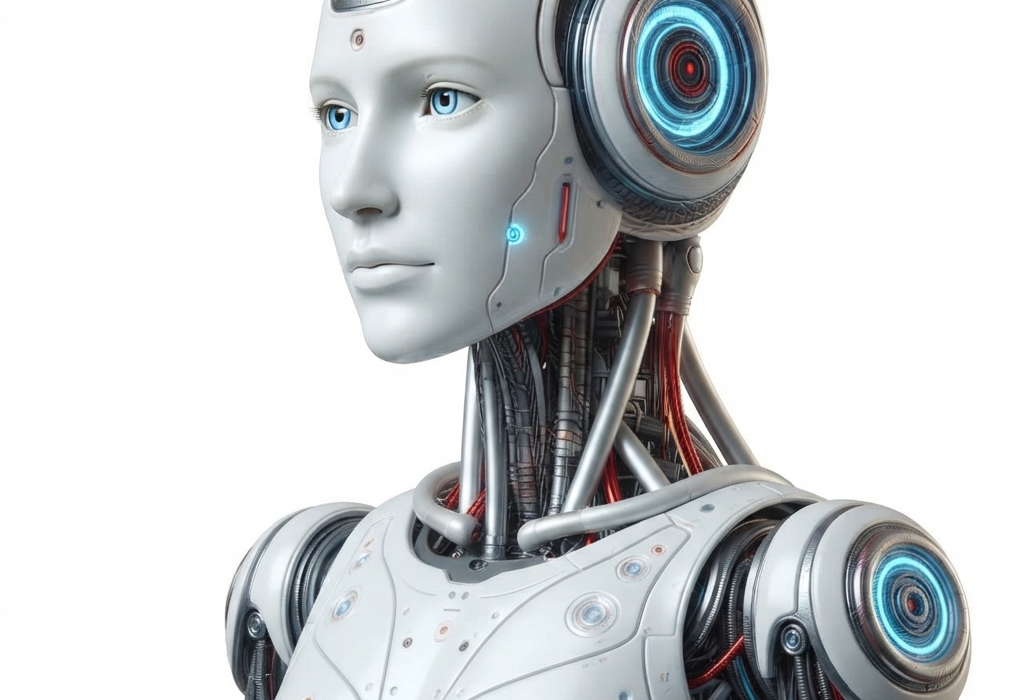
Advances in robotics, artificial intelligence, renewable energy, life-support systems, and habitat design will make future stations even more capable.
These orbiting laboratories will continue expanding humanity’s presence beyond Earth.
Why Space Stations Matter
Space stations are far more than impressive machines.
They are laboratories where scientists answer questions that cannot be explored anywhere else.
They help engineers develop technologies needed for deep-space missions.
They improve our understanding of human health.
They inspire new generations of scientists, engineers, and explorers.
Research conducted aboard space stations has contributed to advances in medicine, materials science, environmental monitoring, communications, and many other fields that benefit life on Earth.
Every orbit, every experiment, and every mission brings humanity closer to understanding both our planet and the vast universe beyond it.
Conclusion
A space station is one of humanity’s greatest scientific and engineering achievements. Orbiting high above Earth, it serves as a home, a laboratory, and a gateway to the future of space exploration. By providing a place where astronauts can live and work in microgravity for extended periods, space stations allow researchers to study the universe, test new technologies, and learn how humans can survive beyond our home planet.
Although building and operating a space station is extraordinarily complex, the knowledge gained from these orbiting laboratories reaches far beyond space itself. From improving medical treatments and advancing engineering to preparing for future missions to the Moon and Mars, space stations continue to expand the boundaries of human knowledge. They remind us that curiosity, cooperation, and scientific discovery can carry humanity farther than we ever imagined—one orbit at a time.